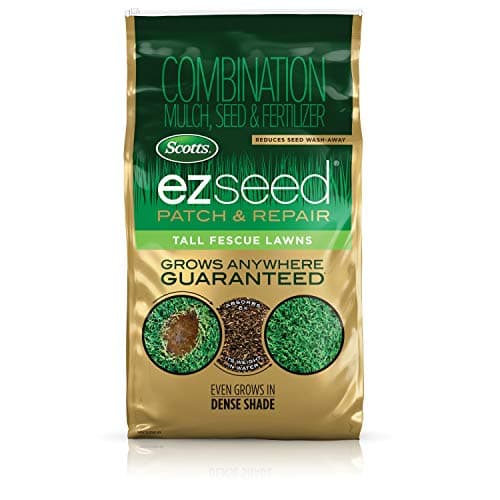
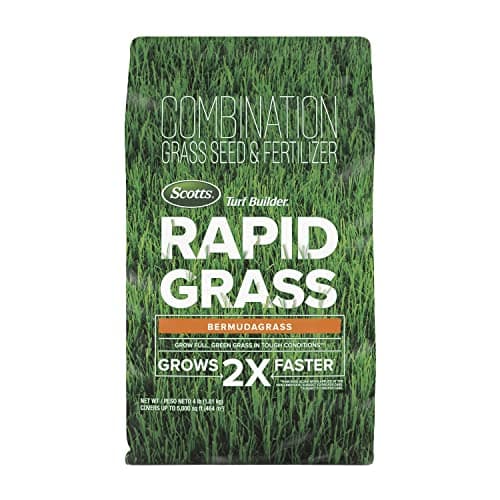
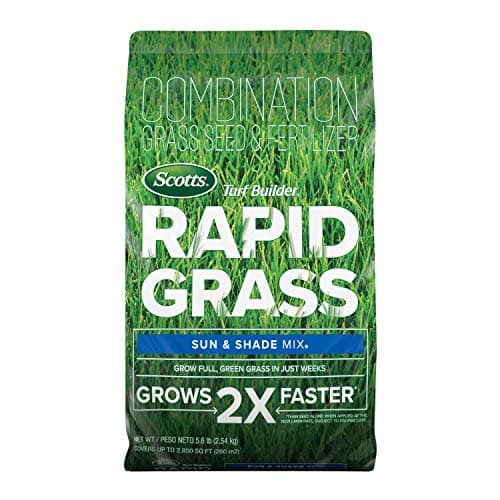
The best grass seed and fertilizer combo is Scotts Turf Builder Rapid Grass Sun & Shade: seed and a starter feed in one bag, in the sun-and-shade mix that suits the largest number of real lawns. For bare patches rather than a lawn, Scotts EZ Seed Patch & Repair adds a moisture-holding mulch to the same idea, and the mulch is what makes it forgiving. And if your lawn is bermuda, Scotts Rapid Grass Bermudagrassis the warm-season version — cool-season seed in the Deep South is the wrong plant at any price.
What a lawn fertilizer and seed bag actually does is solve a timing problem. New seed needs phosphorus for root development at the moment it germinates, and a normal lawn feed is built around nitrogen for leaf growth. Buying a combo bag means the starter feed is physically next to every seed, applied in one pass, at the right rate, with no second trip and no spreader recalibration. For somebody seeding a lawn for the first time, that is worth real money.
What it is not is a bargain. Measured per pound of seed and per pound of nutrient, a grass seed and fertilizer mix costs more than buying a bag of seed and a bag of starter fertilizer separately, because a large share of the bag weight is carrier and coating. We say so below. We have no test plot; the ranking reads the published seed species, analysis, feed type and coverage figures from each label. See how we pick.
How to choose a seed and fertilizer combo
Read the seed species first, and ignore the feed.The fertilizer in every one of these bags is roughly the same idea — a phosphorus-forward starter feed. The seed is what differs and what decides whether you get a lawn. Sun & Shade mixes suit the dappled conditions most gardens actually have; a tall fescue combo suits an open cool-season lawn; a bermudagrass combo is for warm-season lawns only.
Check how much of the bag is seed. This is the number the format hides. A combo bag contains seed, fertilizer, and usually a coating or mulch carrier, and the stated coverage area is the honest way to compare: a 5.6-pound combo bag covering a few hundred square feet is not competing with a 20-pound bag of straight seed.
Decide whether you want mulch in it. The patch-repair products add a water-absorbing mulch that swells and holds moisture around the seed. That is a genuine functional advantage on a patch you will water inconsistently, which is most patches. It is also the most expensive way to buy seed by weight, so it belongs on patches, not lawns.
Match the coverage to your job, and buy once. Running out halfway through means a second bag, possibly a different batch, and a visible seam in the lawn. Measure the area and buy for it.
When two bags beats one
If you are seeding a whole lawn. At any real area, a 20 or 25-pound bag of named-cultivar seed plus a bag of starter fertilizer is less money and better seed. The combo format exists for convenience and convenience does not scale.
If you want premium seed. No combo bag on the market contains the named deep-rooting cultivars you get in the bags on our premium seed roundup. If you intend to sow once and keep the lawn for a decade, the seed quality is the thing to pay for, not the packaging.
If you already own a spreader and a bag of starter feed. Then the problem the combo solves does not exist for you.
And a warning that applies to the whole category: a combo bag is seed plus starter feed, not seed plus weed killer. Some seeding products do add a weed control component — read the label carefully, because anything with a crabgrass pre-emergent in it will stop your own seed germinating. The products that are safe around new seed are covered in best weed control for lawns.
The method still decides the outcome
A combo bag does not change the physics. Seed still has to touch soil, so rake or aerate first. The seeding rate on the bag is still the right rate. And the top half inch still has to stay damp until germination, which means light watering once or twice a day for two to three weeks — the most common reason a combo bag fails is somebody treating "seed and feed in one" as "no technique required."
The full method, in five steps, is in how to grow grass from seed for a new lawn and how to reseed a lawn for an existing one. Both are free and both matter more than which bag you pick.