Skip to content
Fairway&Fescue

The Feed · Fertilizer, Weed Control & Spreaders

The Best Starter Fertilizer for New Grass

Written for a first-time seeder. The middle number on the bag is the one that matters, and here is the bag to buy.

By Stephen V.Updated How we pick
#ad

We earn a commission when you buy through our Amazon links, at no extra cost to you. It never changes our rankings — and we'll tell you when the cheaper bag or machine is the better buy. How this works.

If you are sowing grass seed for the first time, the best starter fertilizer is The Andersons Premium New Lawn Starter 20-27-5, and the reason is the middle number. Those three numbers on every fertilizer bag are nitrogen, phosphorus and potassium, and phosphorus — the middle one — is what builds roots. New grass has no roots yet, which is the entire problem you are solving, and 27 percent phosphorus is far more than an ordinary lawn feed carries. If you would rather have a gentler feed, the Jonathan Green Green-Up for Seeding & Sodding (12-18-8) is the one to take. If you are seeding a whole lawn rather than a patch, buy the Scotts Turf Builder Starter Food 42 lb bag because the price per pound is far better. And if you are fixing one bare spot, the Scotts Triple Action Built for Seeding is the small, safe, nothing-to-think-about option.

Now the mistake, because it is the one that ruins most first lawns and it is easy to make. Do not put a normal weed-and-feed or a crabgrass preventer on ground where you have just sown seed. Those bags contain a pre-emergent herbicide, and a pre-emergent works by stopping seeds from germinating. It cannot tell the difference between crabgrass seed and the grass seed you paid for. People do this every spring, in good faith, because the bag says “lawn” and it is the season for feeding lawns, and then they wonder why nothing came up. A starter fertilizer is a different product and that is why it exists.

The second thing to know is that a starter fertilizer is a temporaryproduct. You use it when you sow and again about six weeks later, and then you stop. After that, new grass becomes established grass and wants nitrogen rather than phosphorus — a normal 16-4-8 type feed, on the schedule in our lawn fertilizer schedule. Buying a 42 lb bag of starter fertilizer for a lawn you have already established is money spent on the wrong nutrient.

One legal note worth checking before you buy: several US states and municipalities restrict the sale or application of phosphorus lawn fertilizer, because phosphorus runoff feeds algae in lakes and rivers. Starter fertilizer is usually exempt when used for establishing new grass, but the rules are local. A thirty-second search for your state will settle it.

Everything here is ranked on label figures — NPK analysis, stated coverage, bag weight — and we have spread none of it ourselves. See how we pick. Prices are live from the price layer with an “as of” date.

The short answer

Quick picks

#ProductBest forScorePrice
01
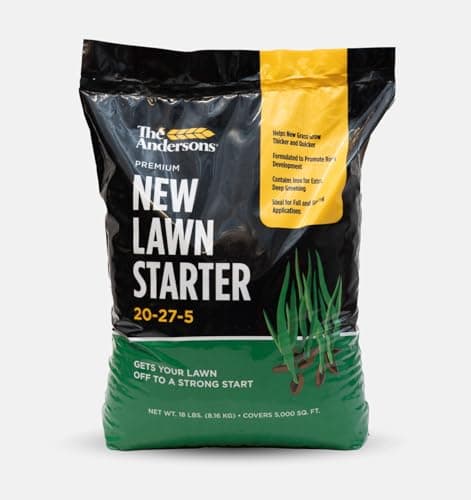
The Andersons The Andersons Premium New Lawn Starter 20-27-5 (18 lb, 5,000 sq ft)
The Andersons Premium New Lawn Starter 20-27-5 (18 lb, 5,000 sq ft)

The best starter fertilizer on this page, and it is the middle number that says why: 27 percent phosphorus is what new grass roots need, and almost nothing else on a garden-center shelf carries that much.

Best starter fertilizer for new grass
7.2
$45.88Amazon
02
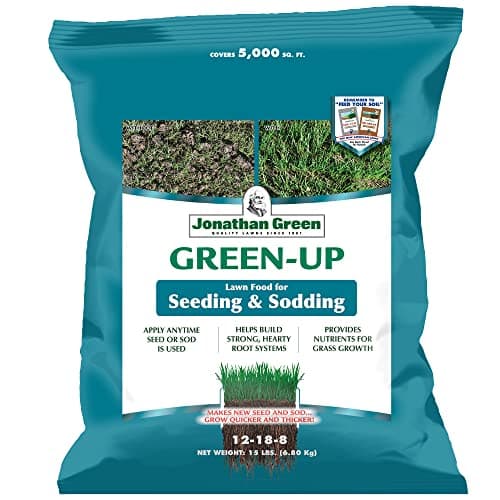
Jonathan Green Jonathan Green Green-Up for Seeding & Sodding 12-18-8 (5,000 sq ft)
Jonathan Green Green-Up for Seeding & Sodding 12-18-8 (5,000 sq ft)

A gentler starter analysis than the high-phosphorus bags - 12-18-8 - which is exactly the point. Less nitrogen means less top growth racing ahead of a root system that has not formed yet.

Gentler starter feed, seed or sod
6.8
$38.73Amazon
03
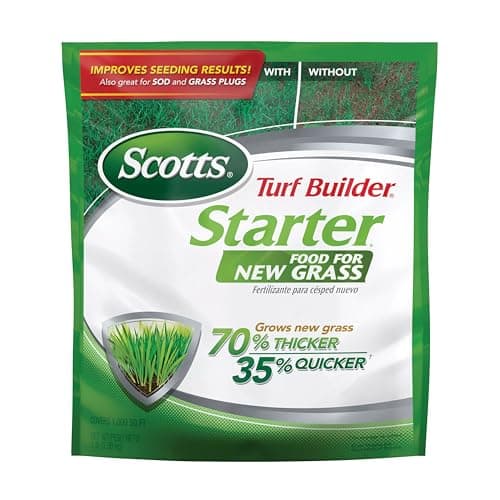
Scotts Scotts Turf Builder Starter Food for New Grass (42 lb)
Scotts Turf Builder Starter Food for New Grass (42 lb)

The big bag of the starter fertilizer most people have actually heard of. If you are seeding a whole lawn rather than patching one, this is the size that makes the arithmetic work.

Seeding a whole lawn
6.8
$79.99Amazon
04
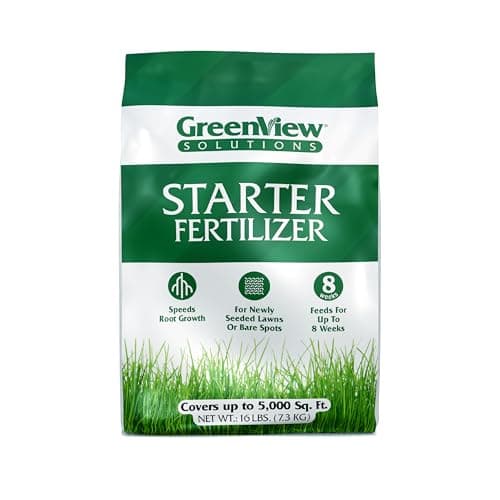
GreenView GreenView Starter Fertilizer (16 lb)
GreenView Starter Fertilizer (16 lb)

A mid-sized starter bag at a mid-sized price, and the easy answer when the 3 lb bag is too small and the 42 lb bag is more than your lawn needs.

Mid-size lawns, one bag
6.8
$32.99Amazon
05
Scotts Scotts Turf Builder Starter Food for New Grass (3 lb)
Scotts Turf Builder Starter Food for New Grass (3 lb)

A phosphorus-forward starter feed in a small bag. Seedlings need phosphorus for root development in a way established grass does not, and this is the cheap way to give it to them.

Feeding newly sown seed
6.8
$18.47Amazon
06
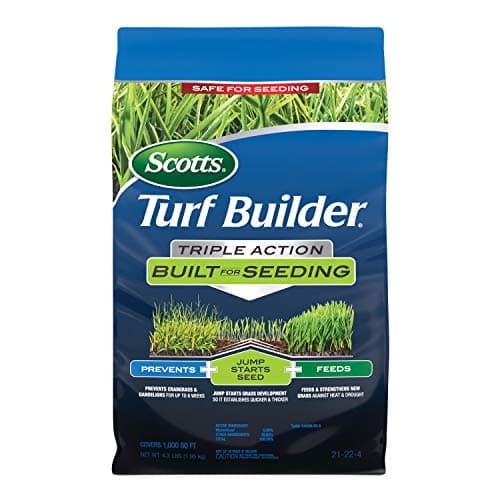
Scotts Scotts Turf Builder Triple Action Built for Seeding (4.3 lb)
Scotts Turf Builder Triple Action Built for Seeding (4.3 lb)

The one bag that solves the beginner's trap: it feeds new seed and suppresses weeds without the pre-emergent that would have killed the seed. Seed, mulch and feed in a single product.

Beginners seeding a bare patch
7.0
$15.49Amazon

#ad · Live prices from the Amazon Product API, as of October 20, 2026. Where we have no verified live price, we show none — we would rather leave a gap than print a number that has rotted.

In detail

The picks, in full

01
The Andersons The Andersons Premium New Lawn Starter 20-27-5 (18 lb, 5,000 sq ft)

Best starter fertilizer for new grass

The Andersons Premium New Lawn Starter 20-27-5 (18 lb, 5,000 sq ft)

20-27-5 NPKCovers 5,000 sq ft18 lb bagProfessional-grade granular
7.2/10

The best starter fertilizer on this page, and it is the middle number that says why: 27 percent phosphorus is what new grass roots need, and almost nothing else on a garden-center shelf carries that much.

Feeding value
10
Weed control
1
Coverage
9
Ease of use
8
Price
8

Pros

  • 27 percent phosphorus is a genuine starter analysis, not a general feed with starter on the label
  • Professional-grade granule size spreads evenly, which is most of whether you get stripes
  • 5,000 sq ft from an 18 lb bag is strong coverage per dollar

Cons

  • Some states and municipalities restrict phosphorus fertilizer - check local rules before you buy
  • Nothing in it addresses weeds, which a new lawn will get

Skip this if…

…your lawn is established and simply hungry. Phosphorus is for root establishment; an established lawn wants nitrogen, so a 16-4-8 or similar is the right bag.

$45.88View on Amazon

Price as of October 20, 2026. Prices change — Amazon's is the one that counts.

#ad · we may earn a commission from this link to The Andersons Premium New Lawn Starter 20-27-5 (18 lb, 5,000 sq ft)

02
Jonathan Green Jonathan Green Green-Up for Seeding & Sodding 12-18-8 (5,000 sq ft)

Gentler starter feed, seed or sod

Jonathan Green Green-Up for Seeding & Sodding 12-18-8 (5,000 sq ft)

12-18-8 NPKCovers 5,000 sq ftFor seeding and soddingGranular
6.8/10

A gentler starter analysis than the high-phosphorus bags - 12-18-8 - which is exactly the point. Less nitrogen means less top growth racing ahead of a root system that has not formed yet.

Feeding value
9
Weed control
1
Coverage
9
Ease of use
8
Price
7

Pros

  • Lower nitrogen means seedlings put energy into roots rather than into blade growth they cannot support
  • Works for sod as well as seed, which most starter bags do not state
  • Jonathan Green granules are consistently sized, so a spreader lays them evenly

Cons

  • Less phosphorus than the Andersons bag, so slower root establishment on poor soil
  • Priced above the supermarket starter bags

Skip this if…

…you are seeding into genuinely poor or compacted soil. That is where the higher-phosphorus Andersons 20-27-5 earns its money.

$38.73View on Amazon

Price as of October 20, 2026. Prices change — Amazon's is the one that counts.

#ad · we may earn a commission from this link to Jonathan Green Green-Up for Seeding & Sodding 12-18-8 (5,000 sq ft)

03
Scotts Scotts Turf Builder Starter Food for New Grass (42 lb)

Seeding a whole lawn

Scotts Turf Builder Starter Food for New Grass (42 lb)

42 lb bagStarter analysisFor newly planted grassGranular
6.8/10

The big bag of the starter fertilizer most people have actually heard of. If you are seeding a whole lawn rather than patching one, this is the size that makes the arithmetic work.

Feeding value
8
Weed control
1
Coverage
10
Ease of use
7
Price
8

Pros

  • A 42 lb bag covers a full lawn rather than a patch, at a far better price per pound than the small bags
  • The best-distributed starter fertilizer in the country, so it is almost always in stock
  • Formulated for new seed and sod, which the regular Turf Builder is not

Cons

  • A 42 lb bag is heavy to handle and awkward to store once opened
  • Lower phosphorus than the professional starter bags

Skip this if…

…you are patching a bare spot. The 3 lb bag exists for that, and an opened 42 lb bag in a damp garage goes solid.

$79.99View on Amazon

$84.495% off

Price as of October 20, 2026. Prices change — Amazon's is the one that counts.

#ad · we may earn a commission from this link to Scotts Turf Builder Starter Food for New Grass (42 lb)

04
GreenView GreenView Starter Fertilizer (16 lb)

Mid-size lawns, one bag

GreenView Starter Fertilizer (16 lb)

16 lb bagStarter analysisGranularWith micronutrients
6.8/10

A mid-sized starter bag at a mid-sized price, and the easy answer when the 3 lb bag is too small and the 42 lb bag is more than your lawn needs.

Feeding value
8
Weed control
1
Coverage
8
Ease of use
9
Price
8

Pros

  • 16 lb is the size that does a typical suburban front and back without a second bag
  • Carries micronutrients as well as the NPK, which thin new soil often lacks
  • Easy to lift and easy to store

Cons

  • Less widely stocked than Scotts, so availability moves around
  • Not a high-phosphorus professional analysis

Skip this if…

…you are seeding a large area. At that size the 42 lb bags are better value and you will not run short mid-job.

$32.99View on Amazon

Price as of October 20, 2026. Prices change — Amazon's is the one that counts.

#ad · we may earn a commission from this link to GreenView Starter Fertilizer (16 lb)

05
Scotts Scotts Turf Builder Starter Food for New Grass (3 lb)

Feeding newly sown seed

Scotts Turf Builder Starter Food for New Grass (3 lb)

Starter fertilizer analysis3 lb bagFor new seed and sodPhosphorus-forward
6.8/10

A phosphorus-forward starter feed in a small bag. Seedlings need phosphorus for root development in a way established grass does not, and this is the cheap way to give it to them.

Analysis quality
8
Spread evenness
7
Coverage per bag
3
Ease of use
9
Value
7

Pros

  • Phosphorus at establishment is one of the few genuinely evidence-backed fertilizer timings in lawn care
  • A 3 lb bag matches the size of a patch job, so nothing goes stale in the garage
  • Cheap enough to buy alongside every bag of seed

Cons

  • A 3 lb bag is far too small for a whole new lawn
  • Some states and municipalities restrict phosphorus fertilizer — check your local rules

Skip this if…

…you are feeding an established lawn. Established turf rarely needs added phosphorus, and a 16-4-8 or Turf Builder is the correct product there.

$18.47View on Amazon

Price as of October 20, 2026. Prices change — Amazon's is the one that counts.

#ad · we may earn a commission from this link to Scotts Turf Builder Starter Food for New Grass (3 lb)

06
Scotts Scotts Turf Builder Triple Action Built for Seeding (4.3 lb)

Beginners seeding a bare patch

Scotts Turf Builder Triple Action Built for Seeding (4.3 lb)

Seed + feed + weed suppression4.3 lbBuilt for seedingGranular
7.0/10

The one bag that solves the beginner's trap: it feeds new seed and suppresses weeds without the pre-emergent that would have killed the seed. Seed, mulch and feed in a single product.

Feeding value
7
Weed control
5
Coverage
4
Ease of use
10
Price
9

Pros

  • Safe to use where you are sowing seed, which an ordinary weed-and-feed absolutely is not
  • Removes the single most common new-lawn mistake - putting crabgrass preventer down over fresh seed
  • Small bag, low price, no leftover product to store

Cons

  • A 4.3 lb bag covers a patch, not a lawn
  • Weed suppression here is mild compared with a real herbicide

Skip this if…

…you are seeding a whole lawn. The coverage is patch-sized; a 42 lb starter bag plus seed is the right purchase at that scale.

$15.49View on Amazon

$25.3039% off

Price as of October 20, 2026. Prices change — Amazon's is the one that counts.

#ad · we may earn a commission from this link to Scotts Turf Builder Triple Action Built for Seeding (4.3 lb)

Starter fertilizers compared

ProductNPKSizeCoverageBest for
Andersons New Lawn Starter20-27-518 lb5,000 sq ftBest overall; poor soil
Jonathan Green Green-Up Seeding12-18-85,000 sq ft bag5,000 sq ftGentler feed; seed or sod
Scotts Starter FoodStarter analysis42 lbWhole-lawnSeeding a whole lawn
GreenView StarterStarter + micronutrients16 lbMid-size lawnOne bag, mid-size lawn
Scotts Starter Food (small)Starter analysis3 lbPatchBare-spot repair
Scotts Triple Action for SeedingSeed-safe feed4.3 lbPatchSimplest beginner option

NPK analyses, bag weights and coverage figures above are the numbers printed on the labels and published in the listings. Where a label states a coverage area we use it; where it does not, we describe the bag size rather than invent a figure.

Lawn fertilizer starter: what the three numbers mean

Every fertilizer bag carries three numbers, always in the same order, always as a percentage by weight.

The first number is nitrogen (N).It drives leaf growth and green color. It is what an established lawn mostly wants, and on new grass you want a moderate amount rather than a lot — push too much nitrogen and seedlings grow blade they have no root system to support.

The second number is phosphorus (P), and this is the starter number.It drives root development. A normal lawn food runs around 4 percent; a real starter fertilizer runs 18 to 27 percent. This single number is the difference between a starter fertilizer and a bag with “starter” written on it, and it is the one to check before you pay.

The third number is potassium (K). It supports general hardiness and stress tolerance. Useful, rarely decisive on new grass.

So 20-27-5 is a genuine starter analysis: moderate nitrogen, high phosphorus, a little potassium. 12-18-8 is a gentler one — less nitrogen so the seedlings put energy into roots rather than top growth, which is a defensible choice and why it ranks second rather than fourth. Our full explainer on reading a bag and doing the pounds-per-thousand-square-feet arithmetic is in the best lawn fertilizer.

How much do you need, and when do you put it down?

Work in thousands of square feet. Measure your lawn, divide by 1,000, and match that to the coverage on the bag. An 18 lb bag covering 5,000 square feet does a typical suburban front and back; a 3 or 4 lb bag does a patch. Buying by lawn area rather than by bag size is how you avoid both running short halfway through and storing an opened bag that goes solid in a damp garage.

Apply it when you sow, not before and not after.Spread the fertilizer and the seed at the same time — many people do fertilizer first, then seed, then a light rake — so the phosphorus is in the soil where the first roots will reach for it.

Then do it once more, about six weeks later. This is the step beginners skip. The first feed gets the seed up; the second one carries the young grass through establishing a real root system. After that, switch to a normal lawn food.

Use a spreader, not your hands. Hand-scattering gives you dark green stripes where you were generous and thin patches where you were not, and on new grass it shows for a year. A cheap handheld spreader is enough for a patch; for a lawn, see the spreader roundup.

Which bag is right for which job

Seeding a whole lawn from bare soil: the Andersons 20-27-5 if the soil is poor or compacted and you want maximum root drive, or the Scotts 42 lb bag if you want the best price per pound and a product that is in stock everywhere.

Overseeding an existing thin lawn: the Jonathan Green 12-18-8. Lower nitrogen suits seedlings coming up among established grass that is already competing with them for light.

Laying sod rather than sowing seed:the Jonathan Green bag again — it is the one that states sodding as well as seeding on the label.

One bare patch: the 3 lb Scotts starter, or the Triple Action for Seeding if you want weed suppression that will not kill your seed. Do not buy a 42 lb bag for a patch.

A mid-size lawn and one trip: the GreenView 16 lb bag, which also carries micronutrients that thin new topsoil often lacks.

What a starter fertilizer will not do

It will not control weeds, and a new lawn will get them — that is normal, and the answer is to mow rather than to spray, because most herbicides are unsafe on grass under about two months old. It will not fix compacted soil, which is a job for aeration before you sow rather than fertilizer after. And it will not rescue the wrong seed for your region: species choice outlasts every other decision you make here, and it is covered in the best grass seed and fescue grass seed.

Or buy it already mixed with the seed

Everything above assumes you are buying seed and starter feed as two bags, which on a whole lawn is both cheaper and better seed. For a patch or a small area, the seed-and-feed combination bags are ranked in best grass seed and fertilizer combo — with the arithmetic on where the convenience stops being worth it.
How we picked this

We haven't run this gear through a lab — and we say so

We compiled the published manufacturer specifications — deck width and gauge, drive type, blower CFM, fertilizer NPK, seed species — did the deck-width and nitrogen arithmetic, cross-read the owner manuals, and scored each pick against a published rubric. The scores are judgments from documented research — they are notlab measurements we took, because we don't have a lab and we're not going to pretend we do. Where somebody has genuinely measured this, we link them. You can check every number we publish.

Questions

Frequently asked

What is the best starter fertilizer for new grass?
The Andersons Premium New Lawn Starter 20-27-5. The middle number is phosphorus, which is what builds roots, and 27 percent is far more than an ordinary lawn feed carries. For a gentler option take the Jonathan Green Green-Up for Seeding & Sodding (12-18-8); for a whole lawn on a budget, the 42 lb Scotts bag.
Can I use regular fertilizer instead of starter fertilizer on new grass?
You can, but it is the wrong nutrient balance - ordinary lawn food runs about 4 percent phosphorus against 18 to 27 percent in a starter, and phosphorus is what new roots need. What you must NOT use is a weed-and-feed or crabgrass preventer: those contain a pre-emergent herbicide that stops your grass seed germinating along with the weeds.
How many times should I apply starter fertilizer?
Twice. Once when you sow the seed, and again about six weeks later. The first feed gets the seed up and the second carries the young grass through building a real root system. After that switch to a normal lawn food - see the lawn fertilizer schedule.
What do the numbers on a fertilizer bag mean?
Nitrogen, phosphorus and potassium, as percentages by weight, always in that order. Nitrogen drives leaf growth and green color; phosphorus - the middle number - drives root development, which is why it is the one that matters on new grass; potassium supports general hardiness.
Should I put down fertilizer or seed first?
Either, as long as it is the same session - most people spread the starter fertilizer, then the seed, then rake lightly and water. The point is to get the phosphorus into the soil where the first roots will reach for it, not to apply it weeks before or after.
Is starter fertilizer legal where I live?
Usually, but check. Several US states and municipalities restrict phosphorus lawn fertilizer because of runoff into lakes and rivers. New-lawn establishment is commonly exempt, but the rules are local, so a quick search for your state before you buy is worth the thirty seconds.

Keep reading

Receipts

Sources

We do not run a testing lab, and we do not pretend to. Every spec number here comes from a manufacturer's published sheet or an official standard, cited above. Where we could not verify something, we say so on the page rather than quietly leaving it out. Read our full method.