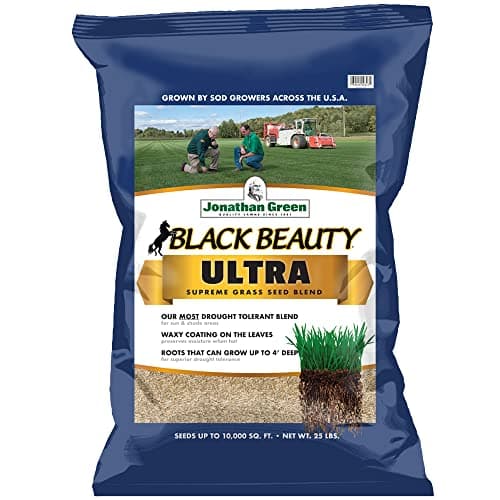
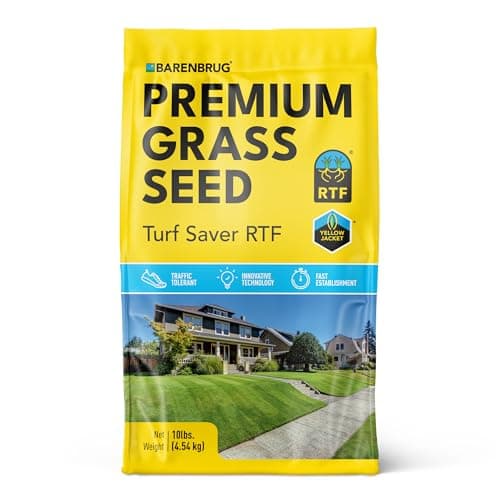
Plant tall fescue if your summers are hot, your watering is limited, or part of the lawn is shaded. Plant Kentucky bluegrass if you are in a genuinely cool northern climate, you will irrigate, and the lawn takes enough wear that you need it to knit itself back together. If you want both properties, the honest answer is a mixture — Jonathan Green Black Beauty Ultra combines tall fescue with bluegrass and ryegrass for exactly that reason. For a tall-fescue lawn that still self-repairs, Barenbrug Turf Saver RTF gets you there without the bluegrass.
The comparison hinges on one structural difference. Tall fescue is a bunch grass with deep roots: it survives heat and drought well and does not spread. Kentucky bluegrass has shallower roots and spreads by rhizomes: it repairs damage beautifully and needs more water to do it. Almost every practical difference between the two falls out of that trade.
We have grown neither, and the agronomy below is published and independently trialled rather than observed by us — the National Turfgrass Evaluation Program runs separate trials for both species. See how we pick.
Where tall fescue wins
Summer heat. Tall fescue holds colour through heat that puts bluegrass into dormancy. In the transition zone this difference alone settles the question, and it is why fescue dominates lawns across the middle of the country.
Drought and water use. Deep roots reach moisture that bluegrass's shallower system cannot, so fescue stays green on less irrigation. Under the kind of outdoor water restrictions documented by EPA WaterSense, that is a practical advantage rather than an abstract one.
Shade.Four to six hours of sun is workable for tall fescue and marginal for bluegrass, which is among the least shade-tolerant cool-season grasses. For real shade, neither is right — you want fine fescue.
Establishment speed. Tall fescue germinates and establishes faster than bluegrass, which is notoriously slow from seed. If you want a usable lawn this season rather than next, that matters.
Where Kentucky bluegrass wins
Self-repair, and it is the real argument. Bluegrass rhizomes knit a worn patch closed on their own. Standard tall fescue simply cannot do this, so damage stays visible until you overseed it. On a lawn with children, dogs or a worn route, this is bluegrass's genuine edge.
Fine texture and colour. Bluegrass has a finer blade and the characteristic deep blue-green that people picture when they picture a perfect lawn. Modern turf-type fescues have closed most of this gap, but not all of it.
Density and feel. A healthy bluegrass lawn is denser underfoot than a fescue lawn, because it fills in laterally rather than growing in individual crowns.
Cold tolerance. In genuinely northern climates bluegrass is in its element, and the heat argument against it never arises.
The verdict
Hot summers, limited watering, any shade: tall fescue. Start at tall fescue and buy a turf-type blend, not Kentucky 31.
Cool north, irrigated, heavy wear: Kentucky bluegrass. The self-repair is worth the extra water in that situation.
You want heat tolerance and self-repair: RTF, or a mixture. Rhizomatous tall fescue gives you fescue's drought performance with spreading growth. A tall-fescue-and-bluegrass mixture like Black Beauty Ultra is the other route, at the cost of a slightly less uniform texture and a thirstier lawn.
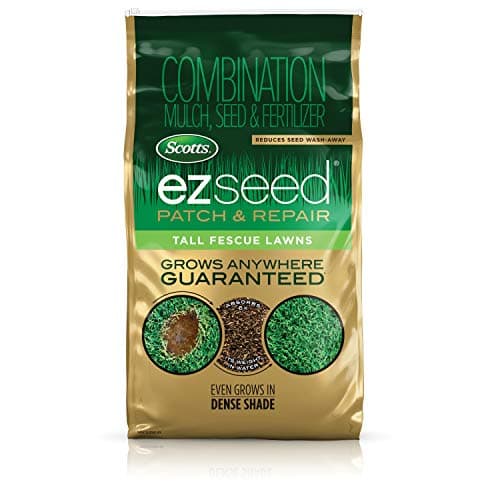
Either way, repair patches with a matched product.A patch of the wrong species shows for years. Scotts EZ Seed in the tall fescue version is the convenient option for dog spots and bare patches on a fescue lawn — and if the patch keeps coming back, the cause is probably compaction rather than seed, so read best lawn aerator.