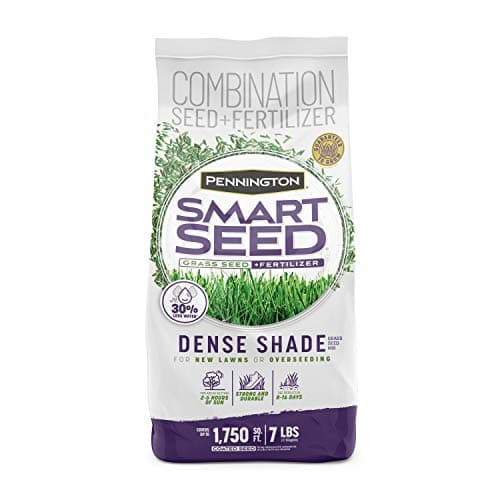
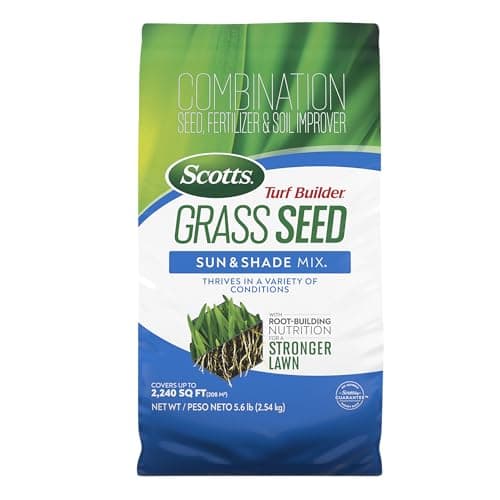
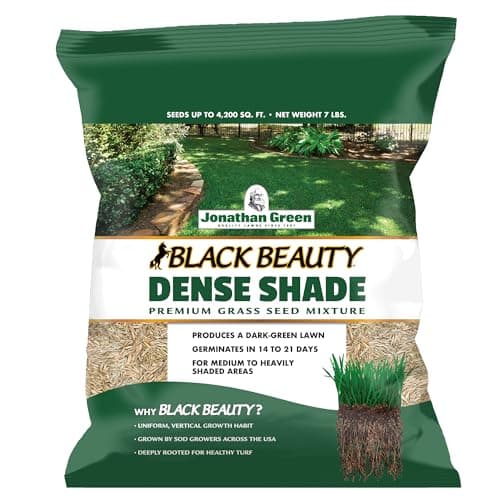
The best grass seed for shade is Jonathan Green Black Beauty Dense Shade, a fine-fescue-led mixture built for exactly the places where tall fescue thins and bluegrass dies outright. For the same species choice at roughly half the price, Pennington Smart Seed Dense Shade is the value pick. And if you want to know exactly what you are sowing, Eretz Creeping Red Fine Fescue is single-species, uncoated and spreads by short rhizomes.
The single most important thing on this page: shade is a speciesproblem. The instinct when a shaded patch thins is to buy more of whatever is already failing there, and it never works — because the grass is not short of seed, it is short of light, and the species cannot cope with how little it gets. Fine fescues — creeping red, chewings and hard fescue — are the most shade-tolerant cool-season turf grasses that exist. That is the fix.
We have no shaded test plot and we have grown none of this. The ranking reads published seed labels and relies on the independent trial data published by the National Turfgrass Evaluation Program, which runs separate fine fescue trials precisely because the group behaves so differently from the rest. See how we pick.
How to choose shade seed
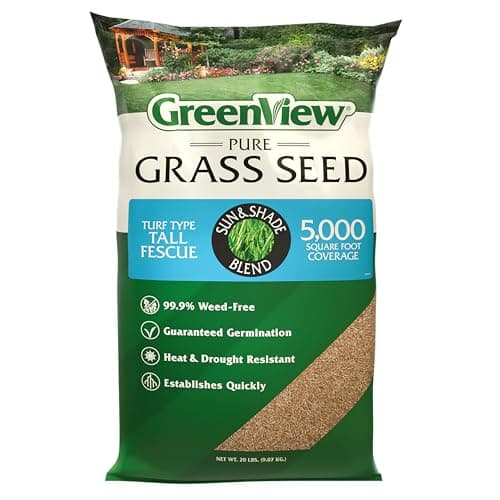
Count the actual hours of sun. Go and look at the patch at 9am, noon and 4pm. Over six hours of direct sun is not shade and you want ordinary tall fescue. Four to six hours is part shade and a sun-and-shade tall fescue blend like the GreenView is right. Under four hours, or dappled canopy all day, is where fine fescue becomes the only sensible answer.
Accept the wear trade-off.Fine fescues have the finest blades and the best shade tolerance of any cool-season turf, and the worst tolerance of foot traffic. If the shaded area is also the route to the shed, that is a genuine problem and no seed solves it — consider a path or a mulch bed instead.
Prefer a mixture for a varied shaded site. Shade under trees is rarely uniform: dappled in one spot, dense in another, root-filled and dry in a third. A mixture of fine fescues covers more of that variation than a single species does, which is why the Jonathan Green and Pennington bags rank above the single-species Eretz for most people.
Choose coated seed if you water by hand. Coated seed holds moisture around each seed and forgives a missed day. Uncoated bags like the Eretz and Outsidepride give you more viable seed per pound and demand more discipline about keeping the seedbed damp for two to three weeks.
Feed shade less, not more. Fine fescues have genuinely low fertility requirements, and pushing nitrogen into a shaded lawn produces soft growth that invites disease. If you are feeding the rest of the lawn with a standard programme, go lighter here.
Fix the light if you can. The honest answer that no seed company will give you: thinning the lower limbs of a tree to let more light through will do more for a shaded lawn than any bag on this page. Seed is the second-best lever.
Who should skip these
Skip fine fescue in open sun. It is the best shade grass available and it is not happy in full sun and summer heat — use turf-type tall fescue there.
Skip the Scotts Sun & Shade mix if you care how the lawn looks up close. It is here because it is the default bag everywhere and it is genuinely forgiving to sow, but a broad species mix produces visibly mixed texture, and per pound it is poor value.
And skip all of it if the shade is dry, root-filled ground under mature evergreens. That is the hardest site in lawn care and the grass will not thank you. A mulch bed or a shade-tolerant ground cover is the right answer, and we would rather say so than sell you seed.
How we picked this
We haven't hit this gear — and we say so
We compiled the published manufacturer specifications — shaft weight and flex, loft, deck width, blower CFM, fertilizer NPK, seed species — did the deck-width and nitrogen arithmetic, cross-read the owner manuals, and scored each pick against a published rubric. The scores are judgments from documented research — they are notlab measurements we took, because we don't have a lab and we're not going to pretend we do. Where somebody has genuinely measured this, we link them. You can check every number we publish.