Skip to content
Fairway&Fescue

The Cut · Mowers

The Best Lawn Mower Blades

A blade is a fitment part first and a performance part second. Get the length, center hole and bolt pattern right, then choose the profile that suits how you mow.

By Stephen V.Updated How we pick
#ad

We earn a commission when you buy through our Amazon links, at no extra cost to you. It never changes our rankings — and we'll tell you when the cheaper bag or machine is the better buy. How this works.

For most walk-behind mowers the blade to buy is the Oregon 21" universal blade: 21 inches is the commonest deck size in America, Oregon makes cutting parts for the trade, and it costs little enough to keep a spare on the shelf. If you own a Toro Recycler, buy the genuine Toro blade instead — that deck is a cutting system designed around its own blade shape, and a generic one cuts worse. For a 42-inch riding deck, the MaxPower 561713B two-blade set is the right unit of purchase, and for a 42-inch Toro TimeCutter the 8TEN toothed pair is the mulching upgrade.

Before any of that, the thing that decides everything: a mower blade is a fitment part. Three measurements have to match — overall length, the shape of the center hole (round, star, H-pattern, 5-point) and the outer bolt holes if it uses them. Deck width alone tells you almost nothing: two 42-inch decks from different makers take different blades. The reliable method takes two minutes: take the old blade off, measure it, and read the part number stamped on it. Then buy by that number.

The second thing worth knowing is that blade profile changes how your mower behaves. A flat replacement blade cuts and discharges. A high-lift blade has a bigger upturned wing that moves more air, which is what fills a bag properly. A mulching blade has a longer curved cutting edge that keeps clippings circulating under the deck to be cut again. A toothedblade is a mulching blade that is more aggressive still. None of them is best; they match how you mow. Prices below are live from the price layer with an “as of” date.

The short answer

Quick picks

#ProductBest forScorePrice
01
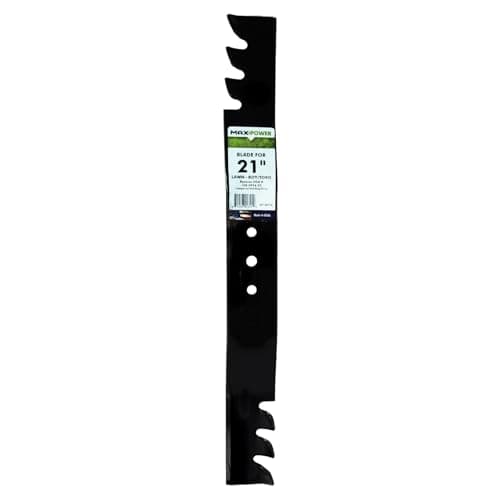
Oregon Oregon 21" Universal Lawn Mower Blade
Oregon 21" Universal Lawn Mower Blade

A 21-inch blade from the biggest name in cutting parts, listed as universal for most standard walk-behind mowers. For the commonest deck size in America this is the default replacement and the one to buy a spare of.

Most 21-inch walk-behind decks
8.0
$33.29Amazon
02
Toro Toro 22" Recycler Replacement Blade (131-4547-03)
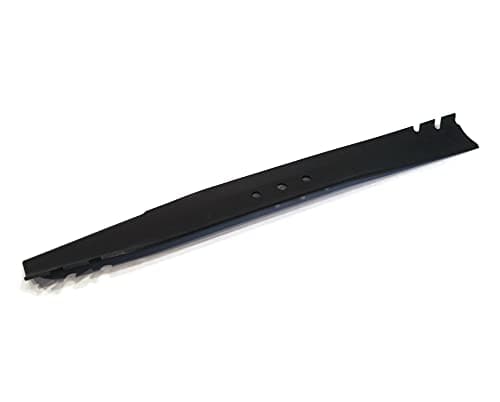
Toro 22" Recycler Replacement Blade (131-4547-03)

The genuine Toro blade for the 22-inch Recycler deck, part number 131-4547-03 in the 59534P pack. The Recycler cut is a deck-and-blade system, so this is the one case where buying OEM is not brand loyalty but physics.

Toro Recycler owners
8.0
$25.25Amazon
03
MaxPower MaxPower 561713B 2-Blade Set for 42" Decks
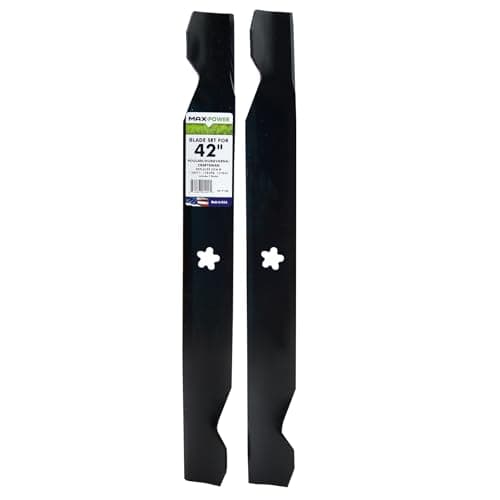
MaxPower 561713B 2-Blade Set for 42" Decks

The pair of blades a 42-inch riding deck needs, listed against the Poulan, Husqvarna and Craftsman part numbers (138498, 138971, 127843 and the 532-prefixed equivalents). Buying the set is the only sensible way to do a riding deck.

42-inch riding decks
7.6
$27.98Amazon
04
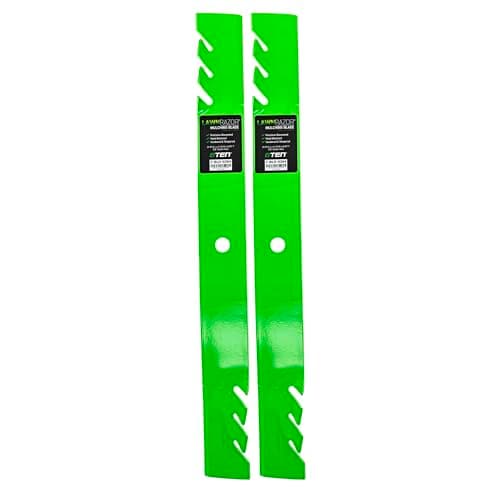
8TEN 8TEN LawnRAZOR Toothed Blades, Toro TimeCutter 42" (2-pack)
8TEN LawnRAZOR Toothed Blades, Toro TimeCutter 42" (2-pack)

Toothed replacement blades for the 42-inch Toro TimeCutter deck (106-8744-03 / 96-362), sold as the pair the deck needs. The serrated edge is the point: it chops clippings smaller on the way out, which is what mulching is.

Mulching on a 42-inch zero-turn
8.0
$39.95Amazon
05
MaxPower MaxPower 331387XB Commercial Mulching Blade
MaxPower 331387XB Commercial Mulching Blade

A commercial-grade mulching blade, made in the USA. The curved mulching profile keeps clippings circulating under the deck to be cut again instead of firing them out on the first pass.

Turning a bagger into a mulcher
8.6
$19.88Amazon

#ad · Live prices from the Amazon Product API, as of October 19, 2026. Where we have no verified live price, we show none — we would rather leave a gap than print a number that has rotted.

In detail

The picks, in full

01
Oregon Oregon 21" Universal Lawn Mower Blade

Most 21-inch walk-behind decks

Oregon 21" Universal Lawn Mower Blade

21" lengthUniversal fit, standard mowersOregon cutting partsSingle blade
8.0/10

A 21-inch blade from the biggest name in cutting parts, listed as universal for most standard walk-behind mowers. For the commonest deck size in America this is the default replacement and the one to buy a spare of.

Fitment breadth
9
Cut quality
8
Durability
8
Mulching lift
6
Value
9

Pros

  • 21 inches is the standard deck size, so this fits the largest number of mowers sold
  • Oregon makes blades and chain for the trade, so the steel and the heat treatment are known quantities
  • Cheap enough to own two and swap rather than stop mid-mow to sharpen

Cons

  • Universal means the center hole and bolt pattern must still be checked against your old blade
  • A flat replacement blade, not a high-lift - bagging performance stays as it was

Skip this if…

…your mower takes a shaped OEM blade, like a Toro Recycler or a Honda twin-blade deck. Those cutting systems are designed around their own blade and a generic one cuts worse.

$33.29View on Amazon

$36.789% off

Price as of October 19, 2026. Prices change — Amazon's is the one that counts.

#ad · we may earn a commission from this link to Oregon 21" Universal Lawn Mower Blade

02
Toro Toro 22" Recycler Replacement Blade (131-4547-03)

Toro Recycler owners

Toro 22" Recycler Replacement Blade (131-4547-03)

22" Recycler deckPart 131-4547-03Genuine ToroDisplay pack 59534P
8.0/10

The genuine Toro blade for the 22-inch Recycler deck, part number 131-4547-03 in the 59534P pack. The Recycler cut is a deck-and-blade system, so this is the one case where buying OEM is not brand loyalty but physics.

Fitment breadth
4
Cut quality
10
Durability
9
Mulching lift
9
Value
8

Pros

  • Matches the airflow the Recycler deck was designed around, which is what makes that mulching cut work
  • Genuine part, so there is no guessing on the center hole or the bolt pattern
  • A Recycler cutting badly is usually a blade problem and this is the fix

Cons

  • Fits one family of decks and nothing else
  • Costs more than a generic blade of the same length

Skip this if…

…you do not own a 22-inch Toro Recycler. Check the number stamped on your old blade before anything else.

$25.25View on Amazon

Price as of October 19, 2026. Prices change — Amazon's is the one that counts.

#ad · we may earn a commission from this link to Toro 22" Recycler Replacement Blade (131-4547-03)

03
MaxPower MaxPower 561713B 2-Blade Set for 42" Decks

42-inch riding decks

MaxPower 561713B 2-Blade Set for 42" Decks

42" cut, 2-blade setPoulan / Husqvarna / CraftsmanReplaces 138971, 532138971Also CMXGZAM110136
7.6/10

The pair of blades a 42-inch riding deck needs, listed against the Poulan, Husqvarna and Craftsman part numbers (138498, 138971, 127843 and the 532-prefixed equivalents). Buying the set is the only sensible way to do a riding deck.

Fitment breadth
7
Cut quality
8
Durability
7
Mulching lift
6
Value
10

Pros

  • A 42-inch deck runs two blades and they must match, so a set is the right unit of purchase
  • Lists the OEM numbers it replaces, which is how you confirm fitment in ten seconds
  • Costs less than one dealer blade in most cases

Cons

  • Only fits decks on that part-number list - a 42-inch deck from another maker is a different blade
  • Stamped replacement blades, not a high-lift upgrade

Skip this if…

…your deck is not on the listed part-number list. Deck width alone does not decide fitment; the center hole and bolt pattern do.

$27.98View on Amazon

Price as of October 19, 2026. Prices change — Amazon's is the one that counts.

#ad · we may earn a commission from this link to MaxPower 561713B 2-Blade Set for 42" Decks

04
8TEN 8TEN LawnRAZOR Toothed Blades, Toro TimeCutter 42" (2-pack)

Mulching on a 42-inch zero-turn

8TEN LawnRAZOR Toothed Blades, Toro TimeCutter 42" (2-pack)

Toro TimeCutter 42" deckToothed / serrated edgeReplaces 106-8744-03, 96-3622-pack
8.0/10

Toothed replacement blades for the 42-inch Toro TimeCutter deck (106-8744-03 / 96-362), sold as the pair the deck needs. The serrated edge is the point: it chops clippings smaller on the way out, which is what mulching is.

Fitment breadth
5
Cut quality
9
Durability
8
Mulching lift
10
Value
8

Pros

  • Toothed blades recut clippings rather than discharging them long, which is the difference between mulching and hiding
  • Sold as a matched pair for a two-blade deck
  • Cross-referenced to the Toro part numbers, so fitment is checkable

Cons

  • Toothed blades need more power to spin in wet or heavy grass
  • Fits the TimeCutter 42 deck family, not zero-turns generally

Skip this if…

…you bag every cut. Bagging wants a high-lift blade moving air into the chute, not a blade designed to keep clippings under the deck.

$39.95View on Amazon

Price as of October 19, 2026. Prices change — Amazon's is the one that counts.

#ad · we may earn a commission from this link to 8TEN LawnRAZOR Toothed Blades, Toro TimeCutter 42" (2-pack)

05
MaxPower MaxPower 331387XB Commercial Mulching Blade

Turning a bagger into a mulcher

MaxPower 331387XB Commercial Mulching Blade

Commercial gradeMulching profileUSA madeSingle blade
8.6/10

A commercial-grade mulching blade, made in the USA. The curved mulching profile keeps clippings circulating under the deck to be cut again instead of firing them out on the first pass.

Fitment breadth
6
Cut quality
9
Durability
9
Mulching lift
10
Value
9

Pros

  • A mulching profile is the cheapest real upgrade to how a mower finishes a lawn
  • Commercial-grade steel holds an edge through more hours than a budget stamped blade
  • Clippings returned to the lawn are free nitrogen, so this blade feeds the grass as a side effect

Cons

  • Mulching blades are harder work for a small engine or a low-voltage battery
  • Fitment is specific - check the part number against your old blade

Skip this if…

…you cut tall or wet grass regularly. A mulching blade clogs a deck faster in heavy growth; a high-lift and a bagger is the better pairing there.

$19.88View on Amazon

Price as of October 19, 2026. Prices change — Amazon's is the one that counts.

#ad · we may earn a commission from this link to MaxPower 331387XB Commercial Mulching Blade

Which blade profile for how you mow

ProfileWhat it doesBest forTrade-off
Standard / flatCuts and side-dischargesWeekly mowing, dischargePoor bagging, no recut
High-liftMoves more air up the chuteBagging, leaf collectionLouder, more power draw
MulchingRecirculates clippings for a second cutReturning clippings to the lawnClogs in tall or wet grass
ToothedAggressive recut, also scarifies lightlyMulching, leaf mulching in fallNeeds the most power

How to work out what fits, in two minutes

One: read the number.Nearly every OEM blade has a part number stamped or printed on it. Searching that number is the fastest and safest route, and it is why good aftermarket listings print the OEM numbers they replace — the MaxPower set lists 138498, 138971, 127843 and the 532-prefixed Husqvarna equivalents, so you can match it in seconds.

Two: measure, do not assume.Length is measured tip to tip diagonally, not along one edge. A “21-inch mower” usually takes a blade close to 21 inches, but not always, and a blade half an inch too long will hit the deck.

Three: match the center hole. Round, five-point star, six-point star and H-pattern are all in use, and they are not interchangeable. If your blade bolts through outer holes as well, those have to line up too.

Four: count the blades. A 42-inch riding deck runs two; a 48 to 54-inch deck usually runs two or three. They must be replaced as a set, because one new blade and one worn blade is an unbalanced spindle pair and an uneven cut.

OEM or aftermarket?

Aftermarket is the right choice for most decks. A blade is simple hardened steel and the established makers — Oregon, MaxPower, Stens, 8TEN — supply the trade. There is one real exception, and it is worth paying for: mowers whose cut is a deck-and-blade system. Toro's Recycler decks and Honda's twin-blade micro-cut decks are engineered around a specific blade shape and airflow path, and fitting a generic blade measurably changes how they cut. If your Recycler has stopped mulching well, the blade is the first thing to check and the genuine part is the fix.

When to replace rather than sharpen

Sharpening is the normal maintenance and it is cheap — the tools are in best lawn mower blade sharpener. Replace instead of sharpening when any of these is true:

The trailing edge is worn thin or the sail is eroded. The upturned wing at the back of the blade is what moves air. Once it is thinned by sand and grit, no amount of sharpening brings the lift back.

There is a notch or deep nick in the cutting edge. Grinding past a notch takes so much metal that the blade ends up unbalanced and short.

It is bent, or the center hole is worn oval. Both put a vibration through the spindle, and spindle bearings cost far more than blades.

You can see daylight through a thin spot. A blade spinning at the tip speed of a mower deck is not something to run thin. Replace it.

Balance, torque and the two mistakes people make

Balance it after sharpening. Take more metal off one end than the other and you have made a vibrator. Hang the blade on a nail through the center hole: if one end drops, grind a little more off that end and check again. Vibration is what destroys spindle bearings and cracks deck plates.

Fit it the right way up and torque the bolt properly.The wings point up toward the deck, always — a blade fitted upside down will barely cut grass and people do it more often than you would think. Then torque the bolt to the manual figure: loose is dangerous, and over-tight shears the bolt or distorts the boss.

Disconnect the spark plug lead or remove the battery before you put a hand near a blade, and lift a rider properly rather than propping it — the lifts are in best zero turn mower lift.

How often, and why it matters more than the brand of mower

Sharpen every 20 to 25 hours of mowing — for most lawns that is twice a season, once in spring and once mid-summer. The reason is agronomic rather than cosmetic: a sharp blade severs the grass blade cleanly, while a dull one tears it, leaving a frayed end that browns off and loses water. A tired mower with a sharp blade leaves a better lawn than a new one with a dull blade, every time. Which is why this page exists in a hub full of machines costing a hundred times as much.
How we picked this

We haven't run this gear through a lab — and we say so

We compiled the published manufacturer specifications — deck width and gauge, drive type, blower CFM, fertilizer NPK, seed species — did the deck-width and nitrogen arithmetic, cross-read the owner manuals, and scored each pick against a published rubric. The scores are judgments from documented research — they are notlab measurements we took, because we don't have a lab and we're not going to pretend we do. Where somebody has genuinely measured this, we link them. You can check every number we publish.

Questions

Frequently asked

How do I know which lawn mower blade fits my mower?
Take the old blade off and read the part number stamped on it, then buy that number or an aftermarket blade that lists it. Deck width alone is not enough — length, the center hole shape and the outer bolt pattern all have to match.
Are mulching blades better than regular blades?
Only if you mulch. A mulching blade keeps clippings circulating under the deck for a second cut, which returns nitrogen to the lawn, but it clogs more easily in tall or wet grass and draws more power. If you bag, a high-lift blade is the better choice.
How often should lawn mower blades be sharpened?
Every 20 to 25 hours of mowing, which is about twice a season for most lawns. A dull blade tears the grass instead of cutting it, leaving frayed tips that brown off and lose water.
Should I replace both blades on a riding mower?
Yes, always as a set. One new blade and one worn blade gives an unbalanced spindle pair and an uneven cut, and the vibration is what wears out spindle bearings.

Keep reading

Receipts

Sources

We do not run a testing lab, and we do not pretend to. Every spec number here comes from a manufacturer's published sheet or an official standard, cited above. Where we could not verify something, we say so on the page rather than quietly leaving it out. Read our full method.