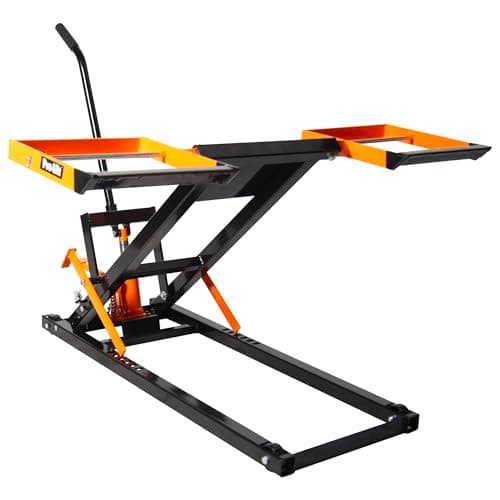
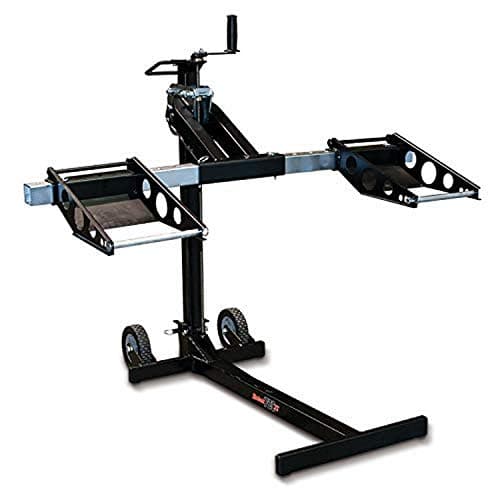
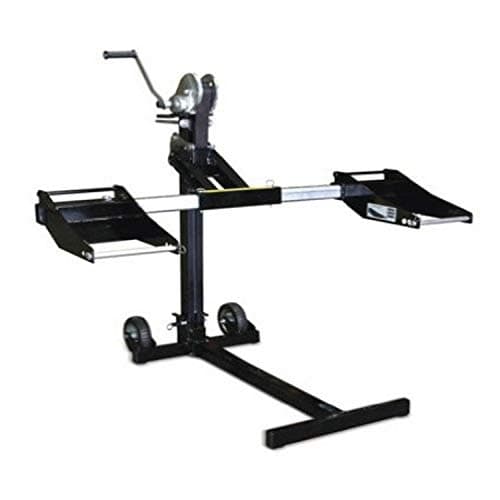
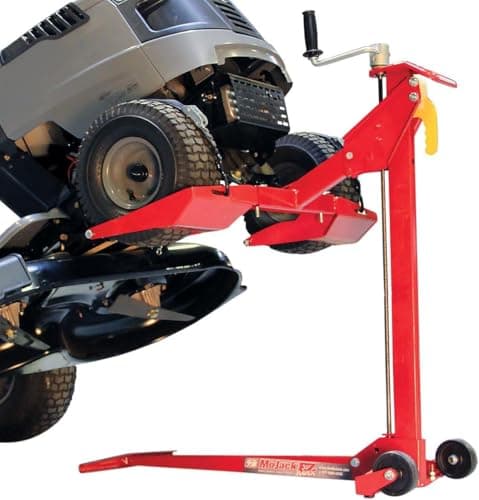
The best zero turn mower lift for most owners is the MoJack EZ MAX: a 450 lb rating and a published 24-inch lift height, which covers the overwhelming majority of residential zero-turns and lawn tractors and gets the deck high enough that you work sitting on a stool rather than lying on concrete. If you want the most working room, the Pro-Lift PL5500Zpublishes a 26.5-inch lift height on a hydraulic jack with dual safety locks. And if your machine is a commercial 60-inch zero-turn, step up to 750 lb with the MoJack MJ750XT.
A zero turn mower jackexists for one job: getting the deck off the ground so you can sharpen or change blades, clear packed grass, and get at the spindles. Blade sharpening is the single highest-value piece of mower maintenance there is — a dull blade tears grass instead of cutting it, which browns the tips and leaves the plant open to disease — and the reason most people do not do it is that getting under the machine is miserable. A lift fixes that, and that is its whole case.
We have not used any of these. The ranking reads published lift capacities, lift heights, mechanisms and safety-lock arrangements from the listings and manufacturer pages. See how we pick. One thing we will say flatly: never work under a mower held up by a jack alone.Use the lift's own locks, chock the wheels, and if there is any doubt, add stands.
How to size a mower lift
Capacity is the end weight, not the whole machine.This confuses everyone and it is the most important thing on this page. A lift rated at 450 lb is rated for the weight on the end being lifted, which on a front-lift design is roughly the front axle load — a fraction of total machine weight. A 700 lb residential zero-turn sits comfortably inside a 450 lb rating. Check the manufacturer's own guidance for your machine rather than comparing total weight against the rating and panicking.
Lift height decides whether the job is pleasant.Twenty-four inches is the practical figure: that is enough to sit on a low stool and work with both hands. The Pro-Lift PL5500Z's 26.5 inches is the most here and those extra inches are genuinely noticeable. The cheap telescopic jacks lift far less, which means the job gets done lying down — and a job done lying down gets done less often.
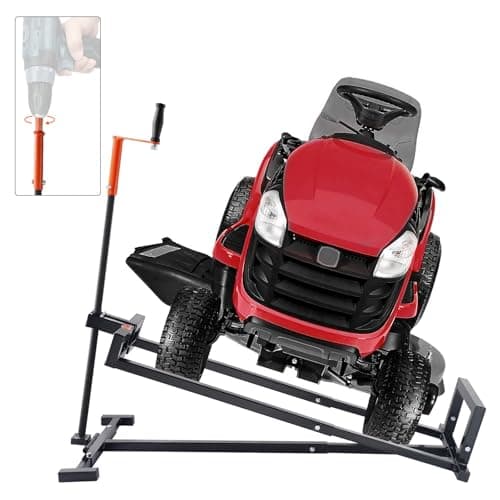
Cradle lifts and jacks are different tools. A MoJack-style lift rolls under the front, clamps to the frame and raises the whole front of the machine on a stable wide base. A telescopic jack like the VEVOR lifts one point. The lift is more stable, raises higher and is faster to use; the jack is a fraction of the price and folds away. If you change blades twice a year, the jack is defensible. If you sharpen every month, buy the lift.
Hydraulic or ratchet winch. A hydraulic pump takes far less effort, especially at the top of the stroke where a winch gets heavy. A ratchet winch has nothing to leak, which matters on a tool that sits unused for ten months of the year. Both are fine; pick on how much lifting your back wants to do.
Check the tire span range against your machine. The MoJack lifts publish an adjustable span, which is what lets one lift serve both a zero-turn and a lawn tractor. A span that will not open wide enough for your machine makes the whole purchase useless.
What a lift is actually for
Blade sharpening and replacement, which is the main one. Sharpen at least once a season and more if you hit things. A sharp blade is the cheapest improvement available to any lawn, and it matters as much on a zero-turn as on a walk-behind.
Clearing the deck underside. Packed wet grass under a deck holds moisture against bare metal and rusts it from the inside, and it also wrecks the air flow the deck depends on to stand grass up before cutting. Scraping it out twice a season roughly doubles deck life.
Spindles, belts and deck wheels. All of them live underneath, all of them are serviceable, and none of them are reachable with the machine on the ground.
Winter storage prep. With the front up, draining and inspecting is a different job. Pair it with the rest of the seasonal routine in the lawn care calendar.
Who should skip one
If you own a walk-behind mower, skip this entirely. A 21-inch mower can be tipped on its side — carburetor side up, fuel drained or the tank low — and blade access takes thirty seconds. Everything on this page is for riding machinery.
If you change blades once a year and your dealer does it as part of a service, the arithmetic will not work out. A lift costs about what two or three annual services cost, so it pays back only if you are genuinely going to do the work yourself.
What else the hitch and the lift unlock
A lift is the first of two things that turn a rider into a machine that does more than mow. The second is the hitch on the back of it: carts, spreaders, sweepers, aerators and dethatchers are ranked by how often each one actually gets used in best riding lawn mower attachments.