Skip to content
Fairway&Fescue

The Acreage · Riding & Zero-Turn Mowers

The Best Commercial Lawn Mower

Ranked on what actually fails first on a machine running forty hours a week - transaxles, deck steel and operator fatigue - not on horsepower.

By Stephen V.Updated How we pick
#ad

We earn a commission when you buy through our Amazon links, at no extra cost to you. It never changes our rankings — and we'll tell you when the cheaper bag or machine is the better buy. How this works.

The best commercial lawn mower you can actually buy with a verified price is the Husqvarna MZ61: a 61-inch deck, a 24 HP Kawasaki twin and a rollover protection structure, which is the combination a crew mowing acreage all day needs. If the ground is rough, the Ferris ISX 800is the one to look at, because Ferris builds independent suspension into its mowers and on broken ground that is not a comfort feature — it is what keeps the deck level and the operator working at hour seven. For many small properties a day, the Ferris SRS Z1 stand-on is the format that wins.

Commercial means a duty cycle, not a price bracket. A residential zero-turn running thirty hours a year will outlast its owner's interest in mowing. The same machine running thirty hours a week fails inside two seasons, and it almost never fails at the engine. It fails at the transaxles— and residential machines ship sealed maintenance-free transaxles that cannot be serviced, only replaced. That single difference is most of what you are buying.

We have not run any of this machinery commercially. The ranking reads published deck widths and gauges, engine families, transaxle models, suspension design and operator protection. See how we pick. Several machines here are dealer-channel and carry no verified price, which we flag on every card rather than guessing at a number.

The short answer

Quick picks

#ProductBest forScorePrice
01
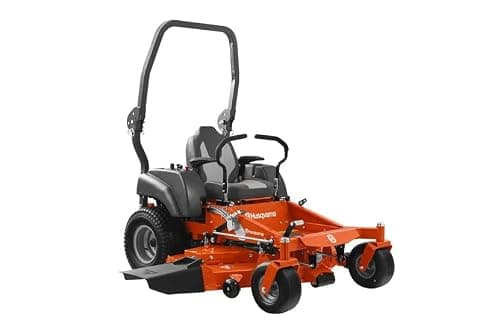
Husqvarna Husqvarna MZ61 Zero Turn, 61" (24 HP Kawasaki, ROPS)
Husqvarna MZ61 Zero Turn, 61" (24 HP Kawasaki, ROPS)

A 61-inch commercial-class deck with a roll-over protection bar. This is the machine for five acres and up, and it is overkill in every sense below that.

Five acres and up
6.0
$5,949.00Amazon
02
Ferris ISX 800 Zero Turn (dealer channel)

The mid-range ISX, and the Ferris most commercial crews actually buy. Full independent suspension, a commercial deck, and a seat you can sit in all day - which is the specification that matters when mowing is the job.

Pro use, all-day comfort
6.4
Check price →
03
Ferris SRS Z1 Stand-On Mower (dealer channel)

A stand-on rather than a sit-on. It takes up less room on a trailer, gets on and off faster at every gate, and lets the operator shift weight on a slope - which is why crews with lots of small properties buy them.

Crews with many small properties
6.6
Check price →
04
Kubota ZD1021 Diesel Zero Turn, 60" (dealer channel)

The diesel. A 21 HP Kubota diesel under a 60-inch deck is a commercial machine with commercial running hours in it, and it is the reason groundskeepers buy orange.

Commercial hours, diesel economy
7.6
Check price →
05
Ariens APEX 52" Zero Turn (dealer channel)

The semi-commercial Ariens. A 23 HP Kawasaki FR691V on a 10-gauge fabricated deck with Hydro-Gear ZT-3100 transaxles - and the transaxles are the real difference, because that is what fails first.

Buy-it-for-life Ariens
7.2
Check price →
06
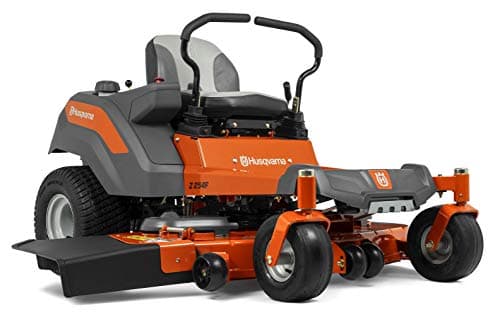
Husqvarna Husqvarna Z254F Zero Turn, 54" (23 HP Kawasaki)
Husqvarna Z254F Zero Turn, 54" (23 HP Kawasaki)

The Husqvarna zero-turn to buy if the lawn is big and complicated. A 54-inch fabricated-class deck and a 23 HP Kawasaki twin - the engine most commercial crews specify - with a verified Amazon price on it.

Two to four acres with obstacles
7.4
$3,899.00Amazon
07
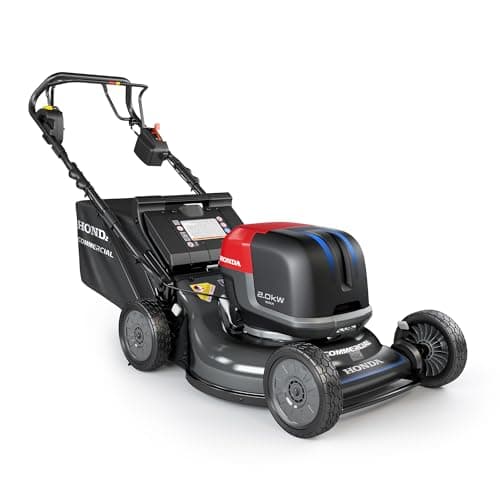
Honda Honda HRC-BE 21" Commercial Battery Walk-Behind (HRC216EXA6)
Honda HRC-BE 21" Commercial Battery Walk-Behind (HRC216EXA6)

Honda's commercial-duty HRC deck in battery form. Built for a crew that cuts all day, priced accordingly, and almost never the right answer for a homeowner.

Crews, not homeowners
7.4
$1,699.00Amazon

#ad · Live prices from the Amazon Product API, as of October 20, 2026. Where we have no verified live price, we show none — we would rather leave a gap than print a number that has rotted.

In detail

The picks, in full

01
Husqvarna Husqvarna MZ61 Zero Turn, 61" (24 HP Kawasaki, ROPS)

Five acres and up

Husqvarna MZ61 Zero Turn, 61" (24 HP Kawasaki, ROPS)

61" deck24 HP Kawasaki engineZero-turnROPS roll bar
6.0/10

A 61-inch commercial-class deck with a roll-over protection bar. This is the machine for five acres and up, and it is overkill in every sense below that.

Acreage suited
10
Maneuverability
7
Running cost
5
Upkeep burden
5
Price
3

Pros

  • 61 inches is 13 percent more swath than a 54 and nearly half again a 42 - the only thing that makes five acres a single sitting
  • A ROPS bar is the safety feature that belongs on anything driven near a slope or a ditch
  • Commercial-class frame built for hours rather than minutes

Cons

  • The most expensive machine in this hub, and the largest to store
  • A 61-inch deck is unusable on a lawn with gates, beds or mature trees

Skip this if…

…you mow under about four acres. Everything that makes this machine good at five acres makes it awkward at one, and the Z254F or Z242F is the right size of tool.

$5,949.00View on Amazon

Price as of October 20, 2026. Prices change — Amazon's is the one that counts.

#ad · we may earn a commission from this link to Husqvarna MZ61 Zero Turn, 61" (24 HP Kawasaki, ROPS)

02

Pro use, all-day comfort

Ferris ISX 800 Zero Turn (dealer channel)

Zero-turnFull independent suspensionCommercial deckDealer channel - no verified Amazon price
6.4/10

The mid-range ISX, and the Ferris most commercial crews actually buy. Full independent suspension, a commercial deck, and a seat you can sit in all day - which is the specification that matters when mowing is the job.

Acreage suited
10
Maneuverability
9
Running cost
5
Upkeep burden
6
Price
2

Pros

  • The suspension plus a suspended seat is the difference between finishing a day and enduring it
  • Commercial deck and spindles built for daily hours
  • Holds resale value better than almost anything else in the category

Cons

  • Priced for a business, not a homeowner - and no Amazon listing to price against
  • Physically large to store and transport

Skip this if…

…you mow your own lawn once a week. This is specified in hours per day; a Husqvarna Z254F does a residential acreage properly for a fraction of the money.

Check price on Amazon →

We don't have a verified live price for this right now, so we aren't showing one.

#ad · we may earn a commission from this link to Ferris ISX 800 Zero Turn (dealer channel)

03

Crews with many small properties

Ferris SRS Z1 Stand-On Mower (dealer channel)

Stand-on platformZero-turnSuspension platformDealer channel - no verified Amazon price
6.6/10

A stand-on rather than a sit-on. It takes up less room on a trailer, gets on and off faster at every gate, and lets the operator shift weight on a slope - which is why crews with lots of small properties buy them.

Acreage suited
9
Maneuverability
10
Running cost
5
Upkeep burden
6
Price
3

Pros

  • Shorter than a sit-on zero-turn, so more machines fit on one trailer
  • Stepping off to open a gate takes a second, not a dismount
  • Standing lets you shift your weight uphill on a slope, which genuinely helps traction

Cons

  • Standing for hours suits some operators and punishes others
  • Dealer channel only - no Amazon listing and no price to publish

Skip this if…

…this is your own lawn. A stand-on solves a route-density problem that homeowners do not have, and a seat is more pleasant for one lawn a week.

Check price on Amazon →

We don't have a verified live price for this right now, so we aren't showing one.

#ad · we may earn a commission from this link to Ferris SRS Z1 Stand-On Mower (dealer channel)

04

Commercial hours, diesel economy

Kubota ZD1021 Diesel Zero Turn, 60" (dealer channel)

60" deck21 HP Kubota dieselCommercial ZD seriesDealer channel - no verified Amazon price
7.6/10

The diesel. A 21 HP Kubota diesel under a 60-inch deck is a commercial machine with commercial running hours in it, and it is the reason groundskeepers buy orange.

Acreage suited
10
Maneuverability
6
Build quality
10
Dealer support
10
Price visibility
2

Pros

  • A diesel at low revs burns far less fuel per hour than a gas twin working as hard, and on a machine running all day that is the dominant running cost
  • Kubota builds its own diesels, which is unusual in this market and is the brand's actual engineering claim
  • 60 inches of deck and a commercial frame is a different category of machine from everything else on this list

Cons

  • No live price, and a commercial Kubota is a serious capital purchase
  • Diesel service intervals and a 60-inch deck are both wrong for a residential lawn

Skip this if…

…this is your own lawn. Unless you are mowing many acres every week for money, the residential Kommander is the right Kubota and this one is an expensive way to cut grass.

Check price on Amazon →

We don't have a verified live price for this right now, so we aren't showing one.

#ad · we may earn a commission from this link to Kubota ZD1021 Diesel Zero Turn, 60" (dealer channel)

05

Buy-it-for-life Ariens

Ariens APEX 52" Zero Turn (dealer channel)

52" deck, 10-gauge fabricatedKawasaki FR691V twin, 726 cc23 HPHydro-Gear ZT-3100 transaxles
7.2/10

The semi-commercial Ariens. A 23 HP Kawasaki FR691V on a 10-gauge fabricated deck with Hydro-Gear ZT-3100 transaxles - and the transaxles are the real difference, because that is what fails first.

Acreage suited
9
Maneuverability
7
Build quality
10
Dealer support
8
Price visibility
2

Pros

  • ZT-3100 transaxles are a serviceable commercial-grade unit, where residential machines ship sealed maintenance-free transaxles you cannot repair
  • 10-gauge deck steel is heavier than the 11-gauge used across the IKON and EDGE lines
  • This is the Ariens that is still mowing in fifteen years

Cons

  • No Amazon listing and no live price
  • Priced well above the residential IKON for a cut that looks identical on day one

Skip this if…

…you mow an acre on weekends. The difference between this and the IKON shows up at several hundred hours a year, not at thirty.

Check price on Amazon →

We don't have a verified live price for this right now, so we aren't showing one.

#ad · we may earn a commission from this link to Ariens APEX 52" Zero Turn (dealer channel)

06
Husqvarna Husqvarna Z254F Zero Turn, 54" (23 HP Kawasaki)

Two to four acres with obstacles

Husqvarna Z254F Zero Turn, 54" (23 HP Kawasaki)

54" deck23 HP Kawasaki engineHydrostatic zero-turnLap-bar controls
7.4/10

The Husqvarna zero-turn to buy if the lawn is big and complicated. A 54-inch fabricated-class deck and a 23 HP Kawasaki twin - the engine most commercial crews specify - with a verified Amazon price on it.

Acreage suited
10
Maneuverability
9
Running cost
6
Upkeep burden
5
Price
7

Pros

  • 54 inches of deck on a machine that still turns inside its own width - the combination that saves real time
  • Kawasaki twins are the engine family with the best parts availability and the longest service life
  • In stock with a live price, which almost no other dealer-brand zero-turn on this site has

Cons

  • A 54-inch deck needs space to store and a gate to match
  • Lap bars take a lawn or two to learn, and scuff turf while you are learning

Skip this if…

…your lawn is an acre or less. The 42-inch Z242F costs less, fits through more gates, and finishes an acre without you noticing the narrower deck.

$3,899.00View on Amazon

Price as of October 20, 2026. Prices change — Amazon's is the one that counts.

#ad · we may earn a commission from this link to Husqvarna Z254F Zero Turn, 54" (23 HP Kawasaki)

07
Honda Honda HRC-BE 21" Commercial Battery Walk-Behind (HRC216EXA6)

Crews, not homeowners

Honda HRC-BE 21" Commercial Battery Walk-Behind (HRC216EXA6)

21" deckBattery poweredHRC commercial deckWalk-behind
7.4/10

Honda's commercial-duty HRC deck in battery form. Built for a crew that cuts all day, priced accordingly, and almost never the right answer for a homeowner.

Cut quality
10
Deck width
8
Ease of use
7
Upkeep burden
10
Price
2

Pros

  • Commercial deck and frame — built for hours a day rather than an hour a week
  • Battery, so a crew loses the fuel runs and the two-stroke noise complaints
  • The most durable mower construction Honda puts on a walk-behind

Cons

  • Costs more than some riding mowers, for a 21-inch deck
  • Commercial build is weight and ruggedness a homeowner pays for and never uses

Skip this if…

…you mow your own lawn once a week. This is specified for daily commercial hours; the HRX-BV does the same job on a residential lawn for a fraction of the money.

$1,699.00View on Amazon

$1,999.0015% off

Price as of October 20, 2026. Prices change — Amazon's is the one that counts.

#ad · we may earn a commission from this link to Honda HRC-BE 21" Commercial Battery Walk-Behind (HRC216EXA6)

What makes a mower commercial

Serviceable transaxles. The first and most important thing. Commercial machines use Hydro-Gear ZT-3100 units or heavier, which have serviceable fluid and filters. Residential machines use sealed EZT-class units that are a replacement item. At commercial hours, that is the difference between an afternoon of maintenance and a new mower.

Deck gauge. Lower is thicker. A 10-gauge fabricated deck resists the flexing that scalps turf and eventually cracks around the spindles; 11-gauge is the good residential standard; a stamped deck belongs on neither list for professional use. The deck is also where the resale value lives.

Commercial engine families.Kawasaki FX and FS, Kohler Command Pro, Vanguard, and Kubota's own diesels. These are not the same engines as the residential blocks even where the displacement matches — the difference is in bearings, filtration and cooling, which is to say in how they survive thousands of hours.

Suspension, which is an output spec not a comfort spec. Ferris builds independent suspension into its mowers and the argument is not plushness: a suspended deck follows the ground instead of bouncing, so the cut is even at higher speed, and an operator who is not being shaken for eight hours works faster at the end of the day than one who is. On rough ground it is the single biggest productivity difference available.

Operator protection. A ROPS, as on the Husqvarna MZ61, with the seat belt used. A zero-turn rolls more easily than a tractor because of where its weight sits and because it steers by differential drive, and on commercial ground you will eventually meet a slope you misjudged.

Zero-turn, stand-on, or walk-behind

Zero-turn for acreage: the most square feet per hour of anything here, and the right answer for parks, schools and large properties. The deck widths that make commercial sense start around 54 inches and run to 72.

Stand-onfor routes with many small properties. A stand-on takes less trailer space than a sit-down zero-turn, and getting on and off is a step rather than a climb — on twenty stops a day that saves real time. The Ferris SRS Z1 is the format done properly, with suspension.

Commercial walk-behind for gated back yards and anything a rider cannot reach. The Honda HRC is a commercial 21-inch walk-behind, built to a completely different standard from the residential HRX line, and every crew needs one on the trailer regardless of what else is up there. The residential equivalents are in our self-propelled roundup.

The running-cost arithmetic

At commercial hours, fuel is a real line item rather than a rounding error, which is why Kubota's diesel ZD machines exist — a diesel at working load burns substantially less per hour than a gas twin doing the same job, and over a thousand hours a year that difference buys a lot of machine.

Blades are the other one. A commercial deck eats blades, and a dull blade costs you in cut quality and in fuel. Which means a mower lift is not optional equipment at this level — it is how blade changes happen fast enough to happen at all, and a 750 lb-rated lift is the one to buy for machines this size.

Who should not buy a commercial mower

Almost every homeowner reading this. A commercial zero-turn costs several times what a good residential one does, needs a wide gate and a trailer, and delivers its advantage only at hours you will never put on it. The honest recommendation for an acre or three is the residential zero-turn roundup or, for a smaller lot, the small zero-turn page.

The one homeowner case that does stack up: several acres of rough, uneven ground mowed weekly, where suspension and a fabricated deck genuinely pay for themselves in cut quality and machine life. If that is you, buy the commercial machine and keep it for twenty years.
How we picked this

We haven't run this gear through a lab — and we say so

We compiled the published manufacturer specifications — deck width and gauge, drive type, blower CFM, fertilizer NPK, seed species — did the deck-width and nitrogen arithmetic, cross-read the owner manuals, and scored each pick against a published rubric. The scores are judgments from documented research — they are notlab measurements we took, because we don't have a lab and we're not going to pretend we do. Where somebody has genuinely measured this, we link them. You can check every number we publish.

Questions

Frequently asked

What is the best commercial lawn mower?
The Husqvarna MZ61 for acreage with a verified price — a 61-inch deck, 24 HP Kawasaki twin and a ROPS. The Ferris ISX 800 is the pick for rough ground because of its independent suspension, and the Ferris SRS Z1 stand-on suits routes with many small properties.
What makes a lawn mower commercial grade?
Serviceable transaxles rather than sealed maintenance-free units, a fabricated deck in 10-gauge or heavier steel, a commercial engine family such as Kawasaki FX or a Kubota diesel, and operator protection. Horsepower is the least useful spec for telling the classes apart.
Is a commercial mower worth it for a homeowner?
Usually not. The advantages appear at hundreds of hours a year, and a homeowner puts on tens. The exception is several acres of rough, uneven ground mowed weekly, where suspension and a heavier deck genuinely pay back in cut quality and machine life.
Why do commercial mowers use diesel engines?
Fuel cost per hour. A diesel at working load burns considerably less than a gas twin doing the same work, and at a thousand hours a year that difference is a significant sum. Kubota's ZD series is the main example in this market.

Keep reading

Receipts

Sources

We do not run a testing lab, and we do not pretend to. Every spec number here comes from a manufacturer's published sheet or an official standard, cited above. Where we could not verify something, we say so on the page rather than quietly leaving it out. Read our full method.