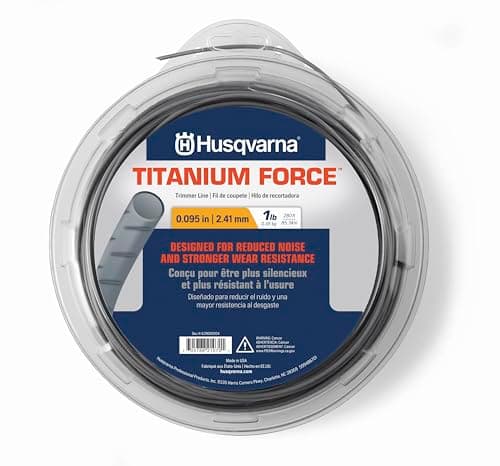
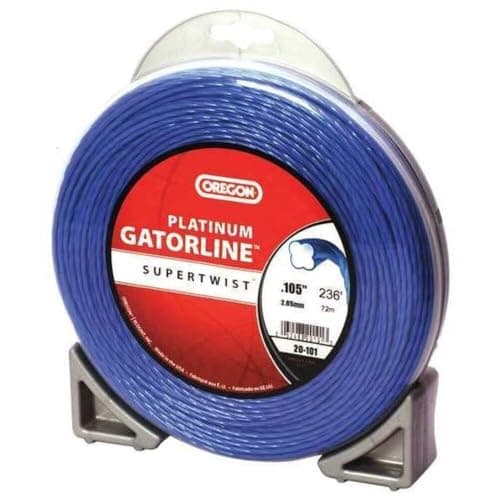
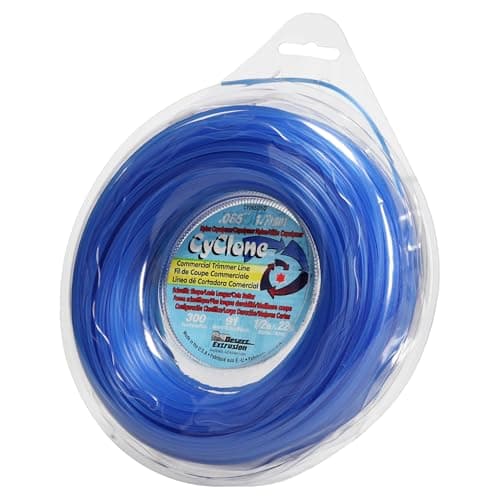
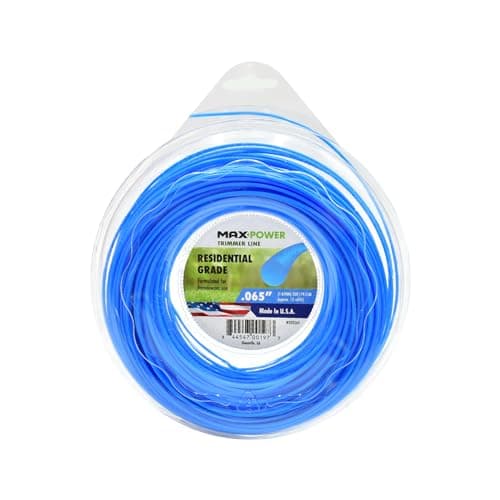
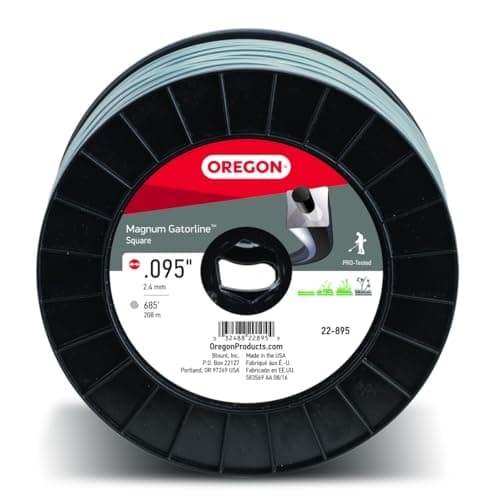
The best string trimmer line is Oregon Magnum Gatorline in .095— a heavy-duty copolymer, bought on a 685-foot spool so the cost per foot collapses. If you own a Husqvarna or any gas trimmer, the Husqvarna Titanium Force .095 in a 280-foot pack with a built-in cutter is the convenient equivalent. And if your trimmer is a compact 20V machine, you want .065, where the Cyclone 300-foot spool is the pick.
What is the strongest string trimmer line? Within one diameter, the answer is grade: a heavy-duty or professional copolymer resists the shearing that happens against concrete, brick and chain-link far better than a residential-grade round line. Across diameters, thicker is simply stronger — and this is the trap. The strongest line your trimmer can actually feed is limited by the head, and forcing thicker line into a small head bogs the motor, jams the spool and achieves nothing. So the real answer is the heaviest grade available in the diameter your trimmer is rated for.
The other half of this page is cost. Line is a consumable, and the way it is sold at the hardware store checkout — a 20-foot blister pack — is the most expensive way to buy it by an enormous margin. A bulk spool costs a few dollars more than one blister pack and contains thirty times as much. If you take one thing from this page, take that.
Diameters, spool lengths and grades below are what each listing publishes. Line profile descriptions are the manufacturers' own. We have not cut with any of it; the ranking reads diameter, grade and length against what each class of trimmer can feed. See how we pick.
First: find the diameter your trimmer takes
It is printed on the trimmer head, in the manual, and usually on the box. Running the wrong diameter is the single most common trimmer-line mistake. Thicker line than the head is rated for will not feed properly, loads the motor and jams. Thinner line than it needs snaps constantly and wastes the power you paid for.
| Diameter | Typical machine | Cuts |
|---|
| .065 in | Compact 20V battery trimmers | Grass, light edges |
| .080 in | Mid-size battery, small gas | Grass and light weeds |
| .095 in | 56-80V battery, 21-25 cc gas | Weeds, thick growth, hard edges |
| .105 in and up | Large gas and commercial | Woody stems, brush |
A useful rule: if your trimmer came with a battery smaller than 56V, assume .065 or .080 until the manual says otherwise. If it is a gas machine or a 56V-plus battery trimmer, .095 is almost certainly right.
Grade: the spec that separates line that lasts
At the same diameter, the construction decides how long a length survives. Published grades run roughly like this:
Residential-grade round line is the cheapest and it is fine for cutting grass in open lawn. It shears off quickly against anything hard. A single pass along a concrete path eats it.
Heavy-duty and professional copolymer— Oregon's Magnum and Platinum grades, Husqvarna's Titanium Force — is engineered for abrasion. If you trim along driveways, walls, brick or chain-link, this is where your money belongs, because the line is the thing being destroyed, not the trimmer.
Profile: round, twisted, square, multi-sided
Round is the default. It is the most durable shape for a given diameter because there are no corners to wear away, and it is the quietest. It cuts by abrasion rather than slicing, so it is slightly less aggressive in heavy weeds.
Twisted presents a continuous edge instead of a smooth surface, so it slices weed stems more cleanly at the same diameter. It is noticeably quieter than square line, which on a battery trimmer is much of the point of having a battery trimmer.
Square and multi-sidedcut most aggressively of all — genuine cutting edges rather than abrasion — and wear their corners off fastest. They are also the loudest. For woody growth they are the right choice; for weekly lawn edges they are overkill.
Pre-cut, spooled, or bulk
Bulk spool is cheapest per foot by a wide margin and is what we rank first. You cut your own lengths, which takes seconds.
Spooled with a dispenser and cutter costs slightly more and saves hunting for scissors. A clean square cut feeds through a head much better than a crushed one, which is a real argument for the dispenser.
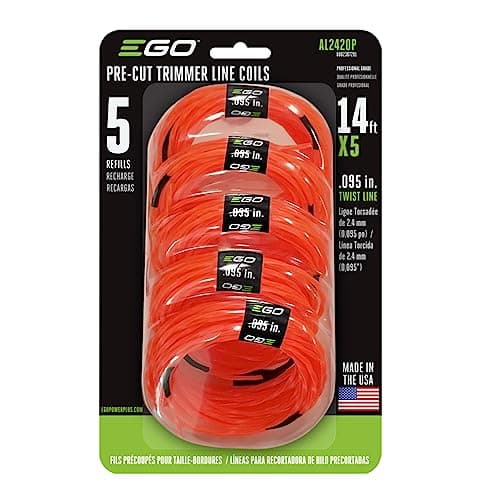
Pre-cut lengths are the most expensive way to buy line, with one genuine exception: automatic-winding heads like EGO's POWERLOAD are designed around a specific length, and a hand-cut piece is the usual cause of a POWERLOAD jam. If you own one of those trimmers, buy the pre-cut line for it and ignore the cost per foot.
How to make any line last twice as long
Do not trim with the tip against concrete. Use the outer part of the arc and let the line's own speed do the cutting. Pushing the head into a hard edge grinds line away for no extra cut.
Soak old line in water overnight. Nylon-based line dries out in storage and becomes brittle, and a few hours in water genuinely restores flexibility. This is the cheapest trick in lawn care.
Store spools out of sunlight. UV degrades line on the shelf, which is why the spool that has been on a sunny garage windowsill for two years snaps constantly.
Wind the spool in the direction the head arrows show, and not too tightly. Overlapping or crossed windings weld themselves together under heat and then will not feed.
Use an edger for vertical edges. Trimming a driveway edge with string is what consumes line fastest, and a bladed edger does that job without consuming anything. See best lawn edger.
Who should skip these
Skip the .095 spools entirely if your trimmer is a compact 20V machine — it will not feed them. Skip the pre-cut packs unless you own a POWERLOAD head. Skip residential-grade round line if your trimming is mostly along concrete, because you will buy it three times. And skip the 685-foot spool if you trim a small lawn twice a month: you will still have most of it in fifteen years.