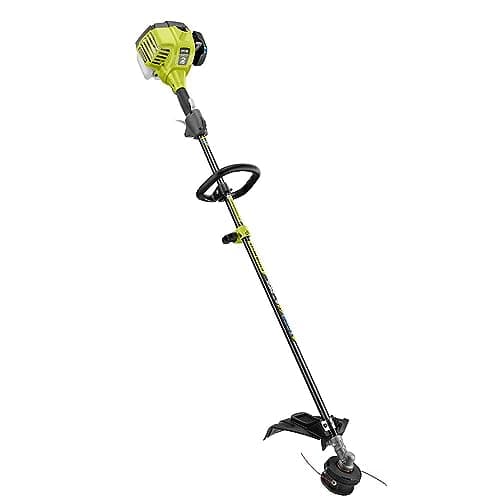
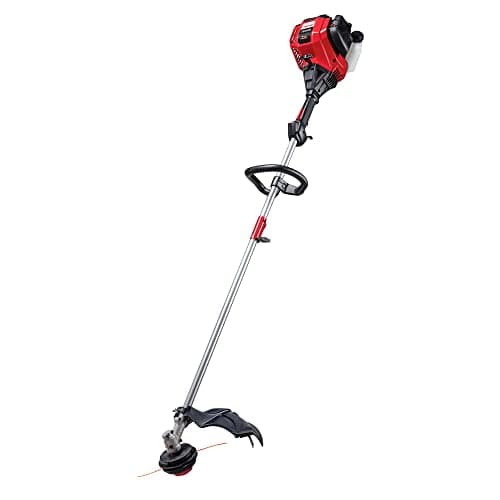
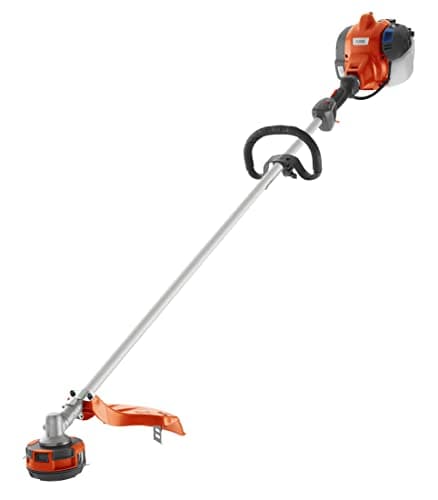
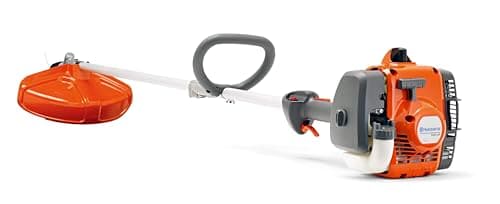
The best gas string trimmer for most people is the Husqvarna 122LK: a 22 cc straight-shaft trimmer with a detachable shaft that takes attachments, which is the shape of tool that stays useful for a decade. For the most displacement per dollar the RYOBI 25 cc full-crank is the value pick, and the full-crank bottom end is the durability spec that matters most on an affordable two-stroke. If mixing fuel is the thing you hate, the Troy-Bilt TB304S is four-cycle and runs on straight gasoline.
The honest question first, because the market has moved: do you need gas at all? For a suburban lawn, a 56V or 80V battery trimmer now matches a 25 cc gas machine in grass, is dramatically quieter, starts on a button, needs no fuel and has no carburetor to gum up over winter. Our cordless trimmer roundup covers those, and for most readers it is the better page.
Gas still wins in three situations, and they are real ones. Long runtime — a clearing job that lasts all afternoon needs a fuel can, not a charger. Heavy growth— woody stems and thick brush take sustained torque that a mid-tier battery trimmer runs out of. And attachment systems— a gas powerhead that takes an edger, pole saw and cultivator head is one engine doing four jobs.
Engine displacements, shaft types and swath figures below are what each listing and manufacturer publishes. We have not cut with any of them, and the ranking reads specs against the job rather than claiming a test. See how we pick. Prices come from the live price layer with an “as of” date.
Two-cycle or four-cycle, and why it matters more than displacement
Two-cycleengines mix oil into the fuel. They are lighter, simpler, higher-revving and can be held at any angle, which is why most professional trimmers are two-stroke. The cost is that every tank has to be mixed at the stated ratio, and getting that wrong — straight gas in a two-stroke — destroys the engine quickly. If you are not going to be careful about this, do not buy two-cycle.
Four-cycle engines keep their oil in a sump and run on straight gasoline. No mixing, no ratio, no ruined engine from one careless fill. They are heavier for the same displacement, they need occasional oil changes, and they have to be kept broadly upright. For a homeowner who uses a trimmer twenty times a year, the no-mixing simplicity is worth more than the weight penalty.
Straight shaft or curved shaft
Straight shaftreaches further — under shrubs, under fence rails, past the edge of a deck — and keeps the head further from your feet. It is the shape every machine on this page uses, and it is what the attachment systems are built around.
Curved shaft is lighter and more comfortable for short people and for casual trimming right in front of you. It cannot reach under anything and it will not take most attachments. There is a reason professionals use straight shafts.
The spec nobody looks at: how you reload the line
This is the single biggest difference in daily use between a trimmer you like and one you dread. Standard heads require removing the spool, winding line onto it in the right direction, and reassembling — a ten-minute job in the dirt, several times a season.
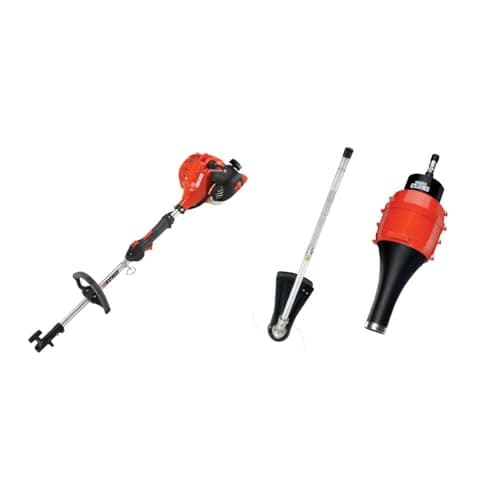
Echo's Speed-Feed head is the benchmark fix: you line up the eyelets, feed the line straight through, and wind it with a knob without taking anything apart. Thirty seconds. It is most of the reason the Echo kit is on this page at its price, and if you trim a lot of hard edges where line disappears quickly, it is the spec to buy for.
Then buy the right line for the machine. A 21 to 25 cc gas trimmer wants .095, and a heavy-duty copolymer at that diameter lasts several times longer than cheap residential line against concrete and chain-link. The ranking is in best string trimmer line.
Displacement, and what it actually buys
| Machine | Engine | Shaft | Best suited to |
|---|
| Husqvarna 122LK | 22 cc 2-cycle | Straight, detachable | Best all-round gas trimmer |
| RYOBI 25 cc | 25 cc 2-cycle, full crank | Straight | Most displacement per dollar |
| Troy-Bilt TB304S | 17 cc 4-cycle | Straight | No fuel mixing |
| Husqvarna 130L | Gas 2-cycle | Straight | A step up in reach and power |
| Echo PAS-225VPB | 21.2 cc 2-cycle | Straight, PAS fitting | Attachment system + Speed-Feed head |
Displacement in this class runs from about 17 to 25 cc, and the difference shows in thick weed stems rather than in grass. All of these cut lawn edges without complaint. If your job is a seasonal clearance of a fence line gone wild, buy the larger displacement; if it is weekly tidying, the smaller engines are lighter to hold for half an hour.
When a gas handheld is the wrong tool entirely
If the job is a quarter acre of waist-high growth, a handheld trimmer of any displacement is the wrong machine and you will be at it for hours. A wheeled walk-behind string mower puts a 22-inch cutting head on wheels and clears rough ground in a fraction of the time — see best wheeled string trimmer. That is a genuinely different tool for a genuinely different job.
And if the job is a clean vertical edge along a path or driveway, a string trimmer is a compromise. A dedicated edger with a blade cuts a trench a trimmer cannot — the comparison is string trimmer vs edger.
Running a gas trimmer so it starts next spring
Almost every “my trimmer will not start” story is fuel. Ethanol-blended gasoline absorbs water and degrades in weeks, and the varnish it leaves blocks the tiny passages in a trimmer carburetor.
Three habits fix it. Buy fuel in small quantities and use it within a month. Add a fuel stabilizer to every can. And at the end of the season, run the tank dry rather than storing it full. Do those and a gas trimmer is a twenty-year tool; skip them and it is a three-year one with an annual carburetor bill.
Hearing and eye protection, not optional
A gas trimmer is loud enough to damage hearing over repeated exposure, and a string head throws grit and stone chips at head height. Ear defenders and eye protection cost almost nothing against the alternative. This is the one place on this site where we will tell you to spend money on something that is not a tool.
Who should skip these
Skip gas entirely if your lawn is suburban and your trimming is weekly tidying — a battery trimmer does that job better and more pleasantly. Skip two-cycle if you are not going to be disciplined about fuel mixing. Skip the Echo kit unless you will genuinely use the attachments, because you are paying for a system. And skip all of them if the job is heavy brush over a large area: that is a wheeled machine.
Where gas goes from homeowner to professional
Everything above is a homeowner machine. If you trim for a living, or you have worn one of these out already, the differences that matter are a full-crank engine, a solid steel driveshaft, a commercial head and parts sold individually rather than as a whole unit. Those machines are ranked in best commercial string trimmers.
Before you commit to fuel, it is worth checking whether you need it at all: on a suburban lot a 16-inch battery trimmer finishes the job before a tank is half empty. Battery vs gas string trimmer works through the crossover in trimming minutes rather than acres.