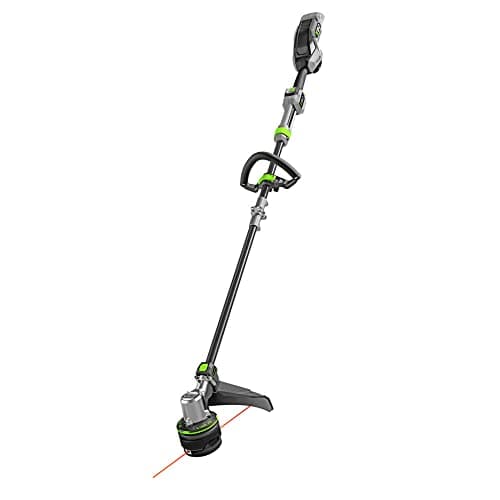
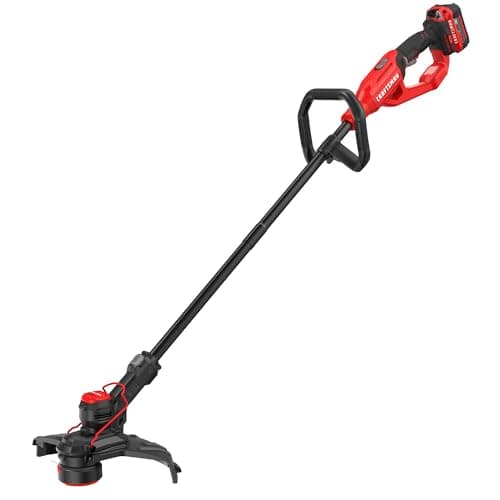
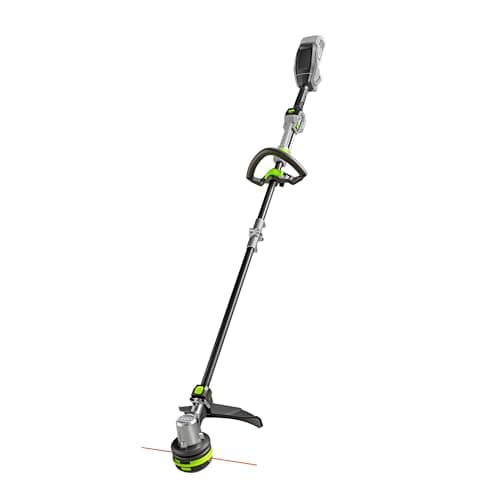
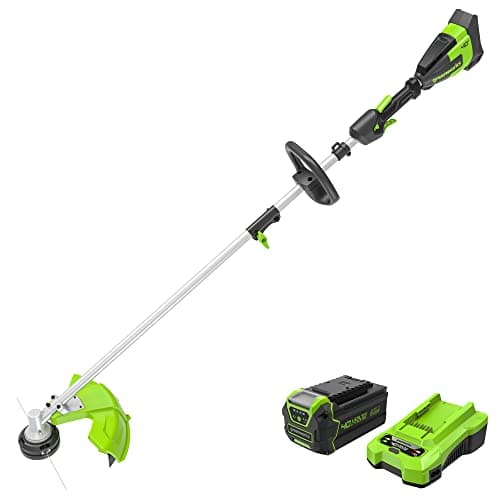
The best string trimmer for most people is the Greenworks 40V 16" Cordless String Trimmer— a full 16-inch swath with a 4.0 Ah battery actually in the box, for less than an EGO bare tool costs on its own. If you want the trimmer that removes the two genuinely annoying parts of the job, the EGO ST1620T reloads its spool at the push of a button and feeds line automatically instead of making you bump the head. And if you want a complete kit for the least money, the CRAFTSMAN V20 trimmer and edger kit includes a 4 Ah battery and publishes up to 63 minutes of runtime.
Here is the framing that makes this category make sense: almost nobody's trimmer problem is insufficient power. The problems are the line running out halfway along the fence, bumping the head on the ground to feed more line and eventually breaking the head, and rewinding a spool by hand. So this ranking weights line-handling mechanisms and cutting swath above voltage, which is the opposite of how these tools are advertised.
We have not trimmed anything with these. The ranking reads published cutting swaths, battery platforms and voltages, engine displacements, and the feed mechanism each maker documents — see how we pick. Every pick carries an honest “don’t buy if”, and the single most important one on this page is about bare tools versus kits.
How to choose a string trimmer
Check whether the battery is included — this is the big one. EGO sells its best trimmers as bare tools. A bare ST1620T plus a 56V pack and charger costs well over double the Greenworks kit, and the listed price does not tell you that. Always compare kit against kit for a first purchase on a new platform. It is the single most common way people overspend in this category.
Cutting swath sets your pass count. A 16-inch swath covers about 23 percent more per sweep than a 13-inch one and about a third more than a 12-inch one. On a short bed edge that is irrelevant; along a hundred feet of fence it is the difference between one pass and two. Same arithmetic as mower deck width.
Then look at how it feeds line.Three mechanisms exist. Bump feed, the default, means tapping the head on the ground — which works and is also how heads get broken. Automatic feed, which EGO markets as LINE IQ, advances line as it wears without you doing anything. And push-button reloading, which EGO calls POWERLOAD, winds a fresh length onto the spool for you. That last one addresses the most hated job in lawn care and is the main reason to pay EGO money.
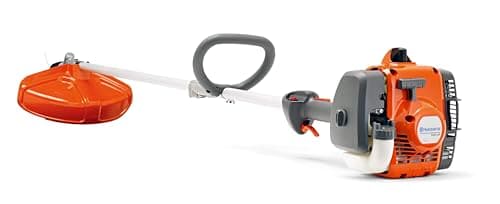
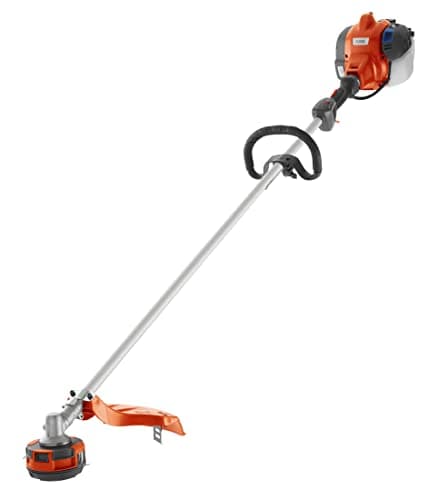
Straight shaft reaches, curved shaft balances. A straight shaft gets the head flat under low shrubs and further across a bed edge, which is why both Husqvarna gas trimmers here have one. A curved shaft is lighter in the hand for short work around a small lawn. Reach matters more than balance if you have beds and fences.
Buy gas only for volume or thickness. If you are cutting woody stems, brambles or rough grass across real acreage, a 22cc or larger engine with a straight shaft will not fade or run out, and Husqvarna's attachment-capable power heads will also run an edger or a pole saw. For grass around a lawn, every battery trimmer here is lighter, quieter and starts on a trigger.
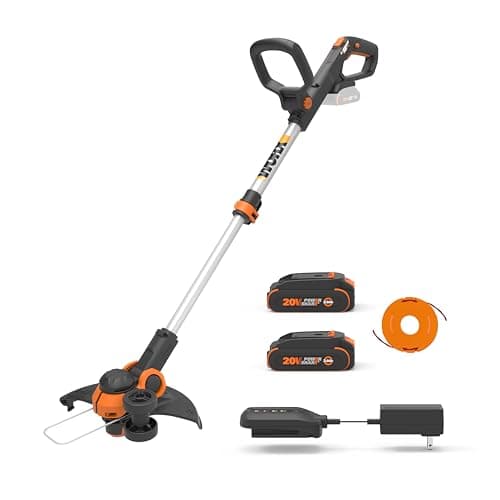
Consider whether it edges too.The WORX WG163 and the CRAFTSMAN kit both rotate to cut a vertical edge, which for occasional work saves you buying a second tool. For a clean, consistent edge every time you want a wheeled edger with a depth stop — the reasoning is in best lawn edger.
Who should skip these
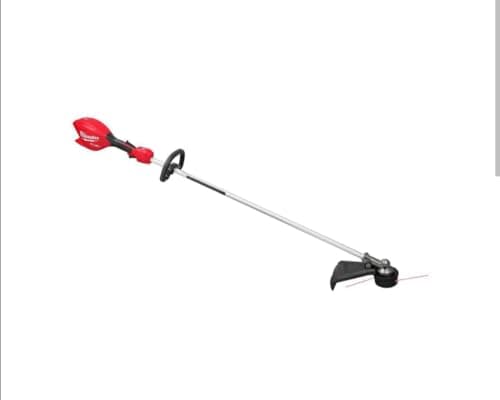
Skip the EGO trimmers if you have no 56V batteries and no plans to buy other EGO tools — the all-in cost is roughly double the Greenworks kit for mechanisms you can live without. Skip the Milwaukee M18 for the same reason unless you already own M18 packs, in which case it is excellent value because the tool is the only cost.
Skip the WORX WG163 if you have long fence lines: a 12-inch swath on 20V turns a half-hour job into an hour, and the Greenworks 16-inch costs only a little more. And skip the Husqvarna 130L unless you have acreage or brush — on a suburban lot it is more weight, more noise and more maintenance for a job a battery trimmer does happily.
How we picked this
We haven't hit this gear — and we say so
We compiled the published manufacturer specifications — shaft weight and flex, loft, deck width, blower CFM, fertilizer NPK, seed species — did the deck-width and nitrogen arithmetic, cross-read the owner manuals, and scored each pick against a published rubric. The scores are judgments from documented research — they are notlab measurements we took, because we don't have a lab and we're not going to pretend we do. Where somebody has genuinely measured this, we link them. You can check every number we publish.