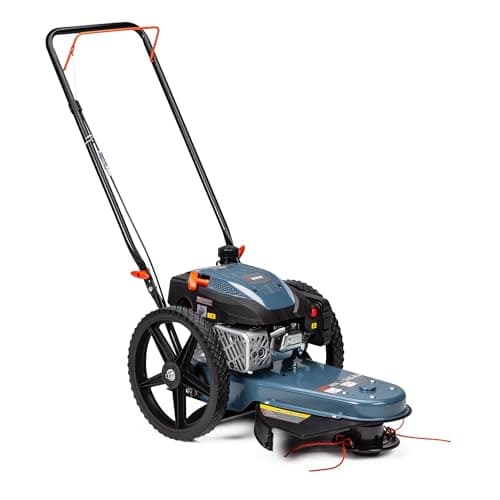
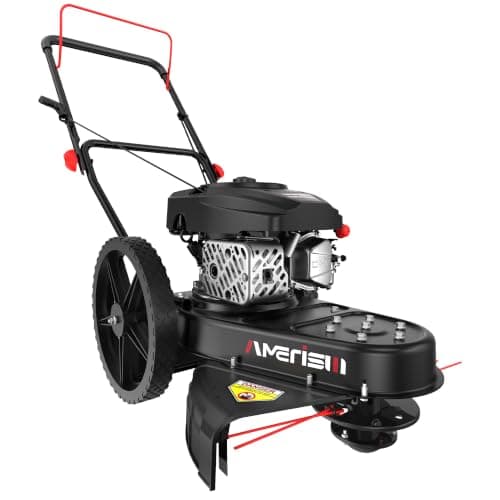
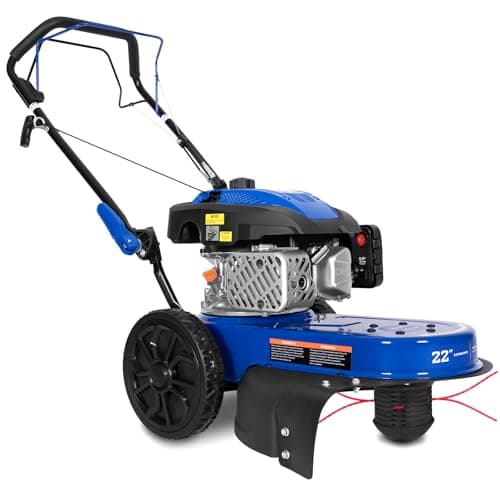
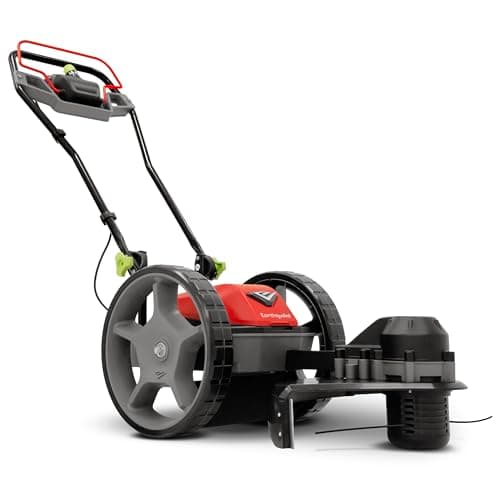
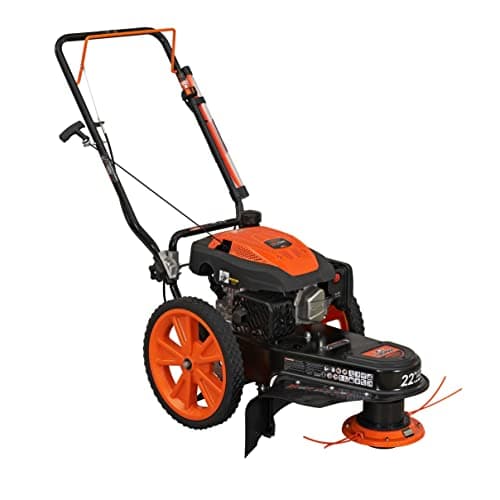
The best wheeled string trimmer is the YARDMAX YL2250: a 22-inch cutting diameter on a 170 cc engine, which is the most displacement per dollar in this format and the best-balanced machine here. If the ground is genuinely rough, the SENIX STMG-L publishes a .155-inch line gauge on 14-inch wheels, and line thickness is the spec that decides what a string mower can actually cut. On a bank, the self-propelled BILT HARD is the one that stops the job being a fight. And the Earthquake 60V is the battery option, which on a machine you start twice a season is a bigger deal than it sounds.
String trimmers on wheels are a different machine from the handheld trimmers in our main trimmer roundup, and they solve a different problem. A handheld trimmer is for edges and detail, and ten minutes of it is fine. A wheeled trimmer is for a fence line, a ditch bank, a field edge or a quarter acre of weeds that a mower would choke on — and it does that for an hour without touching your shoulders, because the ground carries the weight.
The other reason to own one: a string head goes where a blade cannot. Against a fence, around posts, over tree roots, into gravel and up to a wall, a line head flexes and keeps cutting where a mower blade would stop the machine or throw a stone. That is why these exist alongside the mowers, not instead of them. We have not cleared ground with any of these; the ranking reads published cutting diameters, engine displacements, line gauges, wheel sizes and drive types. See how we pick.
How to choose a wheeled string trimmer
Cutting diameter sets the pace, and 22 inches is the class standard. Every serious machine here cuts 22 inches, which is roughly double a 16-inch handheld swath and the reason a wheeled trimmer finishes a fence line in a quarter of the time. If a listing quotes much less than 22 inches, it is a smaller machine than this category.
Line gauge is the spec almost nobody publishes, so prize it when they do. Trimmer line is sold by thickness, and heavier line survives contact with woody stems, fence posts and stone where light line snaps instantly. The SENIX machine publishing .155-inch line is a genuine mark of what it is built to cut. Thin line on a brush-clearing machine means you will spend the afternoon feeding out new line instead of cutting.
Engine size matters more here than on a mower.A line head bogs far more readily than a blade, because line wraps and loads the spindle in a way a blade does not. 170 cc is the larger of the two displacements in this class and worth having; 160 cc is adequate.
Wheel size decides whether broken ground stops you.14-inch wheels roll over ruts, roots and the debris you are cutting. 10-inch wheels stop against them. Since the whole point of this machine is ground that is too rough for a mower, this is not a minor spec — it is close to the main one.
Self-propelled only if you have a slope. A drive is worth real money on a bank, where the head snags constantly and kills your forward momentum. On flat ground it is weight and cost you do not need, and the push machines here cost substantially less.
Gas or battery is a starting question.Gas runs as long as you keep pouring fuel in, which on a long property line is decisive. Battery starts on a button — and stale fuel in a machine used twice a season is the most common reason a gas string mower will not start in spring. If your clearing job is an afternoon rather than a day, the Earthquake 60V is the easier tool to own.
What a wheeled trimmer will and will not do
It will clear waist-high weeds, cut a fence line flush, take down brambles and light woody growth, mow a ditch bank that a rider cannot safely sit on, and cut right up to posts, walls and trees without damaging them or the machine.
It will not give you a lawn finish. A string head cuts by tearing at high speed, and the result is rough. If you want an even cut on real turf, that is a mower's job, and on rough acreage a riding mower is the right tool. Use a wheeled trimmer to bring neglected ground under control, then mow it.
It will notreach under low shrubs or do vertical edging. That is still a handheld job — see the cordless trimmer roundup — or a dedicated lawn edger for a clean edge along a path.
Running one without wasting line
Cut in stages on heavy growth. Set the head high on the first pass to knock the top off, then lower it and go again. Trying to take waist-high weeds in one pass wraps the head, stalls the engine and eats line.
Keep heavy line in it. A machine specified for .155-inch line will run thinner line and will shed it constantly — the saving is false. And walk at the pace the head can clear, not the pace your legs want: a line head that is loaded and slowing is one that is about to wrap.
Who should skip this category
If your trimming is a neat edge around a mown lawn, a wheeled trimmer is far too much machine and it will not do the job well. A cordless handheld is the right tool, costs a fraction as much, and stores on a hook.
If what you have is acres of genuine brush with woody stems thicker than a finger, a string head is the wrong mechanism and you want a brush mower with a blade. A wheeled string trimmer is for heavy grass, weeds and light woody growth — that is a wide band, but it has an upper edge.