Skip to content
Fairway&Fescue

The Seed · Grass Seed & Fescue

The Best Grass Seed for Michigan

Michigan is cool-season country from Monroe to Marquette. That narrows the bag to three species, and the one you want depends on shade, water and how much you mow.

By Stephen V.Updated How we pick
#ad

We earn a commission when you buy through our Amazon links, at no extra cost to you. It never changes our rankings — and we'll tell you when the cheaper bag or machine is the better buy. How this works.

For most Michigan lawns the best grass seed is a turf-type tall fescue blend, and the one we would put down is Jonathan Green Black Beauty Tall Fescue. Michigan sits squarely in the cool-season zone, so the species question is settled before you start: tall fescue, Kentucky bluegrass and fine fescue are the three that belong in a Michigan lawn, and tall fescue handles the one thing that actually kills grass here — a hot, dry stretch in July and August when nobody wants to run a sprinkler. If you want the classic dense blue-green Michigan lawn and you will water it, buy Jonathan Green Blue Panther Kentucky Bluegrass instead. Under maples, buy Black Beauty Dense Shade.

Michigan runs from zone 6b on the Lake Erie shore to zone 4b in the western Upper Peninsula, which sounds like a lot of variation and changes the answer less than you would think. Every one of those zones is cool-season: bermuda, zoysia and St. Augustine do not overwinter anywhere in the state. What the latitude spread actually changes is the calendar, not the bag — a Marquette lawn wants seed down a couple of weeks earlier in the fall than a Detroit lawn, because the window closes sooner.

The one thing that genuinely varies within Michigan is water. Sandy soil across the northwest and the lakeshore drains fast, and lawns there run dry in a normal summer; the clay loam through the southeast holds water much better. Deep-rooting tall fescue is the right answer on sand. On heavier soil with irrigation, bluegrass is a better-looking lawn.

We have grown none of these in a trial plot. Everything here reads the species on the label, the stated coverage rate and the published seeding arithmetic — see how we pick. Prices are live from the price layer with an “as of” date beside each bag.

The short answer

Quick picks

#ProductBest forScorePrice
01
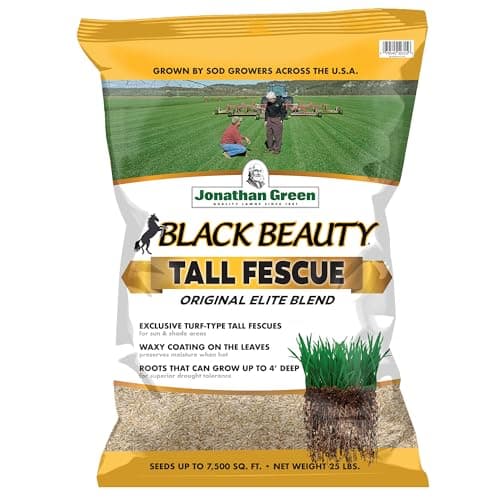
Jonathan Green Jonathan Green Black Beauty Tall Fescue Blend (25 lb)
Jonathan Green Black Beauty Tall Fescue Blend (25 lb)

The premium turf-type tall fescue blend, in a bag size that actually seeds a lawn. Black Beauty is the cultivar family lawn-care professionals name when asked what they would put down themselves.

The best-looking tall fescue lawn
7.6
$104.13Amazon
02
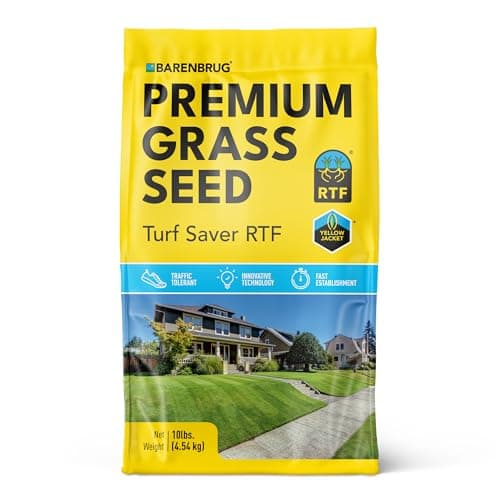
Barenbrug Barenbrug Turf Saver RTF Tall Fescue (10 lb)
Barenbrug Turf Saver RTF Tall Fescue (10 lb)

The one bag on this list that does something the others cannot: RTF is rhizomatous tall fescue, so it spreads sideways and fills its own thin patches instead of needing you to overseed them.

A lawn that repairs itself
8.4
$45.20Amazon
03
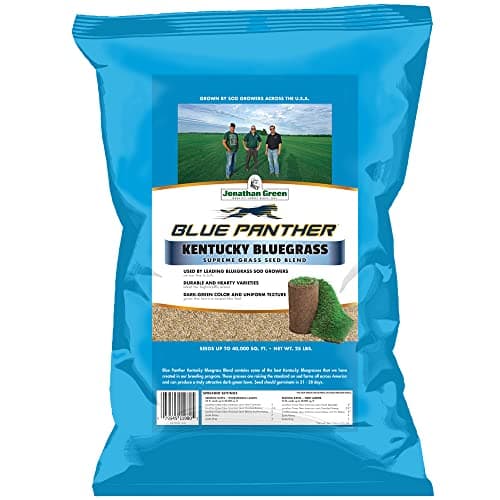
Jonathan Green Jonathan Green Blue Panther Kentucky Bluegrass (25 lb)
Jonathan Green Blue Panther Kentucky Bluegrass (25 lb)

Pure Kentucky bluegrass, no filler species and no annual ryegrass padding the bag. This is the seed behind the dense, deep blue-green lawn people picture when they picture a northern lawn.

The classic northern bluegrass lawn
7.2
$170.85Amazon
04
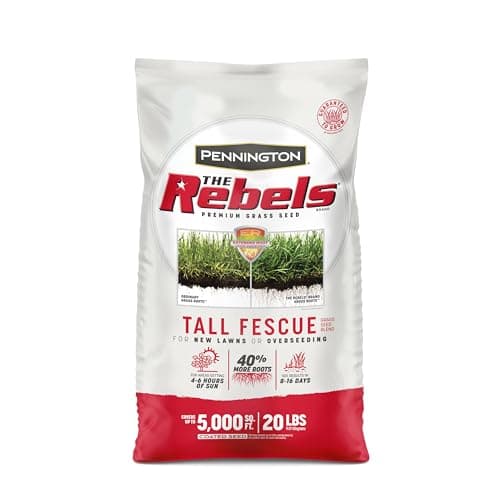
Pennington Pennington The Rebels Tall Fescue (20 lb)
Pennington The Rebels Tall Fescue (20 lb)

The value pick, and the bag we would point most people at first. The Rebels is a long-established turf-type tall fescue brand and a 20 lb bag costs a third of the premium blends.

Best value turf-type tall fescue
7.2
$52.98Amazon
05
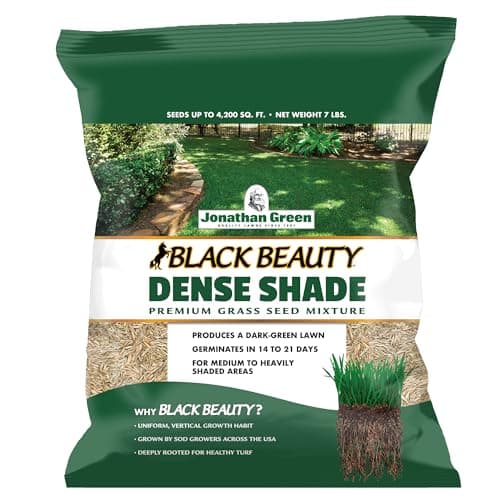
Jonathan Green Jonathan Green Black Beauty Dense Shade (7 lb)
Jonathan Green Black Beauty Dense Shade (7 lb)

The best shade seed on this list. A fine-fescue-led mixture from the Black Beauty family, built for the places where tall fescue thins out and bluegrass simply dies.

Genuine deep shade
7.4
$44.99Amazon
06
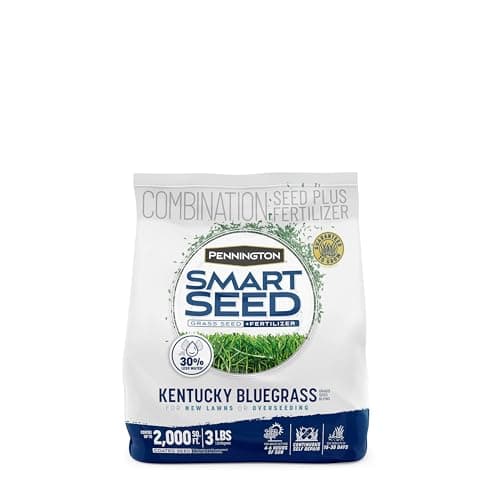
Pennington Pennington Smart Seed Kentucky Bluegrass Blend (3 lb)
Pennington Smart Seed Kentucky Bluegrass Blend (3 lb)

Bluegrass in a bag sized for a patch rather than a project, from the Smart Seed line bred for lower water use. The sensible way to buy bluegrass if you are overseeding rather than starting over.

Overseeding bluegrass into an existing lawn
7.2
$17.23Amazon

#ad · Live prices from the Amazon Product API, as of October 20, 2026. Where we have no verified live price, we show none — we would rather leave a gap than print a number that has rotted.

In detail

The picks, in full

01
Jonathan Green Jonathan Green Black Beauty Tall Fescue Blend (25 lb)

The best-looking tall fescue lawn

Jonathan Green Black Beauty Tall Fescue Blend (25 lb)

Turf-type tall fescue blend25 lb bagDeep-rooting cultivarsDark green color class
7.6/10

The premium turf-type tall fescue blend, in a bag size that actually seeds a lawn. Black Beauty is the cultivar family lawn-care professionals name when asked what they would put down themselves.

Species quality
10
Shade tolerance
7
Drought tolerance
9
Self-repair
4
Value per lb
8

Pros

  • A blend of several improved tall fescue cultivars rather than one, which spreads the risk of any single cultivar failing in your conditions
  • 25 lb is a real lawn's worth of seed at a sensible price per pound
  • The dark color class is the visible difference between this and a commodity fescue bag

Cons

  • Noticeably more expensive than Scotts or Pennington per bag
  • Still a bunch-type tall fescue, so it will not self-repair the way RTF does

Skip this if…

…the lawn is mostly deep shade. Tall fescue tolerates shade better than bluegrass but a fine fescue mix handles genuine gloom far better.

$104.13View on Amazon

Price as of October 20, 2026. Prices change — Amazon's is the one that counts.

#ad · we may earn a commission from this link to Jonathan Green Black Beauty Tall Fescue Blend (25 lb)

02
Barenbrug Barenbrug Turf Saver RTF Tall Fescue (10 lb)

A lawn that repairs itself

Barenbrug Turf Saver RTF Tall Fescue (10 lb)

Rhizomatous tall fescue (RTF)Yellow Jacket seed coating10 lb bagSelf-repairing
8.4/10

The one bag on this list that does something the others cannot: RTF is rhizomatous tall fescue, so it spreads sideways and fills its own thin patches instead of needing you to overseed them.

Species quality
10
Shade tolerance
7
Drought tolerance
9
Self-repair
10
Value per lb
6

Pros

  • Ordinary tall fescue is a bunch grass — it grows up, not out, so every bare patch stays bare until you reseed it. RTF puts out rhizomes and closes gaps on its own
  • The Yellow Jacket coating is a water-holding polymer coat, which helps germination on the days you miss a watering
  • Barenbrug sells the same seed into sports fields and parks, which is the honest reason to trust the genetics

Cons

  • Priced well above a commodity tall fescue bag per pound of seed
  • Coated seed weighs more per viable seed, so a 10 lb bag of coated seed sows less area than 10 lb of bare seed

Skip this if…

…you are seeding a large area on a budget. At this price per pound, covering a half acre gets expensive fast — Pennington's Rebels blend is the better value for sheer square footage.

$45.20View on Amazon

Price as of October 20, 2026. Prices change — Amazon's is the one that counts.

#ad · we may earn a commission from this link to Barenbrug Turf Saver RTF Tall Fescue (10 lb)

03
Jonathan Green Jonathan Green Blue Panther Kentucky Bluegrass (25 lb)

The classic northern bluegrass lawn

Jonathan Green Blue Panther Kentucky Bluegrass (25 lb)

100% Kentucky bluegrass25 lb bagSpreads by rhizomeFull sun to light shade
7.2/10

Pure Kentucky bluegrass, no filler species and no annual ryegrass padding the bag. This is the seed behind the dense, deep blue-green lawn people picture when they picture a northern lawn.

Color and texture
10
Self-repair
10
Shade tolerance
5
Drought tolerance
5
Value per lb
6

Pros

  • Kentucky bluegrass spreads by underground rhizomes, so it genuinely knits back over a thin patch rather than needing reseeding
  • A pure-species bag, so you know exactly what is going in the ground
  • The finest leaf texture and the deepest color of any common cool-season lawn grass

Cons

  • Slow to germinate - two to three weeks against a week for ryegrass, so a bare lawn stays bare longer
  • Needs more water and more nitrogen through summer than tall fescue does

Skip this if…

…your lawn has real shade or you are trying to water less. Bluegrass is the thirstiest and least shade-tolerant of the common northern grasses; tall fescue is the better bag for both of those problems.

$170.85View on Amazon

Price as of October 20, 2026. Prices change — Amazon's is the one that counts.

#ad · we may earn a commission from this link to Jonathan Green Blue Panther Kentucky Bluegrass (25 lb)

04
Pennington Pennington The Rebels Tall Fescue (20 lb)

Best value turf-type tall fescue

Pennington The Rebels Tall Fescue (20 lb)

Turf-type tall fescue20 lb bagImproved cultivarsSun and light shade
7.2/10

The value pick, and the bag we would point most people at first. The Rebels is a long-established turf-type tall fescue brand and a 20 lb bag costs a third of the premium blends.

Species quality
8
Shade tolerance
6
Drought tolerance
8
Self-repair
4
Value per lb
10

Pros

  • Genuinely cheap per pound for real turf-type tall fescue rather than forage-type seed
  • 20 lb covers a substantial area at normal new-lawn seeding rates
  • The Rebels cultivars have been in the trials and on lawns for decades

Cons

  • Not the dark color class of the Black Beauty bags
  • Bunch-type, so no self-repair

Skip this if…

…you are overseeding a lawn you already like the look of. Matching an existing dark-green fescue with a mid-green bag leaves you with a patchwork for a season.

$52.98View on Amazon

$59.9912% off

Price as of October 20, 2026. Prices change — Amazon's is the one that counts.

#ad · we may earn a commission from this link to Pennington The Rebels Tall Fescue (20 lb)

05
Jonathan Green Jonathan Green Black Beauty Dense Shade (7 lb)

Genuine deep shade

Jonathan Green Black Beauty Dense Shade (7 lb)

Fine fescue shade mixture7 lb bagBlack Beauty familyDense shade rated
7.4/10

The best shade seed on this list. A fine-fescue-led mixture from the Black Beauty family, built for the places where tall fescue thins out and bluegrass simply dies.

Species quality
9
Shade tolerance
10
Drought tolerance
7
Self-repair
5
Value per lb
6

Pros

  • Fine fescues are the most shade-tolerant cool-season turf grasses there are — this is the correct species choice for gloom, not a marketing claim
  • Fine blade texture, so it looks like a proper lawn rather than a patch job
  • Low fertility requirement: fine fescues want less feeding than tall fescue or bluegrass

Cons

  • Fine fescues do not take foot traffic well — a shaded path through it will wear through
  • Expensive per pound for a 7 lb bag

Skip this if…

…the area gets more than about four hours of direct sun. Fine fescue struggles in full sun and heat; a turf-type tall fescue blend is the better grass there.

$44.99View on Amazon

Price as of October 20, 2026. Prices change — Amazon's is the one that counts.

#ad · we may earn a commission from this link to Jonathan Green Black Beauty Dense Shade (7 lb)

06
Pennington Pennington Smart Seed Kentucky Bluegrass Blend (3 lb)

Overseeding bluegrass into an existing lawn

Pennington Smart Seed Kentucky Bluegrass Blend (3 lb)

Kentucky bluegrass blend3 lb bagSmart Seed low-water lineOverseeding rate
7.2/10

Bluegrass in a bag sized for a patch rather than a project, from the Smart Seed line bred for lower water use. The sensible way to buy bluegrass if you are overseeding rather than starting over.

Color and texture
9
Self-repair
9
Shade tolerance
5
Drought tolerance
6
Value per lb
7

Pros

  • A 3 lb bag is the right size for overseeding a thin area, at a fraction of the cost of a 25 lb bag
  • A blend of bluegrass cultivars rather than one, which hedges against any single disease
  • Pennington's Smart Seed line is selected for lower water need than standard bluegrass

Cons

  • 3 lb covers only a small area at seeding rates - this is a patch bag, not a new-lawn bag
  • Still bluegrass, so it still germinates slowly and still wants summer water

Skip this if…

…you are seeding a whole lawn. At new-lawn rates you would need many bags; buy the 25 lb bluegrass or a tall fescue bag instead.

$17.23View on Amazon

Price as of October 20, 2026. Prices change — Amazon's is the one that counts.

#ad · we may earn a commission from this link to Pennington Smart Seed Kentucky Bluegrass Blend (3 lb)

Michigan grass seed compared

SeedSpeciesBagShadeBest for
JG Black Beauty Tall FescueTurf-type tall fescue25 lbModerateMost Michigan lawns
Barenbrug Turf Saver RTFRhizomatous tall fescue10 lbModerateA lawn that repairs itself
JG Blue Panther100% Kentucky bluegrass25 lbLowIrrigated show lawns
Pennington The RebelsTurf-type tall fescue20 lbModerateBest value per 1,000 sq ft
JG Black Beauty Dense ShadeFine + tall fescue blend7 lbHighUnder trees
Pennington Smart Seed KBGKentucky bluegrass blend3 lbLowOverseeding bluegrass

Species, bag weights and stated coverage above are the figures the labels publish. Prices are live with an “as of” date beside each bag.

The three species that belong in a Michigan lawn

Turf-type tall fescue is the default and it is the default for a reason: it roots deeper than anything else on this page, which is what carries a lawn through a dry August without irrigation. It handles moderate shade, it holds color into the cold, and modern turf-type cultivars are a world away from the coarse Kentucky 31 pasture seed sold under the same word. Full detail in our tall fescue reference.

Kentucky bluegrassis the prettier lawn and the more demanding one. It spreads by rhizome, so it knits over a thin patch on its own rather than needing a reseed — genuinely useful where kids and dogs wear a track. The cost is water and nitrogen: bluegrass goes dormant and brown in a dry spell that tall fescue shrugs off, and it wants more feeding to look like the picture. See tall fescue vs Kentucky bluegrass for the head-to-head.

Fine fescue— creeping red, chewings, hard fescue — is the shade specialist and the low-input one. It is the only species on this page that will hold a lawn under a mature maple canopy, and it asks for less fertilizer and less mowing than either of the others. It does not like heavy traffic. Our best grass seed for shade roundup goes deeper.

Perennial ryegrass is the fourth name you will see on Michigan bags, and it is a component rather than a lawn. It germinates in a week, which makes it excellent in a mix for cover while the slower species establish. A lawn of nothing but ryegrass is thirsty and short-lived; see fescue vs ryegrass.

When to plant grass seed in Michigan

Mid-August to mid-September is the best window in the state, and it is not close. Soil is still warm enough for fast germination, the air is cooling, autumn rain does the watering for you, and crabgrass — which is the real competition for a spring seeding — is finished for the year. In the Upper Peninsula and the northern Lower Peninsula, pull that forward: early August to the end of the month, because new grass needs six to eight weeks of growth before the ground freezes.

Spring is the second-best window and a distant second.Seed down from late April into May once soil temperatures are reliably in the 50s. The problem is not germination, it is what comes next: a spring seeding has one summer of its life to survive with a root system a few weeks old, and it competes with crabgrass the whole way. If spring is your only option, skip the crabgrass preventer — it stops your grass seed germinating just as effectively — and water through the first summer.

Dormant seeding— broadcasting in late November or over snow in winter so the seed germinates on its own in spring — works in Michigan and is a genuinely useful trick for a bare patch you cannot get to in the fall. Expect a lower strike rate than a proper fall seeding.

How much seed a Michigan lawn needs

The arithmetic is the part nobody prints on the front of the bag. New lawn from bare soil with tall fescue: about 8 to 10 lb per 1,000 square feet. Overseeding existing grass: 4 to 5 lb per 1,000. Kentucky bluegrass seed is far smaller, so the rates drop to roughly 2 to 3 lb per 1,000 new and 1 to 2 lb overseeding — which is why a 3 lb bluegrass bag is a patch bag and a 25 lb bag seeds a yard.

A 6,000 square foot Michigan front and back — a normal suburban lot — therefore needs roughly 50 to 60 lb of tall fescue to start from scratch, or 25 to 30 lb to overseed. Two 25 lb bags, in other words. Buying one and spreading it thin is the most common self-inflicted failure in lawn seeding. The full method is in how to grow grass from seed.

Feed it at seeding, and again in the fall

New seed needs phosphorus at the root, which ordinary lawn fertilizer does not supply in useful amounts. Put down a starter fertilizer with the seed — see best starter fertilizer for new grass. Michigan restricts phosphorus fertilizer on established lawns under its 2012 law, with a specific exemption for new lawns and repairs, so read the bag and the state guidance before you spread.

After that, the single most valuable feed of the Michigan year is the one in late October or early November, which the grass stores as root reserves for a fast spring green-up. That is in the fall fertilizer roundup.

Who should skip these

Skip the pure bluegrass if you do not irrigate. It will go dormant and brown in a normal Michigan July, which is survivable but not what you paid for.

Skip the dense shade blend in full sun — fine fescues are not sun grasses and will thin out. And skip any bag whose label lists annual ryegrass as a main ingredient: it is a one-season plant sold as filler.
How we picked this

We haven't run this gear through a lab — and we say so

We compiled the published manufacturer specifications — deck width and gauge, drive type, blower CFM, fertilizer NPK, seed species — did the deck-width and nitrogen arithmetic, cross-read the owner manuals, and scored each pick against a published rubric. The scores are judgments from documented research — they are notlab measurements we took, because we don't have a lab and we're not going to pretend we do. Where somebody has genuinely measured this, we link them. You can check every number we publish.

Questions

Frequently asked

What is the best grass seed for Michigan?
A turf-type tall fescue blend for most lawns - Jonathan Green Black Beauty Tall Fescue is our pick, because deep roots are what carry a Michigan lawn through a dry August without irrigation. If you water and want the classic dense blue-green lawn, buy Kentucky bluegrass; under mature trees, buy a fine-fescue dense shade blend.
When should I plant grass seed in Michigan?
Mid-August to mid-September in the Lower Peninsula, and early August in the UP and the north. Warm soil, cooling air, autumn rain and no crabgrass competition make fall far better than spring. Spring works from late April into May if it is your only option.
Will bermuda or zoysia grass grow in Michigan?
No. Both are warm-season grasses that do not reliably overwinter anywhere in Michigan. Every part of the state is cool-season territory: tall fescue, Kentucky bluegrass, fine fescue and perennial ryegrass are the four species that belong here.
How much grass seed do I need for a Michigan lawn?
With tall fescue, about 8 to 10 lb per 1,000 square feet for a new lawn and 4 to 5 lb per 1,000 to overseed. Kentucky bluegrass seed is much smaller, so it is roughly 2 to 3 lb per 1,000 new and 1 to 2 lb overseeding. A typical 6,000 sq ft lot needs two 25 lb tall fescue bags from bare soil.
Is tall fescue or Kentucky bluegrass better for a Michigan lawn?
Tall fescue if you do not irrigate, have sandy soil or have part shade - it roots deeper and rides out a dry spell. Bluegrass if you water, have heavier soil and want the finest texture and a lawn that repairs its own worn patches by spreading.

Keep reading

Receipts

Sources

We do not run a testing lab, and we do not pretend to. Every spec number here comes from a manufacturer's published sheet or an official standard, cited above. Where we could not verify something, we say so on the page rather than quietly leaving it out. Read our full method.