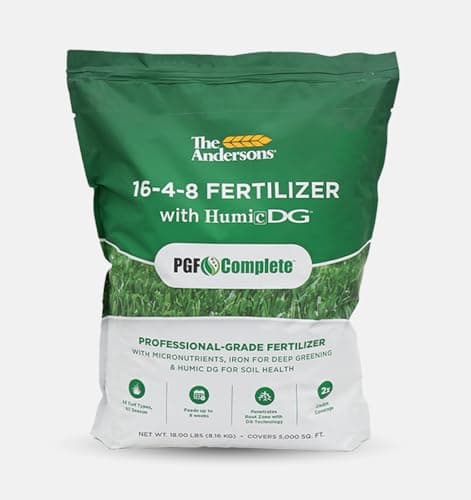
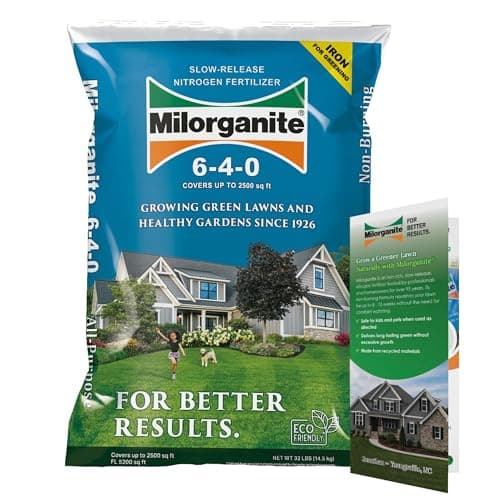
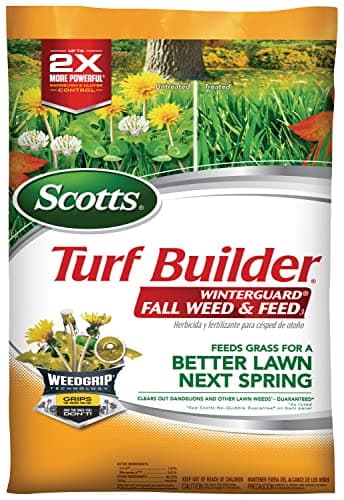
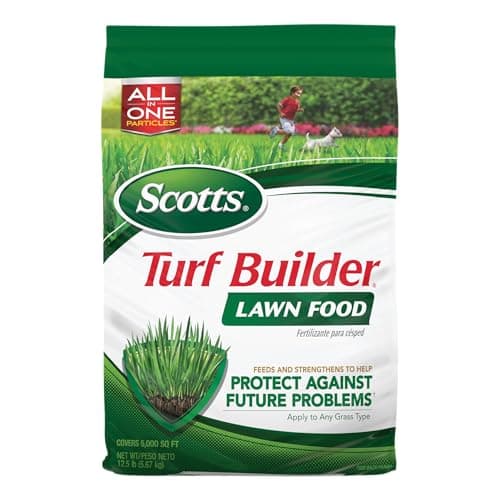
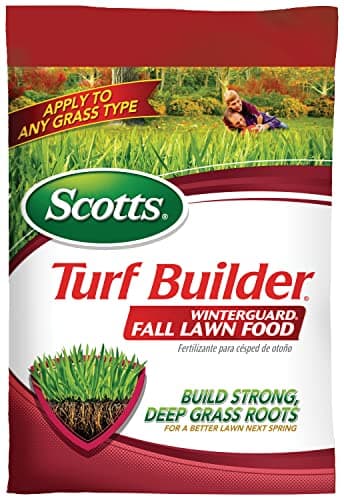
The best fall lawn fertilizer is Scotts Turf Builder WinterGuard Fall Lawn Food, because it is built for the job autumn actually does: a high-nitrogen feeding that a cool-season lawn puts into roots and crown reserves rather than into top growth, going into winter. For a lawn you are also overseeding, The Andersons PGF Complete 16-4-8 in its fine granule is the better partner. And Milorganite is the no-burn option for a late application when the weather is still warm.
If you only feed your lawn once a year, feed it in the fall. That is the single most useful sentence in this whole hub. A cool-season lawn — tall fescue, bluegrass, ryegrass — does its best root growth when air temperatures drop but soil stays warm, which is September through November across most of the country. Nitrogen applied then goes into root mass and stored carbohydrate instead of into blades you have to mow. The lawn comes out of winter thicker, greens up earlier, and needs less from you in spring.
The flip side, and the reason “best fertilizer for winter” is a slightly wrong question: there is no winter feeding. A winterizer is a late autumn application, not a December one. Feed a frozen or dormant lawn and the nitrogen either sits there or runs off into a storm drain. Timing is most of this page.
NPK figures and coverage rates below are what the labels publish; the agronomy is standard turf-management practice rather than our measurement. See how we pick. Prices are live from the price layer with an “as of” date.
The two fall applications, and what each one is for
Early fall, around Labor Day:this is the recovery and growth feeding. Soil is still warm, the grass is actively growing again after summer, and this is the application that thickens a lawn thinned by heat. It is also the one to pair with aeration and overseeding — aerate, seed, feed, in one weekend, is comfortably the most effective thing anyone can do to a tired lawn. See best lawn aerator and how to reseed a lawn.
Late fall, six to eight weeks later: this is the winterizer. The lawn has largely stopped growing upward but roots are still active in soil that has not frozen. Nitrogen now becomes stored reserves. This is the application people skip and the one with the clearest payoff the following March.
If you are overseeding, use a starter fertilizer for the first one.New seed needs phosphorus to build roots, which a standard lawn food does not carry much of. That is a different bag — see starter fertilizer for new grass.
How to time the late application without guessing
The rule that works anywhere: apply the winterizer around the time of your last mow of the season, when the grass has slowed but is still green and the ground is not frozen. In the northern tier that is late October into November. In the transition zone, November. Further south on a cool-season lawn, as late as early December.
Two things to avoid. Do not apply to frozen ground — nothing takes it up and it runs off, which is both a waste of money and a genuine water-quality problem the EPA documents. And do not apply so early that the lawn responds with a flush of tender growth that then gets frosted.
The arithmetic, so you buy the right number of bags
One pound of actual nitrogen per 1,000 square feet per application. Divide 100 by the first NPK number to get pounds of product: a 32-0-4 bag needs about 3.1 lb per 1,000, a 16-4-8 needs 6.25 lb. Measure your lawn once — pace it out, multiply, subtract the house and the driveway — and you will stop buying by eye forever. The full version is in the lawn fertilizer schedule.
Then spread it with something that has edge control, so you are not throwing fertilizer into the street and leaving stripes in the lawn. The spreader roundup ranks on exactly that spec.
Fall weed-and-feed: when it is actually the right call
Autumn is the best time of year to kill perennial broadleaf weeds. Dandelions, clover and plantain are pulling resources down into their roots in the fall, and a systemic herbicide goes down with them — which is why an autumn application kills weeds that shrug off a spring one. A fall weed-and-feed is therefore one of the few genuinely well-timed combination products, and WinterGuard Fall Weed & Feed is here for that.
Two conditions. Do not use it on a lawn you have just overseeded — the herbicide will take out your new seedlings, and most labels say to wait until the new grass has been mowed several times. And if you only have a few weeds, spot-treat them instead; our safest weed killer page explains why that is the lower-exposure choice.
Warm-season lawns: this page is not for you
If your lawn is bermuda, zoysia or St. Augustine, do not apply a nitrogen winterizer. Warm-season grass goes dormant for winter, and late nitrogen pushes tender growth into cold weather and invites winter kill and spring dead spot. Stop feeding four to six weeks before your first expected frost and leave it alone. The bermuda fertilizer page has the correct calendar.
Who should skip these
Skip the late winterizer if your ground is already frozen — wait for spring, because an application onto frozen soil runs off rather than feeding anything. Skip the weed-and-feed version if you have overseeded in the last few weeks. And skip all of it on a warm-season lawn.