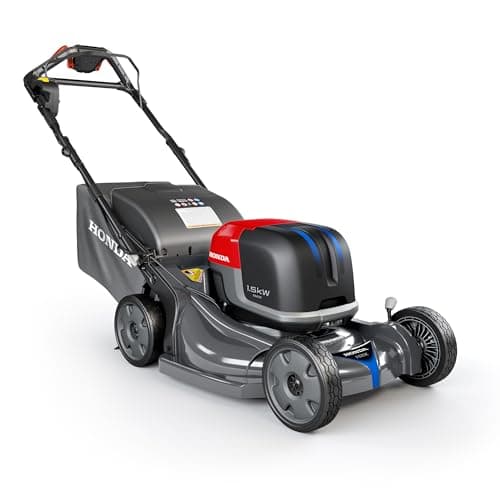
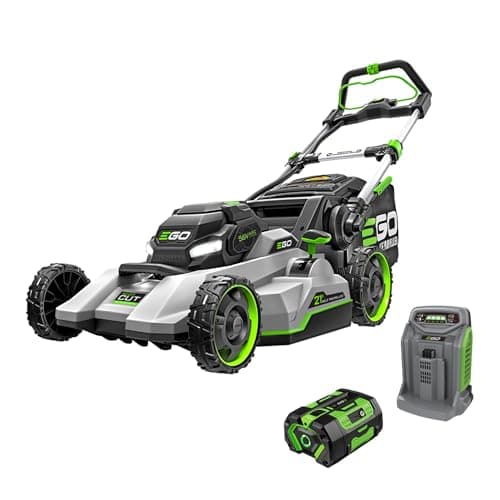
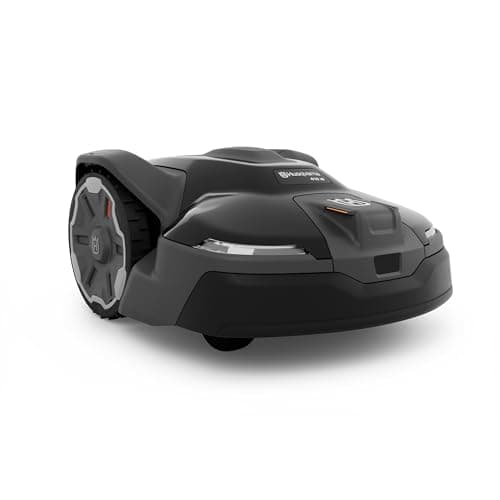
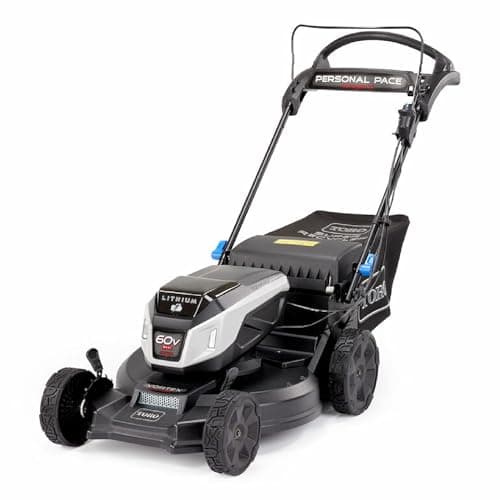
For a sloped yard the mower to buy is a rear-wheel-drive self-propelled walk-behind, and the one we would buy is the Toro 60V Max Super Recycler with Personal Pace— rear-wheel drive puts the traction where your weight is on a slope, and Personal Pace matches the mower's speed to your walking pace instead of asking you to hold a bail at a fixed speed uphill. The Honda HRX-BE is the alternative with the better deck, the EGO LM2135SP the one if you want no engine, and for a bank too steep to walk safely at all, the Husqvarna 410iQ robot mower is rated for slopes up to 45%.
Three things decide whether a mower works on a hill, and only one of them appears in the marketing.
Drive type, and specifically which wheels are driven
Rear-wheel drive is the single most important spec on this page. On a slope you naturally lean into the hill, which lifts weight off the front wheels. A front-wheel-drive mower therefore loses traction exactly when you need it and starts scrabbling; a rear-wheel-drive mower pushes from the wheels still carrying load. All-wheel drive is better still and rare on walk-behinds. If you remember one thing from this page, it is to check which wheels the drive goes to before you buy.
Weight, in both directions
A mower that is too heavy is a liability on a slope because you are the brake. A mower that is too light has no traction and skates. Battery mowers sit usefully in the middle: lighter than gas machines of the same deck width, heavy enough to grip. A full grass bag on a steep slope changes the handling of any mower, which is a reason to mulch or side-discharge on a hill rather than bag.
Deck width, which should go down rather than up
This is the counter-intuitive one. On a hill, a narrower deck is easier to keep level across the slope and easier to control. A 21-inch deck is the sensible maximum for a sloped lawn; the 30-inch decks that make a big flat lawn quick are genuinely difficult on a bank.
We have mown no slopes with any of these. Everything here reads published drive types, deck widths, weights and the slope ratings manufacturers state for their robot mowers — see how we pick. Prices are live from the price layer with an “as of” date.
Hill mowers compared
| Mower | Deck | Drive | Power | Best for |
|---|
| Toro 60V Super Recycler | 21 in | Personal Pace self-propel | Toro 60V Max | Best all-round hill mower |
| Honda HRX-BE 21" | 21 in | Self-propelled | Battery | Slopes plus a deck that lasts |
| EGO Power+ LM2135SP | 21 in | Self-propelled | 56V battery | No engine on a slope |
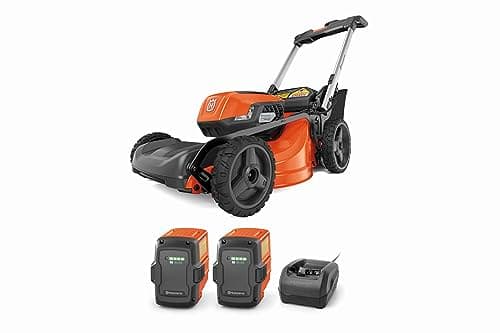
| Husqvarna LE-322R | Battery deck | Rear-wheel drive | Battery | Rear-wheel drive, dealer support |
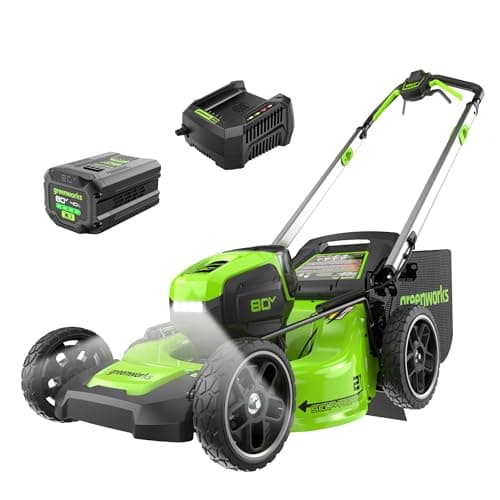
| Greenworks 80V 21" SP | 21 in | Self-propelled | 80V battery | Best value on a slope |
| Husqvarna 410iQ robot | Robot | Autonomous | Battery | Banks rated to 45% slope |
Deck widths, drive types and the stated slope ratings above are the figures the manufacturers publish. Prices are live with an “as of” date beside each mower.
How to mow a slope without hurting yourself
The method matters more than the machine, and it is different for walk-behinds and riders.
With a walk-behind mower, mow across the slope, not up and down. Side to side keeps you beside the mower rather than above or below it, so a slip does not put the deck over your feet and a loss of grip does not send the machine downhill at you. Start at the bottom and work up in overlapping passes.
With a riding mower, the opposite is true: go up and down, never across. A rider has a high center of gravity and will roll sideways long before it will tip end-over-end. That reversal is the single most common and most dangerous misunderstanding in mowing slopes, and it is why the riding mower hill roundup exists as a separate page.
Beyond that: mow when the grass is dry, wear boots with grip rather than trainers, raise the cut height on a bank so the deck cannot catch, and never mow a wet slope at all. If you cannot keep your footing without the mower, the slope is too steep to walk-mow.
How steep is too steep?
Up to about 15 degrees (roughly a 1-in-4 grade) a rear-wheel-drive self-propelled walk-behind handles comfortably, mown across the slope. This covers the large majority of sloped suburban lawns.
From about 15 to 20 degrees you are at the limit of safe walk-behind mowing and you should be honest about your footing, your boots and the weather. A lighter battery mower with a 21-inch deck is easier here than a heavy gas machine.
Above about 20 degrees— a bank you would not run down — stop mowing it with a walk-behind. The two sensible answers are a robot mower rated for the gradient, or replanting the bank with something you do not mow at all: a groundcover, shrub planting or ornamental grasses.
Note that manufacturers state slope in percent and people talk in degrees. A 45% slope is about 24 degrees; a 30% slope is about 17. Read robot mower ratings carefully, because the two units are a factor of nearly two apart in the range that matters.
Why a robot mower is the honest answer to a steep bank
A robot mower on a slope removes the one genuinely dangerous element: you. The Husqvarna 410iQ publishes a 45% slope rating, which is steeper than any walk-behind should be used on, and it simply works the bank in short sessions without anyone standing on it. Four-wheel-drive robot mowers go further still.
The limits are real too: a robot wants a boundary it can learn, it costs considerably more than a walk-behind, and a bank with loose footing or exposed roots will defeat it. Our robot mower roundup ranks the full range and are robot lawn mowers worth it is the honest cost case.
What not to buy for a hill
A front-wheel-drive self-propelled mower.It is a good mower for a flat lawn — the drive wheels unload for easy turning — and the wrong one for a slope, for exactly the same reason.
A 30-inch deck. Wide decks are the right answer to a big flat lawn and a handful on a bank, because you cannot keep them level across the fall line.
A corded electric mower. Cable management on a slope adds a trip hazard to a job that already has one.
A push mower, on anything but the gentlest grade. Pushing a mower full of wet clippings uphill is where people hurt their backs, and drive is the single upgrade worth paying for here. See best self-propelled lawn mower.
Who should skip these
Skip this page if your lawn is flat — you are paying for a drive system you will not use, and the push mower roundup will save you money.
Skip the walk-behinds if the bank is steeper than about 20 degrees. That is a robot mower or a planting decision, not a mower decision.
And skip all of these if the slope is on acreage rather than a yard: that is a riding-mower question, and the answers are in the riding mower hill roundup.