Skip to content
Fairway&Fescue

The Cut · Mowers

Self-Propelled vs Push Mower

Two specs decide this and neither is on the box: how much slope your lawn has, and how far you walk in a cut. A head-to-head with the picks for each answer.

By Stephen V.Updated How we pick
#ad

We earn a commission when you buy through our Amazon links, at no extra cost to you. It never changes our rankings — and we'll tell you when the cheaper bag or machine is the better buy. How this works.

Buy self-propelledif your lawn has any real slope, or if it is over about a third of an acre — the EGO Power+ LM2135SP is our pick. Buy a push mower if your lawn is flat and under a third of an acre: you save money, you save weight, and there is one less drive system to break. The Greenworks 60V 21" push mower is the one we would buy.

The distinction itself is simple and gets muddled by marketing. Both are walk-behind mowers— you walk behind both of them. The difference is whether the engine or motor also drives the wheels. On a push mower, the power cuts the grass and your legs move the machine. On a self-propelled mower, the power does both and you steer and keep up. That is the entire difference, and it is why “self-propelled vs walk-behind” is not really a question: a self-propelled mower is a walk-behind mower.

Is a self-propelled lawn mower worth it? On a flat quarter-acre lawn, honestly, no. A modern 21-inch battery push mower weighs little enough that pushing it is barely exercise, and the self-propelled version of the same machine costs more, weighs more and adds a transmission. On a sloped lawn, or half an acre, or for anyone with a bad back or a bad knee, it is one of the best upgrades you can make to lawn care.

Everything below reads published deck widths, weights, drive types and speeds. We have not pushed any of them up a hill. See how we pick.

The short answer

Quick picks

#ProductBest forScorePrice
01
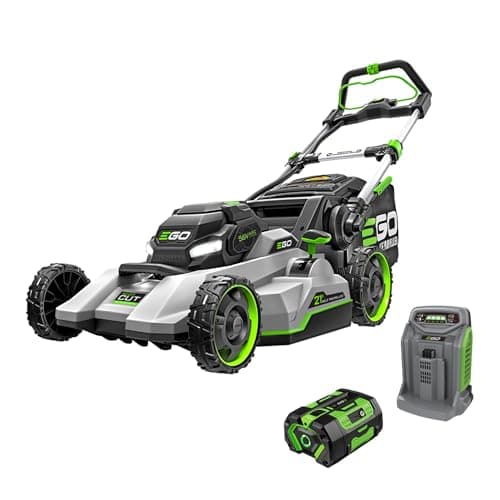
EGO EGO Power+ 21" Select Cut Self-Propelled (LM2135SP)
EGO Power+ 21" Select Cut Self-Propelled (LM2135SP)

The battery mower that stops the gas argument. A 21-inch deck, self-propelled drive and EGO's 56V platform, sold as a kit so there is nothing else to buy on the day it arrives.

A quarter to half acre, no gas can
8.4
$749.00Amazon
02
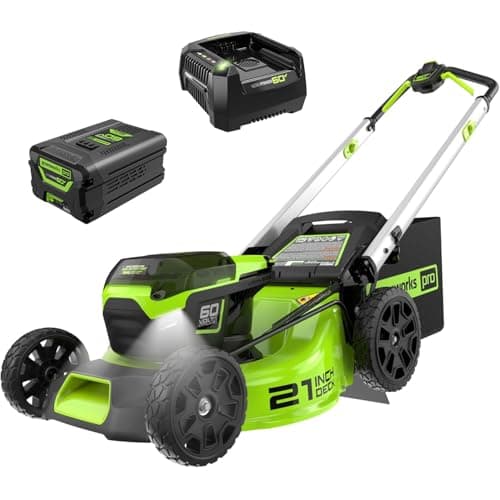
Greenworks Greenworks 60V 21" Push Mower
Greenworks 60V 21" Push Mower

A full 21-inch deck without paying for a drive system you may not need, and the largest single battery of any Greenworks mower here at 5.0 Ah.

A flat quarter acre
8.0
$599.99Amazon
03
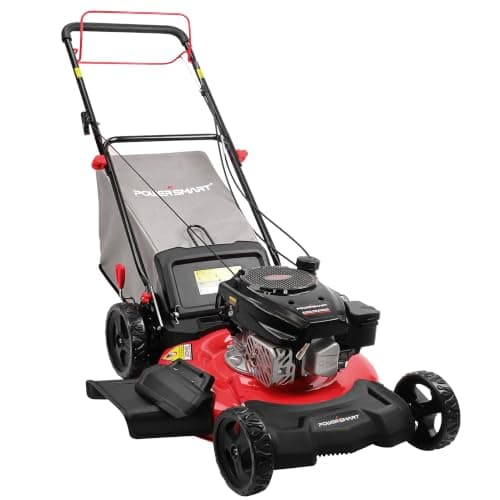
PowerSmart PowerSmart 21" 170cc Self-Propelled Gas
PowerSmart 21" 170cc Self-Propelled Gas

The cheapest way to a self-propelled 21-inch cut, full stop. A 170cc four-stroke and a driven wheel for less than most battery mowers cost without a battery.

Cheapest self-propelled cut
8.0
$319.99Amazon
04
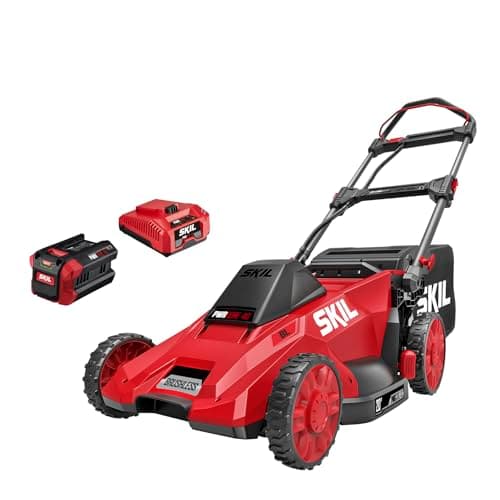
SKIL SKIL PWR CORE 40 Brushless 20" Push Mower (PM4910-15)
SKIL PWR CORE 40 Brushless 20" Push Mower (PM4910-15)

A brushless 20-inch push mower shipped with a 6.0 Ah battery and a 150 W charger — the biggest battery-to-price ratio of anything in this registry.

Most battery capacity per dollar
7.8
$329.99Amazon

#ad · Live prices from the Amazon Product API, as of October 21, 2026. Where we have no verified live price, we show none — we would rather leave a gap than print a number that has rotted.

In detail

The picks, in full

01
EGO EGO Power+ 21" Select Cut Self-Propelled (LM2135SP)

A quarter to half acre, no gas can

EGO Power+ 21" Select Cut Self-Propelled (LM2135SP)

21" deck56V battery platformSelf-propelledBattery + charger included
8.4/10

The battery mower that stops the gas argument. A 21-inch deck, self-propelled drive and EGO's 56V platform, sold as a kit so there is nothing else to buy on the day it arrives.

Suits most lawns
10
Runtime / capacity
9
Ease of use
9
Platform value
8
Price
6

Pros

  • 21 inches is the deck width that suits most suburban lots — wide enough to finish a quarter acre in sensible passes, narrow enough to turn in a side yard
  • Self-propelled drive matters more than power on any lawn with a slope on it
  • Sold as a kit, so the battery and charger are in the box rather than a second line item

Cons

  • The most expensive walk-behind mower on this list by a clear margin
  • Locks you into the 56V EGO platform — an advantage if you buy their trimmer and blower too, a cost if you do not

Skip this if…

…your lawn is under about 5,000 square feet. A push mower finishes that in fifteen minutes and the self-propelled drive is weight you are pushing uphill into your shed for no benefit.

$749.00View on Amazon

Price as of October 21, 2026. Prices change — Amazon's is the one that counts.

#ad · we may earn a commission from this link to EGO Power+ 21" Select Cut Self-Propelled (LM2135SP)

02
Greenworks Greenworks 60V 21" Push Mower

A flat quarter acre

Greenworks 60V 21" Push Mower

21" deck60V battery platformPush (no drive)5.0 Ah battery + charger
8.0/10

A full 21-inch deck without paying for a drive system you may not need, and the largest single battery of any Greenworks mower here at 5.0 Ah.

Suits most lawns
8
Runtime / capacity
8
Ease of use
7
Platform value
8
Price
9

Pros

  • Full-size deck at a push-mower price — the cheapest way to a 21-inch cut on batteries
  • 5.0 Ah is the biggest single pack in this group, so no mid-lawn swap
  • Lighter than the self-propelled mowers, which matters when you are lifting it into a shed

Cons

  • A 21-inch deck full of wet clippings is real work to push uphill
  • No drive system to fall back on as the lawn gets longer between cuts

Skip this if…

…your lawn slopes. Self-propelled is the one upgrade on a hill that is worth the money every single week.

$599.99View on Amazon

Price as of October 21, 2026. Prices change — Amazon's is the one that counts.

#ad · we may earn a commission from this link to Greenworks 60V 21" Push Mower

03
PowerSmart PowerSmart 21" 170cc Self-Propelled Gas

Cheapest self-propelled cut

PowerSmart 21" 170cc Self-Propelled Gas

21" deck170cc 4-cycle engineSelf-propelledGas
8.0/10

The cheapest way to a self-propelled 21-inch cut, full stop. A 170cc four-stroke and a driven wheel for less than most battery mowers cost without a battery.

Suits most lawns
9
Runtime / capacity
9
Ease of use
6
Platform value
6
Price
10

Pros

  • Self-propelled drive at a price no cordless mower comes close to matching
  • 170cc does not run out of power in tall or damp grass the way a small battery deck can
  • No battery to degrade — a gas mower you maintain lasts a long time

Cons

  • Gas, oil changes, air filters, winter storage and pull starts are all back on your to-do list
  • Loud enough that early Sunday mowing is a neighborly decision

Skip this if…

…the reason you are shopping is that you are tired of maintaining a gas engine. Every battery mower above removes that work entirely, and the Greenworks 80V kit costs about half again.

$319.99View on Amazon

Price as of October 21, 2026. Prices change — Amazon's is the one that counts.

#ad · we may earn a commission from this link to PowerSmart 21" 170cc Self-Propelled Gas

04
SKIL SKIL PWR CORE 40 Brushless 20" Push Mower (PM4910-15)

Most battery capacity per dollar

SKIL PWR CORE 40 Brushless 20" Push Mower (PM4910-15)

20" deck40V PWR CORE platformBrushless motor6.0 Ah battery + 150 W charger
7.8/10

A brushless 20-inch push mower shipped with a 6.0 Ah battery and a 150 W charger — the biggest battery-to-price ratio of anything in this registry.

Suits most lawns
8
Runtime / capacity
9
Ease of use
7
Platform value
6
Price
9

Pros

  • 6.0 Ah included is more stored energy than kits costing half again as much
  • Brushless motor, which is the spec that separates a mower that lasts from one that does not
  • 20 inches is the sweet spot for lots with gates and tight side passages

Cons

  • SKIL's PWR CORE 40 range is narrower than EGO's or Greenworks', so the platform buys you less
  • Push only

Skip this if…

…you want one battery system across mower, trimmer and blower. SKIL's 40V tool range is the thinnest here, and platform breadth is most of the reason to go cordless at all.

$329.99View on Amazon

Price as of October 21, 2026. Prices change — Amazon's is the one that counts.

#ad · we may earn a commission from this link to SKIL PWR CORE 40 Brushless 20" Push Mower (PM4910-15)

Self-propelled vs push: head to head

 Push mowerSelf-propelled
What moves itYouDriven wheels
Best lawn sizeUp to about 1/3 acre1/3 acre and up
SlopesHard work uphillThe main reason to buy one
WeightLighterHeavier - transmission and drive
PriceLowerTypically a clear step up
Things that can breakFewerDrive belt, cables, transmission
Maneuvering around bedsEasier - you control it entirelyNeeds the drive disengaged to pivot
StorageLighter to stand on endHeavier to lift or hang
SuitsFlat small lawns, tight budgetsSlopes, bigger lawns, bad knees

The two questions that decide it

1. Does your lawn have slope?Not “is it hilly” — does any part of it rise enough that you would notice pushing a loaded wheelbarrow up it? If yes, buy self-propelled. A 60-pound mower on a 10 percent grade is genuinely hard work, and the mowers people abandon in the garage are almost always push mowers on sloped lawns.

2. How far do you actually walk? Here is the arithmetic nobody does. A quarter-acre lawn cut with a 21-inch deck is roughly 3,000 to 3,500 feet of walking, about two thirds of a mile. A half-acre lawn is a mile and a quarter. At an acre you are walking two and a half miles behind a mower, and whether you are also pushing it stops being a detail. Past about a third of an acre, self-propelled pays for itself in willingness to do the job.

Who should buy self-propelled regardless of lawn size

Anyone with a knee, hip or back problem. This is the clearest case on the page. The drive does the work your joints would otherwise do, and it is the difference between mowing your own lawn and paying somebody to.

Anyone buying a wide deck.A 30-inch mower weighs what it weighs, and pushing one is not realistic. Wide-deck machines are self-propelled by default for that reason — see best mower for a large yard.

Anyone buying a gas mower. Gas machines are substantially heavier than their battery equivalents because of the engine and a tank of fuel. The weight penalty that makes a push mower tiring applies most to gas.

Who should buy a push mower and not feel short-changed

Flat lawn under a third of an acre. You will not miss the drive, and the money is better spent on a bigger battery or a better deck.

Lawns full of beds, trees and tight corners. A push mower is more nimble. Self-propelled drive has to be disengaged to pivot cleanly, and on a lawn that is mostly maneuvering the drive is working against you as often as for you.

Anyone on a tight budget. The price gap between a push mower and the self-propelled version of the same machine is real. On a small flat lawn that money buys nothing you need. See best cheap lawn mower.

Anyone who wants fewer things to break. A drive belt, drive cables and a transmission are three failure points a push mower does not have.

If you do buy self-propelled, which drive?

Front-wheel driveis cheaper and easier to pivot — tip the mower back on its rear wheels and the drive wheels lift clear. It loses traction uphill and when the bag fills, because weight transfers rearward exactly when you need it forward. Good for flat lawns with lots of turning.

Rear-wheel drive holds traction on slopes and with a full bag. It is the right choice for any lawn with real gradient, and it is what most premium self-propelled mowers use.

Variable speed matters more than people expect.A single-speed drive sets your walking pace for you. A variable-speed control — a dial, a lever or a pressure-sensitive handle like Toro's Personal Pace — lets you match the mower to your stride and slow down in thick grass. On a mower you use thirty times a year, it is the feature you notice most. The full ranking is in best self-propelled lawn mower, and the battery versions specifically are in best self-propelled electric mower.

The verdict

Flat, under a third of an acre, no mobility issues: push. Spend the difference on battery capacity. The push mower roundup has the ranking.

Any real slope, or over a third of an acre, or any joint problem: self-propelled, rear-wheel drive, with variable speed if the budget reaches.

Over three quarters of an acre: neither. At that point a wide deck or a riding mower is the honest answer, whatever the drive type.
How we picked this

We haven't run this gear through a lab — and we say so

We compiled the published manufacturer specifications — deck width and gauge, drive type, blower CFM, fertilizer NPK, seed species — did the deck-width and nitrogen arithmetic, cross-read the owner manuals, and scored each pick against a published rubric. The scores are judgments from documented research — they are notlab measurements we took, because we don't have a lab and we're not going to pretend we do. Where somebody has genuinely measured this, we link them. You can check every number we publish.

Questions

Frequently asked

Is a self-propelled lawn mower worth it?
On any lawn with real slope, or over about a third of an acre, or for anyone with a knee, hip or back problem — yes, clearly. On a flat quarter-acre lawn with a light battery mower, no: you are paying more for a drive system you do not need.
What is the difference between a self-propelled and a push mower?
Whether the engine or motor also drives the wheels. Both are walk-behind mowers; on a push mower your legs move the machine, on a self-propelled mower the drive does and you steer and keep up.
Is a self-propelled mower the same as a walk-behind?
Yes - a self-propelled mower is a walk-behind mower with driven wheels. Walk-behind simply means you walk behind it rather than ride on it, which covers both types.
Front-wheel or rear-wheel drive on a self-propelled mower?
Rear-wheel drive for slopes and for mowing with a full bag, because weight sits over the drive wheels. Front-wheel drive is cheaper and pivots more easily, which suits flat lawns with a lot of turning.

Keep reading

Receipts

Sources

We do not run a testing lab, and we do not pretend to. Every spec number here comes from a manufacturer's published sheet or an official standard, cited above. Where we could not verify something, we say so on the page rather than quietly leaving it out. Read our full method.