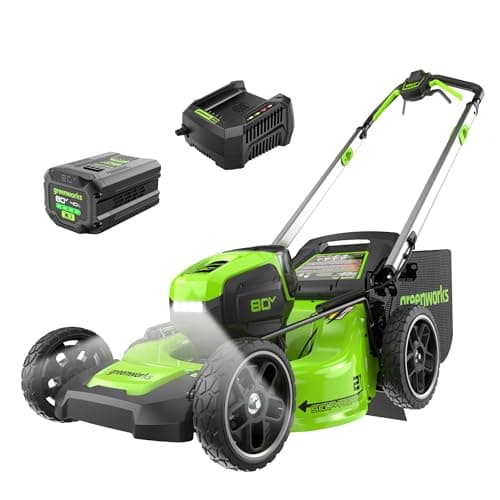
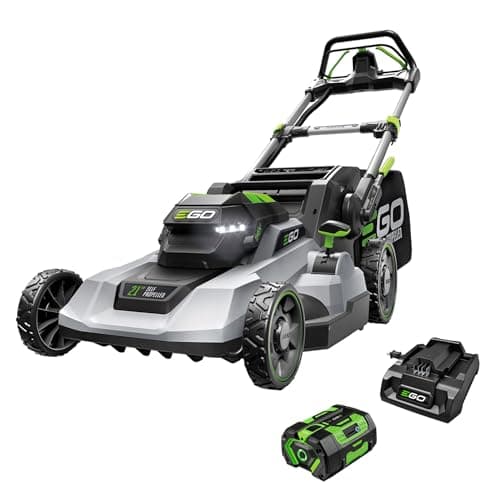
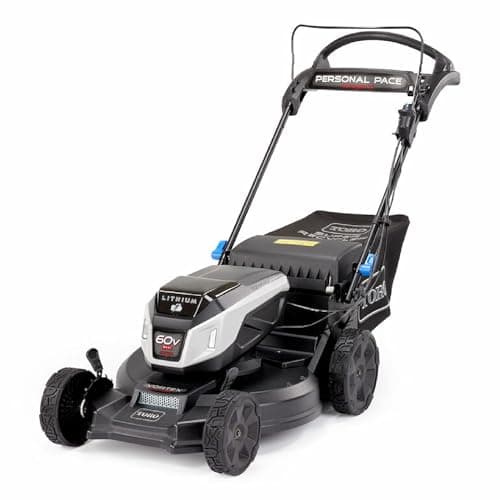
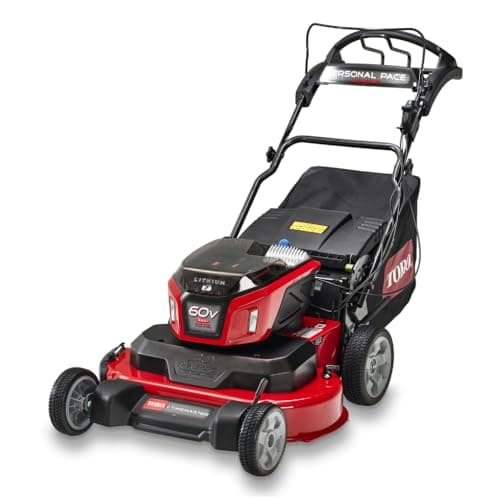
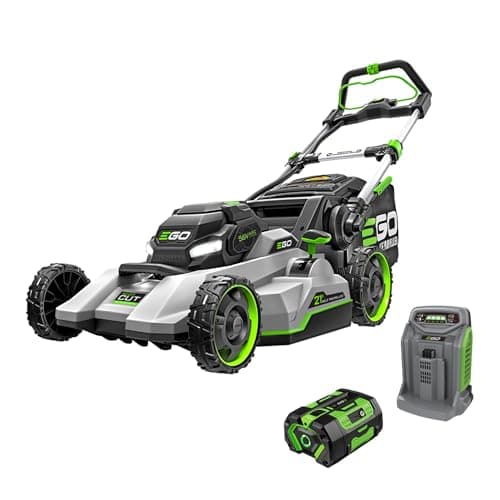
The best self-propelled electric lawn mower is the EGO Power+ 21" Select Cut (LM2135SP), for a quarter to half an acre with no gas can in the shed: a 21-inch deck, a variable-speed rear-wheel drive and EGO's stacked-blade Select Cut system, on the 56V platform with the deepest tool range in cordless lawn care. If you want the same format for less, the Greenworks 80V 21" is the value pick. And if your lawn runs past half an acre, the Toro 60V 30" eTimeMaster is a 30-inch deck on batteries, which is the only honest way to cover that much ground without a rider.
Are electric lawn mowers self propelled?Many of them are, and that is the thing the category pages never make clear. Battery mowers split into push and self-propelled exactly the way gas mowers do, and the split is not about the battery at all — it is a separate drive motor turning the wheels. Our electric mower roundup ranks the whole cordless field and our self-propelled roundup ranks gas and battery together. This page is the intersection: battery lawn mowers that are self propelled, and nothing else.
Two specs decide it. Deck width sets how many passes your lawn takes, and it is the only number that changes how long you spend mowing. Amp-hours at the pack voltagesets whether you finish in one go — and a drive motor draws current on top of the blade motor, so a self-propelled battery mower needs noticeably more capacity than a push one for the same lawn. We have not mowed with any of these; the ranking reads published deck widths, voltages, amp-hours, drive type and rated areas. See how we pick.
Best self propelled lawn mower electric: how to choose
Start with deck width, not voltage.A 21-inch deck covers about a quarter more ground per pass than a 17-inch one, and that is a direct cut in mowing time. Voltage marketing — 40V against 60V against 80V — tells you almost nothing on its own, because what matters is watt-hours, and watt-hours are volts multiplied by amp-hours. A 40V 6 Ah pack and a 60V 4 Ah pack hold the same energy.
Then check the drive layout. Rear-wheel drive is the right answer on any lawn with a slope, because leaning on the handle pushes the driven wheels into the ground. Front-wheel drive is easier to pivot at the end of a pass and loses traction going uphill. Variable speed, as on the EGO machines and the Toro Personal Pace system, matters more than it sounds: a single-speed drive is either faster or slower than you want to walk.
Buy the battery platform, not the mower.This is the decision you are actually making. Your next trimmer, blower and hedge cutter will run on whichever battery you pick today, and the packs are most of the cost of each of them. EGO and Greenworks both have deep ranges; Toro's 60V Flex-Force covers mowers, blowers and trimmers; Husqvarna's battery range leans toward its own professional tools.
Work out the watt-hours your lawn needs. The rough arithmetic that matters: a 21-inch battery mower with a drive motor covers roughly a third of an acre on about 300 watt-hours in normal conditions, and tall or damp grass can halve that. Two 4 Ah packs on a 56V or 60V platform is a bit over 400 watt-hours, which is why two-battery kits exist. If the listing only quotes a runtime in minutes, that figure was measured in easy grass.
Check whether batteries are included.Several of the best machines on this page — the Toro Super Recycler and eTimeMaster among them — are sold as tool-only. That is the right buy if you already own packs and a terrible surprise if you do not, because a 60V 6 Ah pack and charger can cost most of what the mower did.
What a battery drive gives you that gas does not
No fuel to go stale over winter, which is the single most common reason a gas mower will not start in April. No oil changes, no air filter, no spark plug, no carburetor to gum up. It starts on a button every time, and it is quiet enough to mow at eight in the morning without an argument. The full comparison, including where gas still wins, is in electric vs gas lawn mower.
What it costs you is unlimited runtime. A gas self-propelled mower runs as long as you keep pouring fuel in. A battery one runs until the packs are flat, and on a big lawn that means a second set of packs or a break in the middle. That is the whole trade, and it is the reason the 30-inch Toro eTimeMaster is on this list — a wider deck is the cheapest way to buy back runtime.
Who should skip this category
Skip a self-propelled battery mower if your lawn is flat and under about a quarter of an acre. A drive motor adds weight, cost and one more thing to fail, and on flat ground a 21-inch mower is easy to push. The push mower roundup is the right page, and you will spend meaningfully less.
Skip it the other way too: past about three-quarters of an acre, the answer is not a wider walk-behind but a rider. And if your lawn is genuinely steep, read the slope ratings carefully — a rear-wheel-drive walk-behind is the right tool, but there is a gradient past which no walk-behind is.