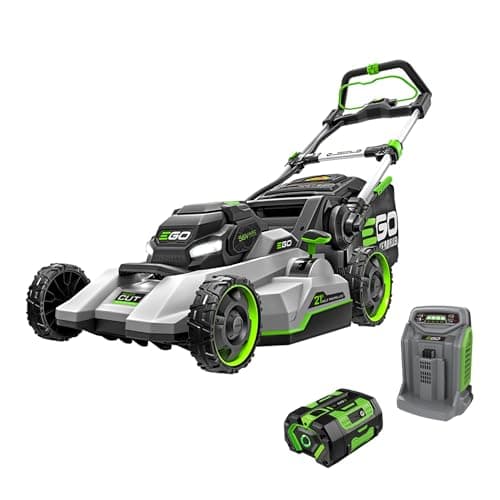
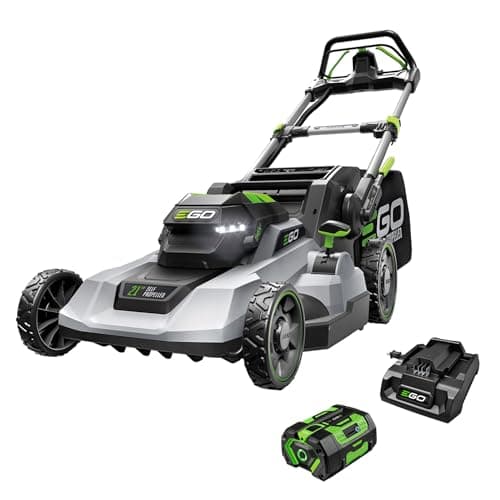
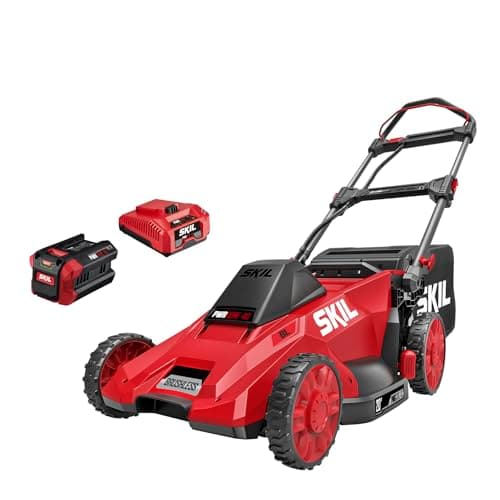
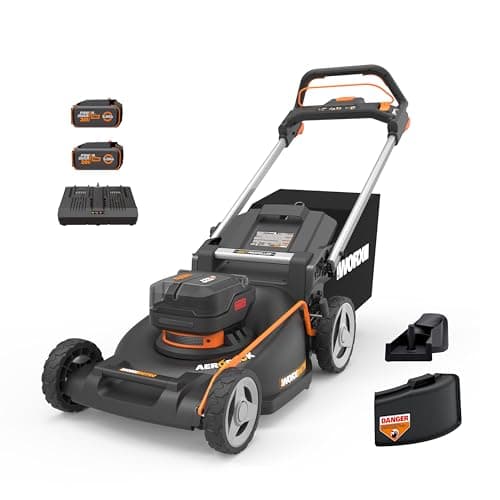
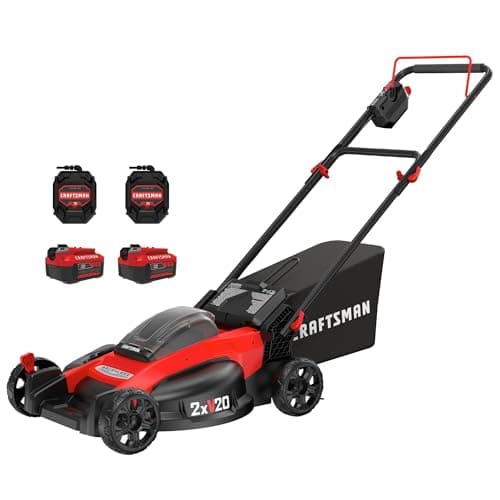
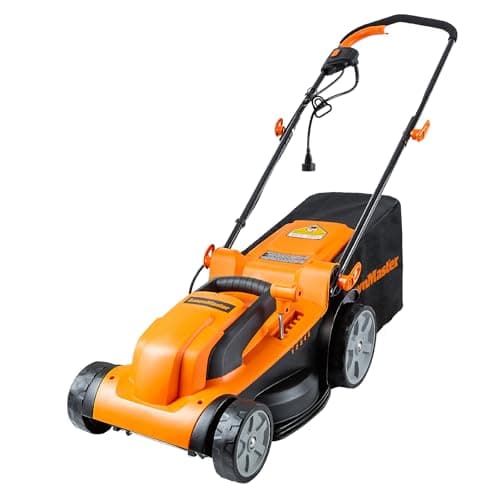
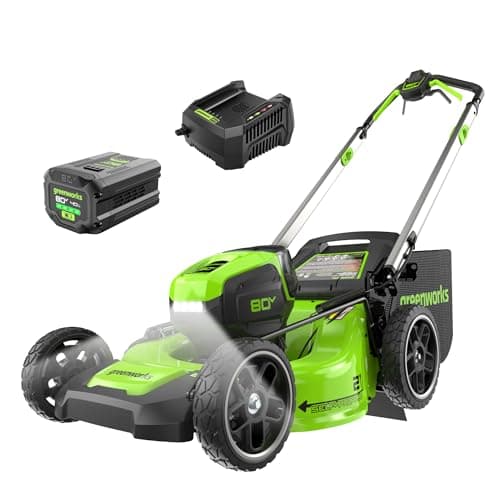
The best electric mower for most lawns is the Greenworks 80V 21" Self-Propelled— the highest nominal voltage here, a full-size deck, a driven wheel and a battery in the box, for substantially less than the equivalent EGO. If you want the better-engineered machine and the broader tool range, the EGO LM2135SP is worth the premium. If you want the most stored energy per dollar, the SKIL PWR CORE 40 ships a 6.0 Ah pack and nothing else here comes close on that measure.
The thing to understand before you spend anything is that you are not really buying a mower. You are buying a battery platform, and the mower is the entry ticket. Over the next ten years you will probably add a trimmer, a blower and maybe an edger, and every one of them will be cheaper as a bare tool on a platform you already own. That is why this list ranks platform breadth alongside deck width, and why the cheapest mower here is not the best value.
We have not mown with any of these, and we are not going to imply we have. What we publish is the deck width, the nominal voltage, the amp-hours in the box and whatever runtime each manufacturer states — then we rank on what those support. Our how we pick page explains the method. For the decision one layer up — whether electric is right for your lawn at all — read electric vs gas lawn mower.
How to choose an electric mower
Pick the platform first, the mower second. EGO 56V and Greenworks 60V and 80V are the two broadest homeowner outdoor platforms; Worx 20V/40V PowerShare and CRAFTSMAN V20 are broad but lower-voltage; SKIL PWR CORE 40 is excellent value and the narrowest range. Milwaukee M18 is a trade platform with outdoor tools attached. If you already own batteries in one of these, that is probably your answer and you can stop comparing mowers.
Voltage is power, amp-hours are endurance.These get conflated constantly. Nominal voltage tells you how hard the mower can work in thick or damp grass before it bogs. Amp-hours tell you how long it can work at all. If your problem is “it stalls in long grass” you want volts; if your problem is “it dies before I finish” you want amp-hours, or a second pack. Note that a mower sold as a two-battery kit, like the Greenworks 60V twin kit, is solving the second problem deliberately.
Check whether the battery is included.EGO sells many of its best tools as bare tools, and the price difference once you add a 56V pack and charger is substantial — it is why the EGO trimmers in our trimmer roundup look cheaper than they are. For a first purchase on a new platform, always compare kit prices against kit prices.
Do not dismiss corded. For a small lawn within about 75 feet of an outlet, a corded mower is the cheapest mower that never needs charging, never needs fuel, and has no battery to degrade in five years. The LawnMaster is here for exactly that case. The cord is a genuine nuisance and the trade is honest: unlimited runtime for permanent cord management.
Expect batteries to be a consumable.Nobody selling you a cordless mower leads with this, so we will: lithium packs lose capacity over years of charge cycles, and a replacement pack is a meaningful fraction of the mower's price. It is still cheaper than a decade of oil, filters, plugs and fuel stabiliser — the numbers are in electric vs gas — but it is a cost, not zero.
Who should skip these
If you mow over half an acre in one session, skip the cordless mowers here. You will either buy a second battery or stop halfway, and a self-propelled gas mower refuels in two minutes. If your grass regularly gets long between cuts — a rental property, a second home, a wet spring you lost — skip the 20V platforms specifically. CRAFTSMAN V20 and Worx 20V are well-made tools that are simply out-of-spec for tall wet grass.
And skip the corded LawnMaster unless your lawn genuinely is small and near a socket. A cord around trees and beds on a quarter acre is the reason a mower sits in the garage while the grass grows.
How we picked this
We haven't hit this gear — and we say so
We compiled the published manufacturer specifications — shaft weight and flex, loft, deck width, blower CFM, fertilizer NPK, seed species — did the deck-width and nitrogen arithmetic, cross-read the owner manuals, and scored each pick against a published rubric. The scores are judgments from documented research — they are notlab measurements we took, because we don't have a lab and we're not going to pretend we do. Where somebody has genuinely measured this, we link them. You can check every number we publish.