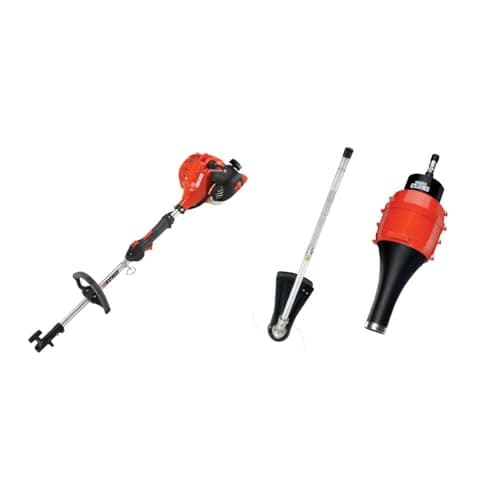
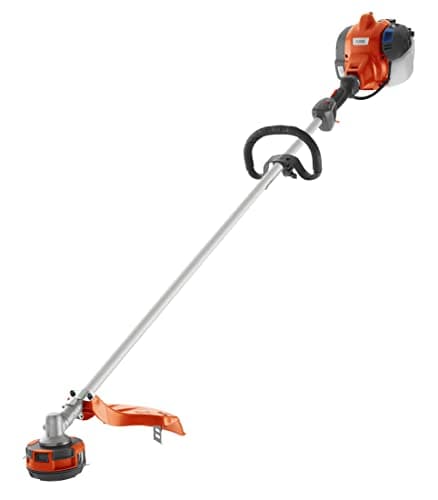
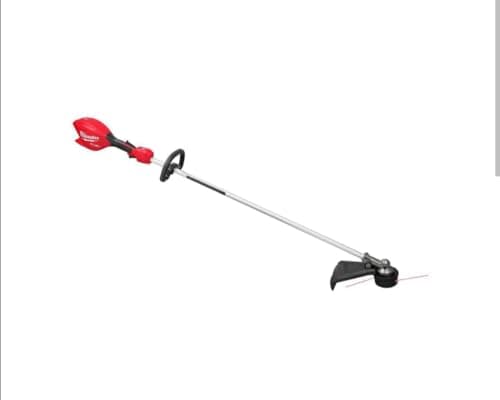
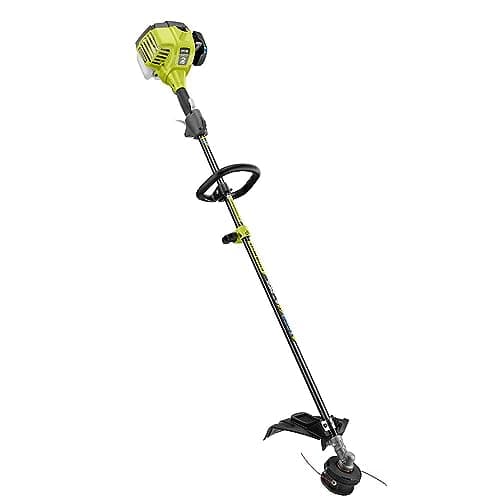
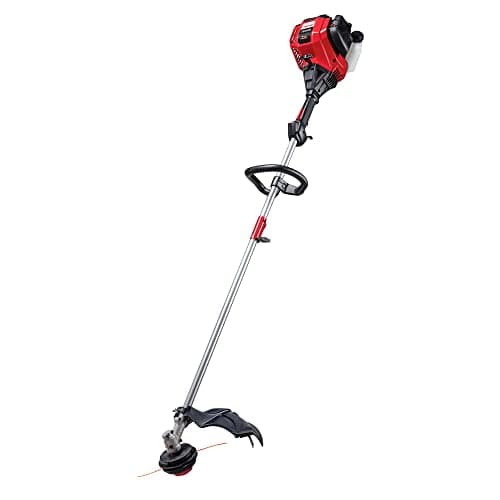
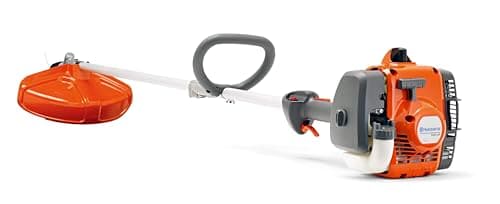
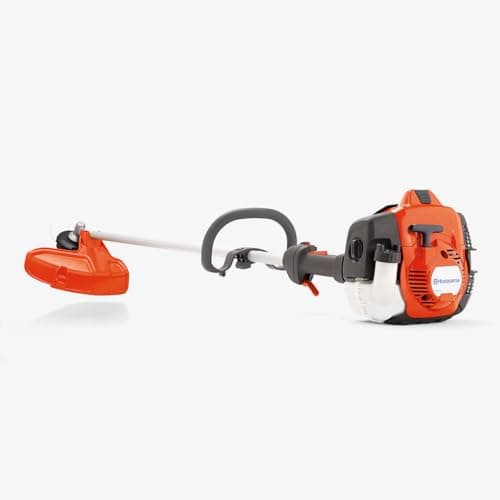
The best commercial string trimmer here is the Husqvarna 525L. The 500 series is Husqvarna's professional line, it runs a straight shaft and a Tap-n-Go head, and it is built around the assumption that somebody will hold it for six hours. If you want one powerhead that also becomes an edger, a pole saw and a hedge trimmer, the ECHO PAS-225VPB is the attachment-capable system and the smartest buy for a small crew. The Husqvarna 130L is the step down that still has the straight shaft and the build quality, and the Milwaukee M18 FUEL is the cordless answer for crews already on M18 batteries.
What actually separates a commercial trimmer from a homeowner one is not power. It is five things, and none of them appears in a big number on the box. A full-crank engine rather than a half-crank, because that is the bearing that fails under sustained revs. A solid steel driveshaft in a straight tube, which transmits torque without the flex and the wear a curved shaft has. A commercial-grade head that reloads in under a minute and takes thick line. Serviceable parts— a clutch, a head, a shaft and a carburetor you can buy individually. And harness mounting points and vibration damping, because the limiting factor on a long day is the operator, not the machine.
A straight word on what this page is not. We have not run these trimmers through a work week, and we do not publish hours figures we did not record — the policy is in how we pick. What we rank on is published specification, whether a maker puts a machine in its professional line, shaft and head type, and parts support. Prices are live from the price layer with an “as of” date.
Homeowner versus commercial: the five differences
| Feature | Homeowner | Commercial | Why it matters |
|---|
| Crankshaft | Often half-crank | Full-crank | The bearing that fails under sustained revs |
| Shaft | Curved, sometimes split | Straight, solid steel | Torque transfer, reach, less wear |
| Head | Bump feed, thin line | Commercial head, 0.095 in and up | Reload speed and cutting in heavy growth |
| Parts | Whole-unit replacement | Clutch, head, shaft, carb sold separately | A repair instead of a purchase |
| Ergonomics | Loop handle, basic damping | Harness points, real damping | The operator is the limit on a long day |
Straight shaft, and why pros do not argue about it
A curved shaft puts a flexible cable inside a bent tube, which is cheaper and lighter and fine for twenty minutes round a suburban lawn. A straight shaft runs a solid steel rod in a straight tube: more torque at the head, longer reach under fences and over banks, and the ability to take a commercial cutting head or a brushcutter blade. It also sets you up to sweep flat at ground level rather than scalping, which is what makes the difference between trimming and gouging. Every machine near the top of this list has one.
Attachment systems: one engine, five tools
The ECHO PAS powerhead is the strongest argument on this page for a crew rather than an individual. One engine, one air filter, one carburetor, one set of fuel to look after — and heads that turn it into a trimmer, an edger, a pole saw or a hedge trimmer. For a two-truck operation that is less equipment to maintain, less to insure and less to load. The trade-off is that when the powerhead is down, five tools are down, which is why crews that depend on one usually own two.
Gas or cordless for work use?
The honest state of it: gas still wins for all-day work, because refuel time is thirty seconds and battery swap time is however long the charger takes when the spares run out. A full-day crew needs a bank of batteries and a vehicle charger to match one gas trimmer and a jerry can, and that is a real capital cost.
Where cordless wins for professionals is specific and growing: noise-restricted sites, early-morning starts in residential neighborhoods, indoor or enclosed areas, and crews already standing on a battery platform for drills and blowers. The Milwaukee M18 FUEL trimmer is the pick there not because it out-cuts a 525L but because a crew with twenty M18 batteries in the van has already paid for the hard part. The residential side of this decision is in best cordless string trimmer and best gas string trimmer.
Line is not an accessory, it is a setting
Switching from 0.065 to 0.095-inch line changes a trimmer more than any feature on the spec sheet. Commercial work means thicker line, usually 0.095 inch and up, and a shaped profile — square or twisted rather than round — because an edge cuts and a circle beats. Thicker line needs a machine with the torque to swing it, which is exactly why head and line are matched to engine size rather than chosen freely. The full breakdown, including who should run what diameter, is in best string trimmer line.
What a serious homeowner should take from this page
You do not need a 525L to trim a suburban lawn, and we are not going to pretend otherwise. Buy a commercial trimmer if one of these is true: you have more than about 400 feet of edge and fence line, you cut heavy growth or brush rather than lawn grass, you have already worn out a homeowner trimmer, or you intend to own one trimmer for fifteen years and have it serviced rather than replaced. If none of those is true, the main trimmer roundup is the right page and you will spend a third of the money.
Running a trimmer so it lasts the season
Mix fuel correctly and use it fresh. Two-stroke machines die from bad fuel more than from work. Mix at the ratio in the manual, use stabilized fuel or pre-mixed canned fuel, and do not keep mixed gas for months.
Clean the air filter weekly in dusty conditions.A blocked filter runs the engine rich and washes down the cylinder. It is a two-minute job that decides the engine's life.
Do not bury the head in dirt. Trimming at soil level packs the head with grit, which wears the eyelets and the spool. Sweep at the grass line, and use an edger for the vertical cut along paving rather than tipping the trimmer on its side.
Keep spare heads and eyelets, not spare trimmers. That is the whole point of buying commercial: the consumables are the parts that wear, and they are replaceable.