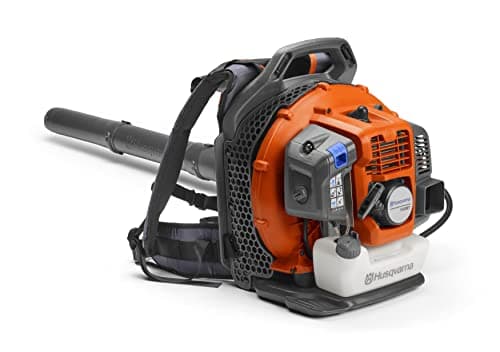
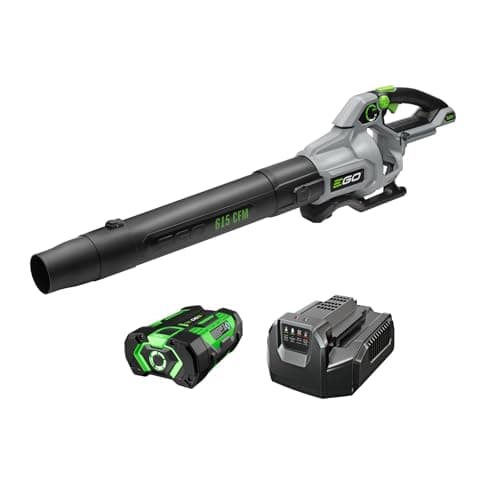
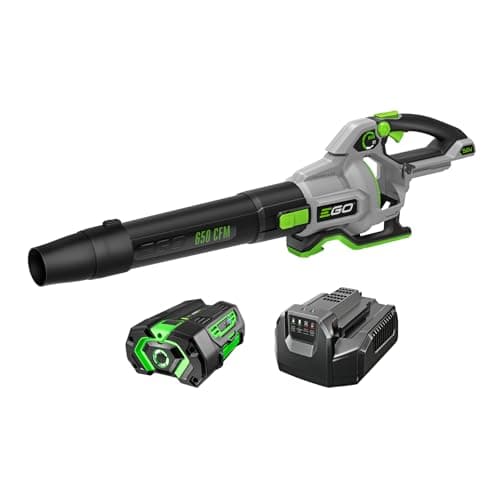
For almost every home lawn, buy battery. The EGO Power+ LB6504 moves enough air to clear a driveway and a leaf-covered lawn, starts instantly, weighs less than a gas handheld and has no fuel, no oil mix, no primer and no pull cord. The case for gas survives in exactly one place: clearing large areas continuously, where a backpack machine like the Husqvarna 150BT runs as long as you keep pouring fuel into it and carries its weight on your shoulders rather than your forearm. If your property is an acre of mature trees and fall is a two-hour job every weekend, that is a gas backpack. Everything smaller is battery.
The number that decides a blower is CFM— cubic feet of air per minute — not MPH. MPH is how fast the air leaves the nozzle, which matters for unsticking a wet leaf from concrete. CFM is the volume of air you are actually moving, which is what pushes a pile across a lawn. A high-MPH, low-CFM blower feels powerful and moves very little; it is the specification combination cheap blowers lead with. Where a maker does not publish CFM, we say so rather than estimating it.
What has changed, and why this comparison reads differently than it did five years ago: battery blowers caught up on air volume before they caught up on anything else, because an electric motor can spin a big fan efficiently. A current 56 or 60-volt handheld moves as much air as a gas handheld while weighing less and making a lower-pitched, less carrying noise. The remaining gas advantages are continuous runtime and the backpack format at high output. Prices below are live from the price layer with an “as of” date.
Battery against gas, head to head
| Battery | Gas handheld | Gas backpack |
|---|
| Air volume | Matches gas handhelds at 56–80V | Mid | Highest |
| Runtime | Limited by batteries | Refuel in 30 seconds | Refuel in 30 seconds |
| Starting | Instant, a trigger | Prime, choke, pull | Prime, choke, pull |
| Weight carried | Light, in one hand | Heavier, in one hand | Heaviest, on your back |
| Noise | Lower and lower-pitched | High and carrying | Highest |
| Upkeep | Charge it | Mixed fuel, plug, filter | Mixed fuel, plug, filter |
| Local rules | Allowed everywhere | Restricted in some cities | Restricted in some cities |
Who should buy battery
Anyone clearing a driveway, path, deck or suburban lawn. This is most people, and the decision is not close. You pick it up, squeeze the trigger and it works, then you put it down and nothing degrades while it sits.
Anyone who blows clippings off paving after mowing. That is a three-minute job and the deciding factor is entirely how quickly the tool starts. A gas blower that needs priming for a three-minute job will not get used.
Anyone in a neighborhood with early-morning sensitivities or a local gas restriction. A growing number of US cities restrict gas leaf blowers by season or by hour. Battery sidesteps that entirely.
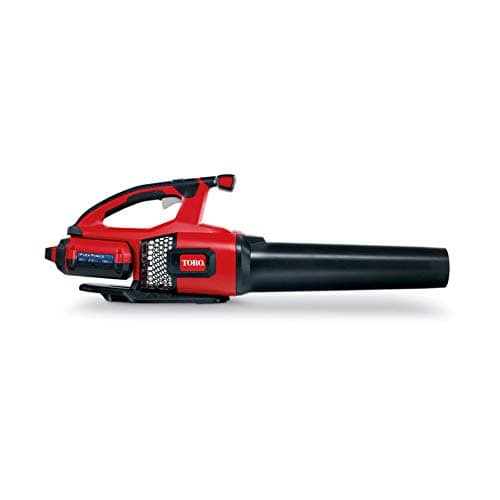
Anyone who already owns a battery platform. If you have EGO, Toro, Greenworks or CRAFTSMAN batteries from a mower or a trimmer, the bare blower is the cheapest tool you will add all year.
Who should still buy gas
Anyone clearing more than about an acre of leaf litter in a session. Fall on a wooded property is sustained, high-output work, and a backpack gas machine runs as long as you feed it. Battery backpacks exist, and they are a bank of expensive batteries.
Anyone who needs the highest air volume available. At the top of the output range, gas backpacks still lead, and the format is right: the weight sits on your shoulders instead of hanging off one wrist for two hours.
Anyone working away from power. Fuel in a can is more portable than a charging schedule if you are clearing a property with no electricity.
Corded: the forgotten third option
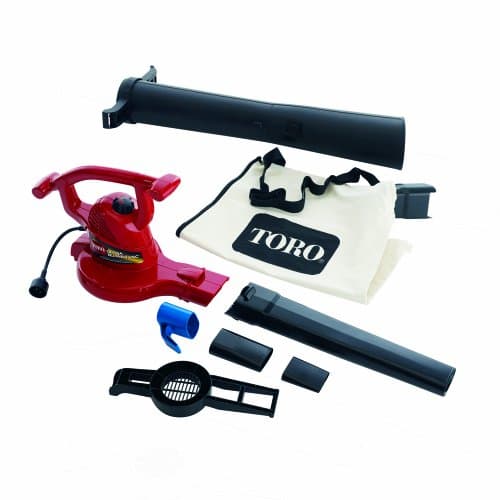
A corded electric blower is cheap, light, unlimited in runtime and tethered to an outlet. For a small paved area within a hundred feet of the house — a town patio, a driveway, a garage floor — the Toro 51609 Ultra type of machine is genuinely the best value in this category, and it doubles as a vacuum and mulcher. The cord is a real nuisance on a lawn with obstacles and no nuisance at all on a rectangle of concrete. The vacuum side of the category is in best leaf blower vacuum.
How to read the specs without being fooled
CFM moves piles; MPH unsticks leaves. You want both, but if you only get one number, take CFM.
Beware figures quoted in boost or turbo mode only. Peak output on a trigger-held boost is not the figure you work at for twenty minutes.
Runtime claims are at low speed.A battery blower quoting a long runtime is usually quoting it at the lowest setting. Full output is a fraction of that, which is fine — you use full output in bursts — but plan a second battery if the job is long.
Nozzle shape matters more than people expect. A flat or tapered nozzle concentrates air for wet leaves; a round wide nozzle moves dry piles. Several blowers ship with both, and it is the cheapest performance change available.
The verdict, plainly
Buy batteryunless you are clearing acreage of leaves in long sessions or you need the very highest air volume on your back. For a driveway, a path, a deck and a lawn — and for blowing clippings off paving after every mow — the instant start and the lower weight win, and the published air volumes on a current 56 to 80-volt handheld are in the same range as a gas handheld. Buy gas, in backpack form, if fall is a two-hour job on a wooded acre. The full rankings are in best leaf blower and best cordless leaf blower.
If that last sentence describes your yard, the backpack class is where this decision actually gets made, and it is the one place battery has closed most of the gap: the machines in best backpack leaf blower run from 600 published CFM on a battery to 890 CFM in a gas housing, at almost identical carried weight.