The criteria, in the order that decides the purchase
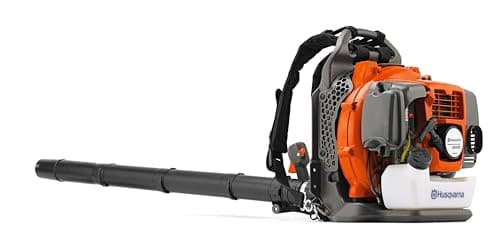
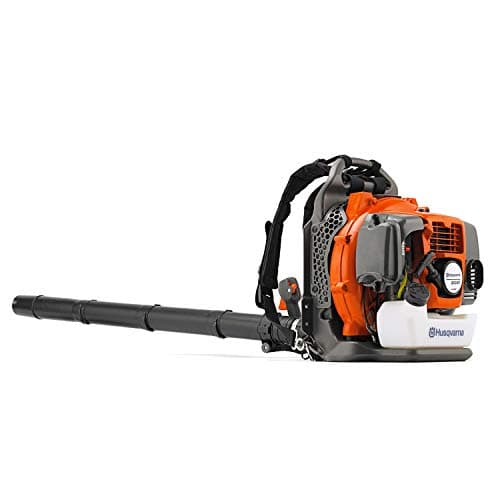
1. CFM, and specifically where it was measured. Air volume is what carries a leaf across a lawn. Air speed only lifts it off the ground. Husqvarna is unusually honest here and publishes both an air flow in housing figure and an air flow in pipefigure, and on the 350BT those are 692 and 494 CFM — a 200 CFM gap on the same machine. Most makers publish one number without saying which it is. So when a listing quotes 800 CFM against Husqvarna’s 692, that is not necessarily more air at the nozzle; it may be the same measurement taken in a friendlier place. Compare like with like where you can, and treat a single unlabeled figure as the optimistic one.
2. Blow force, where it is published. Newtons of blow force is the most useful single number in the category, because it combines volume and speed into the thing you actually feel: how hard the air pushes. Husqvarna publishes 21 N for the 350BT, 22 N for the 150BT and 30 N for the 360BT. Neither EGO nor Greenworks publishes a blow-force figure for its backpack, which is why the gas machines are easier to rank against each other than against the battery ones.
3. Carried weight. All three Husqvarnas land within about a pound of each other (22 to 23.2 lb), which is the useful insight: on a backpack, going up the power range costs you almost nothing in weight. On the battery machines the weight is the battery, and a bigger battery is both your runtime and your load.
4. Runtime versus refueling.A tank of mixed fuel runs about as long as you want to be blowing. A 4.0 to 7.5Ah battery on maximum airflow does not — and “turbo” is a button that trades minutes for CFM. If your leaf fall is a single long Saturday rather than ten minutes a day, gas still wins this argument, and a spare battery costs a meaningful fraction of the tool.
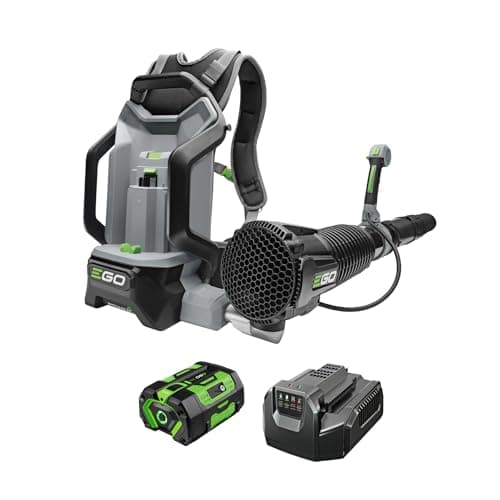
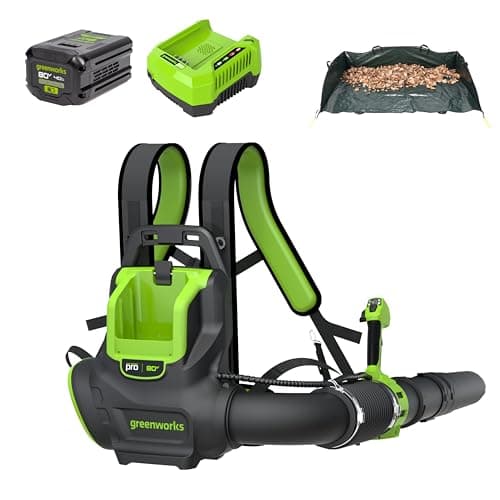
5. The platform you already own. If there are EGO 56V batteries in your garage, the LB6003 is cheaper than its sticker suggests over five years. The same is true in reverse: buying into 80V for one blower is an expensive way to get one tool.
The five, compared on published figures
| Machine | Power | Published airflow | Air speed | Blow force | Weight |
|---|
| Husqvarna 350BT | 50.2 cc gas, 2.1 hp | 692 CFM housing / 494 CFM pipe | 180 MPH | 21 N | 22.5 lb |
| EGO Power+ LB6003 | 56V battery (7.5Ah included) | 600 CFM | Not published | Not published | Not published |
| Greenworks 80V | 80V battery (4.0Ah included) | 800 CFM | Not published | Not published | Not published |
| Husqvarna 360BT | 65.6 cc gas, 3.81 hp | 890 CFM housing / 631 CFM pipe | 232 MPH | 30 N | 23.2 lb |
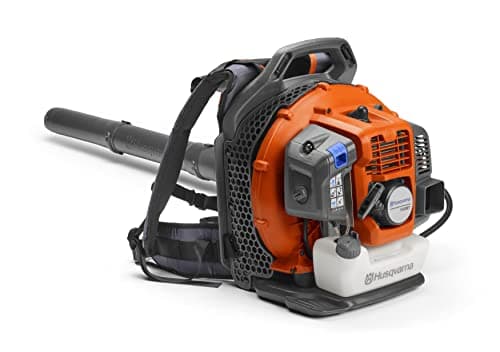
| Husqvarna 150BT | 51.7 cc gas, 2.16 hp | 765 CFM housing / 452 CFM pipe | 270 MPH | 22 N | 21.95 lb |
Every figure above is published by the manufacturer. “Not published” means exactly that — we would rather leave a cell empty than fill it with an estimate. Live prices with an “as of” date are above.
Does your lot actually justify a backpack?
This is the question that saves people the most money, so here it is before the recommendations.
A drive, a patio and a small lawn: no. A cordless handheld clears that faster than a backpack takes to strap on and start, and it costs a third as much. The ranking for that is best cordless leaf blower.
A quarter acre with one or two deciduous trees: borderline. A high-CFM handheld will do it in two sessions. If you would rather do it in one, a backpack is a reasonable luxury rather than a necessity.
A third of an acre and up, with mature trees:yes. This is where the arithmetic flips — the job is long enough that carried weight, not airflow, is what ends your afternoon.
Half an acre or more under oaks, or wet leaf fall:yes, and size up. Wet matted leaf needs blow force rather than speed, which is the 360BT’s 30 N argument.
You clear for other people: gas, and the biggest one you will carry. A commercial day is not a battery conversation.
Gas or battery, for a backpack specifically
The general case is argued in electric vs gas leaf blower. It changes slightly in the backpack class, in both directions.
Battery looks better than usualbecause the weight problem a backpack exists to solve is also the battery’s problem. A 7.5Ah pack is heavy to hold and nearly irrelevant to carry, so putting it in a harness removes the main objection to a big battery. You also get no mixed fuel, no choke, no annual carburetor service and no pull cord, and a blower is the tool most likely to sit unused for ten months and then refuse to start.
Gas looks better than usual because backpack jobs are long by definition. The whole reason to carry a blower on your back is that you intend to blow for an hour, and an hour of maximum airflow is more than one battery. Gas also still wins outright on published blow force at any given price.
The honest split: if your cleanup is bounded — a weekend morning, a drive and a lawn, a few times each fall — take the battery and enjoy never servicing it. If the leaves fall for six weeks and you are out there most of them, take the gas.
Technique matters more than the last 100 CFM
Two things make a bigger difference to how long a leaf cleanup takes than any spec gap in the table above.
Windrow, do not scatter. Work in long overlapping sweeps toward one destination, keeping the nozzle low and moving leaves in a growing line ahead of you. The classic mistake is sweeping side to side across the lawn, which spreads the pile as fast as it builds it. Plan where the heap is going before you start the engine, and work downwind.
Blow onto a tarp, not into a bag.A tarp lets you drag an enormous volume in one trip; bags are a per-bag tax on the same leaves. The Greenworks kit ships with a leaf tarp for exactly this reason. Better still, shred the pile and use it: mulched leaf is good mulch and good compost feed, and light leaf fall can simply be mulched into the lawn with the mower — see best leaf blower vacuum for the shredding tools and best mulching lawn mower for doing it with the machine you already own.
One more: clear leaves before they mat. A dry leaf layer blows in a fraction of the time a wet, frozen or matted one does, and matted leaf left on turf over winter is how you get bare patches to reseed in the spring — and spring is the harder of the two seeding windows, as when to plant grass seed explains.
Hearing protection is not optional on a gas backpack
A gas backpack blower is the loudest tool most homeowners own, and the engine is directly behind your head rather than out at arm’s length. NIOSH guidance on occupational noise is the right reference point here: hearing damage is a function of loudnessand exposure time, and a backpack blower is specifically the tool you run for an hour at a stretch. Wear muffs or plugs, not earbuds. This is also a genuine argument for the battery machines, which are quiet enough to run early on a Saturday without a conversation with the neighbors.
What we did not rank, and why
Sub-$200 no-name gas backpacks.The marketplace is full of 63cc to 76cc backpack blowers quoting 1000-plus CFM at a third of Husqvarna’s price. Some are decent; the numbers are not comparable to a published housing-or-pipe figure, parts support is a gamble, and a two-stroke you cannot get a carburetor kit for is disposable. We would rather point you at machines whose specifications can be checked against the maker’s own spec sheet.
Commercial-tier 1000 CFM machines.Husqvarna’s own 580BTS and the ECHO X-series are excellent and are built for crews running them daily. Stock on the big ones comes and goes, they cost roughly double the 360BT, and the extra capability is wasted on a residential lot. If you clear professionally, go look at them.
Blower vacuums.A backpack cannot vacuum. If what you want is to collect and shred rather than move, that is a different tool — best leaf blower vacuum covers it, and a lawn sweeper collects without any engine at all.
The verdict
Most people who need a backpack: the Husqvarna 350BT. 494 CFM at the pipe, 21 N, 22.5 lb, a spec sheet you can verify, and dealer parts everywhere.
No engine, please: the EGO Power+ LB6003. 600 published CFM, 7.5Ah battery and charger included, nothing to winterize.
Most airflow without gas: the Greenworks 80V at 800 published CFM, with cruise control and a leaf tarp in the box.
Half an acre under oaks: the Husqvarna 360BT. 631 CFM at the pipe and 30 N for less than a pound more on your back.
Smallest sensible gas backpack: the Husqvarna 150BT.
A drive and a patio: none of these. Buy a cordless handheld and keep the difference.