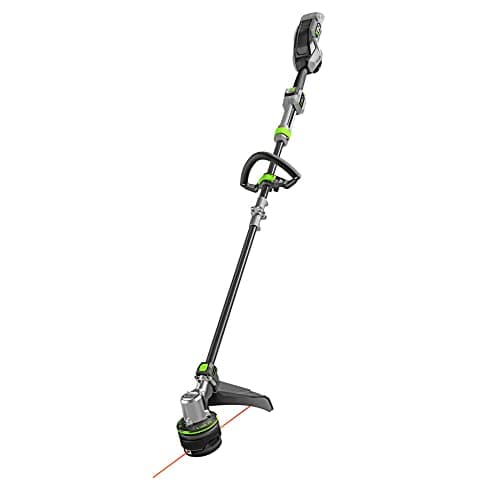
They are the same tool.“String trimmer” is the correct name for a machine that cuts grass with a spinning nylon line; “weed wacker” is an informal nickname for exactly that machine; and “Weed Eater” is a brand name that became a generic word the way Hoover did for vacuum cleaners. If a shop assistant, a neighbor and a product listing use all three words at you, nobody is describing anything different. Buy on the specs, not the noun — and for most homeowners the one to buy is the EGO Power+ 16" POWERLOAD with LINE IQ, because it reloads its own line and feeds it automatically, which removes the two things everybody hates about the category.
There is one real distinction hiding behind the nicknames, and it is worth getting right because the two tools are not interchangeable: a string trimmer cuts grass and soft weeds; a brush cutter cuts woody growth. A brush cutter is a bigger machine that takes a metal blade instead of a line, and it is what you need for saplings, brambles and thick woody stems. A string trimmer asked to do that job will simply shred line all afternoon.
We have trimmed nothing with these. Everything here reads published cutting swath, line gauge, shaft type, power source and line-feed mechanism — see how we pick. Prices are live from the price layer with an “as of” date beside each tool.
What each name actually means
| Name | What it is | Cuts | Cutting head |
|---|
| String trimmer | The correct generic name | Grass, soft weeds | Nylon line |
| Weed wacker | Informal nickname for the same tool | Grass, soft weeds | Nylon line |
| Weed eater | A brand name used generically | Grass, soft weeds | Nylon line |
| Strimmer | British term for the same tool | Grass, soft weeds | Nylon line |
| Brush cutter | A different, heavier tool | Saplings, brambles, woody stems | Metal blade |
| Edger | A different tool again | A vertical edge along a path | Steel blade on a wheel |
Cutting swaths, line gauges and shaft types for the tools below are the figures the listings publish. Prices are live with an “as of” date.
The comparison that actually matters: what to buy
Since the names are the same tool, the useful head-to-head is between the formats you can buy.
Battery straight-shaft trimmer. The default for most homeowners now. Starts on a trigger, no fuel, quiet enough to use early, and the straight shaft reaches under shrubs and fences. The EGO ST1620T is the pick; the cordless roundup ranks the rest.
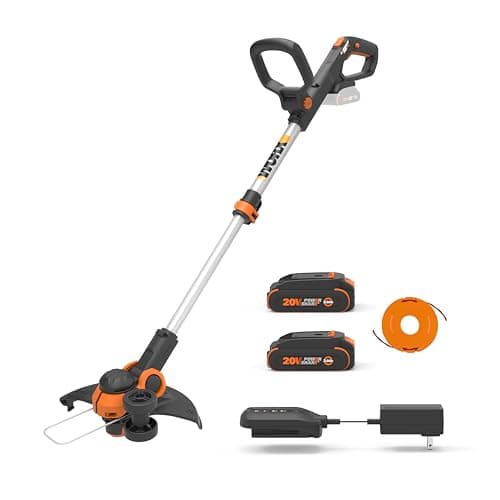
Battery curved-shaft or 2-in-1 trimmer. Lighter, cheaper and shorter reach, and often convertible to an edger. The WORX WG163 is the obvious value case if you already own 20V PowerShare batteries.
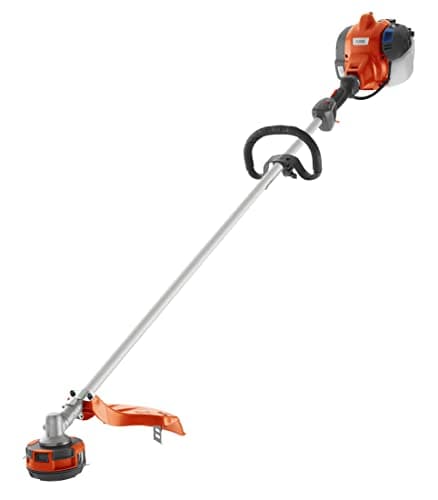
Gas straight-shaft trimmer. Still the answer for long property lines and rough grass, because there is no runtime ceiling and nothing to charge. The Husqvarna 130L is the pick here; see the gas roundup.
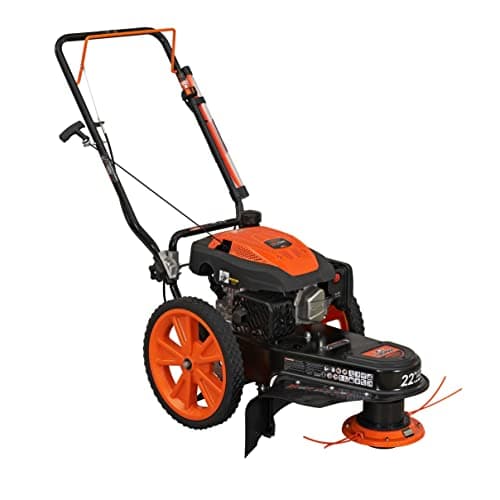
Wheeled walk-behind string mower. The one most people do not know exists. If your real job is a quarter acre of rough grass, a ditch bank or a fence line rather than trimming around a lawn, a wheeled trimmer does in twenty minutes what a handheld does in two hours. See wheeled string trimmers.
Line feed is the spec that decides how much you hate it
Nobody dislikes trimming grass. People dislike reloading line and tapping the head on the ground every thirty seconds. Three mechanisms exist and the difference between them is the single biggest quality-of-life variable in the category.
Bump feed— tap the head on the ground to release more line. Simple, universal, and the thing you will do a hundred times a session.
Automatic feed— the head senses line length and advances it on its own. EGO's LINE IQ is the best-known implementation and it genuinely removes the job.
Fixed-line or pre-cut head— you push in individual pre-cut lengths. Fast to replace, no spool to wind, and you carry a bag of line.
And whatever the head, the loadingmechanism matters nearly as much. A head you can reload by threading line through and winding with a crank — POWERLOAD and its equivalents — turns a ten-minute job on the garage floor into a thirty-second one. Our trimmer line guide covers which line to put in it.
Line gauge: the number to check before anything else
Line thickness decides what the tool can cut, and it is published for every machine. 0.065 inch is for light grass trimming on compact battery tools. 0.080 to 0.095 inch is the homeowner standard and handles grass and soft weeds comfortably. 0.105 inch and up is for rough growth and commercial use.
Putting thicker line than the head is rated for into a small trimmer loads the motor and overheats it, so the machine's rated gauge is a real limit rather than a suggestion. If you need 0.105 line, buy a machine built for it rather than forcing a small one.
Trimmer, brush cutter or edger: three tools, three jobs
This is where the nickname confusion does real damage, because people buy the wrong tool.
A string trimmer cuts grass the mower cannot reach: against walls and fences, around trees and posts, along a bed. It can also scrape a rough edge along a path by turning it vertically, which works and is not as clean as an edger.
A brush cuttertakes a steel blade and cuts woody material: brambles, saplings, heavy weed stems. You cannot do this with line. If your “weeds” have bark on them, this is the tool.
An edger runs a steel blade on a wheel to cut a clean vertical line where lawn meets path or drive. It does one job, does it far better than a trimmer, and the full comparison is in string trimmer vs edger.
The verdict: which to buy
Most homeowners: a battery straight-shaft trimmer with automatic line feed and a reload system. It is the version of this tool that stopped being annoying. The EGO ST1620T.
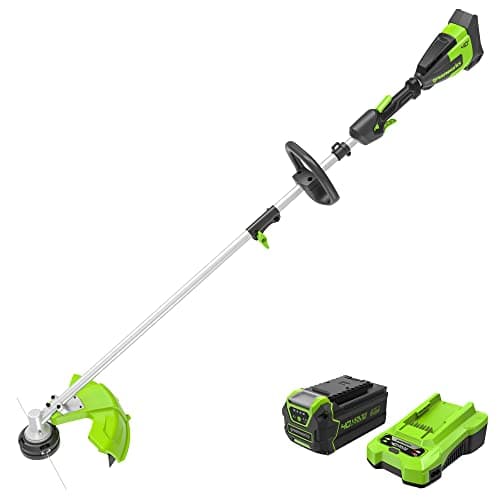
Value buyers, or anyone already on a battery platform:the Greenworks 40V 16" with a 4.0 Ah pack included, or the WORX WG163 if you own 20V PowerShare batteries.
Long property lines and rough grass: gas, for the runtime. The Husqvarna 130L.
A field, a ditch or a quarter acre of rough: stop buying handheld tools and buy a wheeled string mower. The YARDMAX YL2250.
Woody growth: none of these. Buy a brush cutter with a metal blade, which is a different machine for a different job.