Skip to content
Fairway&Fescue

The Feed · Fertilizer, Weed Control & Spreaders

The Best Weed and Feed for Bermuda Grass

Bermuda is dormant when cool-season lawns get fed, so the calendar on the bag is wrong for you. Timing first, then the products that suit a warm-season lawn.

By Stephen V.Updated How we pick
#ad

We earn a commission when you buy through our Amazon links, at no extra cost to you. It never changes our rankings — and we'll tell you when the cheaper bag or machine is the better buy. How this works.

For a bermuda lawn the weed and feed to buy is Scotts Turf Builder Weed & Feed3, applied after the lawn has fully greened up— which in most of the South means late April or May, not March. If the weeds are already up and winning when bermuda wakes, Scotts Turf Builder Triple Action1 adds a pre-emergent to the same job. And if you are reading this in late winter, the right product is not a weed and feed at all: it is Scotts Turf Builder Halts, a crabgrass pre-emergent, because feeding a dormant bermuda lawn feeds the weeds and not the grass.

That timing point is the whole reason this page exists separately from our main weed and feed roundup. Bermuda, zoysia, St. Augustine and centipede are warm-seasongrasses: they go dormant and brown in winter, green up when soil temperatures climb into the 60s, and do their growing through the heat of summer. Cool-season lawns — fescue, bluegrass, rye — do the opposite. Nearly every weed-and-feed bag on the shelf prints a calendar written for the cool-season lawn, and following it on bermuda means applying nitrogen to a brown lawn that cannot use it.

One more thing before the picks, and it is the most important sentence on this page: read the grass-type list on the label before you buy. Lawn herbicides are selective, and what they are selective against varies — a product perfectly safe on bermuda can damage St. Augustine, and the reverse is true too. The label is a legal document and the EPA requires you to follow it. If your lawn is St. Augustine or centipede rather than bermuda, the last pick on this list is the one for you and the first few are not. Prices below are live from the price layer with an “as of” date.

The short answer

Quick picks

#ProductBest forScorePrice
01
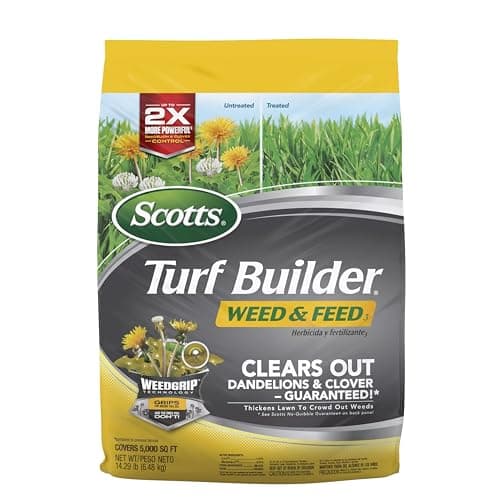
Scotts Scotts Turf Builder Weed & Feed3 (14.29 lb)
Scotts Turf Builder Weed & Feed3 (14.29 lb)

Fertilizer and broadleaf herbicide in one pass. The convenience is real and so is the compromise: the best time to feed and the best time to kill weeds are not the same week.

One pass, fed and weeded
7.2
$31.03Amazon
02
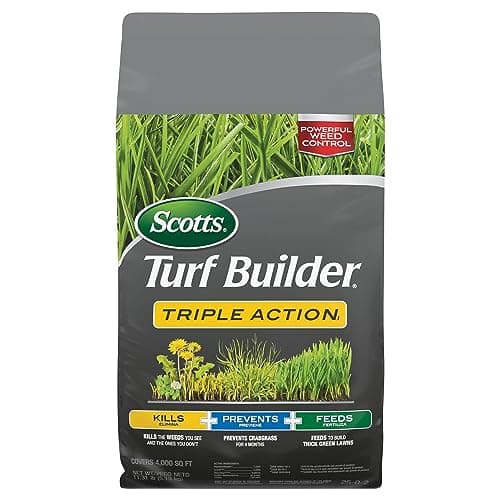
Scotts Scotts Turf Builder Triple Action1 (11.31 lb)
Scotts Turf Builder Triple Action1 (11.31 lb)

Three jobs in one spring bag: it feeds, it kills the broadleaf weeds already up, and it prevents crabgrass from germinating. The right choice when the lawn needs feeding and already has dandelions in it.

Spring feed where weeds are already up
7.8
$39.97Amazon
03
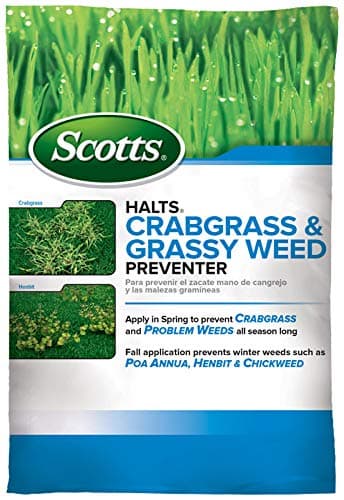
Scotts Scotts Halts Crabgrass & Grassy Weed Preventer (10.06 lb)
Scotts Halts Crabgrass & Grassy Weed Preventer (10.06 lb)

A pre-emergent, which is a fundamentally different and more effective proposition than a weed killer: it stops crabgrass seed germinating rather than fighting the plant after it wins.

Stopping crabgrass before it starts
7.8
$24.97Amazon
04
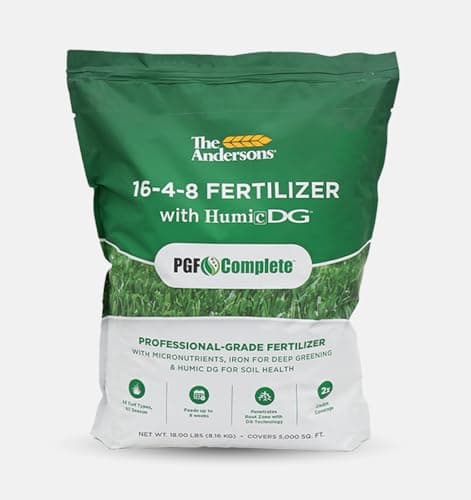
The Andersons The Andersons PGF Complete 16-4-8 with Humic DG (5,000 sq ft)
The Andersons PGF Complete 16-4-8 with Humic DG (5,000 sq ft)

The fertilizer serious lawn people actually use. A balanced 16-4-8 analysis on a very small particle, with 7 percent humic acid — it spreads evenly and waters in without sitting on the surface.

Best all-round lawn fertilizer
8.0
$59.88Amazon
05
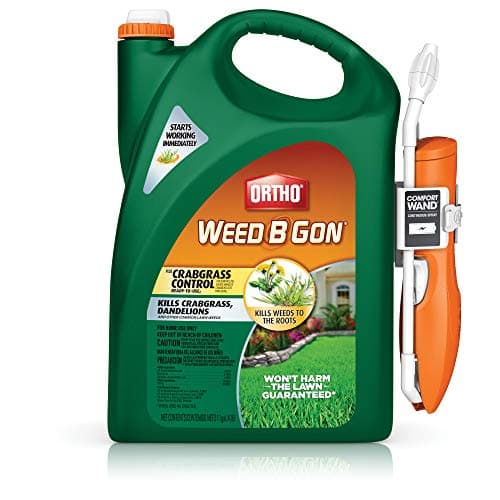
Ortho Ortho Weed B Gon Plus Crabgrass Control, Ready-to-Use (1 gal)
Ortho Weed B Gon Plus Crabgrass Control, Ready-to-Use (1 gal)

The one to buy if you want to walk out and deal with the weeds you can see. Ready-to-use with a wand, so there is no mixing, no measuring and no half-full sprayer to store.

Spot-treating visible weeds, no mixing
7.5
Check price →
06
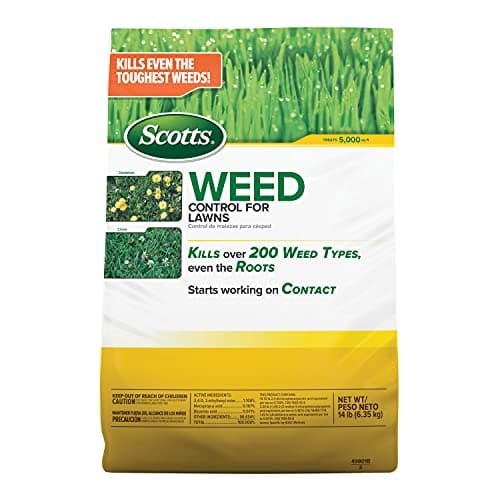
Scotts Scotts Weed Control for Lawns (14 lb)
Scotts Weed Control for Lawns (14 lb)

A granular selective weed control with no fertilizer attached, so you can treat weeds without force-feeding the lawn. Granules cannot drift, which is the single biggest safety advantage over any sprayer.

Best granular weed killer for lawns
8.0
$24.31Amazon
07
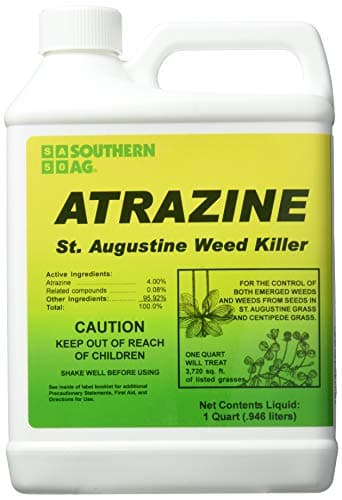
Southern Ag Southern Ag Atrazine Weed Killer for St. Augustine & Centipede (32 oz)
Southern Ag Atrazine Weed Killer for St. Augustine & Centipede (32 oz)

The southern-lawn answer, and the reason this page is not just four bottles of the same thing. St. Augustine and centipede will not tolerate the products that cool-season lawns use.

St. Augustine and centipede lawns
7.3
$15.99Amazon

#ad · Live prices from the Amazon Product API, as of October 21, 2026. Where we have no verified live price, we show none — we would rather leave a gap than print a number that has rotted.

In detail

The picks, in full

01
Scotts Scotts Turf Builder Weed & Feed3 (14.29 lb)

One pass, fed and weeded

Scotts Turf Builder Weed & Feed3 (14.29 lb)

Fertilizer + broadleaf herbicide14.29 lb bagWeed & Feed3 formulationGranular
7.2/10

Fertilizer and broadleaf herbicide in one pass. The convenience is real and so is the compromise: the best time to feed and the best time to kill weeds are not the same week.

Analysis quality
6
Spread evenness
6
Coverage per bag
7
Ease of use
9
Value
8

Pros

  • One trip and one application instead of two, which is why this category exists
  • Granular herbicide needs to stick to damp weed leaves, and Scotts' prills are designed to do that
  • Genuinely effective on dandelion, clover and plantain

Cons

  • You are applying herbicide to the entire lawn to kill weeds in part of it
  • Timing conflict: herbicide wants actively growing weeds and damp leaves, fertilizer wants a dry lawn and a watering-in

Skip this if…

…your weeds are in patches rather than everywhere. Spot-spraying the patches and feeding the lawn separately uses a fraction of the herbicide and works better.

$31.03View on Amazon

$34.4910% off

Price as of October 21, 2026. Prices change — Amazon's is the one that counts.

#ad · we may earn a commission from this link to Scotts Turf Builder Weed & Feed3 (14.29 lb)

02
Scotts Scotts Turf Builder Triple Action1 (11.31 lb)

Spring feed where weeds are already up

Scotts Turf Builder Triple Action1 (11.31 lb)

Feed + broadleaf killer + pre-emergentGranularSpring application11.31 lb bag
7.8/10

Three jobs in one spring bag: it feeds, it kills the broadleaf weeds already up, and it prevents crabgrass from germinating. The right choice when the lawn needs feeding and already has dandelions in it.

Feeding value
8
Weed control
10
Coverage
7
Ease of use
8
Price
6

Pros

  • Handles the weeds that are already visible as well as the crabgrass that has not germinated yet
  • One pass instead of a feed, a weed spray and a pre-emergent
  • Needs morning dew or a light watering to stick to the leaf, which is easy to arrange in spring

Cons

  • A post-emergent herbicide means it must not be applied to a newly seeded lawn
  • Costs more per thousand square feet than a plain feed plus a separate spot spray

Skip this if…

…your lawn is weed-free or newly seeded. On a clean lawn you are paying for herbicide you do not need, and on new grass the herbicide is actively harmful.

$39.97View on Amazon

$45.9913% off

Price as of October 21, 2026. Prices change — Amazon's is the one that counts.

#ad · we may earn a commission from this link to Scotts Turf Builder Triple Action1 (11.31 lb)

03
Scotts Scotts Halts Crabgrass & Grassy Weed Preventer (10.06 lb)

Stopping crabgrass before it starts

Scotts Halts Crabgrass & Grassy Weed Preventer (10.06 lb)

Pre-emergent herbicide10.06 lb bagCrabgrass and grassy weedsGranular
7.8/10

A pre-emergent, which is a fundamentally different and more effective proposition than a weed killer: it stops crabgrass seed germinating rather than fighting the plant after it wins.

Analysis quality
9
Spread evenness
7
Coverage per bag
7
Ease of use
7
Value
9

Pros

  • Pre-emergent control of crabgrass is far more reliable than post-emergent control, which is marginal at best
  • One correctly-timed spring application does more for a lawn's appearance than a summer of spot-spraying
  • Granular, so it goes down with the same spreader as your fertilizer

Cons

  • Timing is everything and the window is short — it must go down before soil temperatures reach germination range
  • It will also stop your grass seed germinating, which catches people out every spring

Skip this if…

…you are overseeding this season. A pre-emergent does not distinguish between crabgrass seed and fescue seed — choose one job or the other for that spring.

$24.97View on Amazon

Price as of October 21, 2026. Prices change — Amazon's is the one that counts.

#ad · we may earn a commission from this link to Scotts Halts Crabgrass & Grassy Weed Preventer (10.06 lb)

04
The Andersons The Andersons PGF Complete 16-4-8 with Humic DG (5,000 sq ft)

Best all-round lawn fertilizer

The Andersons PGF Complete 16-4-8 with Humic DG (5,000 sq ft)

16-4-8 NPK7% Humic DGCovers 5,000 sq ftFine particle size
8.0/10

The fertilizer serious lawn people actually use. A balanced 16-4-8 analysis on a very small particle, with 7 percent humic acid — it spreads evenly and waters in without sitting on the surface.

Analysis quality
10
Spread evenness
10
Coverage per bag
7
Ease of use
7
Value
6

Pros

  • 16-4-8 is the ratio most cool-season lawns want: nitrogen for growth, a little phosphorus, and potassium at half the nitrogen rate for stress tolerance
  • The fine particle size is the quiet advantage — small prills land more per square inch, so you get an even green rather than a striped one
  • At 16 percent nitrogen over 5,000 sq ft, a full bag delivers roughly 0.8 lb of nitrogen per 1,000 sq ft — a textbook single application

Cons

  • Costs several times what a Scotts bag of similar coverage does
  • Fine particles need a spreader with decent calibration; a hand-thrown application wastes it

Skip this if…

…you feed your lawn once a year and are not going to measure anything. The value is in precise, repeatable applications; Scotts Turf Builder does the once-a-year job for a fraction of this.

$59.88View on Amazon

Price as of October 21, 2026. Prices change — Amazon's is the one that counts.

#ad · we may earn a commission from this link to The Andersons PGF Complete 16-4-8 with Humic DG (5,000 sq ft)

05
Ortho Ortho Weed B Gon Plus Crabgrass Control, Ready-to-Use (1 gal)

Spot-treating visible weeds, no mixing

Ortho Weed B Gon Plus Crabgrass Control, Ready-to-Use (1 gal)

Ready-to-use1 gal with wandBroadleaf + crabgrassSelective
7.5/10

The one to buy if you want to walk out and deal with the weeds you can see. Ready-to-use with a wand, so there is no mixing, no measuring and no half-full sprayer to store.

Weed spectrum
8
Ease of use
10
Cost per sq ft
4
Lawn safety
8

Pros

  • No mixing and no measuring - the wand means you can treat a dandelion the moment you notice it
  • Covers both halves of the problem: broadleaf weeds and crabgrass, which most products split across two bottles
  • The wand reaches weeds in a bed edge or against a fence without stooping

Cons

  • Ready-to-use costs several times more per treated square foot than a concentrate
  • A gallon does not go far if you are treating a whole lawn rather than spots

Skip this if…

…you have a weed problem across the whole lawn rather than in patches. At that point you are paying a large premium for water, and the Spectracide or BioAdvanced concentrate covers the same area for a fraction of the money.

Check price on Amazon →

No buyable offer at the last price check (October 21, 2026). We show nothing rather than a stale number.

#ad · we may earn a commission from this link to Ortho Weed B Gon Plus Crabgrass Control, Ready-to-Use (1 gal)

06
Scotts Scotts Weed Control for Lawns (14 lb)

Best granular weed killer for lawns

Scotts Weed Control for Lawns (14 lb)

Granular, no fertilizerSelective - kills broadleaf weedsSpreader applied14 lb bag
8.0/10

A granular selective weed control with no fertilizer attached, so you can treat weeds without force-feeding the lawn. Granules cannot drift, which is the single biggest safety advantage over any sprayer.

Lawn safety
8
Weed spectrum
8
Weed control
8
Coverage per bag
8
Value
8

Pros

  • Granular means no spray drift onto vegetable beds, a neighbor's roses or anybody downwind - the failure mode that causes most herbicide accidents simply does not exist
  • No nitrogen in the bag, so it does not force a growth flush at the wrong time of year the way a weed-and-feed does
  • Selective: it is formulated to take out broadleaf weeds and leave the grass, so a whole-lawn pass does not kill the lawn

Cons

  • Granules need the weed leaves to be damp to stick, so you water first or apply to morning dew - dry application does very little
  • Slower to show results than a liquid, typically a couple of weeks

Skip this if…

…you have five dandelions in an otherwise clean lawn. Treating the whole lawn to kill five weeds is more pesticide than the job needs; spot-spray them instead.

$24.31View on Amazon

Price as of October 21, 2026. Prices change — Amazon's is the one that counts.

#ad · we may earn a commission from this link to Scotts Weed Control for Lawns (14 lb)

07
Southern Ag Southern Ag Atrazine Weed Killer for St. Augustine & Centipede (32 oz)

St. Augustine and centipede lawns

Southern Ag Atrazine Weed Killer for St. Augustine & Centipede (32 oz)

Concentrate32 ozAtrazineSt. Augustine / centipede
7.3/10

The southern-lawn answer, and the reason this page is not just four bottles of the same thing. St. Augustine and centipede will not tolerate the products that cool-season lawns use.

Weed spectrum
8
Ease of use
6
Cost per sq ft
9
Lawn safety
6

Pros

  • Labeled for the two warm-season grasses most often damaged by a general lawn weed killer
  • Works on broadleaf weeds and some grassy weeds, which is unusual in one bottle
  • A concentrate, so the cost per treated square foot is low

Cons

  • Wrong product for a cool-season lawn - this is a grass-specific purchase
  • Atrazine is restricted or prohibited in some states and counties; check before ordering

Skip this if…

…your lawn is fescue, bluegrass or ryegrass. This is the opposite of the right bottle for cool-season turf, and the restriction runs the other way too - check your state rules on atrazine before you buy at all.

$15.99View on Amazon

Price as of October 21, 2026. Prices change — Amazon's is the one that counts.

#ad · we may earn a commission from this link to Southern Ag Atrazine Weed Killer for St. Augustine & Centipede (32 oz)

The warm-season calendar, which is not the one on the bag

WhenBermuda isApplyNot
Late winter, soil near 55°FDormant or wakingCrabgrass pre-emergent, no fertilizerWeed and feed — the nitrogen is wasted
Green-up, roughly AprilGreening unevenlyNothing, or spot-spray broadleaf weedsA full feed before it is fully green
After full green-up, late April to MayGrowingWeed and feed, watered inPre-emergent only — too late for crabgrass
SummerGrowing hardFeed on a schedule; spot-treat weedsBlanket herbicide in extreme heat
Early fallSlowingA last feed, fall pre-emergent for winter weedsHeavy nitrogen late — it invites disease
WinterDormant, brownNothingAny feed at all

The general-purpose version of this calendar, with the nitrogen arithmetic behind it, is in the lawn fertilizer schedule, and the bermuda-specific feeding detail is in best lawn fertilizer for bermuda.

Why March is the mistake everyone makes

March is when the garden centers stack weed and feed by the door, because March is right for most of the country. In Texas, Oklahoma, Georgia, Alabama and the rest of the bermuda belt, March is when the lawn is still brown or patchily waking. Nitrogen applied then does three unhelpful things: it feeds the cool-season weeds that are actively growing, it can push a tender early flush that a late frost burns, and most of it is gone before the grass is ready to use it.

The fix is to split the job. In late winter, when soil temperatures approach 55°F, put down a pre-emergent with no fertilizer— that is the window where you stop crabgrass, and it closes once crabgrass germinates. Then wait. Once the lawn is uniformly green and you have mowed it two or three times, apply the weed and feed. You have now hit both targets instead of missing both.

How weed and feed actually works, and the two rules that follow

A granular weed and feed is fertilizer prills plus a herbicide-coated carrier. The herbicide works on contact with leaf tissue, which means two things follow directly and neither is optional.

Apply to a damp lawn, and do not water it in immediately. The granules have to stick to wet weed leaves long enough to be absorbed. Morning dew is ideal. If you irrigate straight afterward, you wash the herbicide off the leaves and into the soil, where it does nothing for your weeds.

Then water, 24 to 48 hours later, to move the fertilizer in.That is the opposite requirement for the other half of the product, which is exactly why doing the two jobs separately — a straight feed, plus a liquid herbicide sprayed on the weeds — gives a better result. That is what the Andersons 16-4-8 plus a selective spray combination on this list is for, and if you want the best outcome rather than the fewest trips, that is the route.

Bermuda in Texas, and southern lawns generally

Two complications specific to the region. First, a lot of “bermuda” lawns in Texas and the Gulf states are actually St. Augustine, which looks coarser and spreads by thick runners. Getting this wrong matters more than any product choice on this page, because the herbicides that suit each are different. Second, the summer here is long and hot enough that blanket herbicide in extreme heat will stress the lawn itself. Most labels carry a temperature ceiling for exactly this reason. In July and August, spot-treat rather than broadcast.

For grass-type identification and what grows where in the state, see best grass seed for Texas and fescue vs bermuda.

The product never to put on bermuda

Atrazine. The Southern Ag bottle on this list is labeled for St. Augustine and centipede, and that naming is not marketing — it is the label telling you which grasses it is selective for. It is an excellent product on the lawns it names and it is not the product for a bermuda lawn. We list it here because half the people searching for a southern weed and feed have one of those two grasses and need to be sent to the right bottle, and because “southern lawn” advice that ignores the difference is how lawns get damaged.

The same logic in reverse: check any product you buy against your grass type, every time, even if you have used the brand before. Formulations change. The EPA's position is simple — the label is the law.

If the lawn is overseeded with ryegrass

A lot of bermuda lawns in the South are overseeded with annual ryegrass for winter color. If yours is, do not apply a pre-emergent in fall — it will stop the ryegrass germinating along with everything else — and be careful with spring herbicides while the rye is still present. The cleanest approach on an overseeded lawn is to let the rye die back in the heat, then start the bermuda program after green-up.

Spreader setting, and the one number that matters

Every bag prints a coverage area and a setting for the common spreaders, and the way to get this right is to work from the area rather than the bag. Measure the lawn, set the spreader to the label figure, and apply half the rate in one direction and half across it — two light passes at right angles give a far more even result than one heavy pass, and streaky weed and feed is visible for weeks as green and yellow stripes. The spreaders themselves are ranked in best broadcast spreader, and the edge-blocking feature on a good one is what keeps herbicide out of the flowerbeds.
How we picked this

We haven't run this gear through a lab — and we say so

We compiled the published manufacturer specifications — deck width and gauge, drive type, blower CFM, fertilizer NPK, seed species — did the deck-width and nitrogen arithmetic, cross-read the owner manuals, and scored each pick against a published rubric. The scores are judgments from documented research — they are notlab measurements we took, because we don't have a lab and we're not going to pretend we do. Where somebody has genuinely measured this, we link them. You can check every number we publish.

Questions

Frequently asked

When should I put weed and feed on bermuda grass?
After the lawn has fully greened up and you have mowed it two or three times — late April or May in most of the bermuda belt. Applying in March, when bermuda is still dormant, feeds the cool-season weeds instead of the grass.
What weed and feed is safe for bermuda grass?
Check the grass-type list on the label every time, because that is the only reliable answer and formulations change. Scotts Turf Builder Weed & Feed3 and Triple Action1 are the mainstream choices for bermuda; atrazine products labeled for St. Augustine and centipede are not.
Can I use atrazine on bermuda grass?
No. Atrazine lawn products are labeled for St. Augustine and centipede grass. Use a product whose label names bermudagrass, and follow the label — it is a legal document, not a suggestion.
Should you water after applying weed and feed?
Not immediately. The granules need to stick to damp weed leaves for the herbicide to be absorbed, so apply to a dewy lawn and leave it. Water 24 to 48 hours later to move the fertilizer into the soil.

Keep reading

Receipts

Sources

We do not run a testing lab, and we do not pretend to. Every spec number here comes from a manufacturer's published sheet or an official standard, cited above. Where we could not verify something, we say so on the page rather than quietly leaving it out. Read our full method.