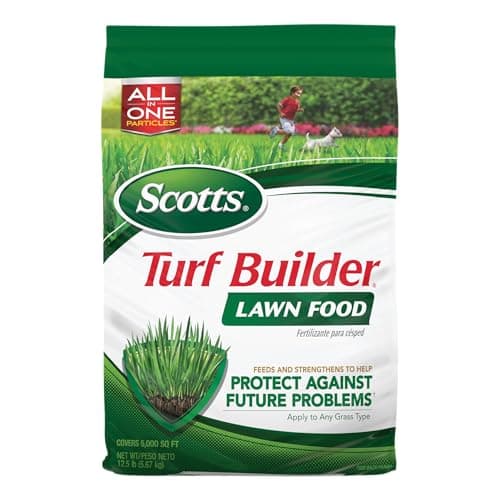
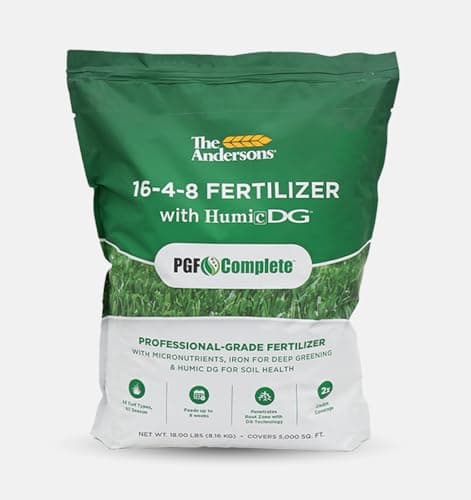
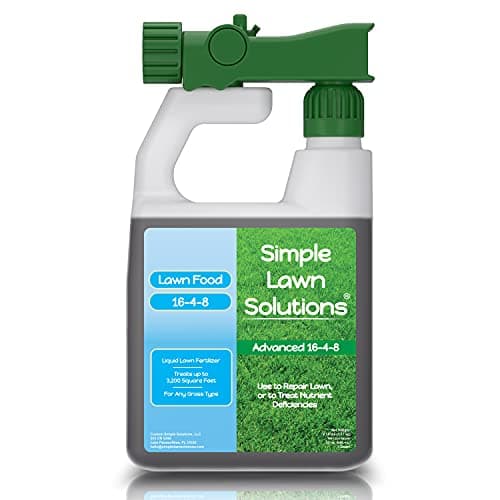
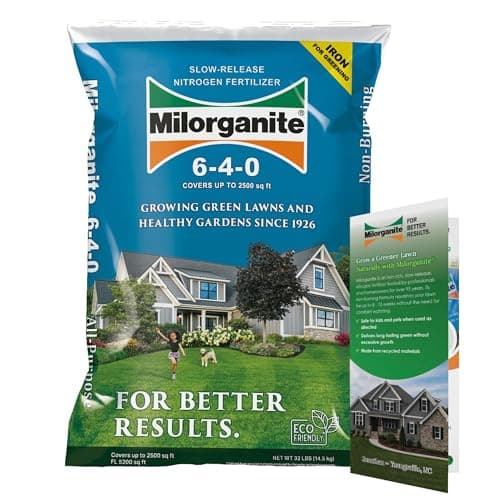
The cheapest honest way to feed a lawn is Milorganite 6-4-0 in the 32 lb bag: a low analysis, which sounds like a weakness and is why it is cheap per pound of product, combined with a bag big enough that the cost per thousand square feet lands well. If you want more nitrogen per bag carried home, Scotts Turf Builder Lawn Food is the value pick on the mainstream shelf, and The Andersons PGF Complete 16-4-8 is the one we would actually buy if the budget stretches, because its small particle size spreads evenly at a lower rate.
This page is written for someone counting the money on a large lawn, so it starts with the rule that decides everything: compare cost per thousand square feet, never price per bag. Bags are sold in different weights at different analyses, which makes the shelf price almost meaningless. Two bags at the same price can differ by a factor of three in how much lawn they feed.
The arithmetic, once, so you can do it in the aisle
Every bag states an NPK analysis — three numbers, the percentage by weight of nitrogen, phosphorus and potassium — and a coverage figure in square feet. Nitrogen is what makes grass grow and green up, and a lawn wants roughly 0.75 to 1 lb of actual nitrogen per 1,000 square feet per feeding.
So: a 32 lb bag at 6% nitrogen contains about 1.9 lb of nitrogen, which at 1 lb per 1,000 feeds about 1,900 square feet properly. A 12.5 lb bag at 29% nitrogen contains about 3.6 lb — nearly twice as much nitrogen in a third of the weight. Divide the price by that nitrogen figure and the ranking on the shelf frequently inverts.
The cheap-bag trap is now obvious. A low-analysis bag is cheap because most of what you are carrying is not fertilizer, and on a 10,000 square foot lawn you will buy several of them. A high-analysis bag is more expensive and may well be cheaper to feed with.
Prices on this page are live from the price layer with an “as of” date, which matters here more than on any other page on this site: the ranking genuinely moves with a few dollars. We have fed no lawns with these — everything here reads the published analysis and coverage figures, see how we pick.
Cheap lawn fertilizer compared
| Fertilizer | Analysis | Bag | Release | Best for |
|---|
| Milorganite | 6-4-0 | 32 lb | Slow, organic | Cheapest safe feed |
| Scotts Turf Builder Lawn Food | Turf Builder analysis | 12.5 lb | Controlled | Value on the mainstream shelf |
| Andersons PGF Complete | 16-4-8 + humic | 5,000 sq ft | Controlled, fine particle | Best cost per 1,000 sq ft |
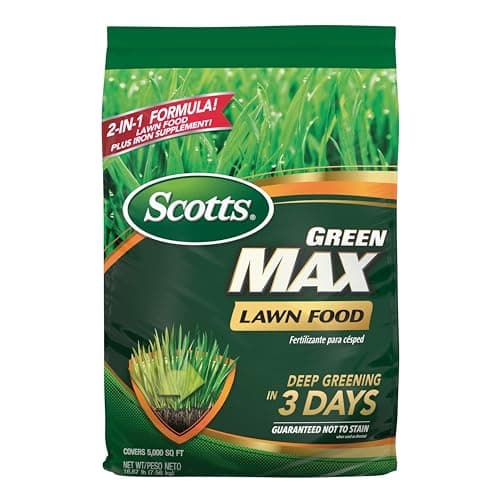
| Scotts Green Max | Lawn food + iron | 16.67 lb | Controlled | Color without extra growth |
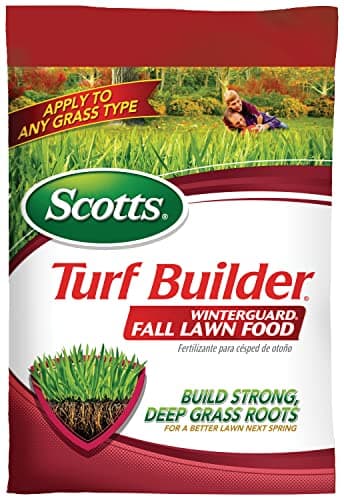
| Scotts WinterGuard | Fall lawn food | 32.3 lb | Controlled | Biggest bag, best-timed feed |
| Simple Lawn Solutions 16-4-8 | 16-4-8 liquid | 32 oz concentrate | Fast, liquid | Cheapest fast green-up |
NPK analyses, bag weights and stated coverage above are the figures each label publishes. Prices are live with an “as of” date beside each product.
Where the real savings are, in order
1. Buy the biggest bag of whatever you choose. This is the single biggest saving available and it requires no cleverness. Fertilizer in a 32 lb bag is routinely a third cheaper per pound than the same product in a 12 lb bag, and granular fertilizer stores indefinitely in a dry shed in a sealed tub. On a large lawn, buy the big bag.
2. Feed at the right time instead of more often.Four well-timed feeds beat six badly timed ones, and the fall feeding is worth more than any other single application because the grass stores it as root reserves. If budget limits you to two feeds a year, make them fall and late spring — see our fertilizer schedule and the fall roundup.
3. Return your clippings.Mulching rather than bagging returns something like a quarter of your lawn's annual nitrogen need to the soil for nothing. It is the cheapest fertilizer that exists and it requires you to stop doing work. See the mulching mower roundup.
4. Calibrate your spreader. Spreading 30% heavy wastes 30% of every bag and risks burning the lawn. Measure the lawn, weigh out what the bag says that area needs, and spread exactly that much. The method is in broadcast vs drop spreader.
5. Do a soil test before buying potassium or phosphorus. Most established lawns need nitrogen and nothing else; the P and K in a complete fertilizer are often money spent on nutrients your soil already has. Several states now restrict phosphorus on established lawns for exactly this reason.
Cheap feeds and the burn risk
The one place being cheap genuinely costs you is burn. A quick-release high-nitrogen fertilizer spread unevenly, or spread on a dry lawn in heat, scorches the grass in stripes that last weeks. Slow-release and organic products are far harder to get wrong — Milorganite is close to impossible to burn with, which is a real part of its value on this page.
If you buy the cheapest high-analysis bag you can find, water it in and spread it at half rate in two passes at right angles. The product will be fine; the risk is the application.
What about urea and farm-supply fertilizer?
Straight urea at 46-0-0 is the cheapest nitrogen you can buy per pound, by a wide margin, and farm-supply stores sell it in 50 lb bags. It is worth knowing about and it comes with real caveats: it is entirely quick-release, so it burns easily and must be watered in immediately; it has no potassium or micronutrients at all; and the particle size is designed for agricultural equipment rather than a homeowner spreader, which makes even coverage harder.
For a careful owner with a big lawn and a calibrated spreader, it is the cheapest route there is. For everyone else, a slow-release bagged product at a slightly higher cost per thousand square feet is the better buy, because it will not cost you a season of recovering from a burn.
The cheapest feed for a new lawn is a different product
Do not economize here. New grass seed needs phosphorus at the root, which the cheap high-nitrogen bags on this page do not supply in useful amounts, and a starter fertilizer is the one application where buying the right product rather than the cheapest one genuinely changes the outcome. See starter fertilizer for new grass.
Who should skip these
Skip the low-analysis organic bags if your lawn is large and your budget is the binding constraint — you will be carrying and buying a lot of bags. Run the cost per thousand square feet and buy the high-analysis product.
Skip the quick-release liquids as your main feed. They are cheap per bottle and the green-up is fast and short; a lawn fed only on liquid needs feeding constantly.
And skip everything here if you have children or pets rolling on the lawn and want to be careful about what is on it — the pet-safe roundup is the page you want, and it costs a little more for a good reason.