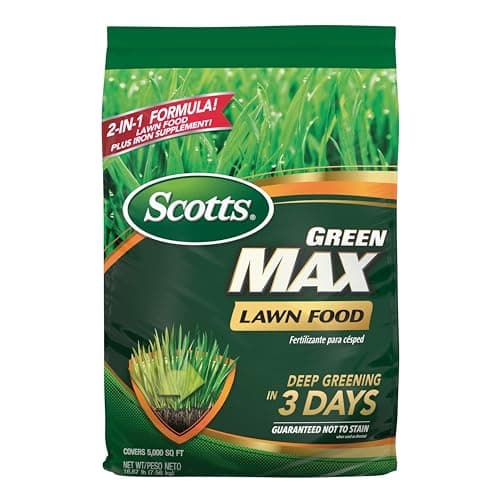
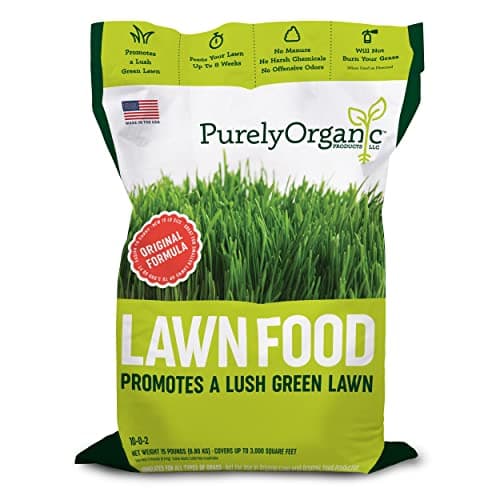
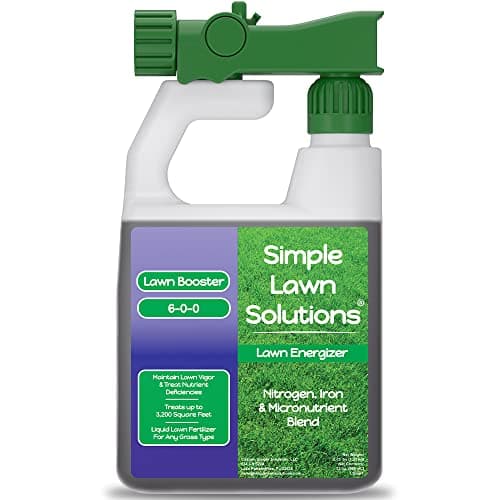
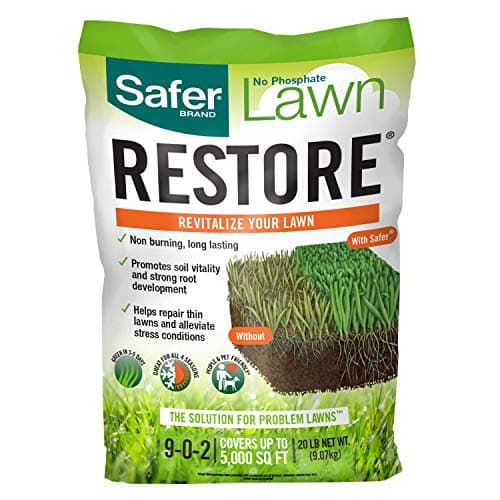
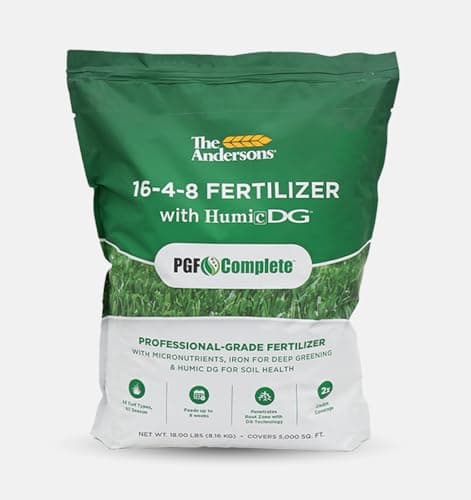
The best overall Milorganite alternative is The Andersons PGF Complete 16-4-8: it replaces the thing most people actually buy Milorganite for — a non-burning, slow-release feed that greens a lawn without a growth surge — and it carries far more nitrogen per pound, so you spread less of it. The budget pick is Scotts Green Max, the cheapest bag here and the closest match to Milorganite’s other job, which is iron-driven color. If what you want is specifically an organic replacement, Purely Organic Lawn Food 10-0-2 is the organic bag with the highest nitrogen number, with Safer Brand Lawn Restore 9-0-2 covering more ground per bag. And if you want the color back this week rather than next month, Simple Lawn Solutions Lawn Energizer is liquid nitrogen plus iron through a hose-end sprayer.
Prices on every card are live, with an “as of” date. That matters here more than usual, because the most common reason people go looking for a Milorganite substitute is that the price has moved or the shelf is empty, and a page with typed-in numbers would be useless for exactly that question. We have not soil-tested anything; the judgments come from the published guaranteed analysis, the stated coverage and the release mechanism of each product. The method is in how we pick.
Start by deciding which half of Milorganite you are replacing. It is a 6-4-0 heat-dried biosolid with iron, and it does two separable things. The first is slow, non-burning nitrogen— it feeds gradually, forgives an overlapping spreader pass, and will not scorch a lawn in July. The second is iron-driven color— it darkens the leaf without pushing growth, which is why people use it in summer when they want a green lawn and emphatically do not want to mow more often.
Almost every disappointing substitution comes from swapping for the wrong half. A high-nitrogen synthetic replaces the feeding and greens the lawn fast, but it can burn and it will make you mow. An iron supplement replaces the color perfectly and feeds the lawn almost nothing. Pick the job first, then the bag.
Why people look for a Milorganite alternative
Four reasons, and they point at different products. Price: it is a 32 pound bag with 6 percent nitrogen, so the cost per pound of actual nitrogen is higher than it looks. Availability: distribution is regional and supply has been inconsistent, so a lot of people need a substitute on a specific Saturday. Smell: it is noticeable for a few days after application, particularly in heat. And what it is: it is a heat-dried biosolid, and some people simply would rather not use one, which is a preference that deserves a straight answer rather than an argument.
Each of those pushes you somewhere different. Price and nitrogen efficiency point at a concentrated slow-release synthetic. Availability points at whatever your store stocks in the same category. Smell and source point at a plant-based organic.
Which alternative, by what you are replacing
| What you bought Milorganite for | Use instead | Why it substitutes |
|---|
| Slow-release feeding that will not burn | The Andersons PGF Complete 16-4-8 | Controlled release with humic acid, far more N per pound, so you spread less |
| Dark green color without extra mowing | Scotts Green Max | Iron for color at the lowest price on this page - the budget pick |
| An organic nitrogen source | Purely Organic Lawn Food 10-0-2 | Plant-based, no biosolid, highest headline N of the organics here |
| An organic that covers a big lawn | Safer Brand Lawn Restore 9-0-2 | 9 percent N across 5,000 sq ft per bag |
| Color back within a week | Simple Lawn Solutions Lawn Energizer | Liquid N plus iron, plant-available immediately through a sprayer |
| A summer feed on fescue | Iron only, not nitrogen | Cool-season grass should not be pushed in heat - see our fescue fertilizer page |
Comparing honestly on nitrogen, not on bag price
The comparison that matters is cost per pound of actual nitrogen applied, and it is simple arithmetic: multiply the bag weight by the first number in the analysis to get pounds of nitrogen, then divide the price by that. A 32 pound bag at 6 percent carries just under two pounds of nitrogen. An 18 pound bag at 16 percent carries nearly three. The smaller bag is often the better buy, and it is always the lighter thing to carry.
Coverage is the second half of the same point. A bag rated for 5,000 square feet and a bag rated for 3,000 are not comparable at the same price, and almost every fertilizer label publishes the figure. We walk through the whole calculation on the cheapest lawn fertilizer.
What no substitute gives you
The forgiveness.Milorganite is close to impossible to burn a lawn with, and that is a genuine property of organic nitrogen rather than marketing. The two organic picks here share it. A concentrated synthetic, including the top pick on this page, does not — it is non-burning at the labeled rate, which is not the same promise. If your spreader technique is approximate, stay organic.
The organic matter. Every organic application leaves carbon in the soil and improves structure over years. A synthetic leaves nutrients and nothing else. This is a slow benefit, but it is the reason a lot of people stay with organic feeding even after the arithmetic argues otherwise. The whole organic shelf is ranked in the best organic lawn fertilizers.
Switching without striping the lawn
Recalibrate the spreader. This is the step people skip and it is the one that shows. Milorganite is a dense, fine, free-flowing granule; a coated synthetic and a meal-based organic flow completely differently through the same gate opening. Using the old setting with a new bag is the most common way to double-apply one half of a lawn and starve the other. The ten-minute method is in how to calibrate a spreader, and the spreaders themselves are in the best broadcast spreaders under $200.
Then watch the rate. Going from a 6 percent bag to a 16 percent bag at the same spreader setting applies nearly three times the nitrogen, which on a hot week is how lawns get burned. Read the new label as though you had never fertilized before, water it in, and if you are feeding a cool-season lawn in summer, lean on iron rather than nitrogen — the reasoning is in the best fertilizer for fescue.