Skip to content
Fairway&Fescue

The Feed · Fertilizer, Weed Control & Spreaders

The Best Organic Lawn Fertilizers

Ranked on the two numbers that decide what a bag is worth: the nitrogen percentage and the square footage it actually covers. No synthetic urea anywhere on this page.

By Stephen V.Updated How we pick
#ad

We earn a commission when you buy through our Amazon links, at no extra cost to you. It never changes our rankings — and we'll tell you when the cheaper bag or machine is the better buy. How this works.

The best organic lawn fertilizer is Safer Brand Lawn Restore 9-0-2, because it carries the highest nitrogen percentage of any organic product in this registry and still covers 5,000 square feet per bag — the two numbers that decide whether a bag of organic fertilizer is a real feed or an expensive soil conditioner. The budget pick is Milorganite 6-4-0: it is the cheapest bag here, it is the largest at 32 pounds, and its iron content is the reason lawns go dark green on it without the surge of growth a synthetic gives. If you want a product sold as a lawn food rather than as a soil amendment, Purely Organic Lawn Food 10-0-2 has the highest headline nitrogen number on the page. And if you want the feed and a crabgrass pre-emergent in one pass, Espoma Organic Weed Preventer Plus Lawn Food is corn gluten meal doing both jobs.

Prices on every card are pulled live from the price layer with an “as of” date, because fertilizer is one of the most seasonally discounted categories in lawn care and a typed-in number would be wrong within a month. We have not run soil tests on any of these; every judgment below comes from the published guaranteed analysis on the label, the stated coverage, and the release mechanism the manufacturer describes. The method is in how we pick.

The honest headline about organic fertilizer is that it feeds the soil on the soil’s schedule, not on yours. Synthetic nitrogen is water-soluble: it is available to the plant within days whatever the weather. Organic nitrogen is locked in protein and has to be digested by soil microbes before the grass can use any of it, which means it needs warm soil and moisture to work at all. Feed organically in April when the soil is at 45 degrees and very little happens; feed in late May and the same bag works properly. That is not a flaw, but it is a schedule you have to plan around, and the month-by-month version is in our lawn fertilizer schedule.

The second honest thing: organic bags carry far less nitrogen per pound than synthetic ones, so a lawn needs more product to get the same feed. A 9 percent nitrogen organic bag and a 30 percent synthetic bag are not interchangeable at the same weight — you need roughly three times as much of the first. Cost per thousand square feet, not cost per bag, is the only fair comparison, and it is the arithmetic our cheapest lawn fertilizer page walks through in full.

The short answer

Quick picks

#ProductBest forScorePrice
01
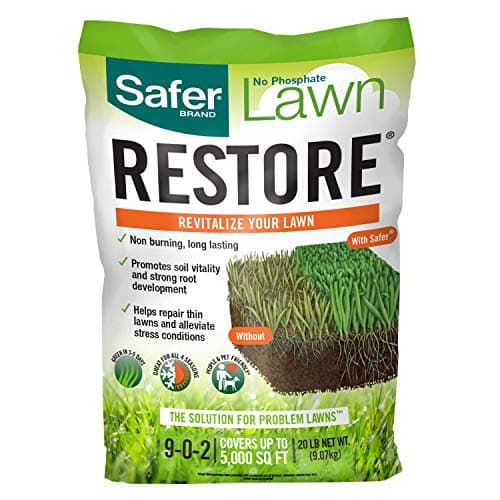
Safer Brand Safer Brand Lawn Restore 9-0-2 (5,000 sq ft)
Safer Brand Lawn Restore 9-0-2 (5,000 sq ft)

A 9-0-2 natural feed published as non-burning, covering 5,000 square feet. The best coverage-per-dollar of the organic feeds here.

Best coverage among pet-safe feeds
8.0
$50.31Amazon
02
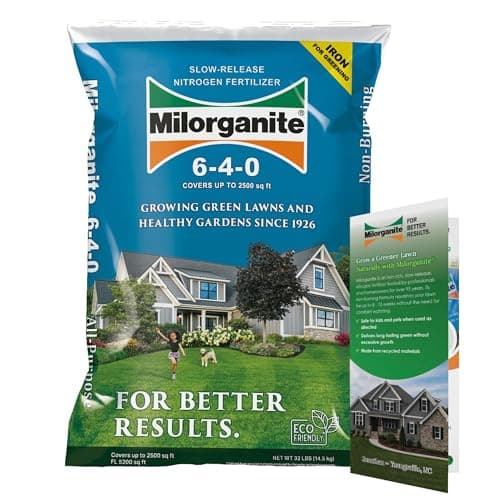
Milorganite Milorganite 6-4-0 Slow-Release Nitrogen (32 lb)
Milorganite 6-4-0 Slow-Release Nitrogen (32 lb)

The one fertilizer you genuinely cannot burn a lawn with. A 6-4-0 organic nitrogen source that releases slowly with soil temperature rather than all at once with the first watering.

The no-burn fertilizer
7.8
$35.01Amazon
03
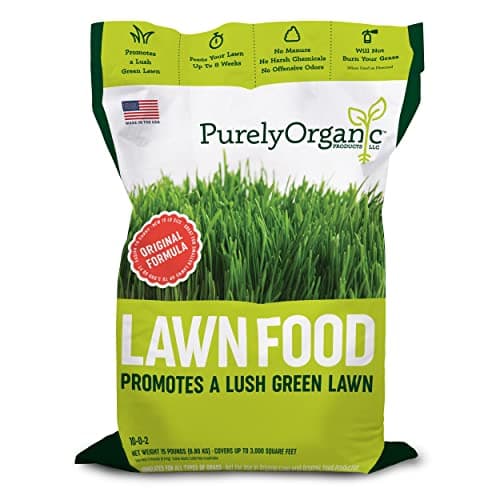
Purely Organic Products Purely Organic Products Lawn Food 10-0-2 (15 lb, 3,000 sq ft)
Purely Organic Products Lawn Food 10-0-2 (15 lb, 3,000 sq ft)

A plant-based 10-0-2 with the phosphorus taken out, which is what a lot of states now require anyway. Ten percent nitrogen is a real feeding rate for an organic bag.

Strongest analysis among the organic feeds
7.4
$47.00Amazon
04
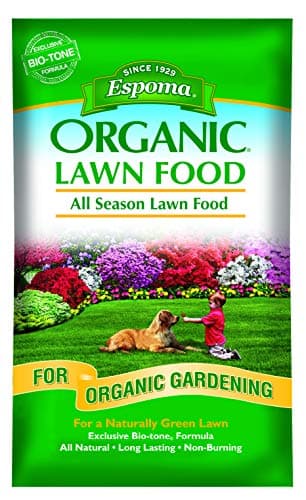
Espoma Espoma Organic All-Season Lawn Food (14 lb)
Espoma Organic All-Season Lawn Food (14 lb)

An organic granular feed with no herbicide in the bag, which is the whole point: nothing to keep a dog off beyond watering it in. It feeds slowly and it will not burn.

Best pet-safe lawn fertilizer
7.6
Check price →

#ad · Live prices from the Amazon Product API, as of November 22, 2026. Where we have no verified live price, we show none — we would rather leave a gap than print a number that has rotted.

In detail

The picks, in full

01
Safer Brand Safer Brand Lawn Restore 9-0-2 (5,000 sq ft)

Best coverage among pet-safe feeds

Safer Brand Lawn Restore 9-0-2 (5,000 sq ft)

9-0-2 NPKPublished non-burningCovers 5,000 sq ftPhosphorus-free
8.0/10

A 9-0-2 natural feed published as non-burning, covering 5,000 square feet. The best coverage-per-dollar of the organic feeds here.

Lawn safety
9
Analysis quality
7
Feeding value
7
Coverage per bag
9
Value
8

Pros

  • 5,000 square feet is a whole suburban lawn from one bag, which is unusual at an organic feeding rate
  • Non-burning by formulation, so an overlap on a spreader pass does not leave a scorched stripe - the most common fertilizer mistake there is
  • No herbicide component, so the lawn is usable as soon as the granules are watered in

Cons

  • 9-0-2 is a moderate analysis, so a badly depleted lawn needs a second application rather than one heavy one
  • Stock on this one moves around; the price layer will show whichever listing is buyable

Skip this if…

…you need to correct a phosphorus deficiency or you are seeding. There is no phosphorus in the bag.

$50.31View on Amazon

Price as of November 22, 2026. Prices change — Amazon's is the one that counts.

#ad · we may earn a commission from this link to Safer Brand Lawn Restore 9-0-2 (5,000 sq ft)

02
Milorganite Milorganite 6-4-0 Slow-Release Nitrogen (32 lb)

The no-burn fertilizer

Milorganite 6-4-0 Slow-Release Nitrogen (32 lb)

6-4-0 NPKSlow-release organic nitrogen32 lb bagNon-burning
7.8/10

The one fertilizer you genuinely cannot burn a lawn with. A 6-4-0 organic nitrogen source that releases slowly with soil temperature rather than all at once with the first watering.

Analysis quality
6
Spread evenness
8
Coverage per bag
7
Ease of use
10
Value
8

Pros

  • Slow-release organic nitrogen will not scorch a lawn even if you double-pass a strip — the single most forgiving fertilizer sold
  • Also contains iron, which is where the deep green color response comes from
  • A 32 lb bag at this price is good value per pound of product

Cons

  • Only 6 percent nitrogen, so you spread four to five times the weight for the same nitrogen as a 16-4-8
  • No potassium at all — on a stressed or sandy lawn you will need a second product for that

Skip this if…

…you want a fast green-up before an event. Slow release means slow: the response takes weeks, not days, and a liquid feed is what you actually want.

$35.01View on Amazon

Price as of November 22, 2026. Prices change — Amazon's is the one that counts.

#ad · we may earn a commission from this link to Milorganite 6-4-0 Slow-Release Nitrogen (32 lb)

03
Purely Organic Products Purely Organic Products Lawn Food 10-0-2 (15 lb, 3,000 sq ft)

Strongest analysis among the organic feeds

Purely Organic Products Lawn Food 10-0-2 (15 lb, 3,000 sq ft)

10-0-2 NPKPhosphorus-freeCovers 3,000 sq ft15 lb bag
7.4/10

A plant-based 10-0-2 with the phosphorus taken out, which is what a lot of states now require anyway. Ten percent nitrogen is a real feeding rate for an organic bag.

Lawn safety
9
Analysis quality
8
Feeding value
8
Coverage per bag
6
Value
6

Pros

  • Ten percent nitrogen is at the top of the organic range, so a bag goes further than most plant-based feeds and the lawn responds more visibly
  • Zero phosphorus, which matters where runoff rules restrict phosphorus fertilizer and on any lawn near water
  • No herbicide, no insecticide - nothing in the bag with a re-entry interval

Cons

  • No phosphorus at all, so it is the wrong bag for seeding - new grass needs phosphorus to build roots
  • 3,000 square feet per bag is less coverage than the big-box synthetic bags at a similar price

Skip this if…

…you are sowing or overseeding. A new seedbed wants a starter fertilizer with phosphorus in it; this has none by design.

$47.00View on Amazon

Price as of November 22, 2026. Prices change — Amazon's is the one that counts.

#ad · we may earn a commission from this link to Purely Organic Products Lawn Food 10-0-2 (15 lb, 3,000 sq ft)

04
Espoma Espoma Organic All-Season Lawn Food (14 lb)

Best pet-safe lawn fertilizer

Espoma Organic All-Season Lawn Food (14 lb)

Organic granularNo herbicideSlow release14 lb bag
7.6/10

An organic granular feed with no herbicide in the bag, which is the whole point: nothing to keep a dog off beyond watering it in. It feeds slowly and it will not burn.

Lawn safety
10
Analysis quality
7
Feeding value
7
Coverage per bag
6
Value
8

Pros

  • There is no weed killer in it, so the only thing on the lawn is plant nutrition - the usual reason to keep pets off a treated lawn is the herbicide, not the fertilizer
  • Organic nitrogen releases as soil microbes break it down, so it cannot dump a salt load onto roots and scorch them
  • Granular, so there is no spray and nothing airborne

Cons

  • Slower and less dramatic than a synthetic high-nitrogen feed - organic feeds green a lawn over weeks, not days
  • Costs more per pound of actual nitrogen than a synthetic bag

Skip this if…

…you want a visible color change this week. Organic nitrogen has to be mineralized by soil biology first, and in cold soil that is slow; a liquid synthetic greens up in days.

Check price on Amazon →

No buyable offer at the last price check (November 22, 2026). We show nothing rather than a stale number.

#ad · we may earn a commission from this link to Espoma Organic All-Season Lawn Food (14 lb)

What makes a fertilizer organic, and what the label has to say

“Organic” on a fertilizer bag means the nitrogen comes from something that was once alive — feather meal, soybean meal, corn gluten, poultry litter, heat-dried microbes — rather than from manufactured urea or ammonium. The label has to publish a guaranteed analysis, which is the three numbers on the front, and it usually names the source materials on the back. If a bag will not tell you what the nitrogen is made of, that is the only red flag you need.

Watch for one piece of marketing: “organic-based” is not organic. It means a synthetic fertilizer with some organic matter blended in. That can be a perfectly good product — it is often the best of both — but it is not what this page ranks, and it should not be bought at an organic price.

The criteria, in the order they matter

1. Nitrogen percentage, because it is what you are buying.The first number in the analysis is the percentage of the bag that is nitrogen. Organic products cluster between about 5 and 10 percent against 20 to 30 percent for synthetics, so the spread inside this page — 6 to 10 percent — is proportionally large. A 10 percent bag does two-thirds more feeding per pound than a 6 percent bag.

2. Coverage per bag, which is the number that sets the real price. A cheap bag that covers 3,000 square feet is not cheaper than a dearer bag that covers 5,000. Divide the price by the coverage before you compare anything. On a typical quarter-acre lot with about 8,000 square feet of turf, the difference between those two bags is one shopping trip a season.

3. Release speed and soil temperature. Everything organic needs microbial activity, and microbes need warm, moist soil. Heat-dried products tend to break down steadily over six to ten weeks; meal-based products are slower still. Plan the first organic feed for when soil has genuinely warmed, not when the calendar says spring.

4. Iron, and why organic lawns still look dark. Iron greens grass without pushing growth, which is the single most useful trick in the organic toolkit: you get the color without the Saturday mowing penalty. One product here is specifically known for it.

5. Whether it does a second job.Corn gluten meal is both a nitrogen source and a pre-emergent that interferes with seed root development. That is genuinely useful — and it is also why you must never use it on a lawn you are about to seed, because it does not distinguish between crabgrass seed and your grass seed.

Which organic fertilizer, by what you are trying to do

Your situationWhat to buyWhy
You want the most feeding per bagSafer Brand Lawn Restore 9-0-2Highest nitrogen here that still covers 5,000 sq ft in one bag
You want color without a growth surgeMilorganite 6-4-0Iron greens the leaf without pushing top growth; also the cheapest bag here
Lowest cost for a big lawnMilorganite 6-4-032 pounds, the largest bag on the page and the budget pick
You want the highest headline nitrogenPurely Organic Lawn Food 10-0-210 percent N, though it covers 3,000 sq ft rather than 5,000
Feeding and crabgrass prevention in one passEspoma Organic Weed Preventer Plus Lawn FoodCorn gluten meal feeds and acts as a pre-emergent at the same time
You are seeding this seasonNone of the corn gluten productsA pre-emergent stops your grass seed as effectively as it stops crabgrass
You need a green lawn in two weeksA synthetic, honestlyOrganic nitrogen cannot move that fast - see our main fertilizer roundup

What organic genuinely buys you

No burn risk. This is the most practical advantage and the least discussed. Organic nitrogen cannot scorch a lawn the way a heavy synthetic application can, because it is not soluble salt sitting on a leaf. If you have ever striped a lawn yellow with an overlapping spreader pass, this is the category that forgives you.

Less leaching.Soluble nitrogen moves with water. Organic nitrogen is held in the soil until microbes release it, so far less of it ends up in a storm drain after heavy rain. The EPA’s nutrient pollution guidance is the clearest public explanation of why that matters downstream.

Organic matter in the soil. Every organic application leaves carbon behind, which over several seasons improves structure and water-holding capacity in a way no synthetic does. This is a slow benefit measured in years, and it is real.

What organic does not do, said plainly

It will not green a lawn in a week. It will not fix a nitrogen-starved lawn in cold soil. It costs more per pound of actual nitrogen, usually by a wide margin. And it will not control weeds — a thicker lawn crowds weeds out over time, but a lawn that already has broadleaf weeds in it needs a herbicide, not a feed. If that is your situation, read the safest weed killers for lawns first and feed afterwards.

A fair compromise that a lot of people land on: feed organically through the growing season when soil is warm and microbes are active, and use one synthetic application in late fall when soil biology has shut down but roots are still storing carbohydrate. That is the season where synthetic nitrogen does something organic genuinely cannot, and it is covered in the best fall lawn fertilizer.

Applying it so the bag is not wasted

Organic fertilizers are bulkier and often coarser than synthetics, which means spreader settings from a Scotts bag will not transfer. Calibrate for the actual product: run a measured quantity across a measured area and weigh what is left. The full method is in how to calibrate a spreader, and the spreaders themselves are ranked in the best broadcast spreaders under $200.

Two application habits worth more than the brand you choose: water it in after spreading, because microbial breakdown needs moisture to start at all; and apply when soil is genuinely warm rather than when the air is. Soil lags air temperature by weeks in spring, and that lag is the single most common reason people conclude organic fertilizer does not work.
How we picked this

We haven't run this gear through a lab — and we say so

We compiled the published manufacturer specifications — deck width and gauge, drive type, blower CFM, fertilizer NPK, seed species — did the deck-width and nitrogen arithmetic, cross-read the owner manuals, and scored each pick against a published rubric. The scores are judgments from documented research — they are notlab measurements we took, because we don't have a lab and we're not going to pretend we do. Where somebody has genuinely measured this, we link them. You can check every number we publish.

Questions

Frequently asked

What is the best organic lawn fertilizer?
Safer Brand Lawn Restore 9-0-2, because it combines the highest organic nitrogen percentage here with 5,000 square feet of coverage per bag. Milorganite is the budget pick and the one to buy if you want dark color without a growth surge.
Does organic lawn fertilizer actually work?
Yes, but on the soil’s timetable. Organic nitrogen has to be broken down by soil microbes before grass can use it, so it needs warm, moist soil. Applied in cold spring soil it does very little; applied in late spring or summer it feeds steadily for six to ten weeks.
Is organic fertilizer more expensive than synthetic?
Per pound of actual nitrogen, yes, usually by a wide margin - organic bags run 6 to 10 percent nitrogen against 20 to 30 percent for synthetics, so you buy and spread more product. Compare cost per thousand square feet rather than cost per bag, or the comparison is meaningless.
Can you burn a lawn with organic fertilizer?
Essentially no, and that is the best practical reason to use it. The nitrogen is not a soluble salt sitting on the leaf, so an overlapping spreader pass does not stripe the lawn yellow the way a heavy synthetic application can.
Is Milorganite organic?
It is a heat-dried biosolid - nitrogen from microbes, not from manufactured urea - and it is sold and used as an organic nitrogen source with iron. If what you want is a specific certification rather than an organic nitrogen source, read the bag, because labeling varies by product and state.
Can I use organic fertilizer and grass seed at the same time?
With most of them, yes - but never with a corn gluten product. Corn gluten meal is a pre-emergent that interferes with seed root development, and it does not know the difference between crabgrass seed and the seed you just paid for. Use a starter fertilizer instead; ours are ranked in best starter fertilizer for new grass.
How often should I apply organic lawn fertilizer?
Roughly every six to eight weeks through the warm part of the growing season, which is more often than a synthetic program because each application delivers less nitrogen. The full calendar is in our lawn fertilizer schedule.

Keep reading

Receipts

Sources

We do not run a testing lab, and we do not pretend to. Every spec number here comes from a manufacturer's published sheet or an official standard, cited above. Where we could not verify something, we say so on the page rather than quietly leaving it out. Read our full method.