Skip to content
Fairway&Fescue

The Acreage · Riding & Zero-Turn Mowers

The Most Reliable Riding Lawn Mowers

Reliability is not a feeling about a brand. It is four components that fail, and whether you can still buy the parts in year twelve.

By Stephen V.Updated How we pick
#ad

We earn a commission when you buy through our Amazon links, at no extra cost to you. It never changes our rankings — and we'll tell you when the cheaper bag or machine is the better buy. How this works.

If you are spending thousands and want the machine to still be working in fifteen years, buy the John Deere X350. It sits on a garden-tractor frame rather than a lawn-tractor one — a heavier chassis, a cast front axle and a serviceable driveline — and it is backed by the one dealer parts network in this market that nobody worries about. For a zero-turn the equivalent answer is the Kubota Z251, and for a value-priced tractor with real running gear the Husqvarna TS 140X. If the ground is rough enough to shake a machine apart, the Ferris 400S and its independent suspension is the one that survives it.

Let us be precise about what this page is and is not. We have not run fleets of these machines and we do not publish reliability survey data we did not collect — that policy is in how we pick. What we can do is something more useful than a brand popularity contest: identify the four components that actually end riding mowers, read what each manufacturer publishes about them, and rank on that plus parts availability. Those four are the transaxle, the deck and its spindles, the engine and the frame and front axle. Nothing else on a rider is expensive enough to retire it.

The second half of reliability is not engineering at all. It is whether a spindle, a belt, a deck wheel and a seat are still orderable in year twelve. A machine with a strong frame and no parts supply is a machine with an expiry date, which is why the brands with real dealer networks dominate this list and why the cheapest machines on the site do not appear on it. Prices are live from the price layer where a listing exists; dealer-channel machines carry a tagged check-price link.

The same question for zero-turns

A zero-turn has one failure mode a lawn tractor does not: a pair of hydrostatic transaxles, which is the most expensive assembly on the machine to replace. That changes which specs predict a long life, and the ranking is in the most reliable zero turn mowers.

The short answer

Quick picks

#ProductBest forScorePrice
01
John Deere X350 Garden Tractor, 42" (dealer channel)

Where the John Deere line stops being a lawn tractor and becomes a garden tractor: a heavier frame, a better deck and the four-wheel steering option. The one worth the dealer visit if you intend to keep it for fifteen years.

Buy-it-for-life John Deere
6.0
Check price →
02
Kubota Z251 Kommander Zero Turn, 54" (dealer channel)

25 HP on a 54-inch deck - the largest Kommander, and the point at which a Kubota zero-turn starts making sense on three acres and up.

Three acres and up
7.2
Check price →
03
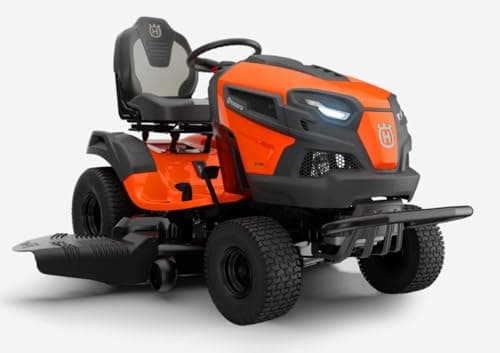
Husqvarna Husqvarna TS 140X Lawn Tractor, 48" (24 HP Briggs V-Twin)
Husqvarna TS 140X Lawn Tractor, 48" (24 HP Briggs V-Twin)

Six more inches of deck and a V-twin instead of a single. On an acre and a half of open ground this is the Husqvarna tractor that stops feeling like it is working hard.

An acre and up, open ground
6.2
$3,799.00Amazon
04
Ariens APEX 52" Zero Turn (dealer channel)

The semi-commercial Ariens. A 23 HP Kawasaki FR691V on a 10-gauge fabricated deck with Hydro-Gear ZT-3100 transaxles - and the transaxles are the real difference, because that is what fails first.

Buy-it-for-life Ariens
7.2
Check price →
05
Ferris 400S Zero Turn (dealer channel)

The entry point into Ferris, which is the brand that put independent suspension on a mower. On rough ground that suspension is not a comfort feature - it is what keeps the deck level and the cut even.

The entry Ferris, rough ground
6.4
Check price →
06
John Deere S130 Lawn Tractor, 42" (dealer channel)

A step up the 100 Series: more engine on the same 42-inch deck. This is the S-model most dealers steer a buyer to once they ask about long grass or a slope.

The 100 Series step-up
6.2
Check price →
07
Cub Cadet XT1 Enduro LT42 Lawn Tractor, 42" (dealer channel)

The volume seller of the Cub Cadet line and the model behind most of this brand's search demand: a 42-inch XT1 Enduro tractor. Amazon stocks its blades and baggers; the machine is a dealer purchase.

The mainstream Cub Cadet rider
6.2
Check price →

#ad · Live prices from the Amazon Product API, as of October 21, 2026. Where we have no verified live price, we show none — we would rather leave a gap than print a number that has rotted.

In detail

The picks, in full

01

Buy-it-for-life John Deere

John Deere X350 Garden Tractor, 42" (dealer channel)

42" deckGasGarden tractor frameDealer channel - no verified Amazon price
6.0/10

Where the John Deere line stops being a lawn tractor and becomes a garden tractor: a heavier frame, a better deck and the four-wheel steering option. The one worth the dealer visit if you intend to keep it for fifteen years.

Acreage suited
8
Maneuverability
6
Running cost
6
Upkeep burden
6
Price
4

Pros

  • A heavier frame and a better deck than the 100 Series, which is what longevity actually comes from
  • The X300 family is the line owners keep for a decade and a half
  • Full attachment range - bagger, blade, cart, and a mulch kit that works

Cons

  • Costs roughly double an S100 before attachments
  • Dealer-only, so no Amazon price and no online checkout

Skip this if…

…you mow a suburban half acre and expect to move house inside a decade. This is a fifteen-year machine and you pay the fifteen-year price up front.

Check price on Amazon →

We don't have a verified live price for this right now, so we aren't showing one.

#ad · we may earn a commission from this link to John Deere X350 Garden Tractor, 42" (dealer channel)

02

Three acres and up

Kubota Z251 Kommander Zero Turn, 54" (dealer channel)

54" deck25 HPDual hydrostaticDealer channel - no verified Amazon price
7.2/10

25 HP on a 54-inch deck - the largest Kommander, and the point at which a Kubota zero-turn starts making sense on three acres and up.

Acreage suited
10
Maneuverability
6
Build quality
8
Dealer support
10
Price visibility
2

Pros

  • 54 inches and 25 HP is the combination that holds blade speed in tall, damp grass instead of bogging
  • Three acres on a 42-inch deck is a long afternoon; on 54 inches it is a job
  • Still a Kubota dealer machine, so the parts chain outlives the mower

Cons

  • No live Amazon price
  • A 54-inch deck needs open ground and real storage space

Skip this if…

…you mow under an acre. You are paying for deck width and engine you will never use, and it will scalp more on uneven ground than a 42-inch deck does.

Check price on Amazon →

We don't have a verified live price for this right now, so we aren't showing one.

#ad · we may earn a commission from this link to Kubota Z251 Kommander Zero Turn, 54" (dealer channel)

03
Husqvarna Husqvarna TS 140X Lawn Tractor, 48" (24 HP Briggs V-Twin)

An acre and up, open ground

Husqvarna TS 140X Lawn Tractor, 48" (24 HP Briggs V-Twin)

48" deck24 HP Briggs V-TwinLawn tractor layoutSteering wheel
6.2/10

Six more inches of deck and a V-twin instead of a single. On an acre and a half of open ground this is the Husqvarna tractor that stops feeling like it is working hard.

Acreage suited
9
Maneuverability
5
Running cost
6
Upkeep burden
5
Price
6

Pros

  • A 48-inch deck cuts a 14 percent wider swath than the 42 - fewer lengths on every single cut
  • A V-twin has the torque to hold deck speed in long grass, which a single-cylinder loses
  • Tractor geometry tows an aerator, spreader or sweeper properly

Cons

  • 48 inches will not fit through many residential gates - measure the narrowest point before you buy
  • Still a tractor turning circle, so complex lawns mean trimming

Skip this if…

…you have a gate, a narrow side passage or under an acre of grass. The TS 120 fits more places and costs considerably less to do the same job on a smaller lawn.

$3,799.00View on Amazon

Price as of October 21, 2026. Prices change — Amazon's is the one that counts.

#ad · we may earn a commission from this link to Husqvarna TS 140X Lawn Tractor, 48" (24 HP Briggs V-Twin)

04

Buy-it-for-life Ariens

Ariens APEX 52" Zero Turn (dealer channel)

52" deck, 10-gauge fabricatedKawasaki FR691V twin, 726 cc23 HPHydro-Gear ZT-3100 transaxles
7.2/10

The semi-commercial Ariens. A 23 HP Kawasaki FR691V on a 10-gauge fabricated deck with Hydro-Gear ZT-3100 transaxles - and the transaxles are the real difference, because that is what fails first.

Acreage suited
9
Maneuverability
7
Build quality
10
Dealer support
8
Price visibility
2

Pros

  • ZT-3100 transaxles are a serviceable commercial-grade unit, where residential machines ship sealed maintenance-free transaxles you cannot repair
  • 10-gauge deck steel is heavier than the 11-gauge used across the IKON and EDGE lines
  • This is the Ariens that is still mowing in fifteen years

Cons

  • No Amazon listing and no live price
  • Priced well above the residential IKON for a cut that looks identical on day one

Skip this if…

…you mow an acre on weekends. The difference between this and the IKON shows up at several hundred hours a year, not at thirty.

Check price on Amazon →

We don't have a verified live price for this right now, so we aren't showing one.

#ad · we may earn a commission from this link to Ariens APEX 52" Zero Turn (dealer channel)

05

The entry Ferris, rough ground

Ferris 400S Zero Turn (dealer channel)

Zero-turnIndependent suspensionCommercial-grade buildDealer channel - no verified Amazon price
6.4/10

The entry point into Ferris, which is the brand that put independent suspension on a mower. On rough ground that suspension is not a comfort feature - it is what keeps the deck level and the cut even.

Acreage suited
9
Maneuverability
9
Running cost
5
Upkeep burden
5
Price
4

Pros

  • Ferris suspension keeps the deck at a constant height over bumps, which is why the cut stays even on rough ground
  • Commercial build standard at the bottom of the range, not just the top
  • Noticeably less punishing to ride for two hours than an unsprung zero-turn

Cons

  • Amazon lists Ferris hitches and deck belts, never the mower - no live price
  • Commercial pricing from the entry model up

Skip this if…

…your lawn is smooth and under two acres. Suspension earns its money on rough, undulating ground and at hours-per-week usage; on a flat suburban acre you are paying for a feature you will not feel.

Check price on Amazon →

We don't have a verified live price for this right now, so we aren't showing one.

#ad · we may earn a commission from this link to Ferris 400S Zero Turn (dealer channel)

06

The 100 Series step-up

John Deere S130 Lawn Tractor, 42" (dealer channel)

42" deckGasLawn tractor layoutDealer channel - no verified Amazon price
6.2/10

A step up the 100 Series: more engine on the same 42-inch deck. This is the S-model most dealers steer a buyer to once they ask about long grass or a slope.

Acreage suited
8
Maneuverability
5
Running cost
6
Upkeep burden
5
Price
7

Pros

  • More engine than the S100 on the same deck, which is what long or wet grass actually needs
  • Same 42-inch gate-friendly width and the same parts ecosystem
  • Towing capability for a spreader, aerator or sweeper

Cons

  • No verified Amazon listing, so no price we will publish
  • Still a tractor turning circle, so an obstacle-heavy lawn means trimming after

Skip this if…

…the lawn is open and flat and under an acre. The S100 does that job and the extra engine is money you will not feel.

Check price on Amazon →

We don't have a verified live price for this right now, so we aren't showing one.

#ad · we may earn a commission from this link to John Deere S130 Lawn Tractor, 42" (dealer channel)

07

The mainstream Cub Cadet rider

Cub Cadet XT1 Enduro LT42 Lawn Tractor, 42" (dealer channel)

42" deckGasLawn tractor layoutDealer channel - no verified Amazon price
6.2/10

The volume seller of the Cub Cadet line and the model behind most of this brand's search demand: a 42-inch XT1 Enduro tractor. Amazon stocks its blades and baggers; the machine is a dealer purchase.

Acreage suited
7
Maneuverability
5
Running cost
6
Upkeep burden
5
Price
8

Pros

  • The XT1 is the Cub Cadet tractor built in the largest numbers, so parts and know-how are everywhere
  • 42-inch deck suits half an acre to an acre and fits through a standard gate
  • A deep factory attachment range - bagger, mulch kit, cart, blade

Cons

  • Not listed as a machine on Amazon, only as parts, so there is no verified price to show
  • Tractor turning circle, which an obstacle-heavy lawn punishes

Skip this if…

…you want to click buy today with a price in front of you. The Husqvarna TS 120 is the equivalent machine with a live listing.

Check price on Amazon →

We don't have a verified live price for this right now, so we aren't showing one.

#ad · we may earn a commission from this link to Cub Cadet XT1 Enduro LT42 Lawn Tractor, 42" (dealer channel)

The four things that fail, in the order they fail

ComponentWhy it failsWhat to look forFatal?
TransaxleHeat, load, sealed-for-life designServiceable commercial unit, oil change intervalUsually yes
Deck spindlesImpact, bearing wear, thin mounting plateCast housings, greasable, reinforced deckNo, if parts exist
Deck shellCorrosion, dishing, cracks at spindlesFabricated plate, 10–11 gaugeUsually yes
EngineContinuous load on a small displacementCommercial twin, bigger cc for the same HPNo, rebuildable
Frame / front axleFlex, worn bushings, plastic axleCast iron front axle, garden-tractor frameUsually yes

Garden tractor, not lawn tractor: the one spec that matters most

The distinction almost nobody shopping makes, and the biggest predictor of a long life. A lawn tractor has a stamped frame, often a plastic or stamped front axle, and a transaxle sized for mowing. A garden tractor— the X300 class and up — has a heavier welded frame, a cast iron front axle, bigger wheel bearings and a driveline specified for ground-engaging work. They look similar in a photograph and they are not the same machine. If “buy it once” is the goal, this is the line to cross.

Engine: read displacement, not horsepower

Rated horsepower tells you what an engine makes at its limit. Displacement tells you how hard it has to work to make it. A 726 cc commercial twin producing 23 HP is loafing; a smaller single producing 19 HP is working near its ceiling every time the deck loads up in wet grass. Over a decade, the loafing engine is the one still running. Kawasaki FR and FX series, Kubota's own engines and the Briggs commercial twins are the makes specified for continuous load, and where a maker publishes the engine make rather than just a number, that is worth something in itself.

Suspension is a reliability feature on rough ground

The Ferris machines are built around independent suspension, and the usual pitch is comfort. The structural argument is better: a suspended machine keeps its tires loaded and its frame unshaken over ruts and roots, so the shock loads that crack welds, loosen fasteners and kill spindles never reach the deck. If your property is genuinely rough rather than merely large, that matters more than deck gauge.

Which brands are reliable? The honest version

Brand is a proxy for three things: how the machines are specified at each price, how strong the dealer parts network is, and how long a model stays in production so that parts keep being made. On those grounds John Deere and Kubota are the safest long-horizon purchases in the residential and semi-pro market, Husqvarna and Ariens offer most of the specification for less money, and Ferris is the specialist answer for rough ground. What brand cannot tell you is whether the specific machine in front of you is a lawn tractor or a garden tractor, which matters more than the color. Our per-brand detail pages are John Deere, Kubota, Cub Cadet and Ferris.

The maintenance that decides it anyway

A well-specified machine neglected will die before a cheap machine looked after. Four jobs, and they are all easy with a lift: change the engine oil on schedule; keep blades sharp and balanced, because a dull or unbalanced blade vibrates the spindles to death; scrape the deck so wet clippings are not sitting against the steel all winter; and grease every point in the manual, including the spindles if they are greasable. Blades and sharpening are covered in best lawn mower blades and best lawn mower blade sharpener.

One thing worth paying for that is not on the spec sheet

A dealer within driving distance. A riding mower is a 600-pound object that eventually needs a part fitted, and the difference between a dealer twenty minutes away and a warranty phone number is the difference between a two-day outage and a season of excuses. Before you choose a brand on specification, check which brands are actually serviced near you.

How we picked this

We haven't run this gear through a lab — and we say so

We compiled the published manufacturer specifications — deck width and gauge, drive type, blower CFM, fertilizer NPK, seed species — did the deck-width and nitrogen arithmetic, cross-read the owner manuals, and scored each pick against a published rubric. The scores are judgments from documented research — they are notlab measurements we took, because we don't have a lab and we're not going to pretend we do. Where somebody has genuinely measured this, we link them. You can check every number we publish.
Questions

Frequently asked

What is the most reliable riding lawn mower brand?
John Deere and Kubota, on the two grounds that can be checked: how the machines are specified at each price, and how reliably parts stay available through a dealer network. Husqvarna and Ariens deliver most of the same specification for less money.
What is the difference between a lawn tractor and a garden tractor?
Frame and driveline. A garden tractor has a heavier welded frame, a cast iron front axle, bigger bearings and a transaxle specified for ground-engaging work. A lawn tractor is built for mowing only. It is the single biggest predictor of how long the machine lasts.
How many hours should a riding mower last?
It depends almost entirely on the transaxle, the deck and whether the engine runs near its limit. Rather than chase an hours figure, look for a serviceable commercial transaxle, a fabricated deck, a larger-displacement engine for the same horsepower, and parts you can still order.
Do you publish reliability survey data?
No. We rank on published specification, the components that actually fail, and parts support — because we have not run fleets of these machines and we are not going to present someone else's survey as our own testing.

Keep reading

Receipts

Sources

We do not run a testing lab, and we do not pretend to. Every spec number here comes from a manufacturer's published sheet or an official standard, cited above. Where we could not verify something, we say so on the page rather than quietly leaving it out. Read our full method.