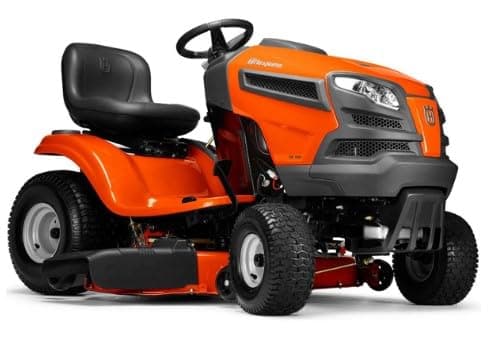
The cheapest sensible riding mower is a 30-inch rear-engine rider, and the Troy-Bilt TB30Ris the one that is usually priced lowest. It has a 30-inch deck, it fits through a gate and into a shed, and it is a genuine rider rather than a compromise — for a quarter to half an acre it is the right machine as well as the cheap one. The Cub Cadet CC30 is the same format with a stronger dealer network behind it. If you need a 42-inch deck on a budget, the CRAFTSMAN T110 is the mainstream cheap tractor and the Murray Cruz 42" is the cheapest route into a zero-turn. Spend one step up and the Husqvarna TS 120 is where the running gear stops being the bare minimum.
This page is written for the buyer whose budget is the deciding factor, which means being straight about something: the cheap end of this market hits its price by thinning the deck steel, fitting a single-cylinder engine and using the lightest transaxle that will turn the wheels. None of those three is visible in a showroom and all three decide whether the machine is alive in year eight. That is not an argument against buying cheap — it is an argument for buying cheap on purpose, with the trade understood, rather than discovering it later.
The most useful thing to know before you shop: at the bottom of this market deck width costs less than frame quality. A cheap 42-inch tractor and a well-built 30-inch rider often sit at a similar price, and they are not the same purchase. The 42 cuts faster; the 30 lasts longer and fits where the 42 will not. Several of the machines here sell through dealers and big-box retail rather than Amazon, so those cards carry a tagged check-price link instead of a number we cannot verify. Live prices come from the price layer with an “as of” date.
What each price step actually buys
| Tier | Typical machine | What you get | What you give up |
|---|
| Cheapest rider | 30 in rear-engine | A real seat, a real deck, gate and shed clearance | Deck width, towing, top speed |
| Cheap 42 in tractor | 42 in, single cylinder | An acre in under an hour, a hitch | Stamped deck, light transaxle, basic seat |
| Cheapest zero-turn | 42 in stamped deck | Pivot turns, speed around obstacles | Deck gauge, slope ability, towing |
| One step up | 42 in, better running gear | Heavier frame, dealer parts, resale | Several hundred dollars |
The 30-inch rider is the honest cheap answer
A rear-engine rider puts the engine behind the seat and the deck in the middle, which is a cheaper layout to build than a tractor and a more compact one to own. On a quarter to half an acre it finishes in about an hour, it turns in a space a 42-inch tractor cannot, and it stores in a shed. The reason it is not the default recommendation everywhere is speed: past about three quarters of an acre, 30 inches of deck starts costing you real time. Below that, buying a cheap 42-inch tractor instead is paying for width you cannot use. More options at this size are in best small riding lawn mower.
Cheap tractor or cheap zero-turn?
At the bottom of the market the tractor is the safer buy. A cheap tractor has one transmission and a steering box; a cheap zero-turn has two hydrostatic transaxles, which is two of the most expensive components in the machine built to a price. A cheap zero-turn is still the right choice if your lawn is full of obstacles, because pivot turns save more time than any specification does — but go in knowing the transaxles are the thing to watch. The full trade-off is in zero-turn vs riding mower, and the value tier above this page is best zero-turn mower for the money.
The four things to check before you buy anything cheap
Deck construction.Stamped is normal at this price. What you are checking is thickness and whether the spindle housings are bolted through a reinforced plate — the spindles are where a cheap deck fails first.
Transmission type. A hydrostatic transmission (a lever or pedal, no gears) is far nicer to use than a manual gear-drive and is now standard even low down. A gear-drive machine is cheaper and genuinely worse to operate on an uneven lawn.
Parts availability. This is the one people skip and it decides the real cost of ownership. Blades, belts, spindles and seats for Craftsman, Husqvarna, Cub Cadet, John Deere and Murray are stocked everywhere. An off-brand machine at a hundred dollars less can be unservicable in year five. Blade part numbers and what fits are in best lawn mower blades.
Seat and steering wheel. Sounds cosmetic. You are going to sit on it for 45 minutes a week in July. A thin pan seat is the difference between mowing and enduring.
When used beats new, and the honest arithmetic
We sell nothing by saying this, and it is the most useful paragraph on the page. A five-year-old mid-range tractor from a brand with a dealer network — a Deere 100 Series, a Husqvarna TS, a Cub Cadet XT1 — typically costs about the same as the cheapest new rider and arrives with a heavier frame, a better seat, a stronger transmission and parts you can still buy. The risks are a tired engine and a worn deck, both of which you can check in ten minutes: start it cold, listen for a knock, look for blue smoke, grab each blade and feel for play in the spindle, and look along the deck for a dish or a crack near the spindle housings. If all four are clean, used is the better buy at this budget nearly every time.
What to spend the saved money on
Two things, in this order. A set of sharp blades and a way to keep them sharp — a cheap mower with sharp blades cuts better than an expensive one with dull ones, every time, and the tools are in best lawn mower blade sharpener. Then a tow-behind cart from the attachments list, because the hitch is the cheap rider's most underused feature.
What we would not buy at any price
A gear-drive rider with no dealer network, and a zero-turn priced below the cheapest tractor. The first is unpleasant to use and unservicable; the second is two hydrostatic transaxles built to a price that cannot support them. In both cases a 30-inch rear-engine rider from a known brand is a better machine for similar money.