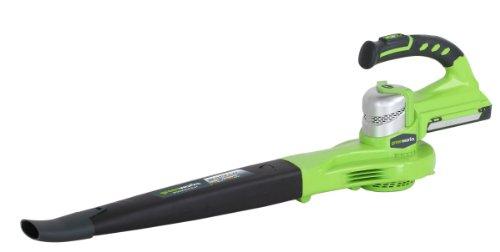
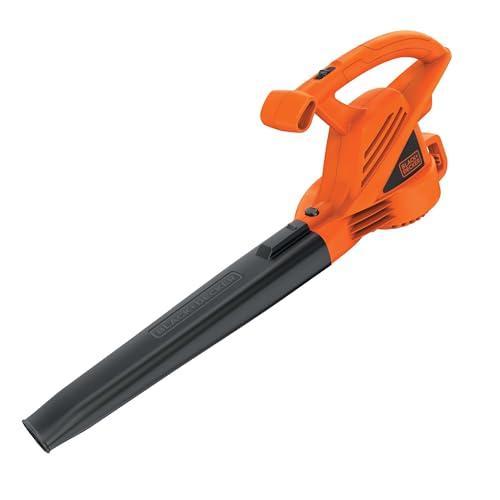
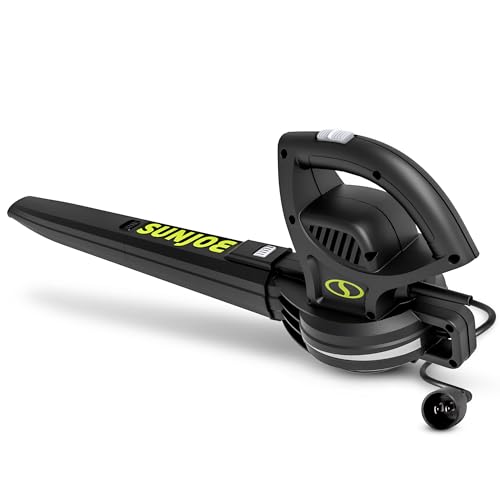
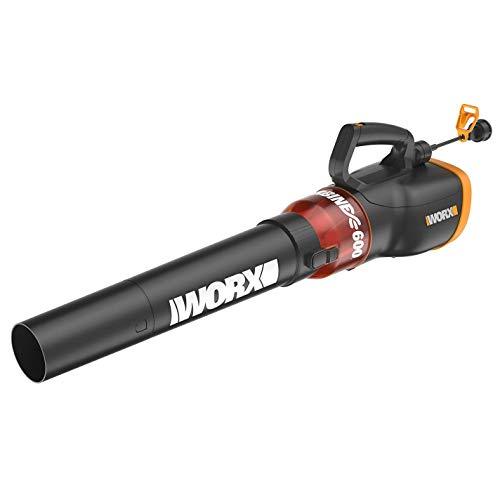
The best leaf blower under $100 is the WORX Turbine 600: 600 CFM of published air volume from a corded 12-amp motor, which is more air than anything else near this price moves, and air volume is the figure that actually shifts leaves off grass. If the cord is the problem rather than the price, the Greenworks 24V cordless blower is the only battery blower that fits under the cap with a battery and charger in the box. For a driveway or a patio, the BLACK+DECKER LB700 trades volume for 180 MPH of air speed, which is what lifts a stuck wet leaf off concrete. And the budget pick is the Sun Joe SBJ597E— the cheapest tool here by a clear margin and still a real blower at 260 CFM.
Every price on this page is read live from the price layer, and the $100 ceiling is checked against that file rather than against a number we typed in.All four blowers below were under $100 on the most recent refresh, and the as-of date sits on each card. A blower sitting close to the line will cross it on a bad week — retail prices in this category move constantly — so the live figure on the card is the only number worth acting on. We have not run these blowers side by side with an anemometer; the CFM and MPH figures here are the ones the manufacturers publish, and the method is in how we pick.
What $100 actually buys you is a corded blower, and that is the real trade on this page.Three of the four picks plug into a wall. A cord is genuinely annoying: you drag it around every tree, bed and gatepost, and your range is whatever your extension cord reaches. What you get for accepting it is a tool that produces the same airflow in the fortieth minute as in the first, with no battery to charge, degrade or replace. Under $100 that trade is heavily in the cord’s favor — a cordless blower at this price has to spend most of its budget on the battery, and the airflow is what gets cut. If you want a battery blower that is genuinely good rather than genuinely cheap, the honest advice is to spend more: those are ranked in the best cordless leaf blowers.
If this cap is tighter than it needs to be for you, the next band up is a materially different page — six blowers, including real cordless machines — and it is the best leaf blowers under $200. The whole category with no cap at all is the best leaf blower.
CFM and MPH: the two numbers, and which one you need
Every blower is sold on two figures and most buyers read them as one. They are not the same thing and they do different jobs.
CFM is cubic feet per minute — the volume of air the blower moves. Volume is what picks up a mass of dry leaves and carries it, which makes CFM the figure that matters for clearing a lawn. High CFM moves a wide column of material at once; low CFM nudges a narrow line of it.
MPH is air speed — how fast that air is traveling at the nozzle. Speed is what breaks something loose: a wet leaf stuck flat to concrete, pine needles wedged in a gutter line, grass clippings pressed into a path. For hard surfaces, speed beats volume.
So the honest version of the question is what surface you are clearing. A leaf-covered lawn is a CFM job and you want the WORX or the Greenworks. A driveway, a deck or a patio is an MPH job and the BLACK+DECKER’s 180 MPH does more for you than a bigger CFM number would. Most people have both surfaces, in which case buy for the one that takes longer.
One caution on reading specs in this price band: manufacturers quote peak figures, often measured without the nozzle fitted, and the two numbers are rarely achieved at the same time. Treat them as a ranking tool between products rather than as a promise about any one of them.
The criteria, in the order they matter under $100
1. Air volume, because it decides whether the tool does the main job.The spread inside this page is large — 180 CFM to 600 CFM — and that is more than a threefold difference in how much lawn you clear per pass. On a leafy quarter-acre lot that is the difference between twenty minutes and an hour.
2. Whether it is corded, and whether that works where you live. This is a practical question about your house, not about the tool. Is there an outdoor outlet? Does a 100 foot cord reach the far corner? Is the lawn open, or is it a slalom of trees and beds that a cord will wrap around? Answer those before you read another spec.
3. Weight in the hand, at the end of the job rather than the start.Every blower on this page is light enough to pick up. The one that matters is whether it is light enough to hold out at arm’s length for thirty minutes, because a blower held at your hip blows leaves at your shoes. This is where cheap corded units quietly beat cheap cordless ones: no battery mass in the handle.
4. Variable speed, which is worth more than it sounds. Full throttle next to a flower bed relocates your mulch. A two-speed switch or a variable trigger lets you work close to planting without redoing the bed afterwards. Not every tool at this price has one.
5. Noise, and your neighbors. Electric blowers are far quieter than gas, but they are not quiet, and this is the category most likely to be covered by a local ordinance on hours of use. NIOSH publishes the occupational exposure guidance; in practical terms, wear hearing protection for a long session and check your local rules before an early Sunday start.
Which blower under $100, by what you are clearing
| Your situation | What to buy | Why |
|---|
| A leaf-covered lawn, outlet within reach | WORX Turbine 600 | 600 CFM is the most air volume under the cap by a wide margin |
| Trees and beds in the middle of the lawn | Greenworks 24V cordless | No cord to wrap around obstacles; the only cordless pick that fits the cap |
| Driveway, patio or deck, wet leaves | BLACK+DECKER LB700 | 180 MPH of air speed is what breaks a stuck leaf off concrete |
| Smallest budget that still buys a real blower | Sun Joe SBJ597E | 260 CFM at the lowest price here |
| You also want to vacuum and mulch leaves | Nothing under $100 | Blower-vacs start above this cap - see our blower vacuum roundup |
| An acre or more of leaves, every fall | A backpack blower, honestly | No handheld at this price finishes that job without wearing you out |
| You already own a 40V or 60V battery | A bare tool on your own platform | A battery you already have makes a much better blower cheaper than these |
What the $100 cap honestly costs you
Runtime, if you go cordless. The single battery in a sub-$100 cordless kit is small, and a blower is one of the most power-hungry tools you can put a battery on. Plan on clearing in sessions with a charge between them, or accept the cord.
Any vacuum or mulching function.Blower-vacs with a metal impeller start above this band. If reducing leaves to mulch for a compost pile is the point of the exercise, this is not the page — the best leaf blower vacuums is.
A platform you can build on. The 24V Greenworks line is a shallow one; it will not grow into a trimmer, a mower and a hedge cutter the way a 40V or 60V system does. If you expect to buy more battery tools, buying into the cheapest platform now is a false economy, and the better route is a bare tool on a platform you intend to keep.
Serious acreage. A handheld at this price is a suburban tool. A property that produces a trailer-load of leaves every fall needs a backpack machine, and those are ranked in the best backpack leaf blowers.
Getting more out of a cheap blower
Work with the wind, not across it. The single biggest gain available to a low-CFM blower is free: plan your direction so the wind is helping, and clear downwind in one direction rather than chasing a pile in circles.
Clear dry, not wet. Wet leaves are several times the mass and they stick to each other and to the ground. A cheap blower that struggles on a soaked lawn will clear the same lawn comfortably two dry days later.
Blow leaves into a tarp, not to the curb. Moving leaves twice is the waste in the job. Blow to a tarp laid where you want the pile, then drag the tarp. And where you can, consider mowing them instead: a mulching mower turns fall leaves into a free soil amendment, which is covered in the best mulching lawn mowers.
Keep the nozzle on. It is the part that converts volume into speed, and the piece most likely to get left in the garage. Running a blower without it loses you the MPH figure you paid for.
Use a properly rated extension cord. A 12-amp motor on a thin cord loses voltage over distance, which costs you airflow and heats the cord. For a 100 foot run on these tools, use a 12-gauge outdoor-rated cord rather than whatever is coiled in the basement.