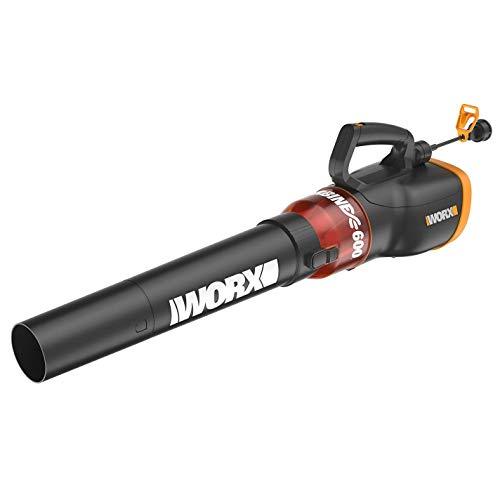
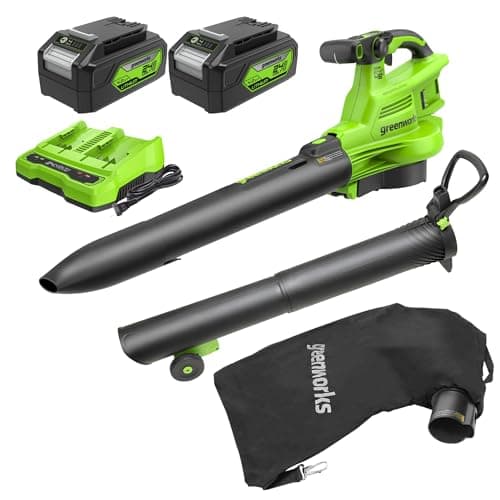
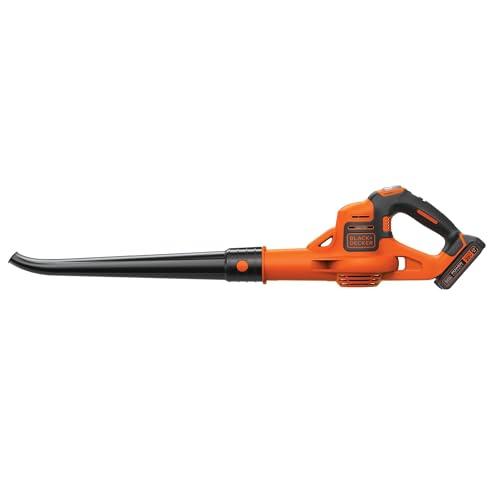
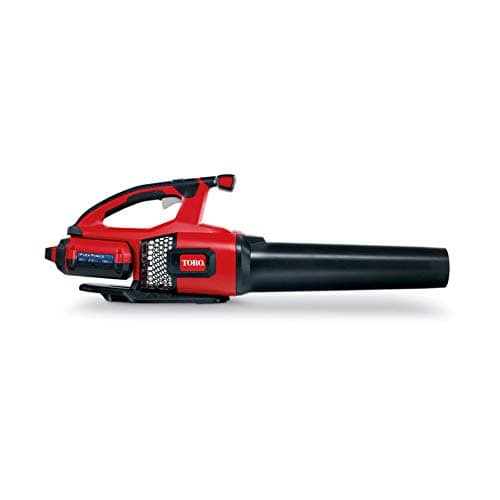
The best leaf blower under $200 is the Toro 60V Max brushless, and the reason is that it publishes 605 CFM at 120 MPH and arrives as a complete kit — the most airflow available under the line from a cordless tool with a battery and charger in the box. If you have an outdoor outlet and would rather spend a fraction of that, the WORX Turbine 600 publishes 600 CFM on a 12-amp cord and is the best airflow-per-dollar tool on the site. If you would rather collect the leaves than move them, the Greenworks 48V blower/vac is the only cordless tool here that shreds and bags. And if the job is a patio rather than a lawn, the BLACK+DECKER LSW321 weighs a fraction of the rest.
Prices on every card are pulled live, so you can see where each tool sits against the $200 line today. One of these sits a dollar under the ceiling and will cross it on a bad week. That is the nature of a price-capped list, and we would rather show the live figure than leave a stale number on the page.
Before you compare anything, understand the two numbers, because this is the category where published specs are least honest. CFMis cubic feet of air moved per minute — volume. Volume is what carries a pile of damp leaves across a lawn. MPHis air speed, which lifts a stuck leaf off a hard surface and does very little to move a pile. A tool advertised on a big MPH number with no CFM figure anywhere is telling you something: it has a small fan and a narrow nozzle. Two of the six picks here publish MPH only, and both are ranked lower for exactly that reason — not because they are bad tools, but because they are sweepers rather than leaf blowers, and the distinction decides which one you should buy.
We have cleared leaves with none of these. The ranking reads published CFM and MPH, what the maker states is in the box, and the power type — see how we pick. Where a brand does not publish an airflow figure, we say so rather than estimating one.
There is a tighter band below this one, and it is a genuinely different pick list rather than a subset — almost entirely corded, because under $100 a cordless blower spends its budget on the battery. Those four are ranked in the best leaf blowers under $100.
The criteria, in the order they matter at this budget
1. Published CFM.First spec, every time, and the one most lists skip because the marketing leads with MPH. Under $200 the honest CFM range is roughly 100 to 600, which is a sixfold spread — by far the biggest difference between these tools. If a tool in this band publishes no CFM at all, assume the fan is small and buy it only for hard surfaces.
2. Corded or cordless, decided by the shape of your lawn. This is the real decision at $200 and it is not about which is better. A corded blower gives you the most airflow per dollar in the category and never fades; what it costs you is a cable to drag round every tree, bed and gatepost, plus whatever your extension lead reaches. A cordless blower goes anywhere and stops when the pack does. The practical test: if your lawn is one open shape with an outlet on the house, buy corded and spend the savings on something else. If it has beds and trees in the middle of it, the cord will cost you more aggravation than the price difference is worth.
3. What is in the box. Same trap as every battery category: a bare tool at $160 is not a $160 blower once a pack and charger add $100 to $180. Every cordless pick on this page ships with at least one battery and a charger, which is why the listing price is the price you pay. We will not rank a bare tool on a price-capped page. The same arithmetic runs the sub-$200 string trimmer page, where it changes the ranking even more sharply.
4. Runtime, which is the blower’s weak point specifically. A blower is the thirstiest tool you will ever put on a battery platform: a mower draws hard but intermittently, a trimmer barely draws at all, and a blower runs flat out continuously. A 2.5 Ah pack on a blower is fifteen-ish minutes of real work, not an afternoon. On a long fall clearance that is the specification that decides whether you finish, and it is the one argument corded wins outright.
5. Weight, because you hold it out at arm’s length. Blowers are held away from the body with the arm extended, which makes weight matter more here than on any other lawn tool. The spread under $200 runs from under four pounds to over eight once a big pack is fitted. If you are clearing a patio for ten minutes, buy the light one; if you are clearing a lawn for an hour, buy the one with a shoulder strap option and take breaks.
6. Blow only, or blow and collect. A blower moves leaves to a pile and you then have to deal with the pile. A blower/vac shreds and bags, typically reducing leaf volume by a large multiple, which turns nine bags into two and gives you excellent bed mulch. It is slower per square foot and it is the right tool for a smaller, tidier property. The full comparison lives on our blower-vac page.
Under $200 by job
| Your job | What to buy under $200 | Why |
|---|
| Fall leaves on a lawn, cordless | Toro 60V Max brushless | 605 CFM / 120 MPH published, battery and charger included - most airflow under the line without a cord |
| Fall leaves on a lawn, outlet nearby | WORX Turbine 600 | 600 CFM on a 12-amp cord for a fraction of the money, and it never fades |
| Collecting and shredding leaves | Greenworks 48V blower/vac | 520 CFM published, cordless, and it bags what it picks up |
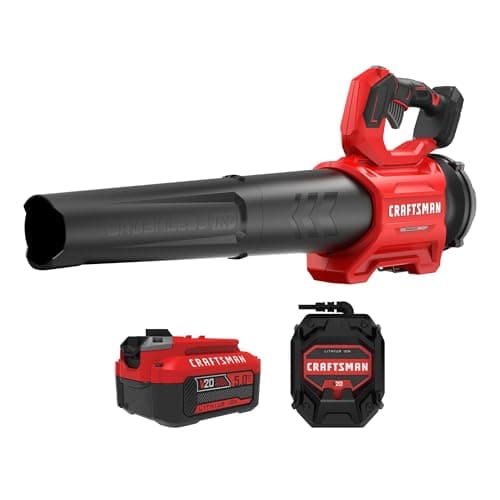
| Drive, path and patio clearing | CRAFTSMAN V20 RP | A 5.0 Ah pack on a light brushless handheld - useful runtime for small jobs |
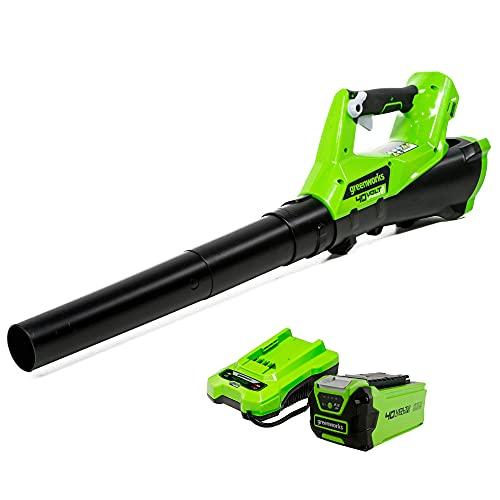
| Cheapest cordless with a real CFM figure | Greenworks 40V axial | 390 CFM / 110 MPH published, battery and charger in the box |
| Deck, garage floor, one-handed | BLACK+DECKER LSW321 | Under four pounds and quiet. A sweeper, not a leaf blower - buy it knowing that |
| A wooded acre, every fall | Nothing on this page | That is backpack-blower work, and the harness matters as much as the engine |
Corded, cordless or gas under $200
Corded wins on airflow per dollar, and it is not close. A 12-amp corded tool at the cheap end of this page publishes roughly the same CFM as the best cordless machine on it and costs a fraction of the money. The reason is simple: there is no battery, no charger and no pack electronics in the price. If your lawn suits a cord, that is the single best value decision in this whole category.
Cordless wins on everywhere else.No cable means you can clear the far corner, the side strip and round every tree without replanning. On a lawn with beds and specimens in the middle of it, a cord turns a twenty-minute job into a knitting exercise. What you pay for that is runtime and money. The battery platform you are already on should decide which cordless tool you buy — if a mower is in your future too, our sub-$500 mower page shows which platforms carry a full-size deck and which stop at handhelds.
Gas does not meaningfully exist under $200 in this category.The cheapest gas blowers we can verify live are handhelds whose airflow is beaten by the corded tools here, and the backpack machines — the ones gas genuinely wins — start well above the line. The comparison, with the published figures on both sides, is in electric vs gas leaf blowers, and the backpack set is in our backpack blower roundup.
What the $200 ceiling costs you
The 615 to 650 CFM cordless tier.EGO’s big handhelds sit just above this line, and what you get up there is the top of cordless airflow with a battery included. The gap in real work between 605 and 650 CFM is small; the gap in price is not, which is most of why the Toro wins this page. If you want the full set, that is our cordless blower roundup.
Backpack harnesses.Everything here is a handheld, held out at arm’s length. If your fall clearance runs for hours, a harness is not a luxury, and the cheapest backpack machines start above this ceiling.
A metal impeller on a blower/vac. The spec that decides how long a vacuuming tool survives being fed wet leaves and the occasional stone is whether the impeller is metal or plastic. Under $200 you are getting plastic.
Honest published specs, half the time.This is the category’s real failing and the cap makes it worse: two picks here publish MPH and not CFM, and we have ranked both accordingly rather than guessing an airflow figure to fill the gap.
Using a cheap blower well
Work with the wind, in one direction, to one pile. The commonest mistake is sweeping back and forth and moving the same leaves twice. Start downwind at the far edge and push everything one way.
Stop fighting wet leaves. A sodden leaf matted into turf needs volume of air and patience, and under $200 you have a limited supply of the first. Wait for a dry afternoon and the same tool does three times the work.
Keep the intake clear. A blower draws air through a grille that sits against your clothing; block it and the tool loses airflow and runs hot. On a battery tool that costs you runtime as well.
Wear hearing protection on anything loud. Blowers are the loudest tool in most sheds, and the cheap corded ones are not the quiet ones. The CDC/NIOSH guidance on occupational noise is the standard worth reading once.
One more, for the lawn rather than the tool: do not blow every leaf off the grass all fall. A thin scatter of shredded leaf is free organic matter and feeds the soil, which is why a mulching mower pass over a light leaf fall is better for the lawn than clearing it — our mulching mower page makes that case properly. Clear the heavy drifts that would smother the grass, and mulch the rest.