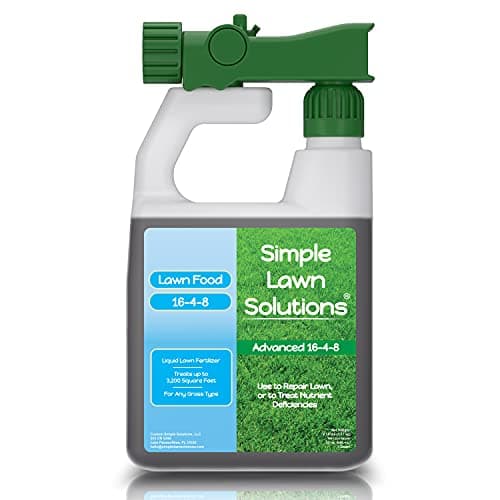
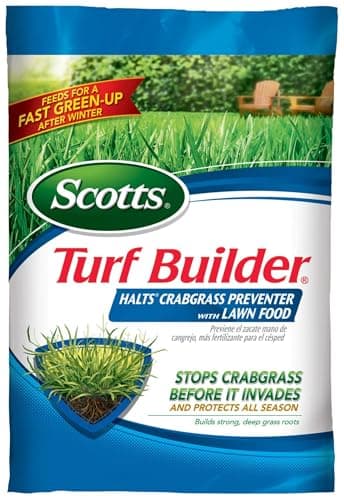
The best lawn fertilizer for spring is Scotts Turf Builder Halts Crabgrass Preventer with Lawn Food, and the reason has almost nothing to do with the fertilizer. Spring is the one application in the year where timing is worth more than product: get a crabgrass pre-emergent down before the soil warms enough for crabgrass to germinate and you prevent a summer-long problem in one pass. Miss that window and no amount of feeding fixes it. This bag does the feed and the pre-emergent together, which is why it leads.
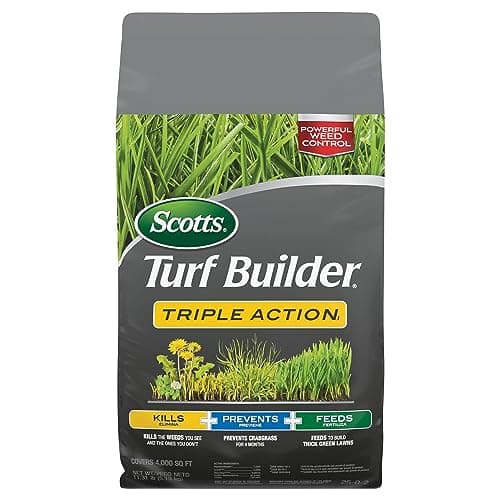
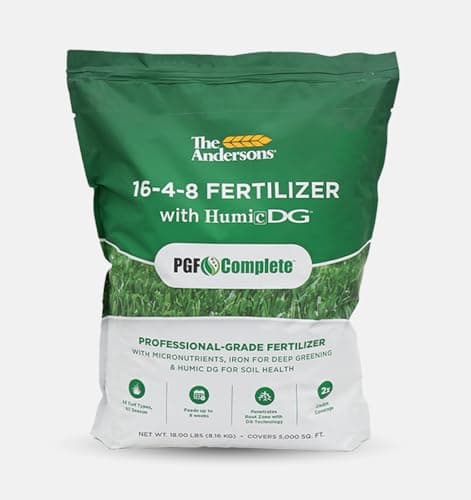
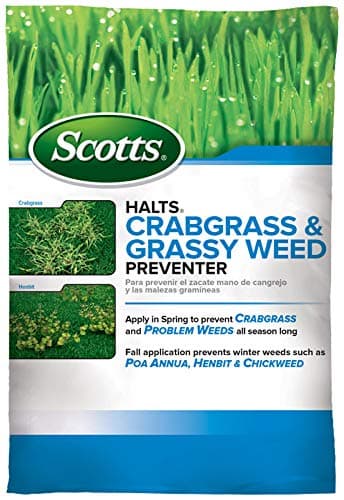
If your lawn already has visible broadleaf weeds — dandelions, clover, plantain — then Scotts Turf Builder Triple Action1 is the better first pass, because it adds a post-emergent herbicide for the weeds already up on top of the feed and the pre-emergent. If you would rather just feed the lawn properly and handle weeds separately, The Andersons PGF Complete 16-4-8 is the best pure spring feed on this site. And if you want the pre-emergent alone, with no fertilizer attached, Scotts Halts is that product.
Here is the one case where you must not use any of the top four: if you are sowing or overseeding grass seed this spring, a pre-emergent will stop your seed germinating. It cannot distinguish your seed from crabgrass seed. Seeding and crabgrass prevention are mutually exclusive in the same season on the same ground — pick one. If you are seeding, use a starter fertilizer instead and accept crabgrass for the year: see the best starter fertilizer for new grass.
Everything here is ranked on label figures — NPK analysis, stated coverage, what the label says it controls — and we have spread none of it. See how we pick. Prices are live from the price layer with an “as of” date.
Spring lawn fertilizers compared
| Product | Feeds | Prevents crabgrass | Kills weeds already up | Safe over new seed | Best for |
|---|
| Halts Crabgrass Preventer with Lawn Food | Yes | Yes | No | No | Best spring bag overall |
| Turf Builder Triple Action1 | Yes | Yes | Yes | No | Weeds already visible |
| Andersons PGF Complete 16-4-8 | Yes | No | No | Yes | Best pure feed |
| Scotts Halts | No | Yes | No | No | Pre-emergent only |
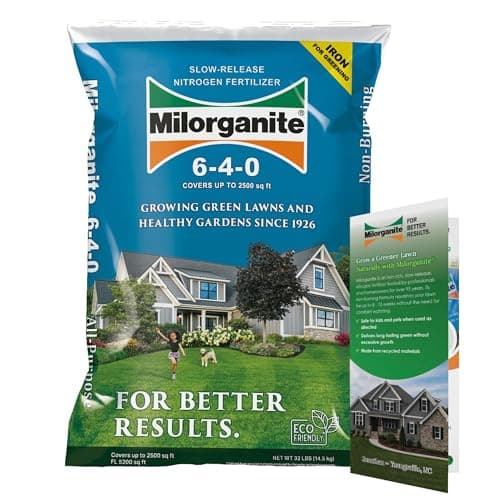
| Milorganite 6-4-0 | Yes, slow | No | No | Yes | Gentle, no burn risk |
| Simple Lawn 16-4-8 liquid | Yes, fast | No | No | Yes | Quick green-up |
Analyses, coverage and control claims above are what the product labels state. “Safe over new seed” means the label carries no pre-emergent or post-emergent herbicide; it is not a substitute for reading the bag you actually buy.
Why pre-emergent timing decides your whole summer
Crabgrass is an annual. It dies every winter and comes back from seed every spring, which means it has one vulnerable moment: germination. A pre-emergent herbicide puts a chemical barrier in the top layer of soil that stops that germination happening.
The barrier has to be down beforethe seed germinates, which is the part people get wrong. Crabgrass germinates when soil temperature at the surface holds around 55 degrees Fahrenheit for a few consecutive days — which in practice means early spring, earlier than most people think about their lawn, and several weeks before the crabgrass is visible. By the time you can see it, a pre-emergent is useless against this year’s crop.
Two practical ways to time it without a soil thermometer. The traditional one: put it down when the forsythia blooms, which tracks soil temperature well across most of the country. The modern one: look up your local soil temperature, which several extension services publish weekly. Either beats guessing by calendar date, because the right week in Georgia is a different month from the right week in Michigan.
And water it in. A granular pre-emergent sitting dry on the surface is not a barrier. Most labels ask for a light watering, or rain, to move the active ingredient into the soil layer where the seed is.
What spring feeding should actually achieve
A common mistake is to treat spring as the big feeding event of the year and to pour nitrogen on. It is not. Cool-season grasses — fescue, bluegrass, ryegrass — are growing hard in spring anyway, and heavy nitrogen then produces soft top growth that struggles in the first real heat of summer. The biggest nitrogen application of the year for a cool-season lawn belongs in autumn.
So spring wants a moderate, ideally slow-release feed: enough to support the flush of growth and the recovery from winter, not enough to force it. That is exactly what a 16-4-8 with slow-release nitrogen like the Andersons PGF Complete does, and why Milorganite — a slow, gentle 6-4-0 that cannot burn the lawn — is a perfectly sensible spring choice for somebody who would rather not think about rates.
The liquid Simple Lawn 16-4-8 is the opposite tool: fast availability for a quick green-up when you want visible results in a fortnight. It is a good product for that job and a poor substitute for a season-long granular program. The whole-year view is in the lawn fertilizer schedule.
How much to put down, and how
Measure the lawn and work in thousands of square feet, then match that to the coverage the bag states. Every bag on this page publishes a coverage figure, and the only arithmetic you need is lawn area divided by a thousand. Our pounds-of-nitrogen-per-thousand walkthrough is in the best lawn fertilizer.
Use a spreader with decent edge control, calibrated to the setting on the bag. The single most visible lawn mistake is uneven granular application: dark stripes where you overlapped, pale ones where you did not, visible for weeks. Spreader choices are in the spreader roundup.
With Triple Action1, note the opposite watering instruction from the pre-emergent-only products: a post-emergent herbicide needs to stick to the weed leaf, so it goes down on a damp lawn (morning dew is ideal) and then you leave the watering for a day or two. Read the bag — the two mechanisms genuinely want opposite things.
Who should skip these
Skip every pre-emergent on this page if you are seeding or overseeding this spring. This is the one hard rule here.
Skip Triple Action1 if your lawn is weed-free — you are paying for herbicide you do not need, and a cleaner feed does the job.
And skip heavy spring nitrogen on a cool-season lawn generally. If you only make one big feeding application a year, autumn is where it belongs, not March. The warm-season case is different, and bermuda specifically is covered in our fescue vs bermuda comparison.
What comes after spring
Spring is the opening application, not the whole program. The next decision is whether to feed through summer at all, which depends on your grass type — the answer is in best summer lawn fertilizer. And if your lawn is bermuda rather than fescue, the whole spring calendar shifts later, because feeding dormant bermuda feeds the weeds instead: see best lawn fertilizer for bermuda.
One more thing belongs in the same March pass, and it is time-critical in a way fertilizer is not: a crabgrass pre-emergent has to be down before the soil reaches the mid-fifties, and the bags that combine it with a spring feed do both jobs in one trip.