Skip to content
Fairway&Fescue

The Seed · Grass Seed & Fescue

How Much Grass Seed Do I Need?

The rate is printed on every bag and almost nobody uses it. Two numbers settle this: the square footage of your lawn and the rate on the label.

By Stephen V.Updated How we pick
#ad

We earn a commission when you buy through our Amazon links, at no extra cost to you. It never changes our rankings — and we'll tell you when the cheaper bag or machine is the better buy. How this works.

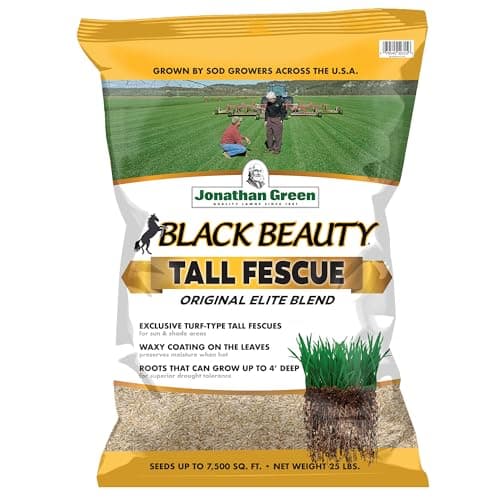
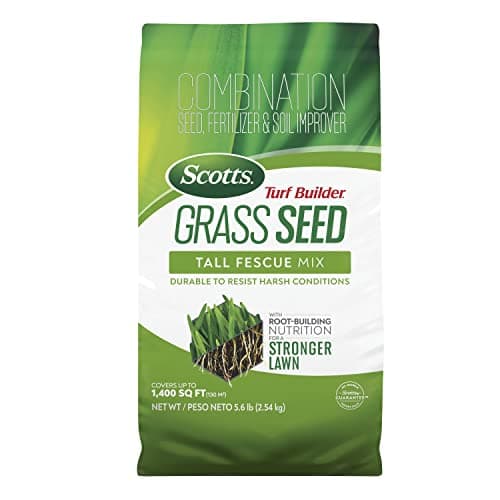
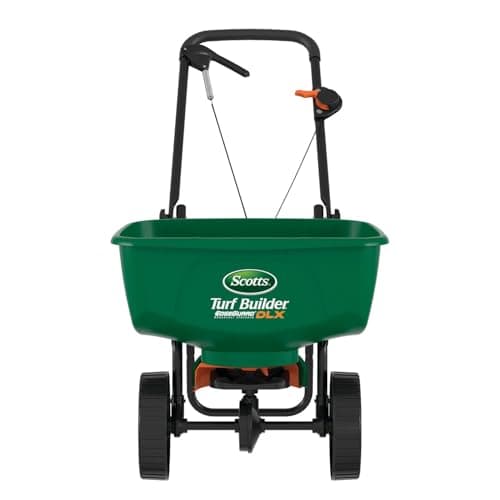
Measure the lawn in square feet, read the rate on the bag, and divide. For a new tall fescue lawn that is usually six to ten pounds per thousand square feet; for overseeding an existing one it is roughly half that. A 25 lb bag of Jonathan Green Black Beauty Tall Fescue therefore covers a few thousand square feet of new lawn or a good deal more as an overseed, and a 5.6 lb bag like the Scotts Turf Builder Tall Fescue Mixis a patch-and-touch-up quantity rather than a whole-lawn one. Whatever the number, you need a spreader that holds a rate — the Scotts EdgeGuard DLX is the broadcast spreader most of these rates assume.

Two things make this harder than it should be. The first is that rates vary by species: fine, light seed like bluegrass goes much further per pound than big tall fescue seed, so the number is never one number. The second is coating — coated seed has material added around each seed for moisture retention, so part of the bag weight is not seed. Both of these are why the figure printed on your specific bag beats any rule of thumb, including ours.

We have not weighed anything out. The rates below are what the labels and standard turfgrass seeding practice publish; the arithmetic is arithmetic — see how we pick. Prices are live with an “as of” date.

The short answer

Quick picks

#ProductBest forScorePrice
01
Jonathan Green Jonathan Green Black Beauty Tall Fescue Blend (25 lb)
Jonathan Green Black Beauty Tall Fescue Blend (25 lb)

The premium turf-type tall fescue blend, in a bag size that actually seeds a lawn. Black Beauty is the cultivar family lawn-care professionals name when asked what they would put down themselves.

The best-looking tall fescue lawn
7.6
$103.55Amazon
02
Scotts Scotts Turf Builder Tall Fescue Mix (5.6 lb)
Scotts Turf Builder Tall Fescue Mix (5.6 lb)

The one to buy for patching and overseeding rather than for a whole new lawn. A small, cheap, easy-to-find bag of tall fescue mix with Scotts' coating on the seed.

Patching and light overseeding
6.0
$29.97Amazon
03
Scotts Scotts Turf Builder EdgeGuard DLX Broadcast Spreader
Scotts Turf Builder EdgeGuard DLX Broadcast Spreader

The spreader to buy. EdgeGuard shuts off the right-hand side of the spread pattern, which is the one feature that stops you throwing fertilizer into beds, onto the driveway and down the storm drain.

Best broadcast spreader for most lawns
8.6
$90.21Amazon

#ad · Live prices from the Amazon Product API, as of October 21, 2026. Where we have no verified live price, we show none — we would rather leave a gap than print a number that has rotted.

In detail

The picks, in full

01
Jonathan Green Jonathan Green Black Beauty Tall Fescue Blend (25 lb)

The best-looking tall fescue lawn

Jonathan Green Black Beauty Tall Fescue Blend (25 lb)

Turf-type tall fescue blend25 lb bagDeep-rooting cultivarsDark green color class
7.6/10

The premium turf-type tall fescue blend, in a bag size that actually seeds a lawn. Black Beauty is the cultivar family lawn-care professionals name when asked what they would put down themselves.

Species quality
10
Shade tolerance
7
Drought tolerance
9
Self-repair
4
Value per lb
8

Pros

  • A blend of several improved tall fescue cultivars rather than one, which spreads the risk of any single cultivar failing in your conditions
  • 25 lb is a real lawn's worth of seed at a sensible price per pound
  • The dark color class is the visible difference between this and a commodity fescue bag

Cons

  • Noticeably more expensive than Scotts or Pennington per bag
  • Still a bunch-type tall fescue, so it will not self-repair the way RTF does

Skip this if…

…the lawn is mostly deep shade. Tall fescue tolerates shade better than bluegrass but a fine fescue mix handles genuine gloom far better.

$103.55View on Amazon

Price as of October 21, 2026. Prices change — Amazon's is the one that counts.

#ad · we may earn a commission from this link to Jonathan Green Black Beauty Tall Fescue Blend (25 lb)

02
Scotts Scotts Turf Builder Tall Fescue Mix (5.6 lb)

Patching and light overseeding

Scotts Turf Builder Tall Fescue Mix (5.6 lb)

Tall fescue mix5.6 lb bagCoated seedSun and shade
6.0/10

The one to buy for patching and overseeding rather than for a whole new lawn. A small, cheap, easy-to-find bag of tall fescue mix with Scotts' coating on the seed.

Species quality
7
Shade tolerance
7
Drought tolerance
7
Self-repair
4
Value per lb
5

Pros

  • A bag size that matches the job most people actually have: thin spots, not a whole lawn
  • Scotts' seed coating holds moisture around each seed, which forgives a missed watering
  • Cheap enough to keep a spare bag in the garage

Cons

  • A 'mix' rather than a tall fescue blend — expect other species in the bag, so check the label
  • Terrible value per pound if you are seeding a real area

Skip this if…

…you are seeding more than about 1,500 square feet. At this price per pound you would pay several times over what a 20 lb Rebels bag costs for the same coverage.

$29.97View on Amazon

$38.4922% off

Price as of October 21, 2026. Prices change — Amazon's is the one that counts.

#ad · we may earn a commission from this link to Scotts Turf Builder Tall Fescue Mix (5.6 lb)

03
Scotts Scotts Turf Builder EdgeGuard DLX Broadcast Spreader

Best broadcast spreader for most lawns

Scotts Turf Builder EdgeGuard DLX Broadcast Spreader

EdgeGuard side shut-offHolds up to 15,000 sq ft of productBroadcast / rotaryCalibrated settings dial
8.6/10

The spreader to buy. EdgeGuard shuts off the right-hand side of the spread pattern, which is the one feature that stops you throwing fertilizer into beds, onto the driveway and down the storm drain.

Spread accuracy
9
Edge control
10
Capacity
9
Build quality
6
Value
9

Pros

  • The edge shut-off is genuinely the most useful feature on any consumer spreader — it saves product and keeps fertilizer out of water
  • A 15,000 sq ft hopper means most lawns are a single fill
  • Scotts prints matching setting numbers on their own bags, so calibration is a dial rather than a maths problem

Cons

  • Plastic construction throughout — this is not a lifetime tool
  • Rinse it after every use or fertilizer salts will seize the gate mechanism

Skip this if…

…your lawn is under about 3,000 square feet. The Mini does the same job in a smaller frame that is far easier to store, for a lot less.

$90.21View on Amazon

$114.9922% off

Price as of October 21, 2026. Prices change — Amazon's is the one that counts.

#ad · we may earn a commission from this link to Scotts Turf Builder EdgeGuard DLX Broadcast Spreader

Step one: get the square footage, properly

Everything depends on this number and most people guess it badly. Pace it out — a normal adult stride is close to three feet, so count paces and multiply by three to get feet.

A rectangle: length times width.

An L-shape or a lawn with a patio in it: break it into rectangles, work out each, add them up. Subtract the house, the drive, the beds and the pool. You are seeding grass, not the footprint of the property.

A circle: radius times radius times 3.14.

A genuinely irregular lawn: treat it as the rectangle that roughly contains it and subtract a quarter. It is close enough, and a satellite measuring tool on a mapping site will get you closer in two minutes.

Write the number down somewhere permanent. Every fertilizer bag, every pre-emergent, every weed product on this site is rated per thousand square feet, so you will use it again every time you buy anything — starting with the fertilizer schedule.

Step two: the rate

SpeciesNew lawn, per 1,000 sq ftOverseeding, per 1,000 sq ft
Turf-type tall fescue6 to 10 lb3 to 5 lb
Fine fescue4 to 5 lb2 to 3 lb
Kentucky bluegrass2 to 3 lb1 to 2 lb
Perennial ryegrass6 to 9 lb3 to 5 lb
Bermudagrass (hulled)1 to 2 lb0.5 to 1 lb

These are the standard published ranges for each species, and your bag's own figure wins wherever it differs — particularly on coated products, which state lower coverage per pound because some of the weight is coating. Bluegrass seed is tiny, which is why its rate looks implausibly low next to tall fescue; it is seeds per square inch that matters, not pounds.

Step three: the arithmetic, worked

A 5,000 sq ft new tall fescue lawn at 8 lb per 1,000: 5 times 8 = 40 lb. Two 25 lb bags, with some left for the inevitable thin strip.

The same lawn overseeded at 4 lb per 1,000: 20 lb. One 25 lb bag covers it comfortably.

A 2,000 sq ft shaded area in fine fescue at 4.5 lb per 1,000: 9 lb. A 10 lb bag.

A 400 sq ft bare patch at 8 lb per 1,000: about 3.2 lb. A 5.6 lb bag, and the rest goes in the shed for next spring.

Buy slightly over rather than slightly under. Running out two thirds of the way across a lawn means a visible seam for a season, and stored seed keeps for a year or two in a cool, dry, sealed container.

Why more seed gives a worse lawn

This is the counterintuitive part and it is worth being clear about. Doubling the rate does not double the lawn. It produces several times the number of seedlings in the same square inch, all competing for the same light, water and nutrients, and the result is a thick flush of weak, spindly grass with shallow roots that thins out under the first real stress of summer.

Dense sowing also raises disease pressure in seedling turf, because the canopy stays damp. And it wastes money twice: once on seed you did not need, and again on the overseeding you end up doing when the stand thins.

Under-seeding has the opposite failure: thin cover, visible soil and an open invitation to weeds. The published range exists because it is the band where neither of those happens.

The spreader is part of the rate

A rate you cannot apply evenly is a number on paper. Two habits make a real difference, and both are free.

Halve the setting and go twice, at right angles. Two light passes crossing each other cover far more evenly than one heavy pass, and they hide the drift at the edge of each sweep.

Keep a steady walking pace and shut the hopper at turns. A broadcast spreader meters by ground speed, so slowing down doubles your rate without you noticing.

Which machine matters mainly for edge control — a spreader that throws seed into beds and onto the drive wastes it twice. The broadcast spreader rankings cover that, and broadcast vs drop explains which type suits your lawn. For a small area, a hand spreader is fine; a hand-thrown application is not, because nobody throws evenly.

Then do not waste it

Seed is the cheap part of seeding. Getting it to germinate is the rest, and the rate is irrelevant if the seed is lying on thatch or dries out on day four. Mow short and collect first, aerate if you can, feed with a starter fertilizer rather than a normal bag, and keep the top half inch of soil damp for two to three weeks. The full sequence is in how to grow grass from seed and, for an existing lawn, how to reseed a lawn.

One more thing is worth more than the rate: the date. Sowing the right quantity into the wrong soil temperature wastes all of it, and the windows are narrower than most people think — see when to plant grass seed.
How we picked this

We haven't run this gear through a lab — and we say so

We compiled the published manufacturer specifications — deck width and gauge, drive type, blower CFM, fertilizer NPK, seed species — did the deck-width and nitrogen arithmetic, cross-read the owner manuals, and scored each pick against a published rubric. The scores are judgments from documented research — they are notlab measurements we took, because we don't have a lab and we're not going to pretend we do. Where somebody has genuinely measured this, we link them. You can check every number we publish.

Questions

Frequently asked

How much grass seed do I need per 1,000 square feet?
For a new turf-type tall fescue lawn, six to ten pounds per thousand square feet; for overseeding an existing one, about half that. Fine fescue is four to five pounds, bluegrass only two to three because the seed is far smaller. Your bag's own stated rate beats any general figure, especially on coated seed.
How much grass seed do I need for 5,000 square feet?
At eight pounds per thousand - a mid-range tall fescue rate for a new lawn - that is 40 pounds, so two 25 lb bags. Overseeding the same lawn at four pounds per thousand needs 20 pounds, which one 25 lb bag covers.
Is it bad to put down too much grass seed?
Yes. Too much seed produces many seedlings competing in the same square inch, which gives weak, shallow-rooted grass that thins out in its first summer and is more prone to seedling disease. The published rate is the band where neither over- nor under-seeding happens.
How do I measure my lawn for seeding?
Pace it out at roughly three feet per stride and break the lawn into rectangles and circles, then subtract the house, drive, beds and patio. For an irregular shape, take the rectangle that contains it and subtract about a quarter. Write the final number down - every fertilizer and weed product is rated per thousand square feet too.
Does coated grass seed cover less per pound?
Yes. A coating adds material around each seed to hold moisture, so part of the bag weight is not seed, and coated products state lower coverage per pound. It is a fair trade on a lawn you cannot water reliably and a waste on one you can.
Can I spread grass seed by hand?
On a small patch, yes. Across a lawn, no - nobody throws evenly, and the result is visible thick and thin bands for a season. A hand spreader costs very little; for a whole lawn, a broadcast spreader at half rate in two crossing passes is the right method.

Keep reading

Receipts

Sources

We do not run a testing lab, and we do not pretend to. Every spec number here comes from a manufacturer's published sheet or an official standard, cited above. Where we could not verify something, we say so on the page rather than quietly leaving it out. Read our full method.