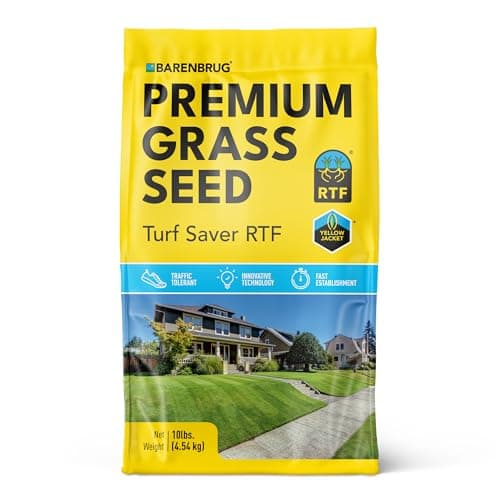
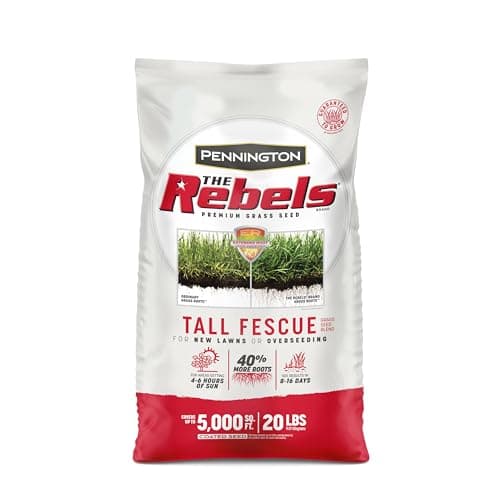
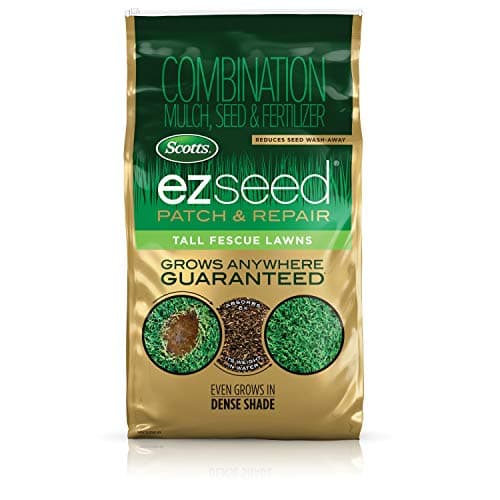
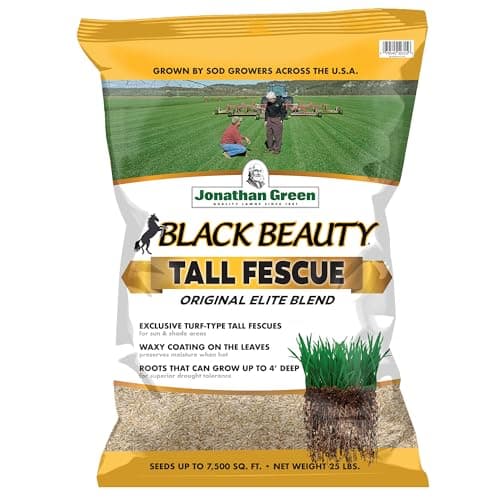
Overseed with Jonathan Green Black Beauty Tall Fescue.It is a blend of deep-rooting turf-type tall fescue cultivars in the dark green color class, which is what you want when the new seedlings have to look like they belong in an existing lawn rather than beside it. If the lawn is thin because it keeps thinning — traffic, dog runs, bare strips that come back every year — Barenbrug Turf Saver RTF is rhizomatous tall fescue, which spreads laterally and fills gaps on its own. For the best cost per thousand square feet, Pennington The Rebelsis improved turf-type tall fescue in a 20 lb bag. For patching rather than overseeding — small bare areas rather than a whole thin lawn — Scotts EZ Seed Patch & Repair carries its own mulch and feed.
The distinction that decides which bag you need: overseeding is sowing seed across an existing lawn to thicken it, and patching is filling a bare spot. Overseeding wants a straight blend at a reduced rate, because the existing grass is already holding the soil and competing for light. Patching wants a seed-plus-mulch-plus-feed product, because there is nothing there to protect or shade the seed. Buying the patch product for the whole lawn costs several times more per thousand square feet and does nothing extra.
We have no test plot. The rankings read the published seed label — species, cultivar family, coating, bag weight and the manufacturer's stated coverage — plus independent cultivar trial data from NTEP. See how we pick. Prices are live from the price layer with an “as of” date beside each bag.
The rate: overseeding is about half a new lawn
Seeding rates are published per thousand square feet, and the bag normally gives two figures — a new-lawn rate and an overseeding rate. The overseeding figure is typically about half the new-lawn figure, because you are adding plants between existing ones rather than covering bare ground.
Going heavier does not give a thicker lawn. It gives thousands of seedlings competing with each other and with the established grass for the same light and water, and the usual result is a flush of weak growth that thins out by midsummer. The seeding-rate guide does the arithmetic in full, including how to measure an awkwardly shaped lawn.
| Bag | What it is | Overseed or patch | Size |
|---|
| JG Black Beauty Tall Fescue | Turf-type tall fescue blend, dark green class | Overseed a whole lawn | 25 lb |
| Barenbrug Turf Saver RTF | Rhizomatous tall fescue, Yellow Jacket coating | Overseed a lawn that keeps thinning | 10 lb |
| Pennington The Rebels | Improved turf-type tall fescue | Overseed on a budget | 20 lb |
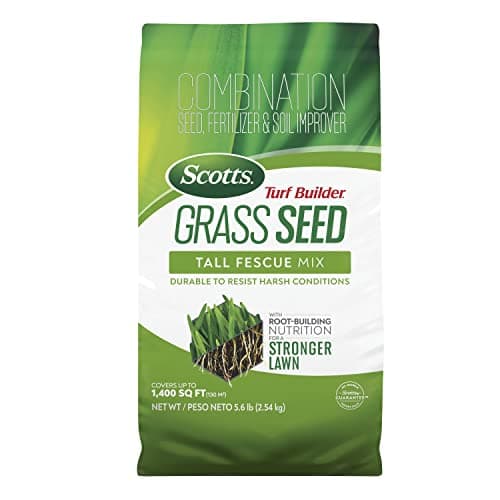
| Scotts Turf Builder Tall Fescue Mix | Coated tall fescue mix | Light overseeding, small lawns | 5.6 lb |
| Scotts EZ Seed Patch & Repair | Seed plus expanding mulch plus feed | Patch bare spots only | 10 lb |
Species, coatings, bag weights and stated coverage are what the labels publish. Live prices with an “as of” date are above.
Match the blade, not the brand
The visible failure mode of overseeding is a lawn that looks patchy in a new way: coarse clumps of a different grass standing out against finer turf. That happens when the seed you added is a different species or a much coarser type than what is already growing.
So the first question is what you have. If your lawn is turf-type tall fescue, overseed with turf-type tall fescue. If it is old coarse Kentucky 31 pasture-type fescue, understand that a modern fine-bladed blend will look different for a season or two until it dominates — that is actually the point, but it is not instant. If it is bluegrass, tall fescue will not blend in and you want a bluegrass blend instead.
The species background is in tall fescue, and tall fescue vs fine fescue covers the case where the thin areas are thin because they are shaded rather than worn.
Coating: useful, and you are paying for weight
Several of these bags carry coated seed. A coating holds moisture against the seed and makes it more visible on the ground, both of which help germination in a dry fall. It also means part of what you bought by weight is coating rather than seed, which is why coated products state a lower coverage per pound.
That is a fair trade on a lawn you cannot water reliably, and a waste of money on one you can. Read the coverage figure on the bag rather than the bag weight, because that is the number the arithmetic needs.
Timing: fall, and it is not close
Overseed cool-season grass in late summer to early fall. Soil is still warm enough for fast germination, air is cooling, annual weed pressure has collapsed, and the new seedlings get six weeks of good growing weather plus a whole spring before their first real summer.
Spring overseeding works and is distinctly second best: the seedlings face summer heat when they are a few months old, and crabgrass is germinating in the same window — which also means you cannot use a crabgrass pre-emergent that spring, because it stops grass seed just as effectively. How to grow grass from seed covers the germination timing in full.
Seed-to-soil contact is the whole job
Seed lying on top of thatch or on a hard surface does not germinate reliably no matter which bag it came from. Three steps make the difference, and none of them is the seed.
Mow short and collect. Take the lawn lower than usual for this one cut and bag the clippings, so seed can reach soil and light can reach seedlings.
Core aerate first. This is the single biggest improvement available. Seed falls into open holes with real soil contact, and the holes are already there for the roots. See when to aerate your lawn and, on heavy soil, aerators for clay.
Feed with a starter, not a regular bag.New seedlings want phosphorus for root development — starter fertilizer exists for exactly this and is a different analysis from your summer feed.
Then keep the surface damp for two to three weeks. Light, frequent watering beats a heavy soak: the seed needs the top half inch to stay moist, and a deep watering mostly runs past it.
The verdict
Most thin fescue lawns: Jonathan Green Black Beauty Tall Fescue. The cultivars blend in and the color class matches established turf.
A lawn that thins in the same places every year: Barenbrug Turf Saver RTF, because rhizomatous fescue fills gaps itself instead of waiting for you.
Best cost per thousand square feet: Pennington The Rebels in the 20 lb bag.
A small lawn or a light touch-up: the Scotts 5.6 lb tall fescue mix.
Bare spots rather than a thin lawn: Scotts EZ Seed. Do not buy it by the thousand square feet.