Skip to content
Fairway&Fescue

The Soil · Aerators, Dethatchers & Lawn Repair

Best Lawn Aerator for Clay Soil

On clay there is exactly one aerator that works, and it is defined by a single spec: hollow tines that remove a plug of soil instead of pushing a hole into it.

By Stephen V.Updated How we pick
#ad

We earn a commission when you buy through our Amazon links, at no extra cost to you. It never changes our rankings — and we'll tell you when the cheaper bag or machine is the better buy. How this works.

Buy a hollow-tine core aerator, and on clay nothing else counts. For most properties that is the Agri-Fab 40" Tow-Behind Plug Aeratorwith 24 galvanized coring knives — a 40-inch working width covers a suburban lot in a couple of passes behind any lawn tractor. Past half an acre, the Agri-Fab 48" with 32 knives is the same machine wider. If you want coring on the smallest budget, the Landzie 42" pulls plugs for considerably less. With no tow vehicle, the Yard Butler Manual Coring Aerator is a step-on tool that cores properly on patches, and the Landzie Rolling Core Plug Aerator is the push version for a whole small lawn.

Clay is not a difficult soil because it is poor — clay is usually nutrient-rich. It is difficult because the particles are tiny and flat, so they pack together under foot traffic and mower weight into a dense layer that water will not drain through and roots will not grow into. The whole problem is pore space, and the only mechanical way to put pore space back is to physically remove soil. A hollow tine does that. A solid spike cannot, because it has to displace what it is pushed into, which on clay means compressing the walls of the hole and making the compaction worse at the edges.

We own no soil lab and have aerated nothing for this page. The rankings read published working widths, tine types, knife or tine counts and hitch arrangements — see how we pick. The agronomy of coring versus spiking is standard turf-management practice, not our measurement. Prices are live from the price layer with an “as of” date beside each tool.

The short answer

Quick picks

#ProductBest forScorePrice
01
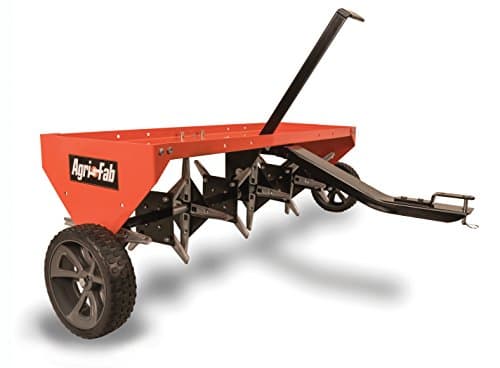
Agri-Fab Agri-Fab 40" Tow-Behind Plug Aerator (24 knives)
Agri-Fab 40" Tow-Behind Plug Aerator (24 knives)

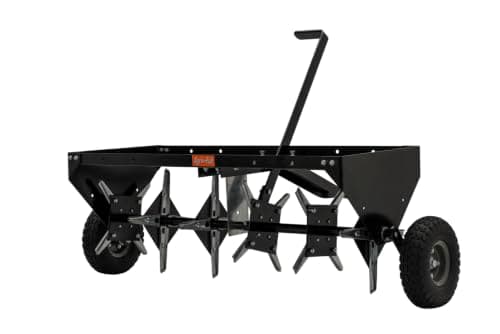
The same galvanized coring-knife design in a 40-inch width. For a lawn with trees and beds in it, a narrower aerator is easier to thread and cheaper to buy.

Best value tow-behind core aerator
8.8
$269.99Amazon
02
Agri-Fab Agri-Fab 48" Tow-Behind Plug Aerator (32 knives)
Agri-Fab 48" Tow-Behind Plug Aerator (32 knives)

The right tool for the job, if you own something to tow it with. Thirty-two galvanized coring knives over a 48-inch width — hollow-tine coring is the only aeration that genuinely relieves compaction.

Best aerator for half an acre plus
8.6
$319.98Amazon
03
Landzie Landzie 42" Hollow-Tine Core Aerator (tow-behind)
Landzie 42" Hollow-Tine Core Aerator (tow-behind)

Hollow tines at a 42-inch width for well under the price of the galvanized tow-behinds. The cheapest genuine coring aerator we can find listed.

Coring on the smallest budget
8.2
$99.99Amazon
04
Yard Butler Yard Butler Manual Lawn Coring Aerator (ID-6C)
Yard Butler Manual Lawn Coring Aerator (ID-6C)

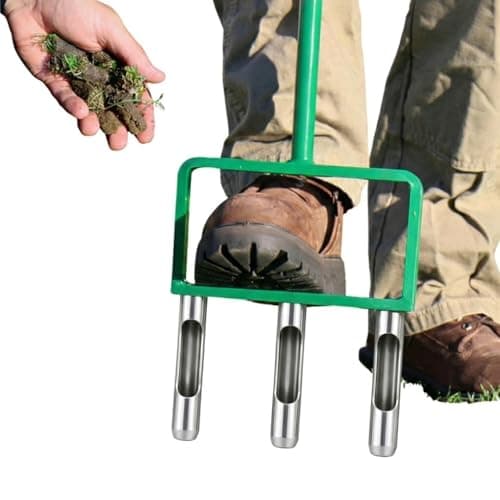
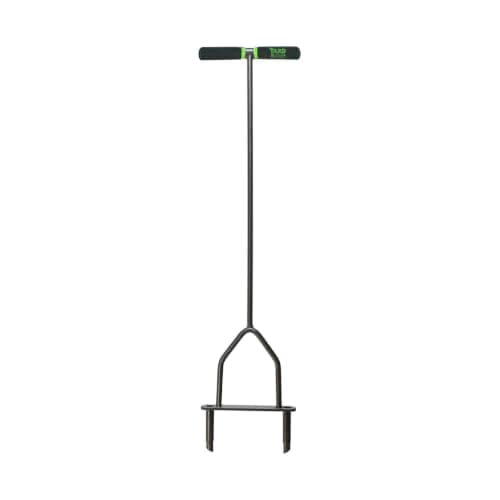
A long-handled hollow-tine corer you step on. It is slow and it is hard work — and it is the only tool here that properly cores a lawn without a tractor or a rental.

Proper coring without a tractor
6.6
$48.95Amazon
05
Landzie Landzie Rolling Lawn Aerator, Manual Core Plug
Landzie Rolling Lawn Aerator, Manual Core Plug

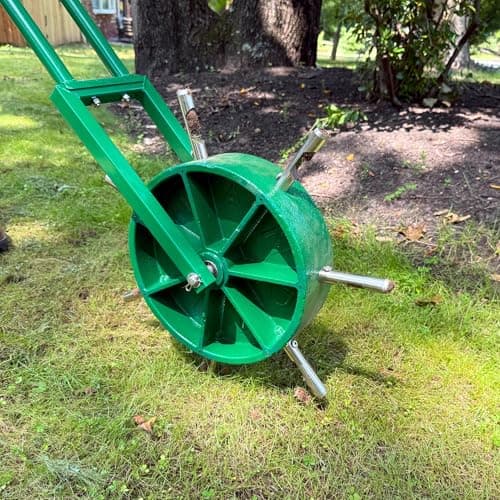
The pick if you want to core a whole lawn with no tractor and no rental. A push roller with coring heads — you walk it, it pulls plugs, and your knees do not pay for it the way a step-on corer makes them.

Best manual lawn aerator tool
7.6
$199.99Amazon

#ad · Live prices from the Amazon Product API, as of October 20, 2026. Where we have no verified live price, we show none — we would rather leave a gap than print a number that has rotted.

In detail

The picks, in full

01
Agri-Fab Agri-Fab 40" Tow-Behind Plug Aerator (24 knives)

Best value tow-behind core aerator

Agri-Fab 40" Tow-Behind Plug Aerator (24 knives)

40" working width24 galvanized coring knivesTow-behindUniversal hitch
8.8/10

The same galvanized coring-knife design in a 40-inch width. For a lawn with trees and beds in it, a narrower aerator is easier to thread and cheaper to buy.

Relieves compaction
10
Working width
8
Build quality
9
Ease of use
8
Value
9

Pros

  • Proper hollow-tine coring at a clearly lower price than the 48-inch model
  • 40 inches turns more tightly behind a mower, which matters on a lawn full of obstacles
  • Same galvanized knife construction, so the same working life

Cons

  • Eight fewer knives and eight inches less width means noticeably more passes on a big lawn
  • Still needs a tow vehicle

Skip this if…

…you are aerating an acre or more of open lawn. The 48-inch version covers 20 percent more ground per pass and the price gap closes quickly in saved time.

$269.99View on Amazon

Price as of October 20, 2026. Prices change — Amazon's is the one that counts.

#ad · we may earn a commission from this link to Agri-Fab 40" Tow-Behind Plug Aerator (24 knives)

02
Agri-Fab Agri-Fab 48" Tow-Behind Plug Aerator (32 knives)

Best aerator for half an acre plus

Agri-Fab 48" Tow-Behind Plug Aerator (32 knives)

48" working width32 galvanized coring knivesTow-behindUniversal hitch
8.6/10

The right tool for the job, if you own something to tow it with. Thirty-two galvanized coring knives over a 48-inch width — hollow-tine coring is the only aeration that genuinely relieves compaction.

Relieves compaction
10
Working width
10
Build quality
9
Ease of use
7
Value
7

Pros

  • Coring knives pull plugs of soil out, which is what actually creates air space in compacted ground — spikes just compress the walls of the hole
  • 48 inches is the widest here, so an acre is a reasonable afternoon
  • A weight tray lets you load it down, and penetration depth is almost entirely about weight

Cons

  • Needs a riding mower or tractor with a hitch — useless on its own
  • The most expensive tool in this hub

Skip this if…

…you do not own a riding mower. Nothing about this works without something to pull it; the Yard Butler hand corer or a rented walk-behind are the real options then.

$319.98View on Amazon

$379.9916% off

Price as of October 20, 2026. Prices change — Amazon's is the one that counts.

#ad · we may earn a commission from this link to Agri-Fab 48" Tow-Behind Plug Aerator (32 knives)

03
Landzie Landzie 42" Hollow-Tine Core Aerator (tow-behind)

Coring on the smallest budget

Landzie 42" Hollow-Tine Core Aerator (tow-behind)

42" working widthHollow coring tinesTow-behindPulls soil plugs
8.2/10

Hollow tines at a 42-inch width for well under the price of the galvanized tow-behinds. The cheapest genuine coring aerator we can find listed.

Relieves compaction
9
Working width
9
Build quality
6
Ease of use
8
Value
9

Pros

  • Hollow tines, so it removes soil rather than compressing it — the mechanism that actually relieves compaction
  • 42 inches of width for roughly a third of what the heavy galvanized plug aerators cost
  • Light enough that a small lawn tractor pulls it without complaint

Cons

  • Lighter build than the Agri-Fab plug aerators, and weight is what drives tines into the ground
  • Still needs something to tow it

Skip this if…

…you are aerating heavy clay every autumn. The galvanized Agri-Fab corers take more weight on the tray and will outlast this by years.

$99.99View on Amazon

Price as of October 20, 2026. Prices change — Amazon's is the one that counts.

#ad · we may earn a commission from this link to Landzie 42" Hollow-Tine Core Aerator (tow-behind)

04
Yard Butler Yard Butler Manual Lawn Coring Aerator (ID-6C)

Proper coring without a tractor

Yard Butler Manual Lawn Coring Aerator (ID-6C)

Hollow coring tinesLong handle, step-onPowder-coated steelCushioned handles
6.6/10

A long-handled hollow-tine corer you step on. It is slow and it is hard work — and it is the only tool here that properly cores a lawn without a tractor or a rental.

Relieves compaction
9
Working width
2
Build quality
9
Ease of use
4
Value
9

Pros

  • Genuine hollow-tine coring — the same mechanism as the tow-behind aerators, at human scale
  • Perfect for the places compaction actually bites: paths worn across the lawn, the gate, under the washing line
  • Cheap, indestructible and takes no storage space

Cons

  • Covering a whole lawn with this is a weekend of hard physical work, honestly
  • Only a few plugs per step, so throughput is very low

Skip this if…

…you intend to aerate the entire lawn. For a full lawn, rent a powered walk-behind corer for an afternoon — it costs less than this tool and does in two hours what this does in two days.

$48.95View on Amazon

Price as of October 20, 2026. Prices change — Amazon's is the one that counts.

#ad · we may earn a commission from this link to Yard Butler Manual Lawn Coring Aerator (ID-6C)

05
Landzie Landzie Rolling Lawn Aerator, Manual Core Plug

Best manual lawn aerator tool

Landzie Rolling Lawn Aerator, Manual Core Plug

Rolling core plug headsPush, no tow vehicleManualPulls soil plugs
7.6/10

The pick if you want to core a whole lawn with no tractor and no rental. A push roller with coring heads — you walk it, it pulls plugs, and your knees do not pay for it the way a step-on corer makes them.

Relieves compaction
9
Working width
6
Build quality
8
Ease of use
8
Value
7

Pros

  • Coring heads on a rolling drum means genuine plug removal at walking pace — the only manual tool here that covers a lawn in an afternoon
  • Needs nothing to pull it, so it works for the majority of homeowners who have no riding mower
  • Far gentler on your back than a long-handled step-on corer

Cons

  • Costs more than every other manual aerator on this page
  • Coring heads clog in wet clay and need clearing

Skip this if…

…you only need to fix a few worn paths. The Yard Butler ID-6C costs a quarter as much and is the right tool for spot work.

$199.99View on Amazon

Price as of October 20, 2026. Prices change — Amazon's is the one that counts.

#ad · we may earn a commission from this link to Landzie Rolling Lawn Aerator, Manual Core Plug

The one spec that matters: hollow tine or solid spike

Every aerator sold falls into one of two groups, and on clay the groups are not interchangeable.

Hollow-tine core aerators— also sold as plug aerators or coring aerators — punch a hollow cylinder into the soil and lift out a plug, leaving an open hole that air, water, fertilizer and roots can move into. The plugs sit on the surface and break down over a week or two. This genuinely reduces compaction, because soil has been taken away.

Spike aeratorspush a solid point into the ground. Nothing is removed, so the soil that was occupying that space has to go somewhere — sideways, into the walls of the hole. On sand that is nearly harmless. On clay it builds a compacted sleeve around every hole, which is the opposite of the intended result.

Spiking is not useless: it is a reasonable way to open a seedbed before overseeding, or to break surface tension before watering. It is just not compaction relief on clay, and products in this category are often marketed as though those were the same job. The full mechanism argument is in spike vs plug aerator.

The coring tools, compared

ToolTine typeWorking widthNeeds a tow vehicleBest lawn size
Agri-Fab 40" Plug Aerator24 galvanized coring knives40 inYesQuarter to half acre
Agri-Fab 48" Plug Aerator32 galvanized coring knives48 inYesHalf an acre and up
Landzie 42" Core AeratorHollow coring tines42 inYesQuarter to half acre on a budget
Yard Butler ID-6CHollow coring tines, step-onHand toolNoPatches and problem areas
Landzie Rolling Core Plug AeratorRolling core plug headsPush widthNoSmall whole lawns

Working widths, knife counts and tine types are the figures the listings and manufacturers publish. Live prices with an “as of” date are above.

Weight is the other half of the machine on clay

A tow-behind core aerator has a weight tray for a reason. Hollow tines have to be pushed into the ground hard enough to fill with soil, and dry clay is close to rock. An unweighted aerator skates across it and pulls nothing.

Two things fix that, in this order. First, water the lawn a day or two before — moist clay cores cleanly, dry clay does not core at all and saturated clay smears. Second, load the weight tray: concrete blocks or paving slabs, up to the manufacturer's stated limit. Reaching full tine depth is the difference between aerating and decorating.

On a clay lawn that has never been aerated, two passes at right angles is a better plan than one heavy pass. More holes per square foot is the point, and the published way to get there is coverage rather than force.

What to do with the plugs, and what to do next

Leave them. The plugs break down in a week or two of weather and mowing and return their soil to the surface, which is where you want it. Raking them up removes topsoil you just paid to lift.

Then take advantage of the holes, because they are a one-time opportunity. Core aeration is the single best moment to overseed — the seed falls into open holes with soil-to-seed contact instead of sitting on a hard surface, which is exactly the problem overseeding usually has on clay. Follow with a starter fertilizer and see fescue seed for overseeding for what to put down. Tall fescue is the right species for clay in most of the country anyway, because it roots deeply enough to keep working in it — the species case is in tall fescue.

A topdressing of sand or compost brushed into fresh holes is the long game for clay. It changes the soil structure a fraction of an inch at a time, and over several seasons it genuinely works. Do not expect one application to do anything you can see.

What a core aerator will not fix

Thatch.A mat of dead stems above the soil is a different problem with a different tool — a scarifier with blades cuts it out. Coring punches through thatch without removing much of it. See aerating vs dethatching and the dethatcher rankings.

A bumpy lawn. Aeration does not level anything. That is topdressing and a leveling rake.

Drainage into subsoil clay. Coring relieves the top few inches. If water stands on the lawn for a day after rain, the problem is below the reach of any aerator and is a drainage job, not a lawn-care one.

The verdict

Most clay lawns, with a tractor:the Agri-Fab 40" plug aerator. 24 coring knives, a weight tray, and a universal hitch.

Half an acre and up:the Agri-Fab 48". Same machine, 32 knives, fewer passes.

Coring on the smallest budget:the Landzie 42".

No tow vehicle, whole small lawn: the Landzie Rolling Core Plug Aerator.

No tow vehicle, problem patches only: the Yard Butler ID-6C step-on corer.

Any spike aerator, for compacted clay: no. Right tool, wrong soil.
How we picked this

We haven't run this gear through a lab — and we say so

We compiled the published manufacturer specifications — deck width and gauge, drive type, blower CFM, fertilizer NPK, seed species — did the deck-width and nitrogen arithmetic, cross-read the owner manuals, and scored each pick against a published rubric. The scores are judgments from documented research — they are notlab measurements we took, because we don't have a lab and we're not going to pretend we do. Where somebody has genuinely measured this, we link them. You can check every number we publish.

Questions

Frequently asked

What kind of aerator is best for clay soil?
A hollow-tine core aerator - also sold as a plug or coring aerator. It removes a plug of soil and leaves an open hole, which is the only mechanical way to put pore space back into packed clay. A spike aerator displaces soil sideways instead of removing it, which compacts the walls of each hole.
Do spike aerators work on clay?
Not for compaction. On clay a solid spike compresses the soil around the hole it makes, so you can end up slightly worse off. Spiking is fine for opening a seedbed before overseeding or breaking surface tension before watering - it is just not compaction relief.
Should I water before aerating clay soil?
Yes - a day or two before. Moist clay cores cleanly, bone-dry clay is too hard for tines to fill, and saturated clay smears rather than pulling plugs. Then load the aerator's weight tray to the stated limit so the tines reach full depth.
How often should clay soil be aerated?
Once a year is a reasonable program for a clay lawn with normal foot traffic, timed to the grass type's growing season. Heavily used lawns and sports areas benefit from twice. Sandy soils often need it only every few years.
Should I pick up the plugs after aerating?
No. Leave them to break down over a week or two of weather and mowing; they return their soil to the surface. Raking them off removes topsoil you just paid to lift.
Can I overseed right after aerating clay?
That is the best time to do it. Seed falls into the open holes and gets real soil contact instead of sitting on a hard surface, which is the usual reason overseeding fails on clay. Follow with a starter fertilizer.

Keep reading

Receipts

Sources

We do not run a testing lab, and we do not pretend to. Every spec number here comes from a manufacturer's published sheet or an official standard, cited above. Where we could not verify something, we say so on the page rather than quietly leaving it out. Read our full method.