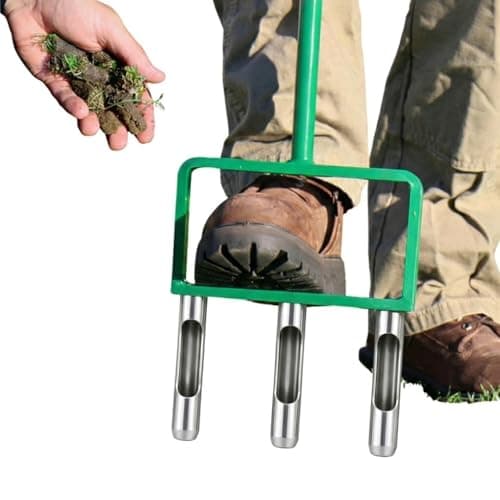
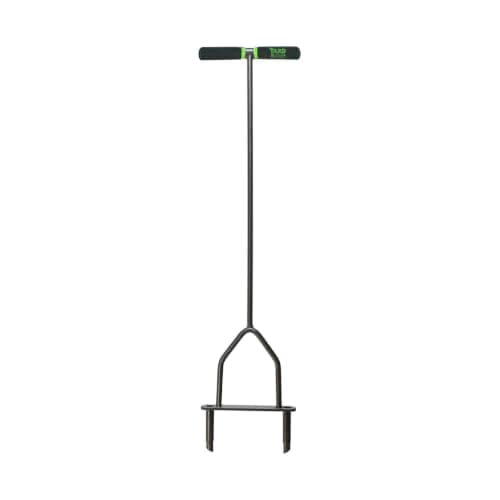
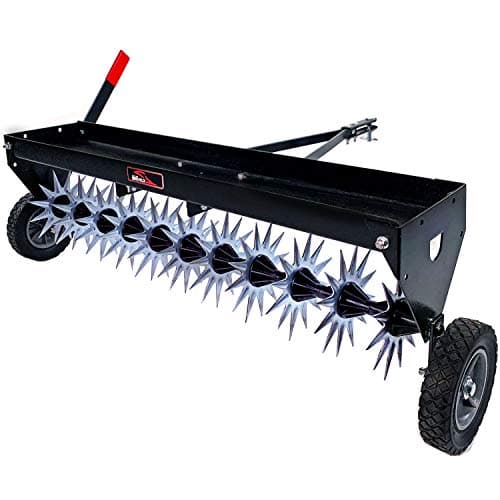
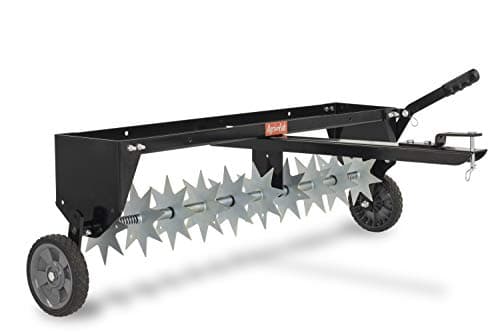
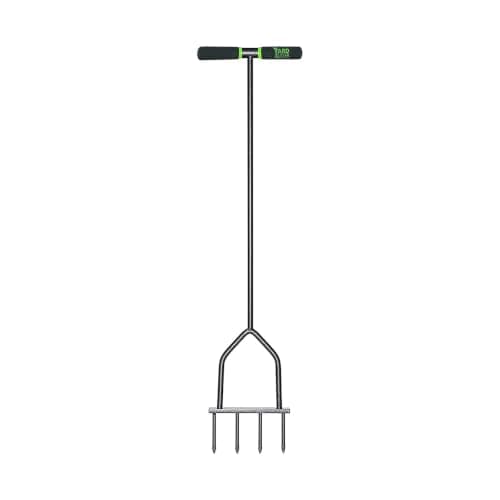
Buy a plug aerator.A plug — or core — aerator pulls hollow tines through the soil and removes a plug of it, leaving a hole with real air space in it. A spike aerator pushes a solid spike in, which displaces the soil sideways and compresses the walls of the hole, so the top inch of a compacted lawn can end up slightly worse than before. If your lawn is hard underfoot, the tool is the Agri-Fab 40" tow-behind plug aerator behind a rider, the Landzie 42" core aerator if you want a wider pass, or the Yard Butler ID-6C hand corer if you have nothing to tow with.
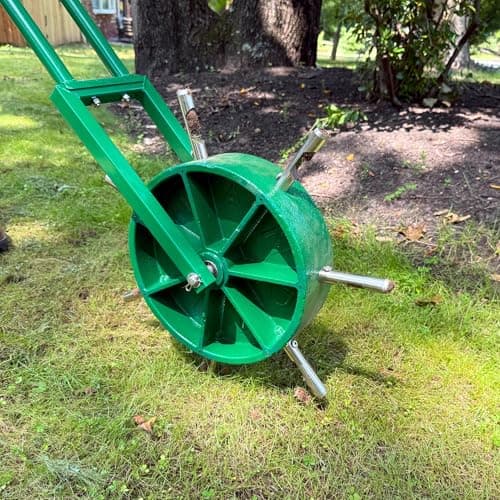
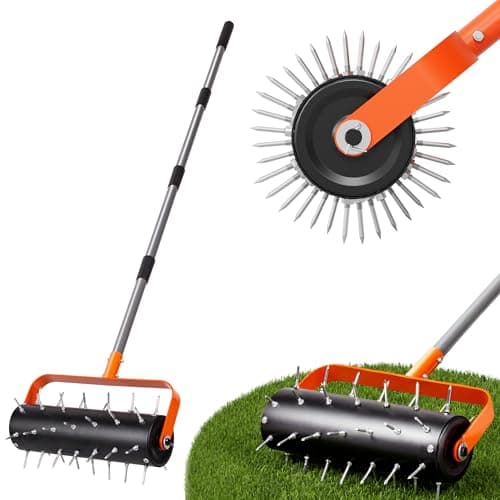
There is exactly one job a spike aerator does better, and it is worth knowing because it is a real job: slicing a seedbed open before overseeding. Spikes make narrow slits fast and cheaply, and seed falling into a slit reaches soil instead of sitting on thatch. If that is what you are doing — and it is why a lot of people buy one — a rolling spiker is fine and the Walensee rolling aerator is the fastest hand tool here for it. Just do not expect it to fix compaction, because it cannot.
Why this matters enough for its own page: these two tools sit next to each other at the same store, at similar prices, with the word “aerator” on both boxes, and the spike versions outsell the corers because they are cheaper and lighter. Meanwhile compaction is the single most common underlying reason a fed, watered, seeded lawn still disappoints. Buying the wrong one of these is the most consequential mistake in this whole hub. Prices below are live from the price layer with an “as of” date.
The two mechanisms, side by side
| Plug / core aerator | Spike aerator |
|---|
| Tine | Hollow tine or coring knife | Solid spike or star wheel |
| What happens to the soil | A plug is removed and dropped on the surface | Soil is pushed sideways and down |
| Effect on compaction | Relieves it — real air space is created | None, and the hole walls are compressed further |
| Typical working depth | Around 2 to 3 inches with enough weight | Usually shallower, and weight-dependent |
| Mess afterwards | Plugs all over the lawn for a week or two | Almost none |
| Weight needed | High — most take a loading tray | High, and it still will not core |
| Right job | Compaction, heavy clay, worn ground | Opening a seedbed before overseeding |
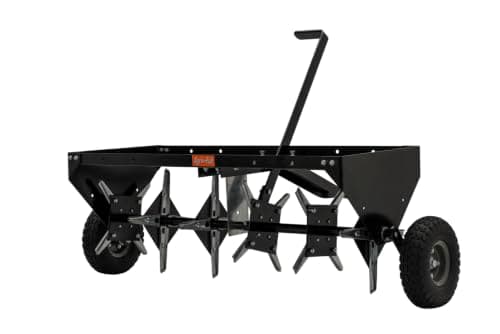
| Our picks | Agri-Fab 40", Landzie 42", Yard Butler ID-6C | Walensee roller, Agri-Fab 40" spike |
Why removing soil is the whole point
Compaction is soil particles pressed together until there is no pore space left for air and water. Roots need air; water needs somewhere to go. The only way to create pore space in a lawn you are not digging up is to take some soil out, which is precisely what a hollow tine does: it cuts a cylinder, lifts it, and leaves a void that the surrounding soil can expand into and that air, water, fertilizer and seed can get into.
A solid spike cannot do that, because nothing leaves. Pushing a cone into dense soil moves that soil somewhere, and the only place available is sideways and downward — which is to say, into the walls of the hole you just made. That is why turf-management practice treats spiking as surface work rather than aeration proper. It is not that spikers do nothing; it is that what they do is not decompaction.
The honest case for a spiker
Overseeding. Seed needs to touch soil to germinate. A spiker opens thousands of narrow slits in a couple of passes, seed falls in, and germination rates go up sharply compared with scattering onto an intact surface. If you are overseeding a thin lawn, read how to reseed a lawn and use the spiker as a seedbed tool.
Speed and price. Spikers are cheaper, lighter, and faster per pass, and they leave no plugs to deal with. For somebody whose lawn is not compacted and who wants to open the surface before feeding or seeding, that is a reasonable purchase.
Light, regular surface work. On a sandy soil that does not compact much, occasional spiking before overseeding may be all the mechanical work the lawn needs.
Diagnose first: is it even compaction?
Two minutes with a spade saves you from buying the wrong tool entirely. Cut a wedge about four inches deep out of the lawn and look at the profile.
If there is a spongy brown mat half an inch or more thick between the green grass and the soil, that is thatch, and neither of these tools is the answer — you need a dethatcher or a scarifier. Start at aerating vs dethatching and then best dethatcher.
If the soil is dense, gray or hard and the roots are all in the top inch, that is compaction, and a core aerator is the tool.
If a screwdriver pushes into moist soil easily to six inches, your lawn is not compacted. Spend the money on feed or seed instead.
Weight is the setting that decides either tool
Tine type decides what the tool can do; weight decides whether it does it. Nearly every implement here accepts ballast — a loading tray on a tow-behind, a fillable drum on a roller — and an unweighted aerator towed over firm ground skips across the surface achieving nothing. Load it up, aerate when the soil is moist rather than baked, and go slowly. A corer on dry clay will bounce; the same corer two days after rain will pull clean plugs.
Rent before you buy, and we mean it
This costs us a sale and it is the right advice. A powered walk-behind core aerator — the drum-type machine with a bank of hollow tines — rents for an afternoon for less than most of the tools on this page cost to buy, and it does in two hours what a hand corer does in two days. If you need to aerate a whole lawn once every two or three years, rent. Buying makes sense for a tow-behind if you own a rider and will use it every fall, and for a hand corer, which handles the worn gateways and paths where compaction actually concentrates.
What to do after you aerate
Aeration opens a window, and the window is short. The fall sequence that actually transforms a tired cool-season lawn is: core aerate, overseed straight into the holes, topdress lightly if the lawn is bumpy, then feed. Leave the plugs where they fall — they break down in a week or two of rain and mowing and return soil to the surface. Doing all of it in one weekend in early fall is the single most effective thing available to a homeowner; doing any of it in July is how a lawn gets killed. Timing per season is in the lawn fertilizer schedule.
And the thing not to buy
Aerator shoes. Strap-on spiked sandals are the cheapest item in this category and they combine the wrong mechanism with the shallowest depth — solid spikes, about an inch long, with your body weight spread across all of them at once. We keep an honest spec on them in best manual lawn aerator tool because thousands of people a month look for them, and the verdict there is the same as here.
The soil you have decides how much this distinction matters. On sand, spiking is close to harmless; on clay it compresses the walls of every hole it makes. The best aerators for clay soil ranks the coring machines that work in it.