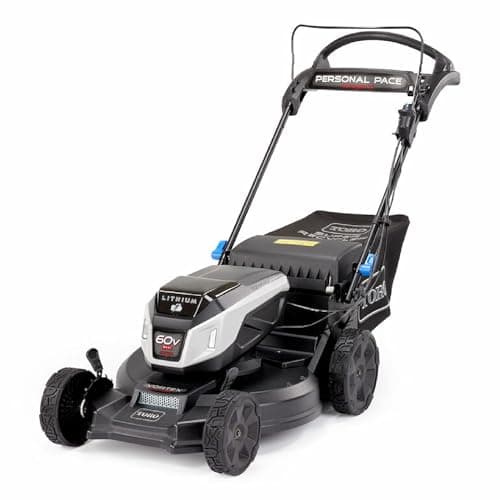
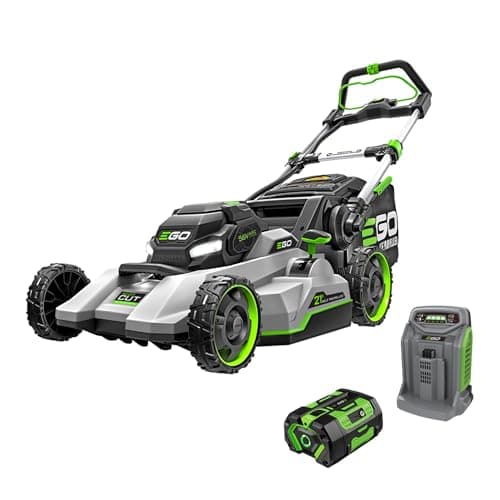
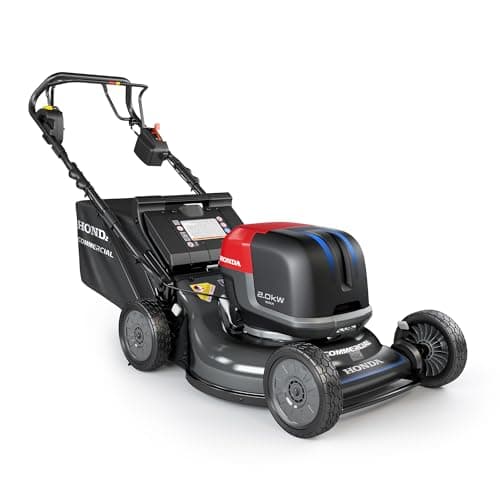
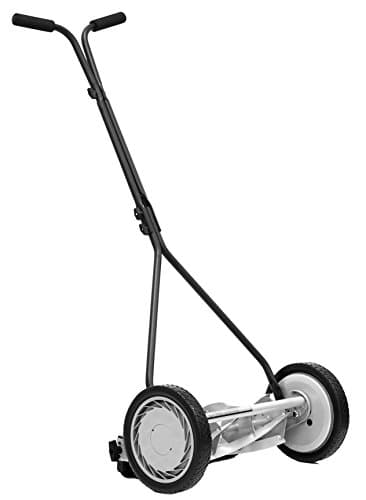
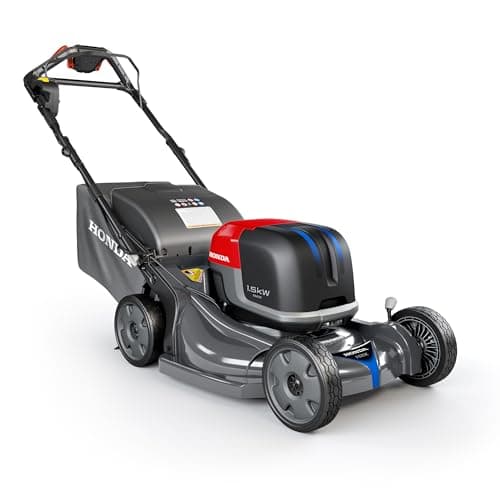
If you want the most reliable lawn mower you can buy as a homeowner, buy a Honda HRX — the HRX-BE 21" battery walk-behind is the version still listed, and it carries Honda's NeXite composite deck, which cannot rust through the way a stamped steel deck eventually does. For a gas-free machine with the fewest moving parts to fail, the EGO Power+ LM2135SP is the pick. For the best cut quality in a mower built to last, the Toro 60V Super Recycler. And if your definition of buy-it-for-life is literal, a Great States 16" reel mower has almost nothing on it that can break.
This page is written for the buy-it-once buyer, so the first thing to say is that “reliability” in a walk-behind mower is not a brand property. It is three specific things, and you can check all three before you spend a dollar.
One: what the deck is made of
The deck is the chassis, and it is what finally kills most mowers. A stamped steel deck rusts from the underside, where wet clippings sit after every cut; once the deck is holed around a wheel mount or a spindle, the mower is done regardless of how well the engine runs. Honda's NeXite composite deck does not rust at all. Cast aluminum decks — Toro Super Recycler, Snapper — do not either. Heavier-gauge steel lasts longer than thin steel. This single spec separates a fifteen-year mower from a six-year one.
Two: whether the drive is a transmission or a belt-and-pulley
On a self-propelled mower, the drive is the second thing to fail. Simpler is better: a single-speed rear-wheel drive has fewer parts to wear than a variable-speed front-wheel system, and a hydrostatic or electronically governed drive — Honda's Select Drive, Toro's Personal Pace — has a much better record than a cheap cable-and-belt arrangement. If you do not need drive at all, a push mower removes the entire failure mode. See self-propelled vs push.
Three: whether you can still get parts in ten years
This is the spec nobody lists and the one that decides the back half of a mower's life. Honda, Toro, STIHL and Husqvarna all run dealer networks that stock wear parts for discontinued machines; a supermarket own-brand mower is unsupported the moment the model changes. Blades, drive belts, wheels, height levers and a carburetor kit are what you will actually want, and they are cheap when they exist and fatal when they do not.
We have not owned any of these for a decade. Everything here reasons from published construction and specification — deck material, drive type, motor or engine design, parts and dealer support — see how we pick. We have run no longevity tests and we do not pretend otherwise. Prices are live from the price layer with an “as of” date.
The most reliable mowers compared
| Mower | Deck | Power | Drive | Best for |
|---|
| Honda HRX-BE 21" | NeXite composite | Battery | Self-propelled | The deck that cannot rust |
| Toro 60V Super Recycler | Cast aluminum | Toro 60V Max | Personal Pace | Best cut, built to last |
| EGO Power+ LM2135SP | Steel, 21 in | 56V battery | Self-propelled | Fewest parts to fail |
| Honda HRC-BE 21" | Commercial HRC deck | Battery | Self-propelled | Commercial-grade build |
| STIHL RMA 510 V | Steel, dealer channel | AP battery system | Variable speed | Dealer parts support |
| Great States 16" reel | Steel frame | You | None | Nothing to go wrong |
Deck materials, power sources and drive types above are the figures the manufacturers publish. Prices are live where a verified listing exists; the dealer-channel STIHL shows a check-price link rather than a number.
Why a battery mower is often the more reliable machine
This surprises people who grew up with gas. A gas mower has a carburetor that gums up over a winter of ethanol fuel, an air filter, a spark plug, an oil sump that needs draining, a primer bulb and a recoil starter — six or seven things that each fail in a predictable way. A battery mower has a motor, a controller and a pack.
The honest counterweight is that the pack is a consumable. Lithium packs lose capacity with cycles and heat whatever you do, so plan on replacing one somewhere in years five to eight. That is a real cost — and it is still less than a decade of carburetor kits, oil, plugs and a spring service. It also means the battery platform matters: buy into a platform broad enough that packs will still be sold when you need one.
The full comparison is in electric vs gas lawn mower, and the platform question is in best lawn mower brands.
The most reliable push mower, if you do not need drive
A push mower has no transmission, no drive belt, no drive cable and no clutch. On a flat lawn that is not a compromise, it is a reduction in everything that can break. If buying once is the goal and your lawn is level, the most reliable thing you can do is buy a well-built push mower rather than an entry-level self-propelled one.
A reel mower takes that logic to the end of the line: a cylinder of blades, a bed knife and two wheels. It wants a weekly cut at a consistent height and it will not cope with grass that got away from you, but there is genuinely almost nothing on it to fail. The push rankings are in best push lawn mower.
What actually wears out, and when
Year one onwards: the blade. A blade should be sharpened once or twice a season and replaced when the trailing edge thins. A blunt blade tears grass instead of cutting it and loads the motor or engine. See best lawn mower blades and blade sharpeners.
Years three to six: the drive belt or drive cable on a self-propelled mower, and the wheels and height-adjust levers on a budget machine. Both are cheap parts and both are the reason parts availability matters.
Years five to eight: the battery pack on a cordless mower, or the carburetor on a gas one that was stored with fuel in it.
Years eight to fifteen: the deck. Rust-through is terminal, and it is the one failure you cannot fix with a part. Which is why deck material is the first spec on this page rather than the last.
The three habits that matter more than the badge
Wash the underside of the deck. Clippings hold water against bare metal and that is where rust starts. Two minutes with a hose after a wet cut, with the mower disconnected or the spark plug lead off, buys years.
Store it dry and store the battery half-charged. A gas mower stored with stale fuel in the bowl is the single most common spring no-start. A lithium pack left at 100% or 0% all winter in an unheated shed loses capacity faster.
Keep the blade sharp and the height sensible.Scalping loads everything — motor, spindle, deck — and cutting more than a third of the leaf at once makes the mower work far harder than it needs to.
Who should skip these
Skip this page if your budget is fixed and tight. A quality mower costs real money and the honest alternative is a competent machine for several seasons — the cheap mower roundup says plainly what you give up.
Skip the commercial Honda unless you are mowing for money; it is built for daily hours and priced accordingly.
And skip the reel mower unless you will genuinely cut weekly. It is the longest-lived mower here and the least forgiving of a skipped week.