Skip to content
Fairway&Fescue

The Acreage · Riding & Zero-Turn Mowers

The Best Zero-Turn Mower for the Money

Value does not mean cheapest. Ranked on the three specs that decide whether a zero-turn is still working in ten years - deck gauge, transmission and engine.

By Stephen V.Updated How we pick
#ad

We earn a commission when you buy through our Amazon links, at no extra cost to you. It never changes our rankings — and we'll tell you when the cheaper bag or machine is the better buy. How this works.

The best zero-turn mower for the money is the Husqvarna Z242F: a 42-inch deck with a 21.5 HP Kawasaki engine, which is a genuinely commercial engine make at a homeowner price and the single biggest factor in whether a zero-turn is still running in a decade. If you would rather not own a gas engine at all, the EGO Power+ Z6 ZT4214L is the best-value electric zero-turn and removes fuel, oil, filters and winterizing from the ownership entirely. And at the bottom of the market the Murray Cruz 42" is the honest cheap answer for a flat acre.

“For the money” needs defining, because this category punishes buying on sticker price. A zero-turn is a machine with two hydrostatic transmissions, a welded deck and a spindle assembly under each blade, and manufacturers hit a low price by thinning the deck steel, fitting lighter transmissions and using a budget engine. Those three choices are invisible in a showroom and decisive after five seasons. So value here means specification per dollar on the parts that wear out, not the lowest number.

A note on how this market is sold. Several of the machines below are dealer-channel or retail-exclusive products rather than Amazon listings — Ariens, Cub Cadet and Murray in particular. Where that is the case the card carries a tagged “check price” link instead of a number, because a dealer price we cannot verify is a price we will not publish. Deck widths, deck gauges, engine makes and rated horsepower below are the figures each manufacturer publishes. We have not mowed with any of them. See how we pick.

The short answer

Quick picks

#ProductBest forScorePrice
01
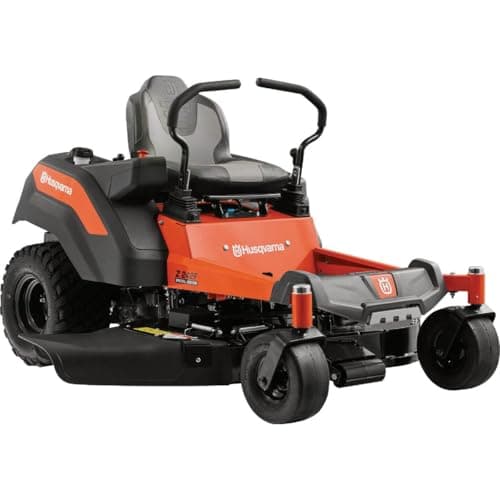
Husqvarna Husqvarna Z242F Zero Turn, 42" (21.5 HP Kawasaki)
Husqvarna Z242F Zero Turn, 42" (21.5 HP Kawasaki)

The gas answer, and the value pick of this hub. A 21.5 HP Kawasaki twin on a 42-inch deck for substantially less than any electric zero-turn here — and it refuels in two minutes.

Best value zero-turn, three acres and up
7.6
$3,875.00Amazon
02
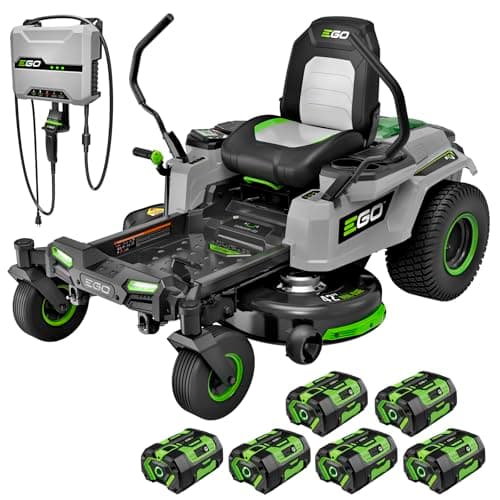
EGO EGO Power+ Z6 Zero Turn, 42" Deck (ZT4214L)
EGO Power+ Z6 Zero Turn, 42" Deck (ZT4214L)

The zero-turn we would put most one-to-two-acre lawns on. A 42-inch deck, electric drive, and none of the oil changes, fuel stabilizer or winterizing a gas zero-turn demands every year.

One to two acres, no engine upkeep
8.4
$5,299.00Amazon
03
Murray Cruz 42" Zero Turn (Home Depot channel)

The Murray that is actually worth knowing about. A 19 HP, 540 cc Briggs EX1900 on dual Hydro-Gear transaxles and a 42-inch stamped deck, with seven cutting heights and a stated 3 acres per tank.

Cheapest route into a zero-turn
6.4
Check price →
04
Ariens EDGE 42" Zero Turn, 915283 (dealer channel)

The Ariens to start with. A 20 HP Briggs EXi2000 twin under an 11-gauge fabricated 42-inch deck - a fabricated deck at the entry price point, which most brands do not do.

The entry Ariens zero-turn
6.8
Check price →
05
Cub Cadet Ultima ZT1 Zero Turn, 42" (dealer channel)

Cub Cadet's residential zero-turn, and the machine that made zero-turns normal on suburban lawns. A 42-inch deck, lap bars, dealer channel - so this is a check-price link.

Cub Cadet zero-turn, one to two acres
6.8
Check price →
06
Ariens IKON 42" Zero Turn, 918002 (dealer channel)

The best small zero-turn Ariens makes, and the pick of the brand. A 21.5 HP Kawasaki FR651V twin under a 42-inch 11-gauge fabricated ENVY deck - a commercial engine family on a residential machine.

Best Ariens lawn mower overall
7.2
Check price →

#ad · Live prices from the Amazon Product API, as of October 21, 2026. Where we have no verified live price, we show none — we would rather leave a gap than print a number that has rotted.

In detail

The picks, in full

01
Husqvarna Husqvarna Z242F Zero Turn, 42" (21.5 HP Kawasaki)

Best value zero-turn, three acres and up

Husqvarna Z242F Zero Turn, 42" (21.5 HP Kawasaki)

42" deck21.5 HP Kawasaki engineZero-turn steeringGas
7.6/10

The gas answer, and the value pick of this hub. A 21.5 HP Kawasaki twin on a 42-inch deck for substantially less than any electric zero-turn here — and it refuels in two minutes.

Acreage suited
10
Maneuverability
9
Running cost
6
Upkeep burden
5
Price
8

Pros

  • Thousands less than the electric zero-turns for the same deck width
  • A Kawasaki twin is the engine most commercial crews specify, and parts are everywhere
  • Refueling takes two minutes, so three or five acres in an afternoon is a non-issue

Cons

  • Oil, filters, blades, belts, fuel stabilizer and winter storage are all your job now
  • Loud, and you will feel it after two hours in the seat

Skip this if…

…you mow an acre or less and chose a zero-turn for the convenience. On that size lawn the electric ZT4214L costs more up front and then asks nothing of you for years.

$3,875.00View on Amazon

Price as of October 21, 2026. Prices change — Amazon's is the one that counts.

#ad · we may earn a commission from this link to Husqvarna Z242F Zero Turn, 42" (21.5 HP Kawasaki)

02
EGO EGO Power+ Z6 Zero Turn, 42" Deck (ZT4214L)

One to two acres, no engine upkeep

EGO Power+ Z6 Zero Turn, 42" Deck (ZT4214L)

42" deckElectric (EGO 56V)Zero-turn steeringLap-bar controls
8.4/10

The zero-turn we would put most one-to-two-acre lawns on. A 42-inch deck, electric drive, and none of the oil changes, fuel stabilizer or winterizing a gas zero-turn demands every year.

Acreage suited
8
Maneuverability
9
Running cost
10
Upkeep burden
10
Price
5

Pros

  • 42 inches is the deck width that fits through a standard gate and still clears an acre in a sitting
  • Electric drive removes the whole annual service ritual — no oil, no filters, no fuel to go stale over winter
  • Quiet enough to cut early without a conversation with the neighbors

Cons

  • Costs clearly more than a comparable gas zero-turn up front
  • Charging is the ceiling: when the batteries are flat you stop, and there is no jerry can equivalent

Skip this if…

…you mow three acres or more in one session. The Husqvarna Z242F refuels in two minutes and keeps going; an electric zero-turn's charge time is the one thing money cannot shorten on the day.

$5,299.00View on Amazon

Price as of October 21, 2026. Prices change — Amazon's is the one that counts.

#ad · we may earn a commission from this link to EGO Power+ Z6 Zero Turn, 42" Deck (ZT4214L)

03

Cheapest route into a zero-turn

Murray Cruz 42" Zero Turn (Home Depot channel)

42" stamped 13-gauge deckBriggs & Stratton EX1900, 540 cc19 HP, dual hydrostatic7 cutting heights, 7 mph
6.4/10

The Murray that is actually worth knowing about. A 19 HP, 540 cc Briggs EX1900 on dual Hydro-Gear transaxles and a 42-inch stamped deck, with seven cutting heights and a stated 3 acres per tank.

Acreage suited
7
Maneuverability
9
Build quality
6
Dealer support
7
Price visibility
3

Pros

  • Dual Hydro-Gear transaxles are the real zero-turn mechanism, not a rebadged tractor transmission - at the lowest price in the format
  • Seven cutting heights and 10-inch rear tires is a sensible residential specification
  • Murray's whole proposition is price, and against a dealer zero-turn the gap is large

Cons

  • Home Depot exclusive, so there is no live Amazon price here
  • A stamped 13-gauge deck flexes and scalps where a fabricated deck does not

Skip this if…

…you mow more than about two acres, or your ground is uneven. A stamped deck and 19 HP is an entry specification - the Husqvarna Z242F is the next real step up and has a live price.

Check price on Amazon →

We don't have a verified live price for this right now, so we aren't showing one.

#ad · we may earn a commission from this link to Murray Cruz 42" Zero Turn (Home Depot channel)

04

The entry Ariens zero-turn

Ariens EDGE 42" Zero Turn, 915283 (dealer channel)

42" deck, 11-gauge fabricatedBriggs & Stratton EXi2000 twin, 656 cc20 HPDealer channel - no verified Amazon price
6.8/10

The Ariens to start with. A 20 HP Briggs EXi2000 twin under an 11-gauge fabricated 42-inch deck - a fabricated deck at the entry price point, which most brands do not do.

Acreage suited
7
Maneuverability
9
Build quality
8
Dealer support
8
Price visibility
2

Pros

  • A fabricated 11-gauge deck at entry price is genuinely unusual - most machines at this money have a stamped deck, which flexes and scalps
  • A twin-cylinder engine at the bottom of the line, where competitors fit a single
  • 42 inches fits standard gates and suits half an acre to an acre and a half

Cons

  • Amazon lists Ariens blades, belts and solenoids, not the mowers, so there is no live price
  • The EDGE LT 42 variant drops to a single-cylinder 540 cc engine - check which one the dealer is quoting

Skip this if…

…you want to buy online at a visible price. The Husqvarna Z242F is the same class of machine with a live Amazon listing.

Check price on Amazon →

We don't have a verified live price for this right now, so we aren't showing one.

#ad · we may earn a commission from this link to Ariens EDGE 42" Zero Turn, 915283 (dealer channel)

05

Cub Cadet zero-turn, one to two acres

Cub Cadet Ultima ZT1 Zero Turn, 42" (dealer channel)

42" deckGasZero-turn, lap barsDealer channel - no verified Amazon price
6.8/10

Cub Cadet's residential zero-turn, and the machine that made zero-turns normal on suburban lawns. A 42-inch deck, lap bars, dealer channel - so this is a check-price link.

Acreage suited
8
Maneuverability
9
Running cost
6
Upkeep burden
5
Price
6

Pros

  • Turns in its own width, which is the whole point on a lawn with beds and trees in it
  • 42 inches is the gate-friendly zero-turn width
  • The Ultima line is priced below the commercial zero-turns while keeping the useful geometry

Cons

  • Amazon has its blades and hitch plates, not the mower - no live price
  • Lap bars are a learned skill and will scuff turf until they are learned

Skip this if…

…your ground slopes and is otherwise open. A tractor holds a line across a gradient better than any zero-turn, and the XT1 is cheaper.

Check price on Amazon →

We don't have a verified live price for this right now, so we aren't showing one.

#ad · we may earn a commission from this link to Cub Cadet Ultima ZT1 Zero Turn, 42" (dealer channel)

06

Best Ariens lawn mower overall

Ariens IKON 42" Zero Turn, 918002 (dealer channel)

42" deck, 11-gauge fabricatedKawasaki FR651V twin, 726 cc21.5 HPDealer channel - no verified Amazon price
7.2/10

The best small zero-turn Ariens makes, and the pick of the brand. A 21.5 HP Kawasaki FR651V twin under a 42-inch 11-gauge fabricated ENVY deck - a commercial engine family on a residential machine.

Acreage suited
8
Maneuverability
9
Build quality
9
Dealer support
8
Price visibility
2

Pros

  • The Kawasaki FR series is the engine commercial crews run, and getting it on a 42-inch residential machine is the whole argument for the IKON
  • 11-gauge fabricated deck at 4.5 inches deep with caged anti-scalp wheels - deck depth is what lets grass stand up and get cut cleanly
  • 42 inches is the width that still gets through a gate, so you are not buying a machine that lives on the wrong side of the fence

Cons

  • No Amazon listing, so no live price - this is a dealer quote
  • More machine, and more money, than a half-acre lawn needs

Skip this if…

…you mow under half an acre. A 42-inch zero-turn with a 726 cc twin is a lot of mower for a small lot, and a self-propelled walk-behind will cut it in the same time.

Check price on Amazon →

We don't have a verified live price for this right now, so we aren't showing one.

#ad · we may earn a commission from this link to Ariens IKON 42" Zero Turn, 918002 (dealer channel)

The three specs that decide value

1. Who built the engine. Kawasaki FR-series and the better Briggs commercial engines are built for the hours a mowing deck puts on them. A budget single-cylinder in a value zero-turn will run, and it will not run as long. On a machine you intend to keep ten years, the engine make is the first thing to look at and it is printed in every spec table.

2. Deck gauge. Deck steel thickness is published as a gauge number, and lower is thicker. A heavier deck resists the flex and cracking that eventually kills a mowing deck, and it holds blade geometry better, which shows in cut quality. Two 42-inch decks at different gauges are not the same deck.

3. The transmissions. A zero-turn has one hydrostatic transaxle per drive wheel and they are the most expensive thing on the machine to replace. Heavier transaxles are specified for more weight and more hours. This is where the cheapest machines save the most money, and it is why a budget zero-turn mowing a hilly acre has a shorter life than the same machine on flat ground.

Value picks compared

MachineDeckPowerBest suited to
Husqvarna Z242F42 in21.5 HP KawasakiBest engine for the money, 1-2 acres
EGO Power+ Z6 ZT4214L42 inBattery, 56VNo fuel, no maintenance, under 2 acres
Murray Cruz 42"42 inGasCheapest honest entry, flat lawns
Ariens EDGE 42"42 inGasDealer-supported entry tier
Cub Cadet Ultima ZT1 42"42 inGasBig dealer network, good deck
Ariens IKON 42"42 inGasA real step up in deck and frame

Forty-two inches is the value sweet spot for a reason. It fits a standard gate and a standard garage, it costs far less than a 50-plus-inch machine, and it cuts an acre in well under an hour. Wider decks only pay off past about two acres of open ground — see zero-turn for 2 acres.

Where a cheap zero-turn actually costs you

Seat and suspension.A zero-turn transmits every bump straight into the seat, and the budget machines have the least to absorb it. On a rough acre that is the difference between a pleasant job and a jarring one. It is also the reason Ferris built a whole brand on suspension — see Ferris zero-turns.

Spindles. Cast-iron spindle housings outlast stamped ones. They are rarely advertised and they are what fails first on a deck that has hit a stump.

Cut quality in thick grass. Deck depth and baffling decide whether clippings get processed or shoved along in a windrow. A cheap deck cuts fine in well-maintained grass and struggles in the spring flush.

Hills. This is the honest safety point. Zero-turns lose traction on slopes more readily than a lawn tractor because of their weight distribution, and the value machines have the least traction of all. If your lawn has real gradient, read zero-turn vs lawn tractor before you buy a zero-turn at any price.

The electric value argument, done properly

A battery zero-turn costs more up front than an equivalent gas machine and removes a whole category of ongoing cost: no gas, no oil changes, no air filters, no spark plugs, no fuel stabilizer, no carburetor to gum up over winter. On a machine used thirty times a year, the carburetor is a real failure mode — a very large share of “my mower will not start” is stale fuel.

The trade is runtime and recharge. A battery zero-turn cuts its rated area and then needs charging; gas gets a five-gallon can. Under two acres that distinction rarely bites. Beyond it, gas still wins on a long day.

Zero-turn or lawn tractor at this budget?

At the value end this is a genuine question, because a lawn tractor costs less for the same deck width. A zero-turn turns in its own width, so it wins decisively on a lawn full of trees, beds and fence lines — it is the trimming time it saves that justifies it. A lawn tractor is cheaper, holds a line better across an open slope, and tows a cart, a spreader or an aerator, which a zero-turn generally does not.

Our split: lots of obstacles, flat to moderate — zero-turn. Open ground, slopes, or you want to tow implements — lawn tractor. The full comparison is zero-turn vs lawn tractor.

Buy the lift at the same time

Not an upsell, a practical point: a zero-turn deck needs sharpening and the underside needs cleaning, and you cannot do either without getting the machine off the ground. A mower lift jack is the cheapest thing in this hub and the one that most affects whether the deck gets maintained. See best zero-turn mower lift.

Who should skip these

Skip every machine here if your lawn is under three quarters of an acre — a self-propelled walk-behind cuts that in half an hour and costs a fraction. Skip the value tier specifically if your lawn is genuinely hilly or rough, because the transmissions and seats are where the savings came from. And skip a zero-turn entirely if you want to tow implements; buy a lawn tractor.

The cheapest zero-turn mowers, and the budget question answered directly

“Best value” and “cheapest” are not the same question, so here is the second one answered plainly. If your limit is the sticker price — a budget zero turn, an affordable zero turn, something under about three thousand dollars — the honest ranking is the Murray Cruz 42" first, then theAriens EDGE 42", then the Cub Cadet Ultima ZT1 42". All three are 42-inch machines, all three are sold through retail or dealer channels rather than Amazon, and all three put the money into deck width rather than into the parts that wear.

What a cheap zero-turn gives up, specifically: a stamped deck rather than fabricated plate, entry-grade hydrostatic transaxles rather than commercial units, and a single-cylinder or budget twin enginerunning closer to its limit. None of those is visible in a showroom and all three decide whether the machine is alive in year eight. On a flat acre cut weekly, that is a fair trade. On three acres, on slopes, or if you plan to keep it fifteen years, it is not — which is exactly why the Husqvarna Z242F wins the page above rather than the cheapest machine on it.

Two things worth knowing before you buy at the bottom of this market. First, a cheap lawn tractor is usually a better machine than a cheap zero-turnat the same price, because a tractor has one transmission and a steering box where a zero-turn has two hydrostatic transaxles built to the same budget — the tractor side is ranked in best cheap riding lawn mowers. Second, a used mid-range zero-turn from a brand with a dealer network often costs what the cheapest new one does and arrives with the deck gauge and transaxles the new machine saved money on. Check for spindle play, a dished deck and a cold-start knock, and it is frequently the better buy.
How we picked this

We haven't run this gear through a lab — and we say so

We compiled the published manufacturer specifications — deck width and gauge, drive type, blower CFM, fertilizer NPK, seed species — did the deck-width and nitrogen arithmetic, cross-read the owner manuals, and scored each pick against a published rubric. The scores are judgments from documented research — they are notlab measurements we took, because we don't have a lab and we're not going to pretend we do. Where somebody has genuinely measured this, we link them. You can check every number we publish.

Questions

Frequently asked

What is the best zero-turn mower for the money?
The Husqvarna Z242F - a 42-inch deck with a 21.5 HP Kawasaki engine, which is a commercial engine make at a homeowner price. Engine make is the single biggest factor in how long a zero-turn lasts.
How many acres do you need to justify a zero-turn?
About three quarters of an acre is where walking behind a mower stops making sense. Below that a self-propelled walk-behind does the job in half an hour for a fraction of the money.
Are cheap zero-turn mowers worth buying?
On a flat, obstacle-free acre, yes. The savings come out of deck gauge, transmissions and seat suspension, and those only really bite on rough or hilly ground - where a budget machine has a noticeably shorter life.
Is an electric zero-turn cheaper to own?
It costs more up front and removes gas, oil changes, filters, plugs and winterizing from the ownership. Under two acres that trade usually favors electric; past it, gas still wins on a long day because you can refuel in a minute.

Keep reading

Receipts

Sources

We do not run a testing lab, and we do not pretend to. Every spec number here comes from a manufacturer's published sheet or an official standard, cited above. Where we could not verify something, we say so on the page rather than quietly leaving it out. Read our full method.