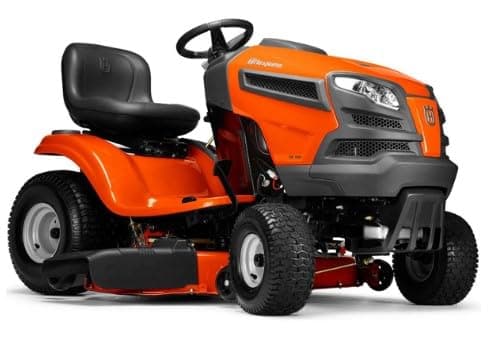
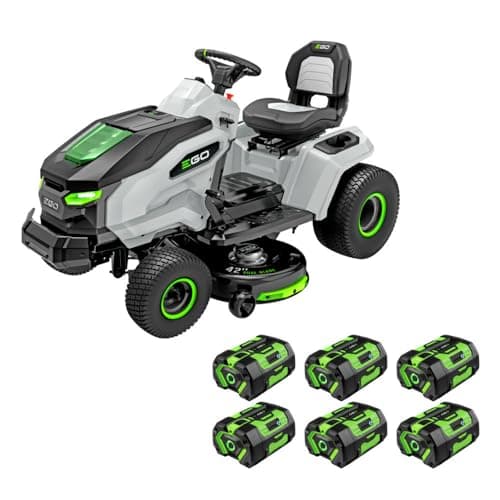
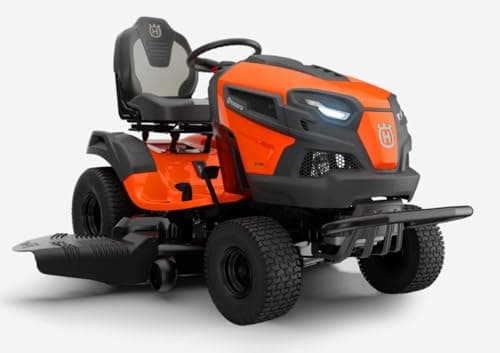
The best lawn tractor is the Husqvarna TS 140X— a 48-inch deck on a 24 HP Briggs V-twin with hydrostatic drive, which is the combination that makes a tractor worth owning rather than a slow zero-turn. The budget pick is the Husqvarna TS 120, the cheapest machine here with a live price and a genuinely capable 42-inch deck for a one-acre lot. If you want the tractor shape without an engine to service, the EGO Power+ TR4204 is the only battery lawn tractor in this registry. And if a dealer twenty minutes away matters more to you than a price on a screen, the John Deere S130 and the Cub Cadet XT1 Enduro LT42are the two dealer-channel tractors worth driving out to look at — neither carries an online price, and we say so on their cards rather than inventing one.
Prices on every card come from the live price layer with an “as of” date. Where a machine sells through dealers only, the card shows no number at all, because the honest answer is that we cannot see one. We have not driven any of these; every judgment reasons from published deck, transmission, engine and towing specifications. The method is in how we pick.
The question that decides this entire category is whether you need to pull something. A lawn tractor has a drawbar, a frame built to take a tongue load and a transmission geared to drag weight uphill. A residential zero-turn generally has none of those things, and the ones that do are rated for far less. If your property needs a cart of mulch moved, a spreader pulled, an aerator dragged or a sweeper towed behind the mower, that is a tractor job, and no amount of deck speed makes up for it.
If the job really is only mowing, and the lawn is open with obstacles to work around, a zero-turn finishes faster for the same money. The side-by-side argument is in zero turn vs riding mower, and the ZTR shortlist in this price class is the best zero turn mowers under $6,000.
The criteria, in the order that matters
1. Transmission, before anything else.Hydrostatic drive means a pedal and continuous speed control; a gear or belt-driven transmission means stopping to change ratio. On a tractor that will tow, hydrostatic is not a luxury — it is the difference between creeping a loaded cart up a slope and stalling halfway. Every machine ranked here is hydrostatic.
2. Deck width, against your acreage and your gates. 42 inches is the standard residential width and suits up to about an acre. 48 inches is the step that makes two acres pleasant. Measure the narrowest gate on the property before you fall in love with a wide deck, because a tractor that cannot get into the back yard is worthless.
3. Engine format: single or twin. A V-twin is smoother, usually larger in displacement and noticeably less stressed pulling a loaded deck through heavy grass. A single-cylinder engine is cheaper and perfectly adequate on a flat acre. On slopes, or with a cart behind you, the twin earns its money.
4. Towing capability, which is the whole point. Check the published drawbar and tongue-weight rating rather than assuming. This is where tractors separate from each other and from every zero-turn in the same price class. The implements themselves are ranked in the best riding mower attachments.
5. Where you will get it fixed. A lawn tractor is a ten to fifteen year purchase with an engine, a transmission, belts, spindles and electrics. Two of the five machines here sell through dealers precisely because that relationship is the product. If you are not comfortable replacing a deck belt yourself, that is worth more than any spec on this page.
Which tractor, by what the property asks for
| Your property | What to buy | Why |
|---|
| Under half an acre | Nothing here | A walk-behind finishes it in the same time for a fifth of the money |
| Half to one acre, flat, light towing | Husqvarna TS 120 | 42-inch deck, hydrostatic, the cheapest live-priced tractor on this page |
| One to two acres, slopes or a loaded cart | Husqvarna TS 140X | 48-inch deck and a 24 HP Briggs V-twin - the headroom is the point |
| One acre, and you are done with gasoline | EGO Power+ TR4204 | The only battery tractor here: no fuel, oil, filters or winterizing |
| You want a dealer who will collect and service it | John Deere S130 or Cub Cadet XT1 LT42 | Dealer-channel machines, no online price, but a service relationship included |
| Three acres and up, mowing only | A zero-turn instead | Deck speed beats towing once there is nothing to tow |
Lawn tractor or zero-turn, honestly
A zero-turn mows faster. That is not in dispute and nobody should pretend otherwise: on open ground with trees to go around, a ZTR finishes an acre meaningfully quicker than a tractor with the same deck width, because it does not have to reverse and reposition.
A tractor does everything else. It tows, it handles a slope with weight behind it more predictably, it steers like a vehicle rather than like a tank, and it costs less for the same deck width. For a homeowner with an acre, a gravel drive to sweep, leaves to collect and mulch to move, the tractor is the machine that gets used twelve months of the year instead of seven.
The practical test: write down every job the machine will do besides cutting grass. If that list is empty, buy a zero-turn. If it has three things on it, buy the tractor and the hitch.
What a battery lawn tractor changes
Removing the engine removes most of the maintenance calendar: no oil, no filters, no spark plug, no fuel stabilizer, no spring carburetor job and no fuel to store. It also removes almost all the noise, which on a machine you sit on for ninety minutes is a real quality of life change rather than a spec-sheet one.
What it adds is a runtime ceiling and a charging habit. A battery tractor mows for its rated area and then needs hours on a charger, where a gas tractor takes two minutes and a can. On an acre that is invisible. On three acres it is the entire argument. The wider battery-versus-gas case, with the running costs written out, is in electric vs gas lawn mowers, and the battery riding machines are grouped in best electric riding lawn mower.
The attachments that justify a tractor
A tractor without implements is a slow zero-turn, so budget for at least one. The three that earn their storage space on a typical acre are a dump cart for mulch, soil and brush, a tow-behind spreader so fertilizer goes down evenly instead of in stripes, and a lawn sweeper, which collects leaves far faster than a blower and a tarp. A tow-behind rolleris the fourth and the one people underestimate — it is what flattens a lawn after a freeze-thaw winter and what presses seed into contact with soil after overseeding. We rank those in the best lawn rollers.
Two habits keep a tractor alive: grease the spindles on the schedule in the manual, and never tow more than the drawbar rating up a slope. Deck spindles are the most common expensive failure on a residential tractor, and they are almost always a lubrication problem rather than a quality one.