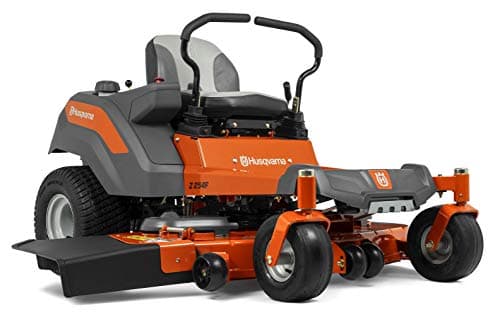
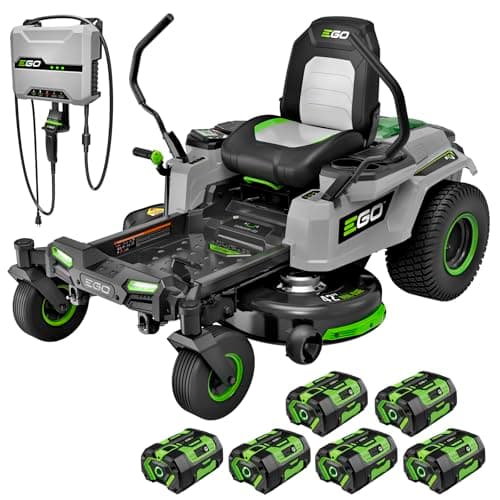
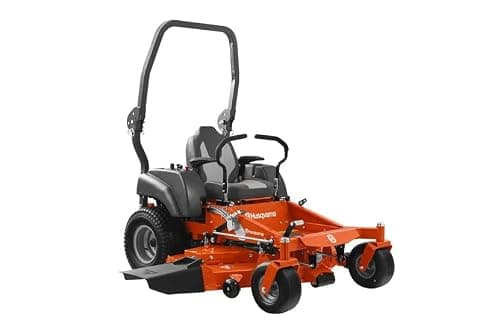
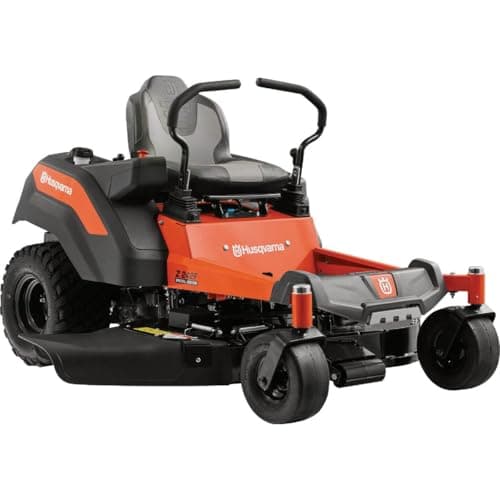
The best zero turn mower under $6,000 is the Husqvarna Z242F— a 42-inch fabricated-deck ZTR on a Kawasaki twin, which is the cheapest way into this band to get a commercial engine brand under a residential price. It is also the budget pick: nothing else here costs less, and nothing cheaper in this registry is a zero-turn at all. If you mow more than two acres, the Husqvarna Z254F adds twelve inches of deck for a few hundred dollars more and it is the better buy per acre. If you want to stop buying gasoline, the EGO Power+ Z6 ZT4214L is the only battery zero-turn under this ceiling. And if your limit is time rather than money, the Husqvarna MZ61 puts a 61-inch deck and a roll bar just inside the line.
Every price on this page comes from the live price layer with an “as of” date, not from a number typed into the copy. That matters more here than on a $40 page: a zero-turn can move several hundred dollars in a week, and two of these picks sit close enough to $6,000 that a bad week puts them over. The figure on the card is the only one worth acting on. We have not driven any of these machines; every judgment below reasons from published deck, transaxle and engine specifications and from nothing else. The method is in how we pick.
What $6,000 buys that $4,000 does not is deck width and transaxle, in that order.Every machine on this page will cut your grass to the same height with about the same finish. What climbs with the money is how much lawn goes under the deck per pass, and how long the drive hardware survives doing it. A 42-inch deck and a 61-inch deck cutting the same four acres differ by roughly a third in time, every week, forever — and the hydrostatic transaxles that take that duty are the most expensive component in a zero-turn after the engine.
Below about $4,000 the zero-turn market in this registry is effectively one brand, and that is worth saying plainly rather than pretending the shelf is fuller than it is. If your budget sits at the bottom of this band, read the best zero turn mower for the money first — it ranks the same tier without a hard dollar line and includes the dealer-channel machines that never carry an online price.
The criteria, in the order they matter under $6,000
1. Deck width, because it is the spec that bills you every week.Deck width sets how many passes your property takes and you pay that number for the life of the machine. The spread on this page is 42 to 61 inches, which is not a detail — it is roughly the difference between a two-hour cut and a ninety-minute one on the same five acres. Buy the widest deck your gates, trees and trailer will take.
2. Deck construction: stamped or fabricated. A stamped deck is pressed from one sheet; a fabricated deck is welded from flat steel and is usually thicker at the edges, which is where a deck actually dies. Fabricated decks are the normal reason one ZTR costs several hundred dollars more than another with the same cut width, and on rough ground the difference shows up in year five rather than year one.
3. The transaxle, which is what you are really buying. Engines on residential zero-turns rarely fail first; the hydrostatic drives do. Integrated transaxles are cheaper, lighter and sealed for life. Commercial-grade units are serviceable and rated for far more hours. If you mow five acres every week, this is the spec that decides whether you own one mower or two.
4. The engine brand, more than the horsepower number. Rated horsepower on a lawn mower engine is a figure governed by a test standard, not by your grass. The engine make and family tell you much more: parts availability, service intervals, and whether a shop twenty minutes away will work on it.
5. Whether it needs fuel at all. The battery zero-turn is now a real option inside this band rather than a curiosity above it. It removes fuel, oil changes, filters, winter stabilizer and most of the noise. What it does not remove is a runtime ceiling, and that ceiling is the whole decision.
Which one, by what you actually mow
| Your property | What to buy under $6,000 | Why |
|---|
| Under half an acre | Nothing on this page | A zero-turn cannot pay back $4,000 on half an acre; a walk-behind finishes it in the same time |
| Half to two acres, open ground | Husqvarna Z242F | 42-inch fabricated deck, Kawasaki twin, the cheapest genuine ZTR here |
| Half to one acre, and you want to stop buying gas | EGO Power+ Z6 ZT4214L | The only battery zero-turn under the ceiling; no fuel, no oil, no winterizing |
| Two to four acres | Husqvarna Z254F | 54 inches of deck for a few hundred dollars more is the best price-per-acre move here |
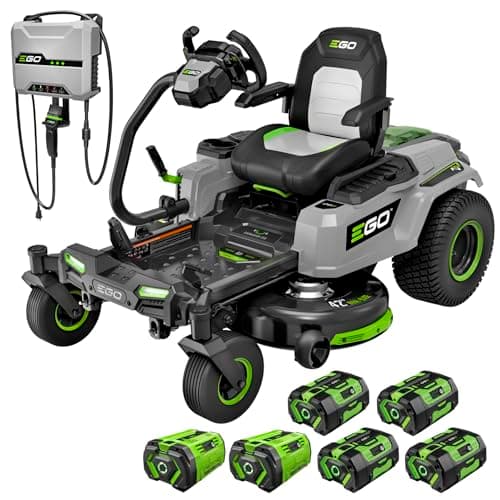
| Tight obstacles, and lap bars put you off | EGO Power+ Z6 e-Steer | Steering-wheel control of a zero-turn drive, which is far easier to learn |
| Four acres and up | Husqvarna MZ61 | 61-inch deck and a roll bar, just inside the line |
| Rough, stumpy or commercial ground | Above this page | Commercial frames and serviceable transaxles start above $6,000 |
Battery or gas, under $6,000
This is the first price band where the question is real rather than theoretical. A battery zero-turn under the ceiling removes every running cost a gas machine has: no fuel, no oil changes, no air filters, no spark plugs, no stabilizer, no spring carburetor job. It is also quiet enough to mow early without annoying anyone, which on a large property is worth more than it sounds.
What it does not do is refuel in two minutes. A gas zero-turn with a five-gallon tank mows until you stop; a battery machine mows for its rated runtime and then charges. On one to two acres that ceiling is invisible. On four, it is the whole decision. The honest summary is that battery wins on everything except duration — and duration is exactly what people buy a zero-turn for, so match the machine to the acreage rather than to the argument.
The second thing gas still wins under $6,000 is deck width per dollar. The widest deck on this page is gas, and it is not close. If your constraint is hours in a Saturday rather than dollars at the pump, that is the trade you are being offered.
What the $6,000 ceiling still costs you
A commercial frame and a serviceable transaxle. The machines built to mow every day for a living start above this line. They have thicker tube frames, larger serviceable drives, higher ground speeds and warranties measured in hours rather than years. If you are mowing for money, read the best commercial lawn mower instead of this page.
Suspension. Nothing under $6,000 here has a suspended operator platform. On smooth turf that is irrelevant; on rough pasture it is the difference between mowing four acres and dreading it.
Dealer-only brands. Several of the best-regarded residential zero-turns sell exclusively through dealers and never carry an online price, so a price-capped page cannot rank them honestly. They are not absent because they are bad. Our most reliable zero-turn mowers page covers that tier, and the best small zero-turn mowers covers the narrow-deck end of the same market.
The costs that arrive after the mower
A zero-turn is the start of a spending pattern, not the end of one. Blades are consumable and a 54 or 61-inch deck eats three at a time. Belts wear. Tires on a heavy machine are not cheap. And a zero-turn is awkward to work on at ground level, which is why a mower lift is the first accessory most owners buy and the one that actually gets used. Budget a couple of hundred dollars a year on a machine mowing four acres, and expect the first real service bill somewhere around year three.
One habit matters more than any of that: keep the blades sharp and the deck clear. A dull blade on a 61-inch deck tears five feet of grass at a time, which browns the tips across the whole property and makes an expensive machine look like a cheap one. Wash the deck underside after wet cuts, and lift the machine properly rather than jacking it on a slope.