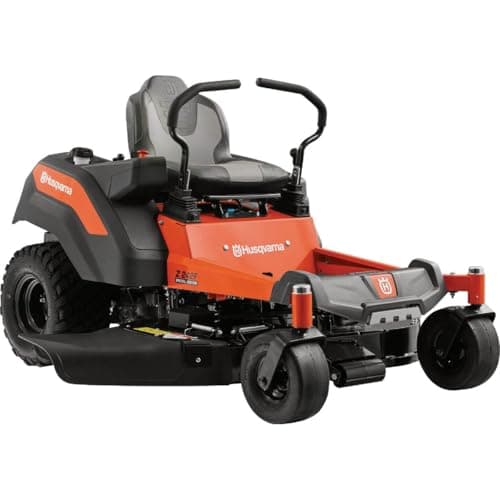
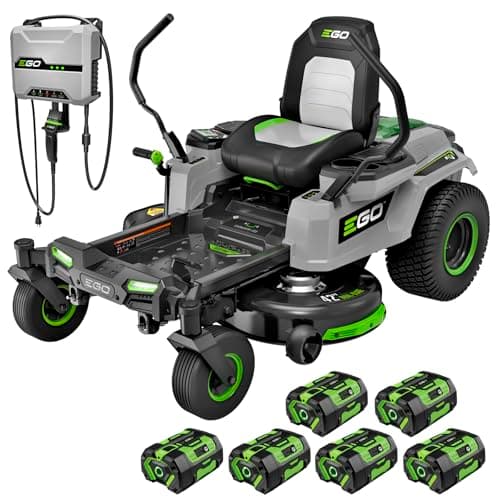
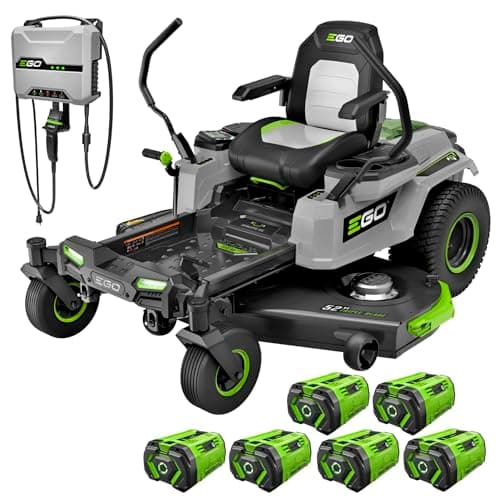
For two acres the deck width you want is 52 inches, and the machine we would pick is the EGO Power+ Z6 with the 52-inch deck— provided it fits through your access. Fifty-two inches cuts about a quarter more per pass than a 42-inch deck, which on two acres is a genuine chunk of the afternoon. If a 52-inch deck will not reach your lawn, or if you would rather not think about charge time at all, the Husqvarna Z242F does two acres on a 42-inch deck and a tank of fuel for thousands less.
Two acres is interesting because it sits right on the line where the binding constraint changes. Up to about an acre, deck width is what decides your mowing time. At two acres and beyond, endurancestarts to compete with width — a battery machine has to carry enough charge to finish, and a 52-inch deck draws harder than a 42-inch one while it covers more ground. Those two effects pull against each other, and which one dominates depends on how your two acres is laid out.
We have not mown two acres with any of these. The reasoning below works from published deck widths, battery platforms and engine ratings — see how we pick — and from the pass-count arithmetic, which is the same arithmetic we use for walk-behind sizing, just scaled up.
The arithmetic for two acres
Two acres is 87,120 square feet. With a 42-inch deck cutting a usable 40 inches after overlap, you cover about 3.3 square feet per foot travelled, which works out to roughly 26,000 feet of driving — close to five miles. Step up to a 52-inch deck cutting a usable 50 inches and the same two acres is about 21,000 feet, or four miles. You have just removed a mile of driving from every cut.
At a typical mowing speed that mile is somewhere between ten and fifteen minutes a week, thirty weeks a year. Over the life of the machine, the 52-inch deck is the cheapest time you will ever buy — and this is exactly why deck width, not engine size, is the spec to spend money on at this acreage.
How to choose for two acres
Access first, always. A 52-inch deck needs well over four and a half feet of clear opening. If your only route to the lawn is a side gate or a gap between house and fence, measure it before anything else. A 42-inch machine that reaches the grass beats a 52-inch machine that does not, and the Husqvarna and the 42-inch EGO are both here for that case.
Then be honest about charge time.This is the real question for electric at two acres. If you are happy to mow in two sessions, or your lawn splits naturally into a front and a back you would do on different days, electric is straightforward. If you want two acres done in one uninterrupted go, every time, without thinking about state of charge, gas removes that question entirely — and that is the strongest single argument for the Husqvarna on this page.
Count the obstacles to confirm zero-turn is right. Two open acres is arguably tractor country: cheaper, tows an aerator or a sweeper, holds a line with less effort. Two acres full of beds, trees and paddock fencing is firmly zero-turn country. The decision is the shape, not the size — see zero-turn vs riding mower.
Check the gradient.Two acres frequently includes a slope somewhere. If any part of it is a bank you would not comfortably walk a mower across, weight the tractor layout more heavily than this page's ranking does — the safety reasoning is in the comparison.
Plan the rest of the programme around the machine. At two acres, everything else in lawn care scales too. You will want a tow-behind spreader rather than a walk-behind one, and a tow-behind dethatcher or sweeper rather than a corded machine. Factor the hitch into the purchase.
Who should skip these
If your two acres is open, flat and you want to tow implements, skip the zero-turns on this page and buy the lawn tractor instead. You will spend less and get more use out of it.
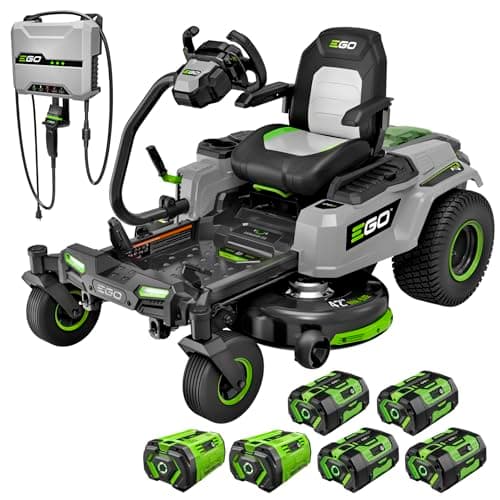
And skip the e-Steer here specifically. It is a fine machine and at two acres you are paying a premium for a steering interface rather than for deck width — which is the spec that actually saves you time at this size.