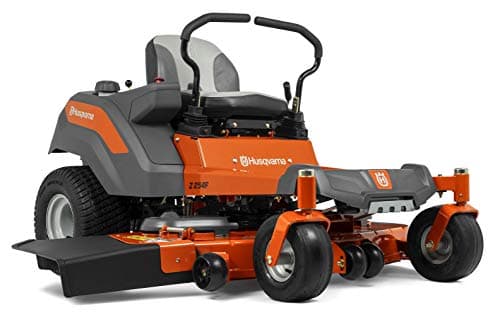
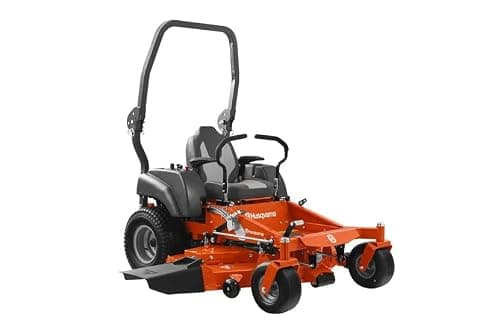
For five acres the machine to buy is the Husqvarna MZ61: a 61-inch deck, a 24 HP Kawasaki engine and a ROPS roll bar, which is the combination that turns five acres into a single afternoon instead of a weekend. If you want a dealer-backed machine with heavier running gear, the Kubota Z251 is the 54-inch Kommander and the Ferris ISX 800 is the suspension machine for rough ground. For three acres rather than five, a 52 or 54-inch deck like the Ariens IKON 52" or the Husqvarna Z254F is the right size and saves real money. This page is the tier above our two-acre roundup.
At this size the arithmetic decides, so here it is. Mowing rate is deck width times ground speed: a 61-inch deck cutting a usable 4.8 feet at 5 mph covers 4.8 × 5 × 5,280 = 126,720 square feet an hour, and at 80 percent for overlap and turns that is about 2.3 acres an hour— five acres in roughly two hours and ten minutes. The same five acres behind a 42-inch deck is nearly three and a half hours, every week, for as long as you own it. That difference, not the sticker price, is what you are actually buying.
The second thing that changes at five acres is that hours accumulate. A machine doing 110 hours a season is a machine whose deck gauge, spindles and transmissions matter — and those are the three places manufacturers cut cost to hit a homeowner price. So the picks below lead on fabricated deck steel, commercial engine makes and heavier transaxles, which is the same reasoning as our value page applied at a bigger size. Prices are live from the price layer; dealer-channel machines carry a tagged check-price link.
Deck width by acreage: the table that settles it
| Deck | Usable width | Acres/hour at 5 mph | Five acres takes |
|---|
| 42 in | 3.5 ft | 1.7 | About 3 h 0 m |
| 48 in | 4.0 ft | 1.9 | About 2 h 35 m |
| 52 in | 4.2 ft | 2.0 | About 2 h 30 m |
| 54 in | 4.4 ft | 2.1 | About 2 h 23 m |
| 61 in | 4.8 ft | 2.3 | About 2 h 10 m |
These are calculations from published deck widths, not timed runs. Two things they show. The first is that the jump from 42 to 54 inches is worth most of an hour on five acres, every cut. The second is that the jump from 54 to 61 is worth only about thirteen minutes, so a 61-inch deck is worth buying for open ground and not worth it if the property has trees — a wider deck cannot get between them, and trimming work costs more than the passes saved. Three acres is the size where 52 to 54 inches is the honest answer.
The three specs that decide whether it lasts
Deck gauge and construction. A stamped deck is pressed from a single sheet; a fabricated deck is cut plate welded together, usually 10 or 11 gauge. At five acres a season the fabricated deck is the one that is still flat in a decade, which matters because a deformed deck cuts unevenly no matter how sharp the blades are.
Transmissions.Two hydrostatic transaxles drive a zero-turn and they are the most common expensive failure. Heavier commercial units — the Hydro-Gear ZT-3100 class fitted to the Ariens APEX, for example — are specified for far more hours than the entry transaxles on a homeowner machine. Published serviceability matters too: a sealed transaxle is a replacement, a serviceable one is an oil change.
Engine make.Kawasaki FR and FX series, Kubota's own engines and the Briggs commercial twins are built for continuous load. The figure to look at is not rated horsepower but displacement — a 726 cc twin running at part load lasts longer than a smaller engine held near its limit for two hours a week.
ROPS, and why a roll bar is a five-acre item
The MZ61 ships with a roll-over protection bar, and at this acreage that is not decoration. Five acres almost always includes a ditch, a bank, a pond edge or a culvert crossing, and a zero-turn tips sideways faster than anyone expects on soft ground at the edge of a slope. Fit the belt, use the bar, and read the slope section of best riding mower for hills before you mow anything banked.
Diesel, and when it stops being exotic
The Kubota ZD1021 is a 60-inch diesel machine, and diesel earns its premium exactly where hours are high: better fuel economy per hour, more torque at low revs for tall grass, and an engine designed for thousands of hours rather than hundreds. On five residential acres cut weekly, that is a long payback and a real one if you intend to keep the machine for fifteen years. On three acres, it is not.
Can a battery zero-turn do five acres?
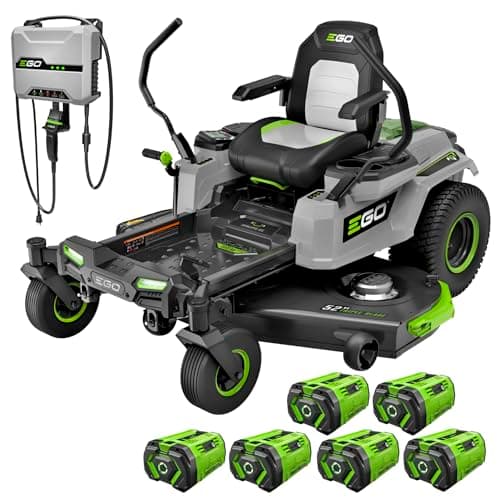
Not five, honestly. The EGO Power+ Z6 ZT5216Lis a 52-inch electric zero-turn and it is an excellent machine for up to about two acres, with no fuel, no oil and no winterizing. At five acres you are asking for well over two hours of continuous deck load, which is beyond what a residential battery platform delivers in one charge. We list it here because it is the right answer for the person who has five acres and mows two of them, and because battery acreage machines are improving fast — the current state of that category is in best electric riding lawn mower.
What else five acres needs
At this size, two blade changes a season rather than one, a lift because you will be under the deck often, and a tow-behind spreader because hand-feeding five acres is not a plan. Five acres of fertilizer is a real cost, so read the fertilizer schedule before you buy product by the pallet.