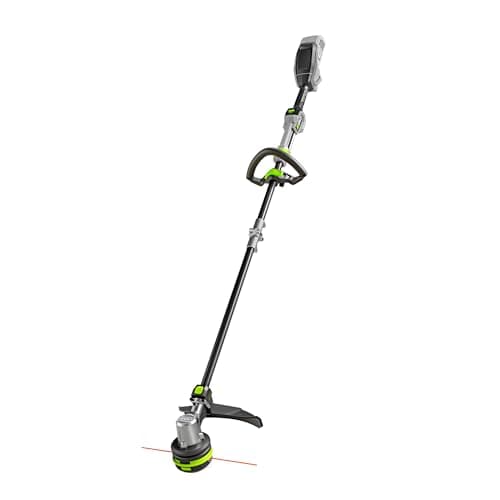
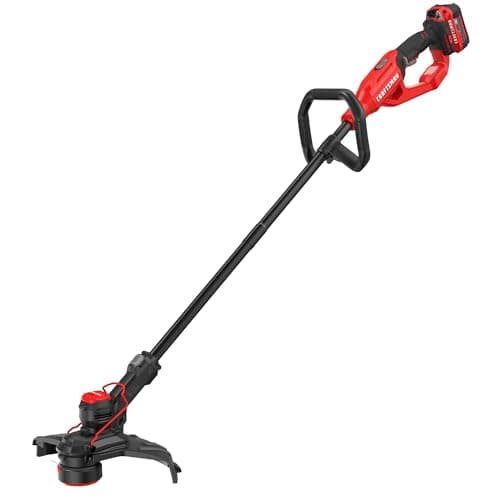
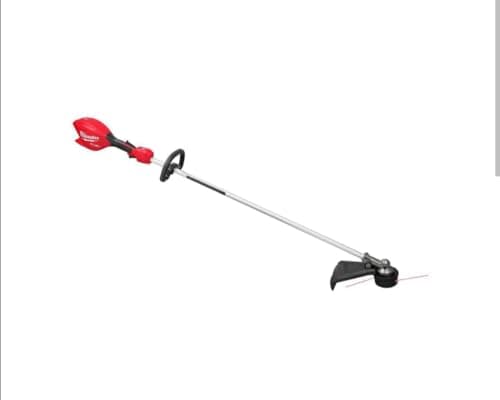
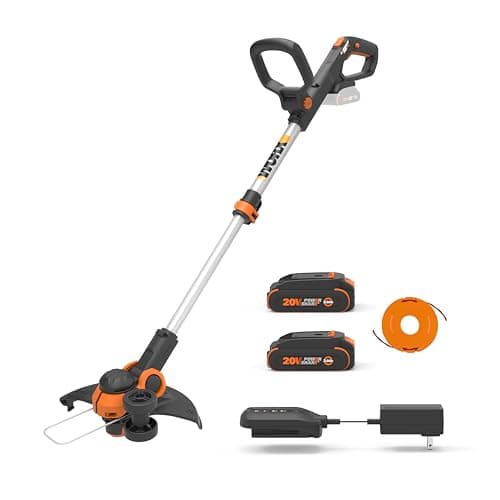
The criteria, in the order they matter at this budget
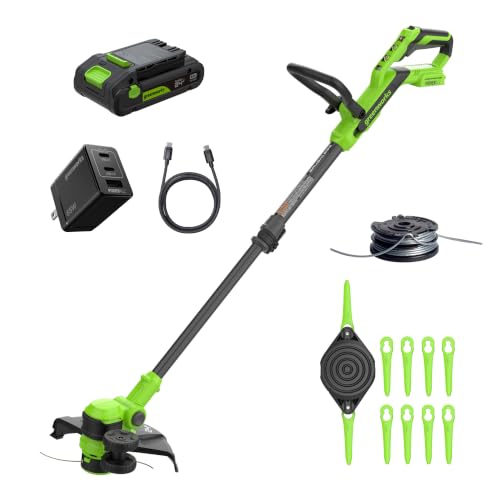
1. What is in the box.This is the first question and the one most lists skip. Work out the cost of the tool plus a battery plus a charger before comparing anything. A $99 kit with a 4 Ah pack is cheaper to put to work than a $179 bare tool, and it is not close. Gas sidesteps the question entirely, which is most of why a gas trimmer still wins this price band. It is the same mistake people make in the seed aisle, where the cheapest bag is usually the most expensive seed — our cheap grass seed page runs that arithmetic the same way, per pound rather than per bag.
2. Cutting swath. The width of the cut is the spec that decides how long trimming takes, in exactly the way deck width decides how long mowing takes. The spread on this page is 12 to 17 inches, and that is a bigger difference than it sounds: a 17-inch swath covers about 42 percent more ground per sweep than a 12-inch one. On a short bed edge you will never notice. On two hundred feet of fence line you will notice every week.
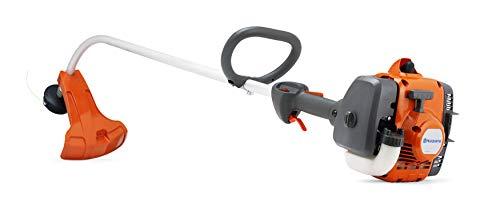
3. Shaft type, if you are buying gas. Straight or curved is not a styling choice. A straight shaft puts the head flat and lets you reach under low shrubs and across a bed edge without bending; a curved shaft is shorter, lighter in the hands and more comfortable for ordinary lawn-edge work, but it cannot get under things. Our gas trimmer roundup works through the whole trade, including the attachment-capable power heads.
4. Line diameter the head will take.At this budget most tools are specified around .065 to .080-inch line, and heavier .095 line is where the real cutting capacity lives. Fitting line thicker than the head is rated for is how people cook a trimmer motor. Match the line to the tool, not to the toughest weed in the yard — our trimmer line page covers diameter and shape properly.
5. Line feed.Bump-feed heads dominate this price band and work fine. Automatic feed and load-without-threading heads are genuinely good features — EGO’s POWERLOAD is the best of them — and only one tool here has one, which tells you what $200 buys.
Gas or battery under $200
Above about $250 this is a genuine argument. Under $200 it mostly is not, and the reason is arithmetic rather than preference.
A sub-$200 gas trimmer is a complete, full-power tool. A sub-$200 battery trimmer is either a complete low-voltage tool with a modest swath, or a capable bare tool whose real cost is well over $200 once it can run. So if you have no batteries and you want maximum capability for the money, gas wins this band outright. If you already own a battery platform, the bare tools become the best buys on the page by a wide margin, because the expensive part is already in your garage.
What gas costs you is everything the engine brings with it: mixing two-stroke fuel in the right ratio, a pull start, carburetor trouble if it sits with stale fuel over winter, and noise that decides what time on a Saturday you can start. Those are real and they are why battery has taken this category over above the $200 line. The full version of this argument is in battery vs gas string trimmers.
The platform question, and why it changes the ranking
A battery trimmer is not really a purchase, it is a subscription to a battery system. Buy an EGO trimmer and the sensible next tool is an EGO blower, because the pack is the expensive part and it is already paid for. That is why the Milwaukee M18 trimmer is on this page at all: on its own it is a hard sell against a complete kit for half the money, and to someone with four M18 packs on a charger wall it is the obvious choice.
The corollary matters if you are starting from nothing: pick the platform you want to live in, then buy its cheapest useful tool. Under $200 that means a 20V or 24V consumer kit, which is a fine place to begin for a small lawn and a poor place to be if you later want a mower on the same battery. If a battery mower is anywhere in your future, look at what budget electric mowers run on before you commit to a trimmer platform — the 40V and 60V lines are where the mowers live.
What you give up at this price
Brushless motors are not guaranteed. Two tools here have them; cheaper ones often use brushed motors, which are less efficient and wear out at the brushes. For a tool used twenty minutes a week that is an acceptable trade.
Swath is the first thing cut. A 16-inch battery trimmer with a battery included does not exist under $200 from a major brand, as far as we can verify. That is the single clearest boundary of this budget.
Attachment capability mostly disappears.Power heads that take an edger, pole saw or cultivator attachment start above this band. The 2-in-1 trimmer-edgers here are a different and more limited idea — the head rotates so the same string cuts a vertical edge, which is useful and is not the same as a dedicated edger blade. If a clean vertical edge is the actual goal, read string trimmer vs edger first, because a string will not cut a defined trench.
Runtime claims get vague.CRAFTSMAN publishing “up to 63 minutes” is unusually specific for this price. Treat every runtime number as a best-case figure measured in light grass with a fresh pack; thick growth can halve it.
Where spending more is worth it, and where it is not
Worth it: a 16-inch battery trimmer as a complete kit, somewhere in the $250 to $300 band. That is the point where you stop choosing between swath and completeness, and it is the single best upgrade out of this page. Our cordless trimmer roundup starts there.
Worth it: a straight-shaft attachment-capable gas power head, if you also want an edger and a pole saw and would rather own one engine than three.
Not worth it:horsepower, on a lawn. Displacement above about 25cc is there for brush and for all-day commercial use. For grass around beds and along a fence, 22cc does the job and weighs less while doing it — weight is the spec that decides whether you enjoy the tool.
Not worth it: a wheeled string trimmer, unless your problem is a half acre of rough growth rather than a lawn edge. Those are a different tool for a different job and they live on our wheeled string trimmer page.
How to make a cheap trimmer last
Three habits, and they are worth more than the difference between any two tools here. Keep the air vents clear— a battery trimmer packed with grass runs hot and a hot motor dies young. Do not force heavy line into a light head for the reason above. And on gas, either run it dry before storage or use a fuel stabilizer; stale fuel in a small carburetor is the single most common reason a cheap gas trimmer will not start in April.
One more, for the lawn rather than the tool: trimming scalps. A string trimmer cuts wherever you hold it, and held flat against a bed edge it will take the grass down to the crown and leave a brown halo. Hold the head at a slight angle with the guard toward you, and cut at the same height you mow at. The same height discipline that makes a mowed lawn look good — covered in how to edge a lawn — applies to the trimmer, and a cheap trimmer used well looks better than an expensive one used badly.