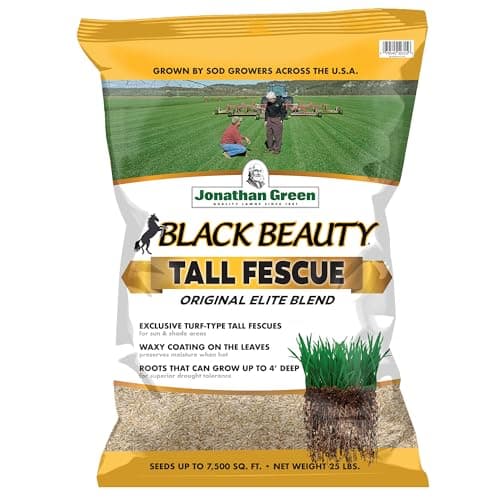
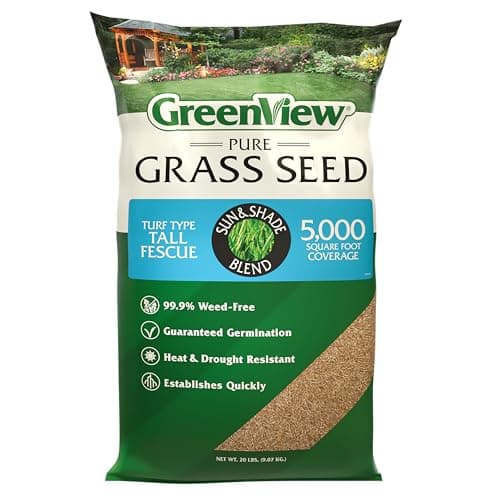
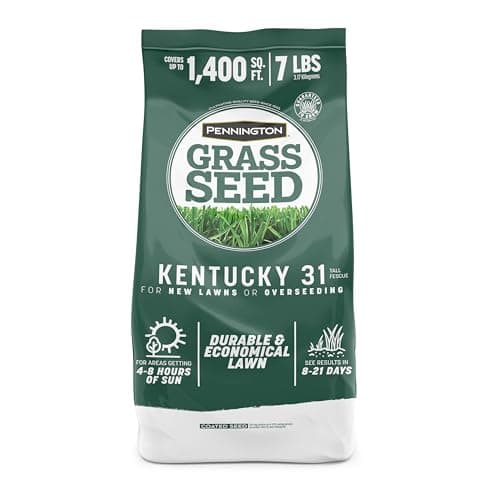
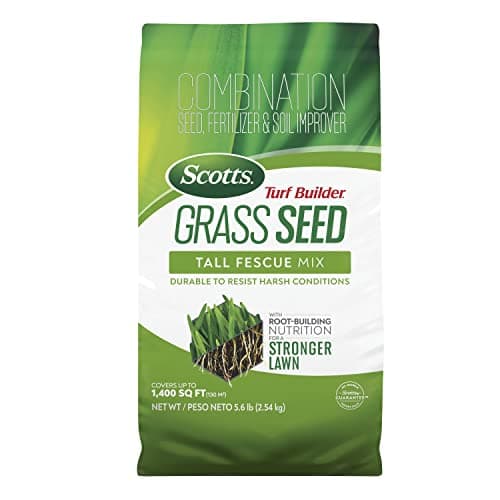
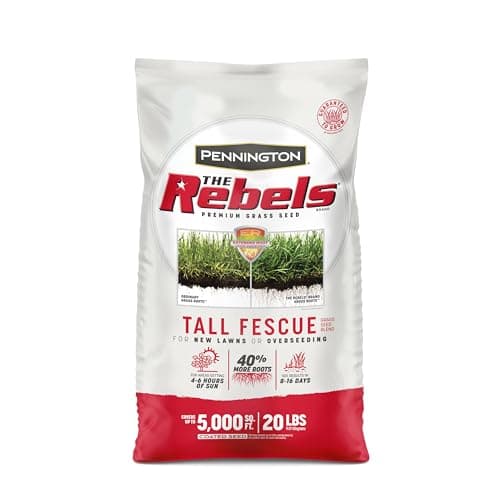
The best cheap grass seed is Pennington The Rebels Tall Fescue in the 20 lb bag: a genuine turf-type tall fescue blend in a bag big enough that the price per pound drops to the bottom of this category. If you will spend a little more for a better cultivar set, the 25 lb Jonathan Green Black Beauty Tall Fescue costs less per pound than most of the small premium bags and is the cheapest honest route to a good lawn. GreenView Turf Type Tall Fescue is the sun-and-shade alternative at a similar scale, Pennington Smart Seed Dense Shade is the value answer under trees, and Pennington Kentucky 31 is the cheapest seed here with the clearest trade-offs.
Everything on this page rests on one idea, so here it is before the picks: the cheapest bag on the shelf is almost always the most expensive seed you can buy.Grass seed is sold in bags from three pounds to twenty-five, and a 3 lb bag with the lowest price tag in the aisle routinely works out at two or three times the cost per pound of a 20 lb bag of the same species. Since you need a fixed number of pounds to seed a given area — roughly six to ten pounds per thousand square feet for a new tall fescue lawn, about half that to overseed, as our seeding rate page works through — pounds are the unit that decides your bill, not bags.
So the ranking below is by cost to seed a lawn rather than by price tag, and the live prices on each card are there so you can run the arithmetic yourself today: divide the price by the bag weight, and compare pounds to pounds. That is the whole method. It takes thirty seconds and it is the single most valuable thing on this page.
The other half of cheap is whether the seed works. Below a certain point, cheap seed stops being a bargain and starts being a lawn you will reseed in two years, and we say plainly on each card where that line falls. Nothing here was grown by us in a trial plot; the species and cultivar claims come from published seed labels and from how we pick.
The arithmetic, done once
Two numbers settle the entire question. Price per pound is the price on the listing divided by the bag weight. Pounds per thousand square feet is the seeding rate for the species, printed on the bag. Multiply them and you have cost per thousand square feet, which is the only figure that compares two bags fairly.
The rates that matter here: a new tall fescue lawn wants roughly six to ten pounds per thousand square feet and an overseed about half that. Kentucky bluegrass is seeded much lighter — its seed is far smaller, so a pound contains vastly more seeds — which is why a 3 lb bag of bluegrass covers more ground than a 3 lb bag of fescue and why comparing bluegrass and fescue on price per pound alone is misleading. Compare within a species first.
Run that calculation across a seed aisle and the result is consistent enough to be a rule: bag size, not brand, is the biggest single driver of what seeding a lawn costs. A premium blend in a 25 lb bag frequently beats a budget mix in a 5 lb bag on cost per pound. If your lawn is big enough to use a 20 or 25 lb bag, buying premium is often the cheap decision, not the expensive one.
Where cheap seed is genuinely cheap, and where it is false economy
Coated seed.Several budget products are coated — a clay or polymer shell that holds moisture against the seed and shows you where it landed. Coating is useful, and it is also weight you are buying that is not seed. A coated bag and an uncoated bag at the same price per pound are not the same purchase, because some fraction of the coated bag is coating. The seed label tells you the percentages; read it.
Inert matter and other crop. Every bag carries a label stating pure seed, inert matter, other crop and weed seed as percentages. Cheap seed tends to carry more inert matter, and the weed-seed number is the one worth actually reading: a fraction of a percent of weed seed spread over a few thousand square feet is a lot of weeds. The expensive part of cheap seed is never the seed, it is the weeding afterward and the herbicide program you did not plan for.
Named cultivars against “tall fescue.”A label listing named cultivars has been through variety trials; a label that just says “tall fescue” has not. The independent reference is the National Turfgrass Evaluation Program, which runs multi-year US trials on named varieties. Products built from NTEP-evaluated cultivars cost more per pound and the difference shows in density, color and disease resistance over years rather than weeks. Our premium seed page is the other end of exactly this trade.
Forage types sold as lawn seed. This is the real trap at the bottom of the market. Kentucky 31 is a tall fescue, and it is a pasture and roadside variety: coarse blades, a clumpy growth habit, lighter color. It is genuinely the cheapest way to get grass growing on bare ground and it holds soil on a slope where nothing else is economic. It is not the same product as a turf-type tall fescue blend and the price difference is telling you so.
Matching cheap seed to the job
Overseeding a thin lawn. The best-value job in lawn care, because the rate is about half a new seeding and the existing turf does the hard work of holding moisture. Buy the biggest bag of a turf-type tall fescue blend you will use within a season. Our overseeding seed page covers the cultivar side.
Patching a few bare spots.Here the small expensive bag is the right answer, and this is the one case where price per pound should be ignored. A 5 lb bag you use completely beats a 20 lb bag that sits in a shed for three years — seed loses viability in storage, faster in a hot garage, so unused seed is money burned.
Seeding a whole new lawn. The one job where going cheap is most tempting and least wise. You are buying the next decade of lawn with this decision, and the difference between a budget mix and a good blend is a few tens of dollars against several hundred dollars of soil prep, water and fertilizer you are spending either way. Spend on the seed and economize somewhere else.
A slope, a ditch or a back acre. Kentucky 31 territory, with no apology. The goal is roots in soil, and cheap coarse grass holding a bank is the correct answer.
What cheap seed cannot fix
More than half the failed seedings we read about are not seed problems. Seed needs soil contact, warmth and water in that order, and no price point substitutes for any of them.
Soil contact.Seed broadcast onto thatch or compacted ground germinates and then dies, because the roots never reach soil. Rake it in, or seed into holes you have already opened — the mechanics are in how to reseed a lawn and the tool side in the aerator roundup.
Timing. Cool-season seed sown in late spring is largely wasted money: it germinates into the hardest conditions of its life. Late summer into early fall is the window, and when to plant grass seed gives the soil temperatures rather than the calendar dates.
Water.Light, frequent watering for the first two to three weeks, per Clemson’s lawn renovation guidance — not a deep soak twice a week. A cheap bag of seed watered properly beats an expensive one watered badly every time, which is the most genuinely money-saving sentence on this page.
Starter fertilizer.New seedlings need phosphorus for root development and a lawn food formulated for established grass is the wrong product. It is a small line item that protects the whole spend — see starter fertilizer.
One more way to spend less: buy less seed
Budget lawn care is mostly this habit applied everywhere: work out the unit cost before you compare prices. We do the same thing with tools in the best string trimmers under $200, where the unit is “what is actually in the box” rather than the number on the listing.
Overseeding heavier than the label says is a common and expensive mistake. Seedlings competing with each other at three times the rate produce a thin, weak stand rather than a dense one, so the extra seed buys you a worse lawn. Calibrate the spreader, use the label rate and keep the change — our spreader calibration guide is fifteen minutes that pays for itself in one bag.
And measure the lawn before you shop. Most people overestimate their lawn substantially, because the number they have in their head is the lot size rather than the turf area. Pace out the actual grass, subtract the house, the drive and the beds, and buy for that.