Skip to content
Fairway&Fescue

The Feed · Fertilizer, Weed Control & Spreaders

The Best Liquid Lawn Fertilizer

Ranked on the three things that decide whether a bottle is worth buying: the analysis on the label, how much lawn it actually covers, and whether you need a sprayer to use it.

By Stephen V.Updated How we pick
#ad

We earn a commission when you buy through our Amazon links, at no extra cost to you. It never changes our rankings — and we'll tell you when the cheaper bag or machine is the better buy. How this works.

The best liquid lawn fertilizer is Simple Lawn Solutions Advanced 16-4-8, because 16-4-8 is the analysis most lawns actually want and this is the cheapest bottle on the page that delivers a complete feed rather than a booster. For an established lawn that does not need phosphorus, Simple Lawn Solutions Superior 15-0-15is the better buy — equal nitrogen and potassium, a gallon of concentrate, and legal to use where lawn phosphorus is restricted. If the lawn is big enough that a 32 ounce bottle is a joke, PetraTools Liquid 16-4-8 is the same balanced ratio in a gallon. If you want to feed without owning a sprayer, Scotts Liquid Turf Builder screws straight onto a garden hose. And the budget pick is Simple Lawn Solutions Lawn Energizer, the cheapest bottle here — but read what it is first: a nitrogen-and-iron color booster, not a complete feeding program.

Every price on this page is pulled live from the price layer with an “as of” date rather than typed into the prose, because liquid concentrates are discounted hard and often and a number written into a page would be wrong within weeks. We have not run tissue or soil tests to produce this ranking. Every judgment below comes from the guaranteed analysis printed on the label, the stated coverage, the application method the manufacturer specifies, and published cool-season and warm-season agronomy. The method is in how we pick.

Three of the five bottles here are Simple Lawn Solutions, and that is not brand loyalty.Liquid lawn fertilizer is a narrow category sold mostly by small direct-to-consumer brands, and Simple Lawn Solutions is the one that publishes a full guaranteed analysis on three genuinely different products: a balanced feed, a phosphorus-free feed, and an iron booster. When a category has one brand covering three jobs properly, ranking three of its bottles is the honest outcome. Where another brand does a job better — PetraTools on volume, Scotts on ease — it is ranked instead.

The real question is not which liquid, it is whether you want a liquid at all. A liquid feed is taken up through the leaf as well as the root, so the color response arrives in days rather than the two to three weeks a slow-release granular takes. The cost of that speed is duration: a liquid application is mostly spent within three to four weeks, where a coated granular keeps releasing for six to ten. Liquid feeding is therefore a little-and-often method, and if you want to feed a lawn four times a year and forget about it, you want a bag. The full trade-off is in liquid vs granular fertilizer, and the bags themselves are ranked in the best lawn fertilizer.

The short answer

Quick picks

#ProductBest forScorePrice
01
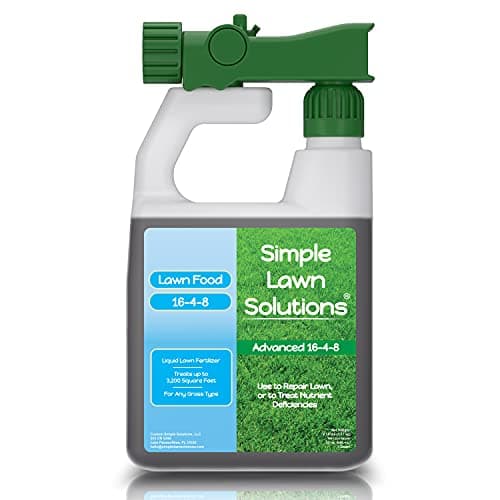
Simple Lawn Solutions Simple Lawn Solutions Advanced 16-4-8 Liquid (32 oz)
Simple Lawn Solutions Advanced 16-4-8 Liquid (32 oz)

A liquid 16-4-8 concentrate you attach to a hose end. The fast option: a liquid feed is taken up through the leaf as well as the root, so the color response is days rather than weeks.

Fast green-up
7.4
$19.01Amazon
02
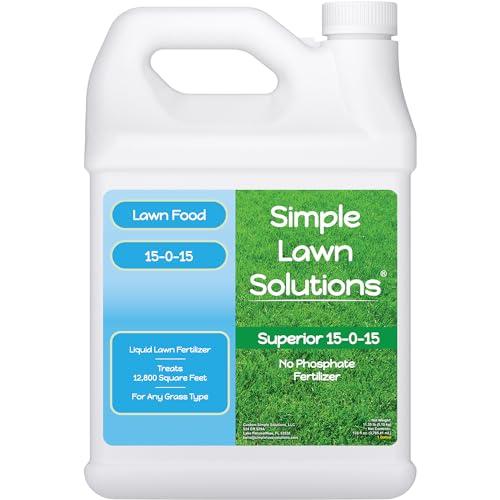
Simple Lawn Solutions Simple Lawn Solutions Superior 15-0-15 Liquid Lawn Fertilizer (1 gal)
Simple Lawn Solutions Superior 15-0-15 Liquid Lawn Fertilizer (1 gal)

A phosphorus-free 15-0-15 with humic acid, fish and seaweed in the bottle. The right liquid for an established lawn, and the one to reach for where lawn phosphorus is restricted.

Best for an established lawn
8.4
$39.17Amazon
03
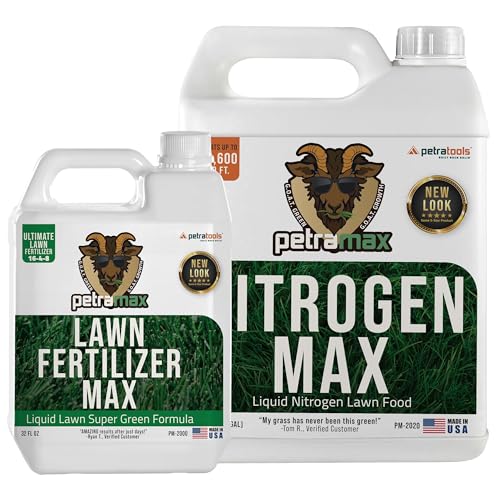
PetraTools PetraTools Liquid 16-4-8 Lawn Fertilizer (1 gal)
PetraTools Liquid 16-4-8 Lawn Fertilizer (1 gal)

A gallon of balanced 16-4-8 liquid - the same ratio as the best granular lawn foods, in a form you spray. The pick when one bottle has to cover a season of feeding on a big lawn.

Most lawn covered per bottle
8.0
$91.14Amazon
04
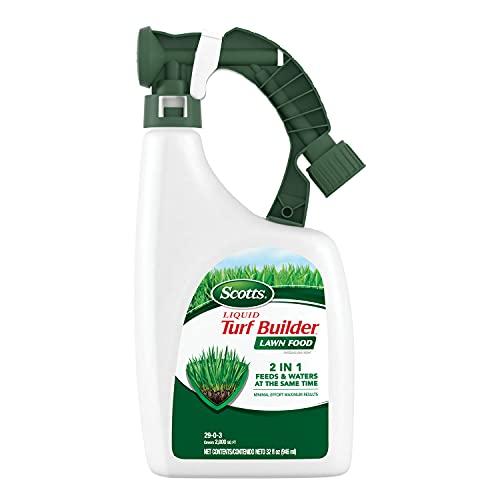
Scotts Scotts Liquid Turf Builder Lawn Food (2,000 sq ft)
Scotts Liquid Turf Builder Lawn Food (2,000 sq ft)

The simplest liquid feed on the shelf: screw it onto a hose, walk the lawn, done. It is the one liquid here that asks nothing of you beyond turning a tap on.

Easiest liquid feed to apply
6.8
$21.99Amazon
05
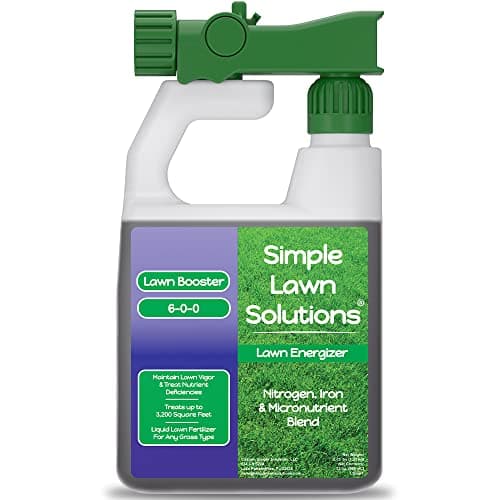
Simple Lawn Solutions Simple Lawn Solutions Lawn Energizer, Nitrogen + Iron (32 oz)
Simple Lawn Solutions Lawn Energizer, Nitrogen + Iron (32 oz)

A liquid nitrogen-and-iron booster. Iron darkens a lawn without pushing the top growth that extra nitrogen alone would, which is exactly what a bermuda lawn wants in midsummer.

Deep color without extra mowing
7.4
$18.69Amazon

#ad · Live prices from the Amazon Product API, as of November 22, 2026. Where we have no verified live price, we show none — we would rather leave a gap than print a number that has rotted.

In detail

The picks, in full

01
Simple Lawn Solutions Simple Lawn Solutions Advanced 16-4-8 Liquid (32 oz)

Fast green-up

Simple Lawn Solutions Advanced 16-4-8 Liquid (32 oz)

16-4-8 NPKLiquid concentrate32 oz bottleHose-end application
7.4/10

A liquid 16-4-8 concentrate you attach to a hose end. The fast option: a liquid feed is taken up through the leaf as well as the root, so the color response is days rather than weeks.

Analysis quality
9
Spread evenness
9
Coverage per bag
4
Ease of use
9
Value
6

Pros

  • Foliar uptake means a visible response in days, which no granular fertilizer can match
  • No spreader needed and nothing to calibrate — the sprayer meters it
  • Easy to apply at a low rate often, which is how the best-looking lawns are actually fed

Cons

  • A 32 oz bottle does not go far — the cost per 1,000 sq ft per application is high
  • No slow-release component, so the effect fades faster than granular

Skip this if…

…you want one application to carry the lawn for two months. Liquid feeding is a little-and-often method; if you want set-and-forget, buy Milorganite or the Andersons bag.

$19.01View on Amazon

$23.7720% off

Price as of November 22, 2026. Prices change — Amazon's is the one that counts.

#ad · we may earn a commission from this link to Simple Lawn Solutions Advanced 16-4-8 Liquid (32 oz)

02
Simple Lawn Solutions Simple Lawn Solutions Superior 15-0-15 Liquid Lawn Fertilizer (1 gal)

Best for an established lawn

Simple Lawn Solutions Superior 15-0-15 Liquid Lawn Fertilizer (1 gal)

15-0-15 NPKZero phosphorusHumic, fish and seaweed1 gallon concentrate
8.4/10

A phosphorus-free 15-0-15 with humic acid, fish and seaweed in the bottle. The right liquid for an established lawn, and the one to reach for where lawn phosphorus is restricted.

Analysis quality
9
Ease of use
7
Coverage per bottle
9
Speed of green-up
8
Value
9

Pros

  • Equal nitrogen and potassium is the ratio an established lawn actually wants - potassium is what carries turf through heat, drought and cold, and most bagged fertilizers are short of it
  • No phosphorus means it stays usable where state or county rules restrict lawn phosphorus, which rules out a lot of balanced products
  • A gallon of concentrate covers a lot of lawn, so cost per thousand square feet is low despite the headline price

Cons

  • Zero phosphorus makes it the wrong product for seeding or sodding, where new roots genuinely need it
  • Needs a pump or backpack sprayer and a measured dilution - there is no hose-end applicator in the box

Skip this if…

…you are feeding a lawn you have just seeded. New grass needs phosphorus for root development and this bottle has none; a starter fertilizer is the right product for that job.

$39.17View on Amazon

$48.9720% off

Price as of November 22, 2026. Prices change — Amazon's is the one that counts.

#ad · we may earn a commission from this link to Simple Lawn Solutions Superior 15-0-15 Liquid Lawn Fertilizer (1 gal)

03
PetraTools PetraTools Liquid 16-4-8 Lawn Fertilizer (1 gal)

Most lawn covered per bottle

PetraTools Liquid 16-4-8 Lawn Fertilizer (1 gal)

16-4-8 NPK1 gallon concentrateBalanced liquid feedSprayer application
8.0/10

A gallon of balanced 16-4-8 liquid - the same ratio as the best granular lawn foods, in a form you spray. The pick when one bottle has to cover a season of feeding on a big lawn.

Analysis quality
9
Ease of use
6
Coverage per bottle
10
Speed of green-up
8
Value
7

Pros

  • 16-4-8 is the ratio most cool-season lawns want, and in liquid form the nitrogen is taken up through the leaf as well as the root
  • A full gallon of concentrate is the largest volume on this page, which is what makes it work on a lawn a 32 oz bottle cannot touch
  • The phosphorus in the analysis means it is usable on a lawn you have just seeded, unlike the phosphorus-free liquids

Cons

  • The most expensive bottle on this page by a wide margin, so the value only shows up if you have the lawn to spend it on
  • Phosphorus rules it out where local rules restrict it - check your state before you buy
  • Sprayer only, and a gallon of concentrate takes real mixing discipline to apply at a consistent rate

Skip this if…

…your lawn is a small suburban front yard. You will not get through a gallon of concentrate in a season, and a 32 oz bottle does the same job for a fraction of the outlay.

$91.14View on Amazon

$101.4810% off

Price as of November 22, 2026. Prices change — Amazon's is the one that counts.

#ad · we may earn a commission from this link to PetraTools Liquid 16-4-8 Lawn Fertilizer (1 gal)

04
Scotts Scotts Liquid Turf Builder Lawn Food (2,000 sq ft)

Easiest liquid feed to apply

Scotts Liquid Turf Builder Lawn Food (2,000 sq ft)

Hose-end applicatorCovers 2,000 sq ftFeeds while wateringReady to spray
6.8/10

The simplest liquid feed on the shelf: screw it onto a hose, walk the lawn, done. It is the one liquid here that asks nothing of you beyond turning a tap on.

Analysis quality
6
Ease of use
10
Coverage per bottle
4
Speed of green-up
8
Value
6

Pros

  • Nothing to mix, measure or dilute - the applicator metes concentrate into the hose stream for you, which removes the one step people get wrong
  • Feeding and watering in happen in the same pass, so there is no window where undiluted product sits on a leaf
  • The cheapest way into liquid feeding, and the cheapest to abandon if you decide you prefer a spreader

Cons

  • 2,000 square feet per bottle is the smallest coverage on this page, so a quarter-acre lawn needs several bottles per application
  • A hose-end applicator cannot be calibrated, so the rate you actually apply moves with your water pressure
  • Stock on this listing has been thin - check availability before you plan a feeding around it

Skip this if…

…your lawn is over about 4,000 square feet. Per-bottle coverage turns a cheap product into an expensive one at scale; buy a gallon of concentrate and a pump sprayer instead.

$21.99View on Amazon

Price as of November 22, 2026. Prices change — Amazon's is the one that counts.

#ad · we may earn a commission from this link to Scotts Liquid Turf Builder Lawn Food (2,000 sq ft)

05
Simple Lawn Solutions Simple Lawn Solutions Lawn Energizer, Nitrogen + Iron (32 oz)

Deep color without extra mowing

Simple Lawn Solutions Lawn Energizer, Nitrogen + Iron (32 oz)

Liquid concentrateNitrogen + ironMicronutrient package32 oz hose-ready
7.4/10

A liquid nitrogen-and-iron booster. Iron darkens a lawn without pushing the top growth that extra nitrogen alone would, which is exactly what a bermuda lawn wants in midsummer.

Lawn safety
8
Analysis quality
7
Feeding value
6
Coverage per bag
8
Value
8

Pros

  • Iron produces color rather than growth, so you get a darker lawn without adding a mow to the week - the reason golf courses use it
  • Liquid foliar feeding works in heat when granular nitrogen is risky, which makes this a genuine summer product
  • A 32 oz bottle of concentrate covers a lot of lawn, so cost per application is low

Cons

  • Iron stains concrete, brick and painted surfaces - overspray on a driveway leaves rust marks that do not wash off
  • It is a booster, not a complete feeding program; the lawn still needs its scheduled nitrogen

Skip this if…

…this is the only product you plan to use. A color booster on an unfed lawn is cosmetics over a nutrition problem - feed it properly first.

$18.69View on Amazon

$21.9915% off

Price as of November 22, 2026. Prices change — Amazon's is the one that counts.

#ad · we may earn a commission from this link to Simple Lawn Solutions Lawn Energizer, Nitrogen + Iron (32 oz)

The criteria, in the order they matter

1. The guaranteed analysis, because it is the only spec that is not marketing. Those three numbers are the percentage of nitrogen, available phosphate and soluble potash in the bottle, and they are a legal declaration rather than a claim. A 16-4-8 bottle does twice the nitrogen work per ounce of a 8-2-4 bottle at the same dilution. Any liquid that will not print an analysis is selling you water and seaweed, and should be priced like it.

2. Concentrate volume, which is the number that sets the real price.A liquid’s coverage claim is a function of dilution, and dilution is adjustable, so the honest way to compare bottles is by how much concentrate you are buying. A gallon is four times a 32 ounce bottle. On a 2,000 square foot front lawn the small bottle is the right purchase; on a half acre it is an irritation you repeat eight times.

3. How you get it onto the grass.This decides more about whether you will actually keep feeding than the analysis does. A hose-end applicator needs nothing but a tap, and it cannot be calibrated — the rate you apply moves with your water pressure. A pump or backpack sprayer gives you a repeatable rate and even coverage, and it costs money and a mixing step. Pick the one you will still be using in August.

4. Phosphorus, and whether you are allowed to use it. Many states and counties restrict phosphorus in lawn fertilizer, because it is the nutrient that drives algae growth when it reaches water. Check your local rule before you buy a bottle with a middle number in it. A phosphorus-free analysis like 15-0-15 is the safe default on an established lawn, which already has all the phosphorus it needs in the soil.

5. Iron, and what it is actually for. Iron darkens a leaf without pushing growth, which is the most useful trick in liquid feeding: color without an extra mow. It is a cosmetic addition on top of a feeding program, not a substitute for one, and iron will stain concrete, brick and painted surfaces on contact.

Which liquid, by what you are trying to do

Your situationWhat to buyWhy
You want one complete liquid feed and nothing complicatedSimple Lawn Solutions Advanced 16-4-8The balanced ratio most lawns want, in the cheapest complete-feed bottle here
Established lawn, or phosphorus is restricted where you liveSimple Lawn Solutions Superior 15-0-15Equal N and K with zero phosphorus, in a gallon of concentrate
Half an acre or more to feedPetraTools Liquid 16-4-8A full gallon of balanced concentrate; the small bottles do not scale
You do not own a sprayer and do not want oneScotts Liquid Turf BuilderHose-end applicator, nothing to mix or measure
You want a darker lawn without more mowingSimple Lawn Solutions Lawn EnergizerNitrogen plus iron; iron produces color rather than top growth
You have just seeded or soddedA starter fertilizer, not a liquidNew roots need phosphorus at a rate a maintenance liquid does not carry
You want to feed four times a year and forget itA slow-release bag, honestlyA liquid application is spent in three to four weeks; coated granular runs six to ten

What a liquid genuinely buys you

Speed, and the ability to see it working. Foliar uptake means the grass gets nitrogen the day you spray rather than the week after it rains. If you have a lawn that looks pale ten days before people come over, this is the only category that can do anything about it.

Even coverage without a calibrated spreader.A granular application is only as even as your spreader pattern, and a bad pass stripes a lawn for a month. A sprayed liquid lands uniformly across the pass, which is why it is the easier method to get right on a small, awkwardly shaped lawn. If you are going the granular route instead, the spreader matters enormously — see the best broadcast spreaders, the tow-behind spreaders for acreage, and how to calibrate a spreader.

Feeding in heat, without the burn risk of granular nitrogen. A diluted foliar feed applied in the evening is a far lower-risk summer application than broadcasting soluble granular nitrogen onto hot, dry turf. That is the one season where liquid is not just a preference.

What a liquid does not do, said plainly

It does not last. A liquid application is largely spent within three to four weeks, so a liquid program means feeding every three to four weeks through the growing season rather than four times a year. If that cadence does not fit how you actually spend Saturdays, you will underfeed the lawn and conclude liquid fertilizer does not work — when the schedule was the problem.

It does not fix a thin lawn. A pale lawn goes green on liquid nitrogen; a sparse lawn stays sparse, because what it needs is seed and a reason for the seed to survive. If that is your lawn, start with the best grass seed and how to reseed a lawn, and use a starter fertilizer rather than a maintenance liquid.

And it does not control weeds. A thicker, better-fed lawn crowds weeds out over seasons, but a lawn that already has broadleaf weeds in it needs a herbicide. Those are ranked in the best weed control for lawns.

Applying it so the bottle is not wasted

Mix only what you will use. Diluted liquid fertilizer is not stable in a sprayer for weeks; mix per application and spray the tank out. Spray in the evening or early morning, not in midday sun, so the solution sits on the leaf long enough to be absorbed rather than evaporating off it.

Do not water it in immediatelyif you want the foliar effect — that is the opposite of granular practice and the single most common mistake. Give it a few hours on the leaf, then water normally. The exception is a hose-end applicator, which dilutes and waters in simultaneously by design.

Keep iron off hard surfaces. Overspray onto a driveway, a path or a painted fence leaves rust marks that do not wash off. Spray with the wind at your back and shut the trigger before you reach the concrete.

Feed on the right calendar for your grass. A cool-season lawn wants its heaviest feeding in fall and a light hand in summer; a warm-season lawn is the reverse. Liquid does not change that, it only changes the interval. The month-by-month version is in our lawn fertilizer schedule, and if your lawn is fescue, the species-specific case is in the best fertilizer for fescue.
How we picked this

We haven't run this gear through a lab — and we say so

We compiled the published manufacturer specifications — deck width and gauge, drive type, blower CFM, fertilizer NPK, seed species — did the deck-width and nitrogen arithmetic, cross-read the owner manuals, and scored each pick against a published rubric. The scores are judgments from documented research — they are notlab measurements we took, because we don't have a lab and we're not going to pretend we do. Where somebody has genuinely measured this, we link them. You can check every number we publish.

Questions

Frequently asked

What is the best liquid lawn fertilizer?
Simple Lawn Solutions Advanced 16-4-8 — a balanced analysis in the cheapest complete-feed bottle here. For an established lawn, or anywhere phosphorus is restricted, the Superior 15-0-15 is the better choice; for half an acre or more, buy a gallon of PetraTools 16-4-8 instead of repeating a small bottle eight times.
Is liquid lawn fertilizer better than granular?
Neither is better; they do different things. Liquid is absorbed through the leaf and shows color in days but is largely spent in three to four weeks. Coated granular takes two to three weeks to show and keeps releasing for six to ten. Liquid suits little-and-often feeding and awkward small lawns; granular suits four applications a year on a big one. The full comparison is in liquid vs granular fertilizer.
How often should you apply liquid lawn fertilizer?
Every three to four weeks through the active growing season, because that is roughly how long one application lasts. That is more often than a granular program, and it is the main reason people abandon liquid feeding — the schedule, not the product.
Do you water in liquid fertilizer?
Not immediately, if you want the foliar effect. Leave it on the leaf for a few hours and then water normally. A hose-end applicator is the exception: it dilutes and waters in at the same time by design.
Can liquid lawn fertilizer burn grass?
Yes, if it is applied undiluted, at double rate, or onto hot dry turf in midday sun. Applied at label dilution in the evening it is the lower-risk way to feed a lawn in heat, which is the one season where liquid has a real safety advantage over broadcasting soluble granular nitrogen.
What does 16-4-8 mean on a liquid fertilizer?
16 percent nitrogen, 4 percent available phosphate, 8 percent soluble potash by weight of the concentrate — a legally guaranteed declaration, not a marketing claim. The ratio matters more than the absolute numbers: roughly four parts nitrogen to one phosphorus to two potassium is what a growing lawn uses.
Is phosphorus-free lawn fertilizer worth buying?
On an established lawn, usually yes. Most settled soils already hold the phosphorus turf needs, phosphorus runoff is the nutrient that drives algae growth in water, and many states and counties restrict it in lawn products. The exception is new seed or sod, which genuinely needs phosphorus for root development.

Keep reading

Receipts

Sources

We do not run a testing lab, and we do not pretend to. Every spec number here comes from a manufacturer's published sheet or an official standard, cited above. Where we could not verify something, we say so on the page rather than quietly leaving it out. Read our full method.