Germination by species: the ranges seed labels publish
Every cool-season species has its own speed, and the differences are large enough to change which bag you should buy. Treat these as ranges, not promises — the same seed in warm moist soil and in cold soil behaves like two different products.
| Species | Typical days to germinate | Why it is that speed |
|---|
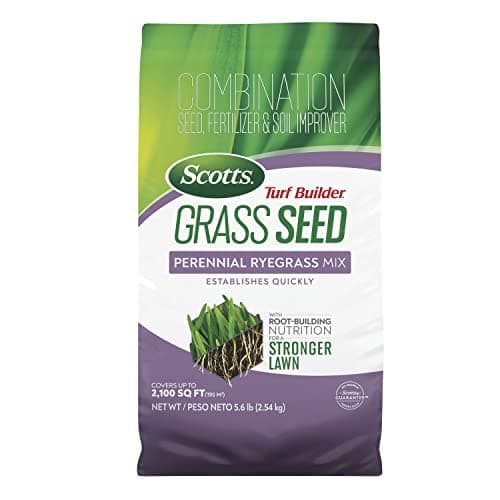
| Perennial ryegrass | About 5-10 days | Large, thin-coated seed with a big energy reserve; built to establish fast |
| Tall fescue | About 7-14 days | Large seed, slightly tougher coat; the mainstream cool-season choice |
| Fine fescue | About 7-14 days | Smaller seed, less reserve, slower to bulk up after it sprouts |
| Kentucky bluegrass | About 14-30 days | Very small seed and a slow start; it spreads by rhizome later instead |
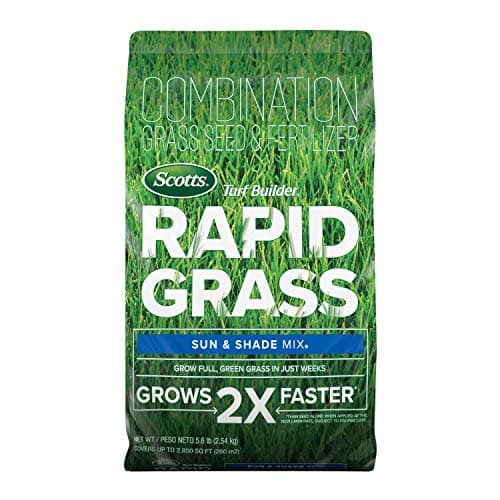
This is exactly why so many bagged mixes contain ryegrass alongside fescue or bluegrass. The ryegrass comes up in a week and holds the seedbed — shading soil, slowing erosion, and giving you something green to look at — while the slower species takes its time underneath. If you sow straight Kentucky bluegrass and panic at day ten, nothing has gone wrong. It is just bluegrass.
Soil temperature is the control, not the calendar
A grass seed does not respond to the forecast. It responds to the temperature of the soil around it, roughly an inch down, and soil lags air by days to weeks — it warms slower in spring and stays warm longer in fall. That lag is the single biggest reason spring seedings disappoint and fall seedings succeed.
Below about 55°F: nothing. Seed sits inert and waits. It does not spoil, but it is exposed to birds, wash-off and rot for every week it waits.
55°F to 65°F: germination happens, at the slow end of every range above. This is a typical early-spring or late-fall soil.
65°F to 75°F: the sweet spot for cool-season grass. Fast germination, fast establishment, and air temperatures mild enough that the seedbed does not dry out between waterings. This is early fall in most of the country, and it is why fall is the better seeding window.
Above about 80°F: germination is quick but survival is poor. Seedlings have no root system and a hot, bright surface dries out between waterings faster than a sprinkler timer can keep up with.
A $12 soil thermometer pushed two inches into the lawn answers this question better than any article can, because it accounts for your yard, your shade and your drainage. The seasonal argument in full is on when to plant grass seed.
The four things that actually stall germination
When seed does not come up, it is almost never the seed. In order of how often it is the culprit:
1. The seedbed dried out, once.This is the overwhelming cause. A seed that has taken up water and begun to germinate has committed; if it dries before the root reaches moist soil, it dies, and no amount of later watering brings it back. Clemson’s guidance is light, daily watering for two to three weeks — damp, never soggy. Note what that means in practice: short and frequent beats long and deep, which is the exact opposite of how you water an established lawn. In hot or windy weather, twice a day.
2. The seed never touched soil.Seed broadcast onto an unprepared surface, onto thatch, or onto a mat of dead grass sits in the air and dries. It needs contact. Rake it in lightly, or roll it, or at minimum sow into a surface that has been scratched open — and if the lawn has a thatch layer, that layer is the problem. Aerating vs dethatching sorts out which tool you need first.
3. Pre-emergent herbicide in the soil. Pre-emergents work by killing germinating seedlings, and they cannot tell crabgrass from grass seed. If you applied a crabgrass preventer this season, most labels require a wait of two to four months before seeding. Read the label you used; this one quietly ruins more spring seedings than anything else, and it is covered on best crabgrass preventer.
4. Buried too deep.Grass seed needs light and has almost no energy reserve. More than about a quarter inch of soil over it and the seedling exhausts itself before it reaches the surface. “Rake it in lightly” means lightly. If you can still see some seed on the surface, the depth is right.
The honest full timeline
Days 0-7. Nothing visible. Keep the surface damp. This is the window in which the seeding is won or lost, and the only job is water.
Days 7-14. First green haze. It looks patchy and alarmingly sparse, because the fast species is up and the slow one is not. Do not reseed over it yet.
Days 14-21. The slower species shows. The lawn starts to look like a lawn from a distance and still looks thin up close. Begin tapering watering frequency and lengthening each watering, so roots chase moisture downward.
Days 21-30.First mow, by height and not by date — one and a half times the target mowing height, with a sharp blade, and take off no more than a third. A dull blade pulls seedlings out of the ground by the roots, which is why blade condition matters more on a new lawn than on an old one.
Weeks 4-8. Thickening. A second feeding goes down around week four to six. Keep traffic off it.
Weeks 8-12. Established enough for normal use and normal watering. A cool-season lawn seeded in early fall will be genuinely usable by the time it goes dormant, and will thicken again the following spring.
What actually makes germination faster
Sowing when the soil is 65 to 75°F. Free, and worth more than every product below put together.
Choosing a faster species.If speed is the priority — erosion, a deadline, a dog-worn patch before guests arrive — perennial ryegrass is the fastest cool-season grass to establish. The trade is longevity: ryegrass is a bunch grass that does not spread, so it thins over years in a way tall fescue and bluegrass do not. The species trade-off is argued out in fescue vs ryegrass.
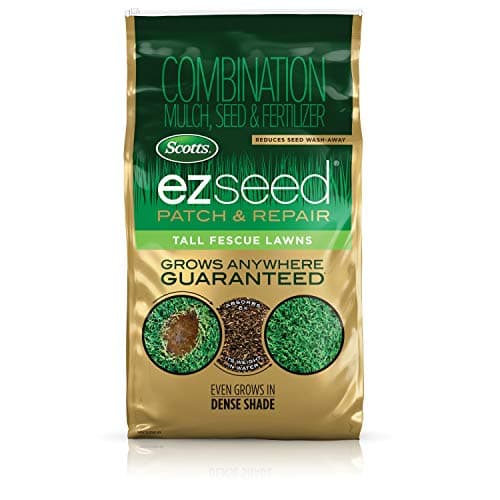
Keeping the seed moist with a mulch carrier. The patch-repair products that combine seed with an expanding mulch are not a gimmick: the carrier holds water against the seed between waterings, which attacks the number-one cause of failure directly. They are expensive per square foot, so they are a patch tool, not a whole-lawn tool.
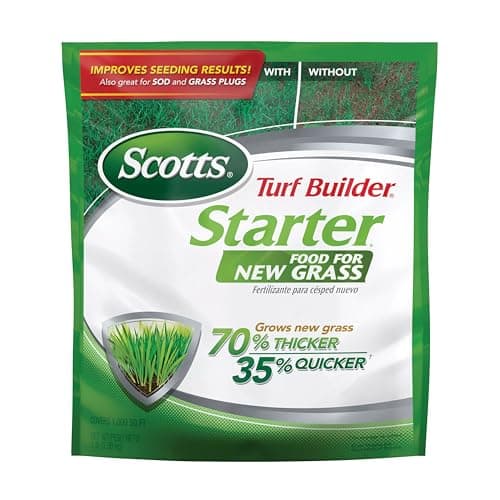
A starter feed, for establishment rather than germination. Worth being precise here: starter fertilizer does not speed germination up. The seed has its own energy reserve and does not take up nutrients until it has roots. What a phosphorus-forward starter feed does is accelerate root development in weeks two through six, which is what turns a germinated seedling into a surviving plant. Put it down with the seed; do not expect it to move day seven. The picks are on best starter fertilizer for new grass.
What does not work.Watering more heavily rather than more often — deep watering drives seed down and rots it. Extra nitrogen — it feeds weeds, which germinate faster than grass. And pre-soaking seed, which makes it clump and impossible to spread evenly.
If nothing has come up by day 21
Dig a little. Find three or four seeds and look at them. Swollen with a white root tip showing means germination started and the seedbed dried — water correctly and the rest of the seed may still come. Hard and unchanged means it has not started, so the soil is too cold, the seed is buried too deep, or there is pre-emergent in the ground. Soft, dark and mushy means it rotted, which is overwatering or poor drainage.
In all but the pre-emergent case, oversowing the thin areas works, and the method is the same as any repair: see how to reseed a lawn for the sequence, or how to grow grass from seedfor a start-to-finish establishment on bare ground. If the surface is uneven enough that water pools in some spots and runs off others, that is worth fixing first — how to level a bumpy lawn covers it.