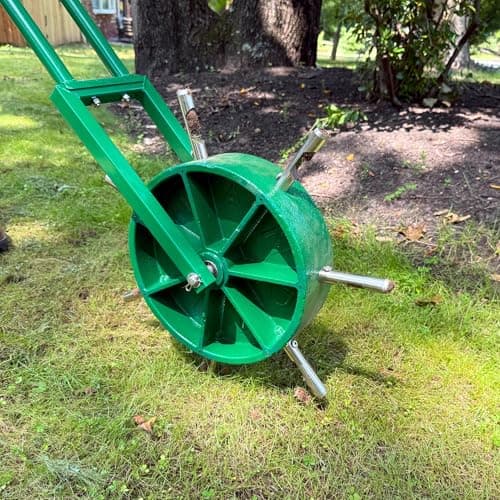
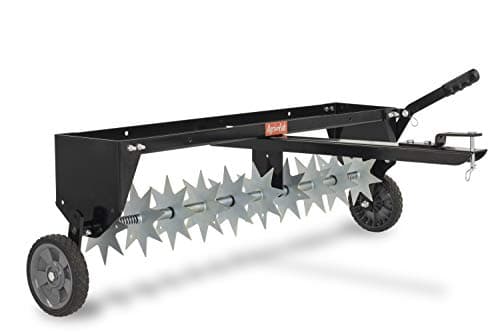
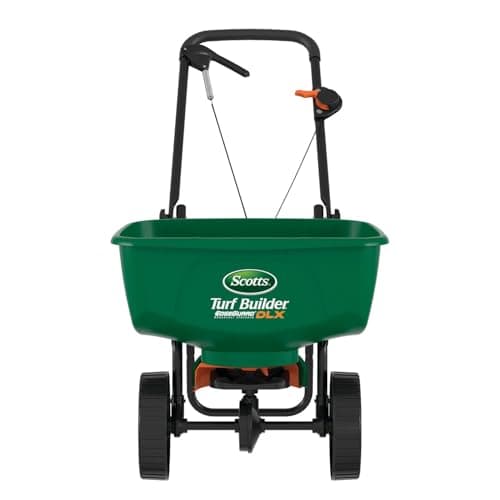
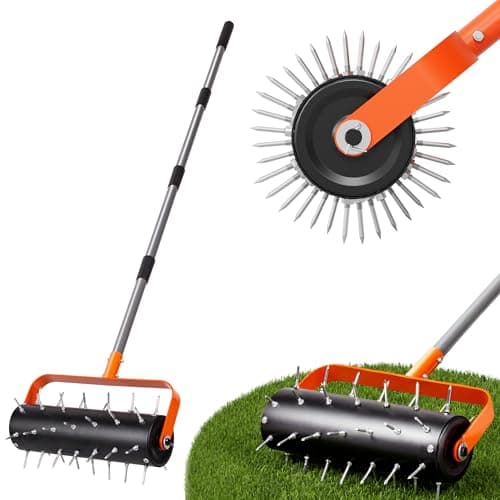
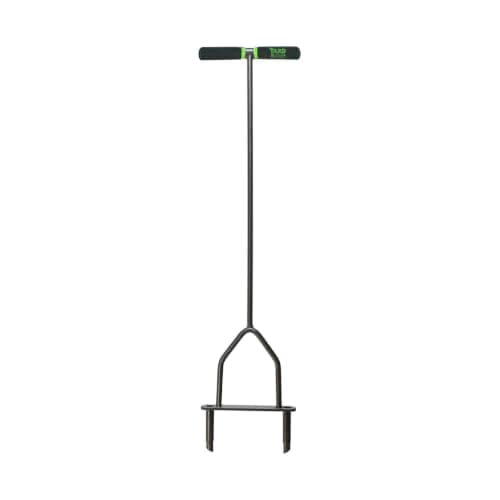
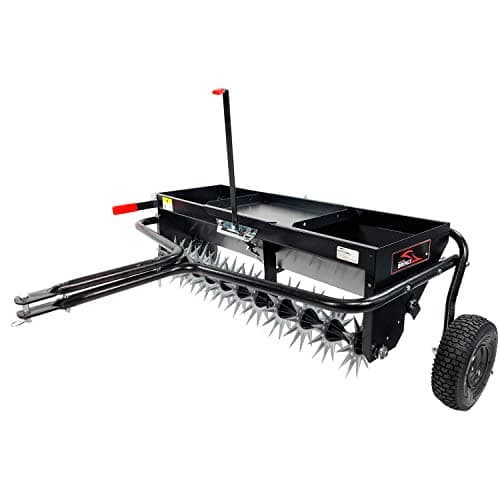
If you want one machine that aerates and seeds in a single pass, buy the Brinly Tow-Behind Combination Aerator Spreader— a 40-inch working width with the hopper feeding seed onto ground the tines have just opened, which is exactly the job of an overseeding weekend. If you do not have a tractor to pull it, the honest answer is a pairing rather than a combination tool: the Landzie rolling core plug aerator to pull plugs by hand, then the Scotts EdgeGuard DLX broadcast spreader to put the seed down. For a large lawn behind a rider, the Agri-Fab 40" tow-behind spike aerator opens a seedbed quickly and cheaply.
Aerating and overseeding are two jobs that belong in the same afternoon, and the reason is mechanical rather than horticultural. Grass seed needs soil contactto germinate — seed sitting on top of thatch or hard ground dries out and dies. An aerator makes thousands of small openings that each catch a seed and hold moisture around it. Seed into holes rather than onto a surface and your strike rate goes up dramatically.
That is why “aerator and seeder” is a real search rather than a marketing one, and why the demand for this page peaks in September: the right time to do all of this in cool-season country is late summer into early fall.
One thing to be clear about before the picks. Spiking and coring are not the same job.A hollow-tine core aerator pulls a plug of soil out and genuinely relieves compaction. A spike aerator pushes a hole and presses the soil sideways, which does nothing for compaction but does make an excellent seedbed. For overseeding, spikes are fine and cheap. For compacted soil, only coring works — see spike vs plug aerator.
We have aerated no lawns with these. Everything here reads published working widths, tine types and counts, hopper capacities and spread widths — see how we pick. Prices are live from the price layer with an “as of” date beside each tool.
Aerator and seeder tools compared
| Tool | Job | Working width | Needs | Best for |
|---|
| Brinly Combination Aerator Spreader | Aerate + seed, one pass | 40 in | Tractor or rider | One tool for both jobs |
| Landzie Rolling Core Plug Aerator | Pull cores by hand | Manual roller | You | Coring without a tractor |
| Agri-Fab 40" Tow Spike Aerator | Open a seedbed | 40 in | Tractor or rider | Fast seedbed over an acre |
| Scotts EdgeGuard DLX | Spread the seed | Broadcast | Push | Seed placement with edge control |
| Walensee Rolling Spike Aerator | Open a seedbed by hand | 42 spikes | You | Small lawn, cheapest route |
| Yard Butler ID-6C | Core a patch by foot | Hand tool | You | Patching and dog spots |
Working widths, tine types and counts, hopper capacities and spread patterns above are the figures the listings publish. Prices are live with an “as of” date beside each tool.
One combination tool, or an aerator plus a spreader?
Buy the combination tool if you own a rider and intend to overseed every year. One pass instead of two halves the laps, and the geometry is right: seed lands on ground the tines have just opened rather than being broadcast over a surface and hoping. For a half-acre lawn that is a genuine afternoon saved, every year.
Buy the pairing if you do not own a rider, or if you want to core rather than spike. No combination tool on the market pulls hollow-tine cores and spreads seed in one pass at homeowner prices; if compaction is your actual problem, you need a core aerator and then a separate spreader. That is two passes and the right two passes.
The pairing is also the more flexible purchase. A broadcast spreader earns its shed space four times a year spreading fertilizer, lime and ice melt; a combination aerator-spreader comes out once.
The overseeding order, which matters more than the tools
Do these in sequence. Out of order, the best tools on the market will not save it.
1. Mow short and bag the clippings. Drop the deck a notch or two below your normal height and remove the clippings rather than mulching them, so seed can reach soil.
2. Dethatch if the thatch layer is over about half an inch. Seed cannot reach soil through a mat of dead stems. Our dethatcher roundup covers the tools, and aerating vs dethatching explains how to tell which problem you have.
3. Aerate.Core if the soil is compacted, spike if you are simply making a seedbed. Go over the lawn twice in different directions for a decent hole density. Leave the cores on the surface — they break down in a fortnight and topdress the lawn for free.
4. Seed immediately, at the overseeding rate rather than the new-lawn rate. Roughly 4 to 5 lb per 1,000 square feet for tall fescue, half that for bluegrass. Seed into open holes the same day while they are still open.
5. Put down a starter fertilizer, which supplies the phosphorus new roots need and ordinary lawn food does not — see starter fertilizer.
6. Water lightly and often for two to three weeks. Little and often, not deep and rarely: the top half inch must not dry out until the seed has germinated. This is the step that actually decides the result, and it is the step people skip. The full method is in how to reseed a lawn.
Why broadcast rather than drop for seed
A broadcast spreader throws seed in an arc and covers a lawn in a third of the passes a drop spreader needs, which is why it is the sensible choice for overseeding a whole lawn. Edge control matters: without it you throw seed into beds and onto paths, where it is wasted. The EdgeGuard mechanism on the Scotts spreaders blocks the right-hand side of the arc for exactly that reason.
A drop spreader has its place — precision around beds and borders — and the full comparison is in broadcast vs drop spreader. Our broadcast spreader roundup ranks the spreaders themselves.
When to aerate and overseed
Cool-season lawns — tall fescue, bluegrass, fine fescue, ryegrass — go in late August through September. Soil is warm, air is cooling, autumn rain helps, and crabgrass is done for the year. This is why the tools sell out in September.
Warm-season lawns — bermuda, zoysia, St. Augustine — aerate in late spring or early summer, when the grass is in active growth and can recover. Most warm-season lawns spread by runner rather than seed, so overseeding usually is not part of the job at all.
Never aerate a dormant lawn or a bone-dry one. Water the day before so the tines can actually penetrate; on hard dry clay an aerator just bounces.
Who should skip these
Skip the tow-behind tools if you have no rider or tractor — they are implements, not machines, and there is no push version of either.
Skip the spike aerators if your problem is genuinely compacted soil. Spiking a compacted lawn feels like progress and relieves nothing; you want a core aerator. See the aerator roundup.
And skip all of this on a lawn that is thin because it is starved or shaded rather than compacted. Overseeding a shaded lawn with sun grass fails every time — buy the right seed first.