Step 1: understand what you are buying, because it is not a mower upgrade
A striping kit is a roller on a hinged arm that trails the back of the cutting deck. Big League Lawns, who make the CheckMate kits sold through mower dealers, describe it as a striper that “follows the ground behind your mower, gently bending the grass as you cut”. The cut happens first; the bending happens a fraction of a second later; the stripe is the consequence.
Which means a striping kit does nothing to cut quality, nothing to runtime and nothing to the lawn’s health. It is a cosmetic accessory, and that is fine — as long as you are not expecting it to fix a patchy lawn. A thin lawn with a stripe in it is a thin lawn.
It also means the two routes to the same effect are genuinely different purchases:
Mower-mounted kit. Bolts to the mower, strips while you mow, no second pass. Cheapest in time, fussiest in fitment.
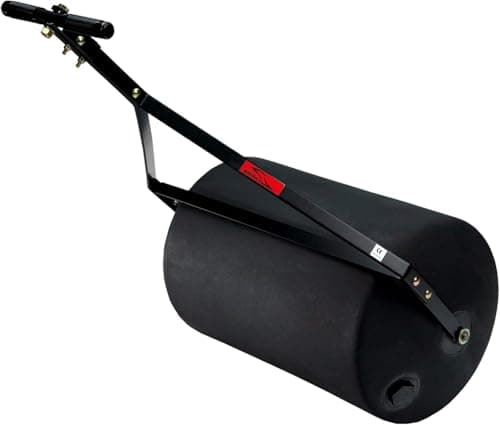
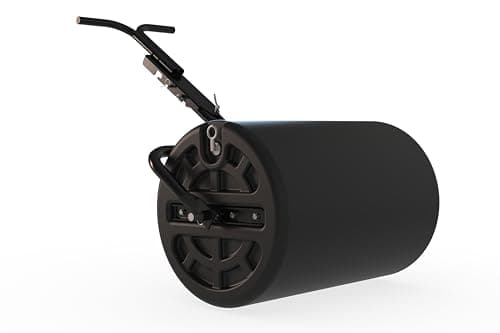
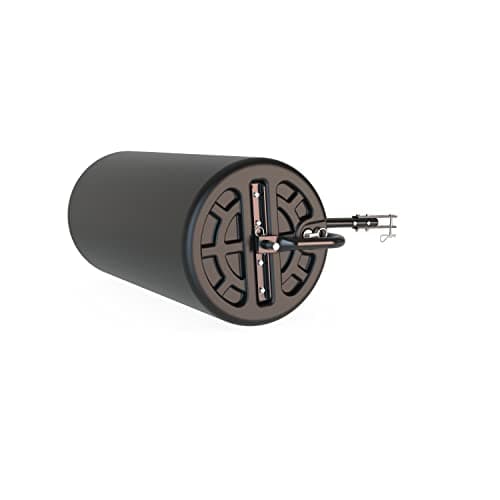
Separate roller.A drum you fill with water and push or tow over the lawn after you mow. No fitment problem at all, works with any mower including a robot, and the same tool does the jobs a roller is genuinely for — pressing new seed and sod into soil contact, and flattening frost-heaved turf in spring. Costs you a second lap of the lawn.
Step 2: fitment is the whole risk on a mower-mounted kit
This is where the money gets wasted. Big League Lawns is explicit that “deck width alone is not enough”— their fitment flow asks for mower type, then brand, then model, then deck size, and the hardware and instructions ship model-specific. OEM kits exist for a modest number of Toro, Exmark and Scag decks and essentially nothing else, which is why the universal kits exist at all.
Three things to check before you order a universal kit:
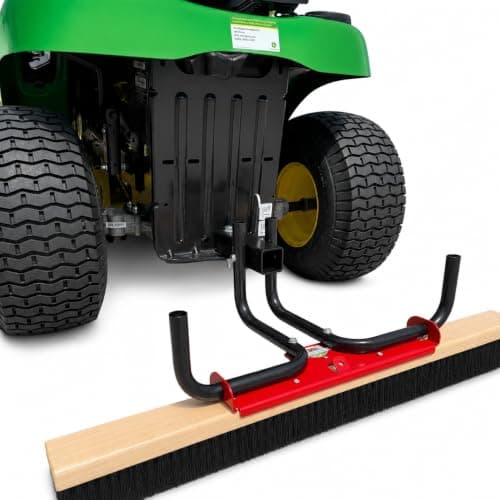
Mounting method.Some universal kits need two half-inch holes drilled through the rear of the mower frame. Others clamp, and hitch-mounted versions fit between the rear tires on a rider that already has a hitch. Drilling a deck is not reversible and it is not covered by anybody’s warranty, so know which kind you are buying.
Length behind the deck.A trailing roller adds length — one manufacturer publishes about 4-1/8 inches of extension behind the deck for its assembly, and you need that clearance between the deck and the rear tires on a walk-behind, or between the deck and the frame on a rider. Measure it.
Roller width relative to the deck.A roller narrower than the cut leaves unbent grass at the edges of each pass; one wider than the cut fouls on turns. Dealer sizing guidance for these kits typically puts the roller a few inches narrower than the deck. If a listing publishes no fitment data at all, treat that as the risk it is — which is exactly the caveat we have put on the Broom and Stripes kit above.
Step 3: if you go the roller route, buy on filled weight and drum width
A roller has to press hard enough to lay the stems over, so filled weight is the spec that decides the result. All three rollers here are poly drums you fill with water on site and drain before storage, which is the right design: there is no 270-pound object in your shed in January, and poly does not rust or dent the way old steel drums did.
The three split cleanly:
Brinly, 18 x 24 inches, 270 lb filled, push or tow. The heaviest hand-pushed drum in this set, and the plug is tethered so it does not get lost in the lawn. The one to buy if the roller is doing double duty on seeding and sod.
Agri-Fab, 18 x 24 inches, 250 lb water capacity, steel frame, push or tow. Same drum size, twenty pounds lighter full, usually a little cheaper. Twenty pounds less is slightly less stripe and a noticeably easier turn at the end of a run; pick your side of that.
Agri-Fab 45-0606, 18 x 36 inches, 400 lb filled, tow only. Half again the width and nearly half a ton of pressure, which means a quarter-acre lawn is a handful of laps instead of a long afternoon. You need something to tow it with.
One honest warning that applies to all three: rolling compacts soil.That is the mechanism, and it is why a roller is an occasional tool rather than a weekly one. Rolling a clay lawn every week to chase stripes will cost you root depth, and the fix for compacted soil is the opposite tool entirely — see the core aerator roundup and best lawn aerator for clay soil.
Step 4: the lawn decides how good the stripe looks, not the kit
The Minnesota work is worth reading before you spend anything, because it explains why two neighbors with the same kit get different results.
Cutting height. Longer leaf bends further and holds the bend. Minnesota lists a higher cutting height first among the ways to make patterns more visible. A lawn cut at three inches stripes; a lawn cut at one inch barely does.
Species.Cool-season grasses bend more easily than warm-season grasses. Tall fescue, Kentucky bluegrass and perennial ryegrass stripe well. Bermuda and zoysia, which are stiff, short and upright, mostly do not — and the heights those grasses want make it worse, which is the whole argument on best mowers for bermuda grass.
Where you are standing. This is the part that surprises people. Minnesota found that grass bent away from the viewer looks lighter, because more leaf surface faces the light, and grass bent toward the viewer looks darker. So the same lawn reads as light and dark bands from the patio and as a flat green field from the far corner. If you are striping for the view from the house, mow the passes perpendicular to that view.
Density.Bare soil does not bend. If the lawn is thin, the honest order of work is to fix the lawn first — reseeding and feeding buy you more visible improvement than any accessory, and the lawn care products guide puts them in order.
Which mowers stripe without a kit, and which never will
If you have not bought the mower yet, this is the one place the machine itself matters. Cornell’s sports-field guidance is specific about it: a rear roller, or the cutting heads on a reel mower, give the best stripes. Everything else is an accessory bolted on to imitate those two.
Reel mowers already stripe.A reel mower’s cutting assembly presses the leaf as it cuts it, which is why cylinder-mown sports turf and the lawns in English garden photographs look the way they do. If you own a reel mower you own a striper, and the reel mowers on this site are ranked on the bermuda mowing page — with the caveat that the grasses people mow with a reel are mostly the ones that stripe worst.
Factory rear rollers are rare in the US market.Rear-roller walk-behinds are a British and commercial-greens category, not an American homeowner one. What the US market has instead is a modest number of OEM striping kits for specific Toro, Exmark and Scag decks — which is exactly why the universal kits exist, and why the fitment questions in Step 2 are the whole purchase.
Drive type helps a little.A rear-wheel-drive walk-behind presses the cut grass down behind the deck more firmly than a front-wheel-drive machine does, so it leaves a faint pattern on its own. It is not a stripe in the photograph sense, but it is free, and it is one more reason rear-wheel drive is the better arrangement on anything but flat ground — see best self-propelled lawn mower.
Robot mowers do not stripe at all, and no kit changes that. A robot’s value comes from cutting a little every day in an irregular or systematic-but-overlapping pattern, so there are no adjacent parallel passes to bend the grass in opposite directions. If a striped lawn is the goal, a robot is the wrong tool; if a uniformly short lawn with no Saturday obligation is the goal, the stripes are the thing you are trading away. Our robot mower roundup is honest about the same trade from the other direction.
Step 5: the free version, and the one thing to avoid
You can stripe with no purchase at all. Mowing in straight alternating passes with a rear-wheel-drive mower lays the grass over to some extent on its own, and Cornell’s sports-field guidance notes that a rear roller or the cutting heads on a reel mower give the best stripes — so if you already own a reel mower, you already own a striper.
The thing to avoid is mowing the same direction every week for the pattern. Cornell recommends changing mowing direction at each mowing, and the reason is wear: repeatedly driving the same wheel lines in the same direction compacts those lines and the grass in them thins out. Rotate the pattern — across, then diagonal, then the other diagonal — and you get the stripes without the tramlines.
Two more practical notes. Stripes show best when the grass is dry, because wet leaf clumps rather than bends cleanly. And a dull blade will undo a lot of this work: a frayed leaf tip grays off and mutes the contrast you are trying to create, so the cheapest striping upgrade for most lawns is a sharp blade, which the blade sharpener roundup covers.