Skip to content
Fairway&Fescue

The Soil · Aerators, Dethatchers & Lawn Repair

Best Lawn Care Products

A lawn does not need a shelf of bottles. It needs about eight things, bought in the right order - and the order matters more than the brands, because the first two do most of the work.

By Stephen V.Updated How we pick
#ad

We earn a commission when you buy through our Amazon links, at no extra cost to you. It never changes our rankings — and we'll tell you when the cheaper bag or machine is the better buy. How this works.

If you buy one thing for a thin lawn, buy fertilizer and a spreader to put it down evenly. Not seed, not weed killer, not a better mower. A lawn that is thin because it is underfed thickens in one season on nitrogen alone, and a thick lawn crowds out most of the weeds you were about to buy a herbicide for. The Andersons PGF Complete 16-4-8 is the fertilizer pick, and the Scotts EdgeGuard DLX is the spreader that makes it land evenly instead of in stripes.

Everything after those two is a job, not a product category, and this page gives one pick per job: seed for bare ground, a pre-emergent in early spring so crabgrass never germinates, a ready-to-use spot spray for the weeds that still show up, a mower, a string trimmer for the edges the mower cannot reach, and a coring aerator for soil that has gone hard. Eight items, because there are eight jobs. A ninth bottle is usually a second version of something you already own.

We have tested none of this. NPK analyses, coverage figures, cutting widths, tine types and bag weights are the numbers printed on the labels and listings — see how we pick. Where the agronomy matters we link to the page on this site that cites the extension source behind it. Prices come from the live price layer with an “as of” date beside each product, because fertilizer and seed prices move with the season.

The short answer

Quick picks

#ProductBest forScorePrice
01
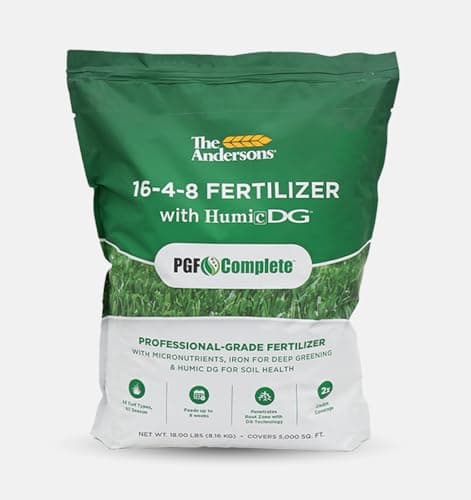
The Andersons The Andersons PGF Complete 16-4-8 with Humic DG (5,000 sq ft)
The Andersons PGF Complete 16-4-8 with Humic DG (5,000 sq ft)

The fertilizer serious lawn people actually use. A balanced 16-4-8 analysis on a very small particle, with 7 percent humic acid — it spreads evenly and waters in without sitting on the surface.

Best all-round lawn fertilizer
8.0
$59.88Amazon
02
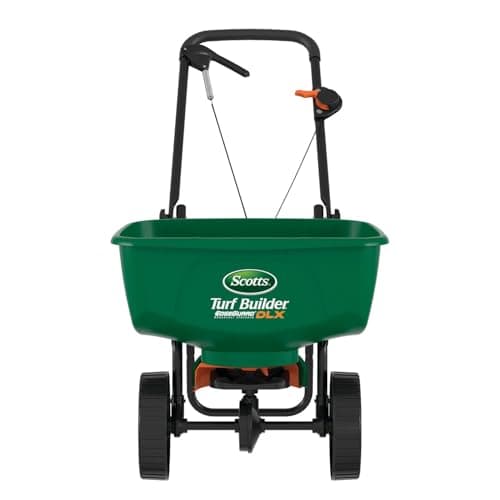
Scotts Scotts Turf Builder EdgeGuard DLX Broadcast Spreader
Scotts Turf Builder EdgeGuard DLX Broadcast Spreader

The spreader to buy. EdgeGuard shuts off the right-hand side of the spread pattern, which is the one feature that stops you throwing fertilizer into beds, onto the driveway and down the storm drain.

Best broadcast spreader for most lawns
8.6
$90.21Amazon
03
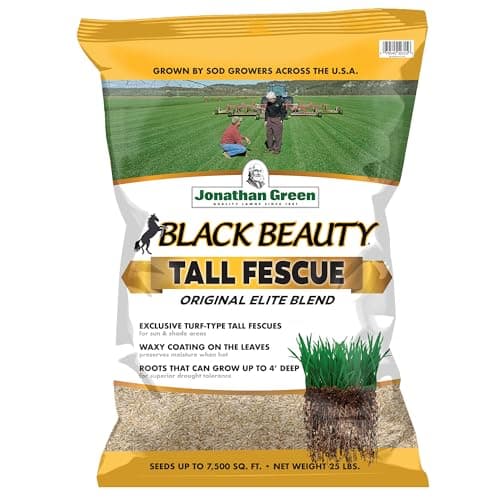
Jonathan Green Jonathan Green Black Beauty Tall Fescue Blend (25 lb)
Jonathan Green Black Beauty Tall Fescue Blend (25 lb)

The premium turf-type tall fescue blend, in a bag size that actually seeds a lawn. Black Beauty is the cultivar family lawn-care professionals name when asked what they would put down themselves.

The best-looking tall fescue lawn
7.6
$103.99Amazon
04
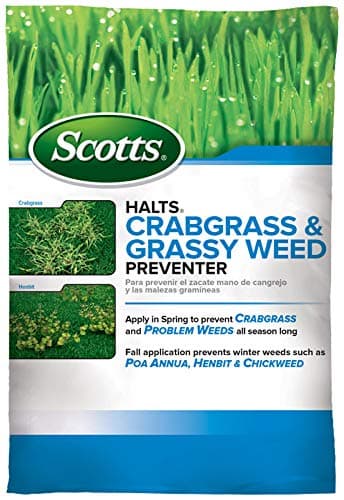
Scotts Scotts Halts Crabgrass & Grassy Weed Preventer (10.06 lb)
Scotts Halts Crabgrass & Grassy Weed Preventer (10.06 lb)

A pre-emergent, which is a fundamentally different and more effective proposition than a weed killer: it stops crabgrass seed germinating rather than fighting the plant after it wins.

Stopping crabgrass before it starts
7.8
$24.97Amazon
05
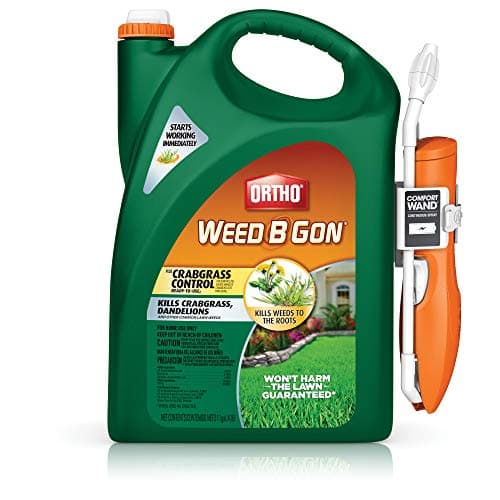
Ortho Ortho Weed B Gon Plus Crabgrass Control, Ready-to-Use (1 gal)
Ortho Weed B Gon Plus Crabgrass Control, Ready-to-Use (1 gal)

The one to buy if you want to walk out and deal with the weeds you can see. Ready-to-use with a wand, so there is no mixing, no measuring and no half-full sprayer to store.

Spot-treating visible weeds, no mixing
7.5
$43.99Amazon
06
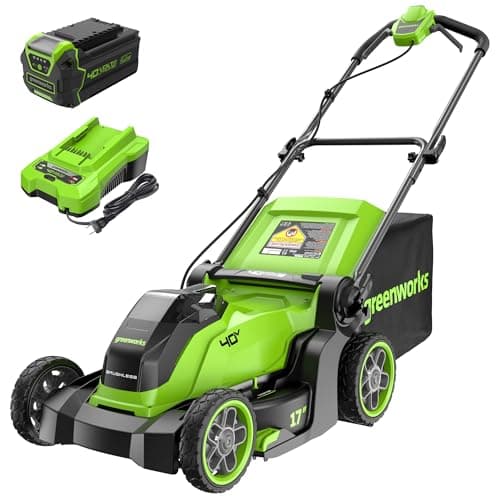
Greenworks Greenworks 40V 17" Push Mower
Greenworks 40V 17" Push Mower

A 17-inch deck on Greenworks' 40V platform — the small-lawn mower, and genuinely the right tool for a courtyard or a patch of front lawn that a 21-inch deck cannot turn in.

Small lawns and tight gates
7.8
$205.83Amazon
07
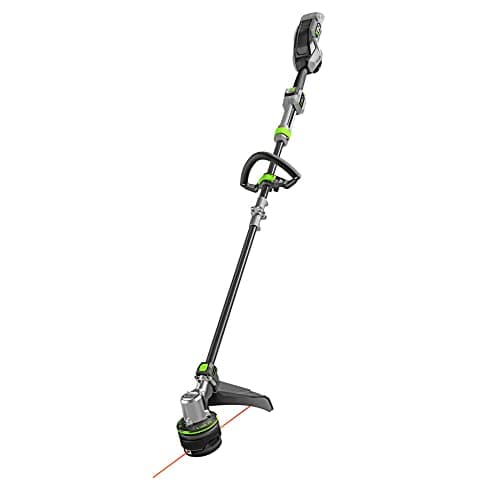
EGO EGO Power+ 16" String Trimmer, POWERLOAD + LINE IQ (ST1620T)
EGO Power+ 16" String Trimmer, POWERLOAD + LINE IQ (ST1620T)

The trimmer that fixes the two things people actually hate about trimmers. POWERLOAD reloads the spool at the push of a button, and LINE IQ feeds line automatically instead of you bumping the head.

The least annoying string trimmer
8.4
$249.00Amazon
08
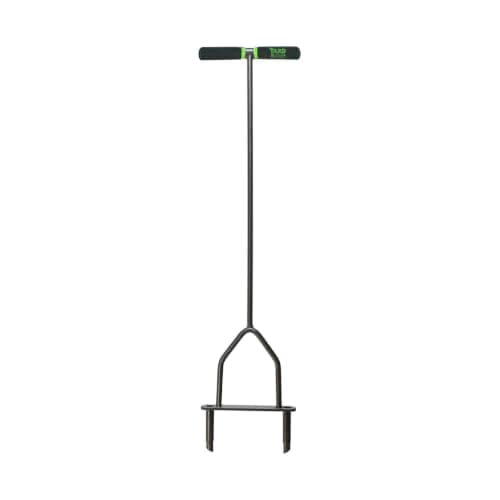
Yard Butler Yard Butler Manual Lawn Coring Aerator (ID-6C)
Yard Butler Manual Lawn Coring Aerator (ID-6C)

A long-handled hollow-tine corer you step on. It is slow and it is hard work — and it is the only tool here that properly cores a lawn without a tractor or a rental.

Proper coring without a tractor
6.6
$48.95Amazon

#ad · Live prices from the Amazon Product API, as of November 1, 2026. Where we have no verified live price, we show none — we would rather leave a gap than print a number that has rotted.

In detail

The picks, in full

01
The Andersons The Andersons PGF Complete 16-4-8 with Humic DG (5,000 sq ft)

Best all-round lawn fertilizer

The Andersons PGF Complete 16-4-8 with Humic DG (5,000 sq ft)

16-4-8 NPK7% Humic DGCovers 5,000 sq ftFine particle size
8.0/10

The fertilizer serious lawn people actually use. A balanced 16-4-8 analysis on a very small particle, with 7 percent humic acid — it spreads evenly and waters in without sitting on the surface.

Analysis quality
10
Spread evenness
10
Coverage per bag
7
Ease of use
7
Value
6

Pros

  • 16-4-8 is the ratio most cool-season lawns want: nitrogen for growth, a little phosphorus, and potassium at half the nitrogen rate for stress tolerance
  • The fine particle size is the quiet advantage — small prills land more per square inch, so you get an even green rather than a striped one
  • At 16 percent nitrogen over 5,000 sq ft, a full bag delivers roughly 0.8 lb of nitrogen per 1,000 sq ft — a textbook single application

Cons

  • Costs several times what a Scotts bag of similar coverage does
  • Fine particles need a spreader with decent calibration; a hand-thrown application wastes it

Skip this if…

…you feed your lawn once a year and are not going to measure anything. The value is in precise, repeatable applications; Scotts Turf Builder does the once-a-year job for a fraction of this.

$59.88View on Amazon

Price as of November 1, 2026. Prices change — Amazon's is the one that counts.

#ad · we may earn a commission from this link to The Andersons PGF Complete 16-4-8 with Humic DG (5,000 sq ft)

02
Scotts Scotts Turf Builder EdgeGuard DLX Broadcast Spreader

Best broadcast spreader for most lawns

Scotts Turf Builder EdgeGuard DLX Broadcast Spreader

EdgeGuard side shut-offHolds up to 15,000 sq ft of productBroadcast / rotaryCalibrated settings dial
8.6/10

The spreader to buy. EdgeGuard shuts off the right-hand side of the spread pattern, which is the one feature that stops you throwing fertilizer into beds, onto the driveway and down the storm drain.

Spread accuracy
9
Edge control
10
Capacity
9
Build quality
6
Value
9

Pros

  • The edge shut-off is genuinely the most useful feature on any consumer spreader — it saves product and keeps fertilizer out of water
  • A 15,000 sq ft hopper means most lawns are a single fill
  • Scotts prints matching setting numbers on their own bags, so calibration is a dial rather than a maths problem

Cons

  • Plastic construction throughout — this is not a lifetime tool
  • Rinse it after every use or fertilizer salts will seize the gate mechanism

Skip this if…

…your lawn is under about 3,000 square feet. The Mini does the same job in a smaller frame that is far easier to store, for a lot less.

$90.21View on Amazon

$114.9922% off

Price as of November 1, 2026. Prices change — Amazon's is the one that counts.

#ad · we may earn a commission from this link to Scotts Turf Builder EdgeGuard DLX Broadcast Spreader

03
Jonathan Green Jonathan Green Black Beauty Tall Fescue Blend (25 lb)

The best-looking tall fescue lawn

Jonathan Green Black Beauty Tall Fescue Blend (25 lb)

Turf-type tall fescue blend25 lb bagDeep-rooting cultivarsDark green color class
7.6/10

The premium turf-type tall fescue blend, in a bag size that actually seeds a lawn. Black Beauty is the cultivar family lawn-care professionals name when asked what they would put down themselves.

Species quality
10
Shade tolerance
7
Drought tolerance
9
Self-repair
4
Value per lb
8

Pros

  • A blend of several improved tall fescue cultivars rather than one, which spreads the risk of any single cultivar failing in your conditions
  • 25 lb is a real lawn's worth of seed at a sensible price per pound
  • The dark color class is the visible difference between this and a commodity fescue bag

Cons

  • Noticeably more expensive than Scotts or Pennington per bag
  • Still a bunch-type tall fescue, so it will not self-repair the way RTF does

Skip this if…

…the lawn is mostly deep shade. Tall fescue tolerates shade better than bluegrass but a fine fescue mix handles genuine gloom far better.

$103.99View on Amazon

Price as of November 1, 2026. Prices change — Amazon's is the one that counts.

#ad · we may earn a commission from this link to Jonathan Green Black Beauty Tall Fescue Blend (25 lb)

04
Scotts Scotts Halts Crabgrass & Grassy Weed Preventer (10.06 lb)

Stopping crabgrass before it starts

Scotts Halts Crabgrass & Grassy Weed Preventer (10.06 lb)

Pre-emergent herbicide10.06 lb bagCrabgrass and grassy weedsGranular
7.8/10

A pre-emergent, which is a fundamentally different and more effective proposition than a weed killer: it stops crabgrass seed germinating rather than fighting the plant after it wins.

Analysis quality
9
Spread evenness
7
Coverage per bag
7
Ease of use
7
Value
9

Pros

  • Pre-emergent control of crabgrass is far more reliable than post-emergent control, which is marginal at best
  • One correctly-timed spring application does more for a lawn's appearance than a summer of spot-spraying
  • Granular, so it goes down with the same spreader as your fertilizer

Cons

  • Timing is everything and the window is short — it must go down before soil temperatures reach germination range
  • It will also stop your grass seed germinating, which catches people out every spring

Skip this if…

…you are overseeding this season. A pre-emergent does not distinguish between crabgrass seed and fescue seed — choose one job or the other for that spring.

$24.97View on Amazon

Price as of November 1, 2026. Prices change — Amazon's is the one that counts.

#ad · we may earn a commission from this link to Scotts Halts Crabgrass & Grassy Weed Preventer (10.06 lb)

05
Ortho Ortho Weed B Gon Plus Crabgrass Control, Ready-to-Use (1 gal)

Spot-treating visible weeds, no mixing

Ortho Weed B Gon Plus Crabgrass Control, Ready-to-Use (1 gal)

Ready-to-use1 gal with wandBroadleaf + crabgrassSelective
7.5/10

The one to buy if you want to walk out and deal with the weeds you can see. Ready-to-use with a wand, so there is no mixing, no measuring and no half-full sprayer to store.

Weed spectrum
8
Ease of use
10
Cost per sq ft
4
Lawn safety
8

Pros

  • No mixing and no measuring - the wand means you can treat a dandelion the moment you notice it
  • Covers both halves of the problem: broadleaf weeds and crabgrass, which most products split across two bottles
  • The wand reaches weeds in a bed edge or against a fence without stooping

Cons

  • Ready-to-use costs several times more per treated square foot than a concentrate
  • A gallon does not go far if you are treating a whole lawn rather than spots

Skip this if…

…you have a weed problem across the whole lawn rather than in patches. At that point you are paying a large premium for water, and the Spectracide or BioAdvanced concentrate covers the same area for a fraction of the money.

$43.99View on Amazon

Price as of November 1, 2026. Prices change — Amazon's is the one that counts.

#ad · we may earn a commission from this link to Ortho Weed B Gon Plus Crabgrass Control, Ready-to-Use (1 gal)

06
Greenworks Greenworks 40V 17" Push Mower

Small lawns and tight gates

Greenworks 40V 17" Push Mower

17" deck40V battery platformPush (no drive)4.0 Ah battery + charger
7.8/10

A 17-inch deck on Greenworks' 40V platform — the small-lawn mower, and genuinely the right tool for a courtyard or a patch of front lawn that a 21-inch deck cannot turn in.

Suits most lawns
6
Runtime / capacity
7
Ease of use
9
Platform value
8
Price
9

Pros

  • A narrow deck turns inside beds and paths that a full-size mower has to reverse out of
  • Light enough to carry down steps, which no 21-inch mower is
  • The cheapest route to a cordless mower with the battery included

Cons

  • 17 inches means noticeably more passes on anything over about 3,000 square feet
  • 40V and a small deck is not a combination for long or wet grass

Skip this if…

…your lawn is over about 4,000 square feet. The extra four inches of deck on the 21-inch mowers above saves you roughly a fifth of the passes, every week, forever.

$205.83View on Amazon

Price as of November 1, 2026. Prices change — Amazon's is the one that counts.

#ad · we may earn a commission from this link to Greenworks 40V 17" Push Mower

07
EGO EGO Power+ 16" String Trimmer, POWERLOAD + LINE IQ (ST1620T)

The least annoying string trimmer

EGO Power+ 16" String Trimmer, POWERLOAD + LINE IQ (ST1620T)

16" cutting swath56V EGO platformPOWERLOAD headTelescopic carbon fiber shaft
8.4/10

The trimmer that fixes the two things people actually hate about trimmers. POWERLOAD reloads the spool at the push of a button, and LINE IQ feeds line automatically instead of you bumping the head.

Cut swath
9
Line handling
10
Ergonomics
10
Platform value
8
Price
5

Pros

  • POWERLOAD winds a fresh length of line onto the spool automatically — the single most irritating job in lawn care, removed
  • LINE IQ feeds line as it wears rather than making you bump the head on the ground, which is also what breaks trimmer heads
  • A 16-inch swath and a carbon fiber telescopic shaft that adjusts to your height

Cons

  • Sold as a bare tool — battery and charger are not included
  • The most expensive trimmer here once you add a battery

Skip this if…

…you have no EGO 56V batteries and no plans to buy other EGO tools. A bare tool plus a battery and charger costs well over double the Greenworks kit.

$249.00View on Amazon

Price as of November 1, 2026. Prices change — Amazon's is the one that counts.

#ad · we may earn a commission from this link to EGO Power+ 16" String Trimmer, POWERLOAD + LINE IQ (ST1620T)

08
Yard Butler Yard Butler Manual Lawn Coring Aerator (ID-6C)

Proper coring without a tractor

Yard Butler Manual Lawn Coring Aerator (ID-6C)

Hollow coring tinesLong handle, step-onPowder-coated steelCushioned handles
6.6/10

A long-handled hollow-tine corer you step on. It is slow and it is hard work — and it is the only tool here that properly cores a lawn without a tractor or a rental.

Relieves compaction
9
Working width
2
Build quality
9
Ease of use
4
Value
9

Pros

  • Genuine hollow-tine coring — the same mechanism as the tow-behind aerators, at human scale
  • Perfect for the places compaction actually bites: paths worn across the lawn, the gate, under the washing line
  • Cheap, indestructible and takes no storage space

Cons

  • Covering a whole lawn with this is a weekend of hard physical work, honestly
  • Only a few plugs per step, so throughput is very low

Skip this if…

…you intend to aerate the entire lawn. For a full lawn, rent a powered walk-behind corer for an afternoon — it costs less than this tool and does in two hours what this does in two days.

$48.95View on Amazon

Price as of November 1, 2026. Prices change — Amazon's is the one that counts.

#ad · we may earn a commission from this link to Yard Butler Manual Lawn Coring Aerator (ID-6C)

The order of operations, and why it saves money

Most lawn spending goes wrong by doing the right things in the wrong order. Seed sown into compacted, unfed soil mostly dies. Weed killer sprayed on a thin lawn clears space for next year’s weeds, because bare ground is what weeds want. Fertilizer spread by hand lands in streaks and the streaks are visible for a month.

The order that works, for a lawn that is thin, weedy or both:

1. Feed it.Nitrogen is the input lawns respond to most visibly and it is the cheapest per square foot. A 16-4-8 analysis with slow-release nitrogen is the general-purpose choice for an established lawn, which is why the Andersons PGF Complete is ranked first here — fine particle size also means it lands more evenly than coarse granules, which matters at the small spreader settings a home lawn uses. The whole-year picture is on the lawn fertilizer schedule, and the fertilizer roundup ranks the alternatives.

2. Buy the spreader before you buy the second bag.This is the single most under-bought item in lawn care. Hand-spreading a granular product cannot be done evenly, and the EdgeGuard side shut-off on the Scotts DLX is the one feature worth paying for: it stops product throwing into beds, driveways and storm drains, which is both waste and a runoff problem. Calibrate it once — how to calibrate a spreaderis a twenty-minute job that makes every bag you ever buy work properly — and compare it against the alternatives on the spreader roundup.

3. Seed the bare ground, at the right time of year. For cool-season lawns that is late summer into early fall, not spring. A turf-type tall fescue blend such as Jonathan Green Black Beauty is the default for most of the country because tall fescue roots deeply, holds color through heat and tolerates more shade than bluegrass. How much you need is arithmetic, not guesswork: how much grass seed do I need does it per thousand square feet, and when to plant grass seed is the timing.

4. Pre-emergent in early spring, every spring.A pre-emergent herbicide like Scotts Halts does not kill crabgrass; it stops the seed from establishing, which means it only works if it is down before soil temperatures climb. Miss the window and the bag does nothing at all. This is the highest-leverage single application in the whole program because crabgrass is an annual — stop the germination and you have stopped the year. Full detail on the crabgrass preventer roundup.

5. Spot-treat what gets through, and only that. A ready-to-use bottle with a wand, like Ortho Weed B Gon Plus Crabgrass Control, is the right shape of product for this: no mixing, no sprayer to clean, and you treat the weed rather than the lawn. Blanket spraying a whole lawn for a dozen dandelions is a waste of herbicide and a needless chemical load. If pets or children use the lawn, read the safest weed killer page and the pet-safe page before you buy anything.

6. The mower is a sizing decision, not a brand one.Buy the smallest deck that still finishes your lawn in one go, and put the saving into the consumables above. For a small or gate-constrained yard the Greenworks 40V 17-inch push is the honest answer: a real battery platform, no self-propel mechanism to pay for or maintain, and a deck narrow enough to turn in a courtyard. Past about a fifth of an acre you want a 21-inch deck instead, and if your lawn is bigger still, hillier, or warm-season, the mower choice changes completely — the main mower roundup sizes it, hills and bermuda are their own problems.

7. A trimmer finishes the ten percent everyone notices. A mown lawn with ragged edges reads as unfinished. The EGO ST1620T is in this kit for one reason: the two jobs people hate about string trimmers are reloading the line and running out of charge, and POWERLOAD plus a 56V platform addresses both. Compare it on the string trimmer roundup, and if you want a crisp edge rather than a trimmed one, read string trimmer vs edger.

8. Aerate only if the soil is actually compacted.This is the item to buy last and use least. The Yard Butler ID-6C pulls real hollow cores, which is the only aeration that genuinely relieves compaction — spiking does not. It is a hand tool, so it is realistic for a few hundred square feet of the worst area rather than a whole lawn. Work out whether compaction is even your problem first: aerating vs dethatching is the diagnosis, when to aerate your lawn is the timing, and the aerator roundup covers the tow-behind machines for bigger areas.

What is deliberately not in this kit

Four things get bought early and earn their money late, or never:

A leaf blower.Genuinely useful, genuinely not part of growing grass. If you have trees, buy one — the blower roundup ranks them. It is a cleanup tool, not a lawn-care product, and it belongs after the eight above.

Weed-and-feed. It sounds like it saves a step and sometimes it does, but the right time to feed and the right time to kill a given weed are frequently not the same week, and you end up compromising both. We lay out exactly when it is the right call on the weed-and-feed page.

A dethatcher. Only if you have thatch, which is less common than the internet suggests. Cut a wedge out with a spade and look: more than about half an inch of brown fibrous layer between green grass and soil is thatch. The dethatcher roundup is there when you need it.

A lawn roller.Useful for pressing seed and sod into soil contact and for frost heave, and it is how you get mower stripes without a kit — see the striping kit roundup. It is not a leveling tool, and rolling a lawn regularly compacts the soil you just aerated.

Which of the eight you need first, by what the lawn is doing

The order above is the general case. If you want to spend on one or two things this month, match the symptom to the purchase instead.

Thin, pale, weak growth, few weeds. This lawn is hungry. Fertilizer and a spreader, and nothing else, and look again in six weeks. This is the cheapest and most visible improvement available to most lawns, and the one people skip in favor of seed.

Thick grass in places, bare soil in others.Seed plus the spreader, timed to the species — and work out why the bare areas are bare first, because new seed in unchanged conditions produces the same result. How to reseed a lawn covers the diagnosis.

Crabgrass every summer. Pre-emergent, applied early, every year. Nothing else on this list touches an annual grassy weed, and a post-emergent sprayed in July is always the more expensive, less effective version of the same job.

Dandelions and clover in an otherwise decent lawn. The ready-to-use spot spray, and only on the weeds. Feed the lawn properly in the same season and the problem usually shrinks on its own, because dense turf is the actual weed control.

Hard underfoot, water pools, lawn fades in July. Compaction. The coring aerator for small areas, a rented machine for a whole lawn, and feeding afterwards while the holes are open. When to aerate your lawn sets the timing by grass type.

Spongy, water sits on the surface, mower scalps high spots.That is thatch or unevenness rather than anything on this list — aerating vs dethatching and how to level a bumpy lawn are the two pages for it.

What this program costs, and where the money goes

We do not publish fixed prices in prose, because fertilizer, seed and tool prices all move with the season and a stale number is worse than no number — every price on this page comes from the live price layer with its own date. But the shape of the spend is stable and worth knowing before you start.

The consumables— fertilizer, seed, pre-emergent, spot spray — are the cheap half, and they are what actually changes the lawn. You will rebuy fertilizer two to four times a year and seed as needed. The durables— spreader, mower, trimmer, aerator — are the expensive half and you buy them once, which is why it is worth sizing the mower to the lawn rather than to the budget: a mower too small for the lawn is a decade of Saturdays.

Two places people overspend. The first is buying premium seed for a lawn that is thin because it is hungry rather than bare — feed it and look again in six weeks before you spend on seed. The second is buying a self-propelled or riding mower for a lawn a push mower handles; the drive mechanism is the most expensive part of a walk-behind mower and the one most likely to need service. Self-propelled vs push mower is the honest version of that decision.

Finally, buy on the lawn you have, not the one in the photograph. A quarter-acre cool-season lawn in the transition zone, a shaded suburban front yard and a bermuda lawn in Texas need three different versions of this kit. The hub pages for grass seed, fertilizer and weed control and mowers sort the options by the job rather than by the aisle.
How we picked this

We haven't run this gear through a lab — and we say so

We compiled the published manufacturer specifications — deck width and gauge, drive type, blower CFM, fertilizer NPK, seed species — did the deck-width and nitrogen arithmetic, cross-read the owner manuals, and scored each pick against a published rubric. The scores are judgments from documented research — they are notlab measurements we took, because we don't have a lab and we're not going to pretend we do. Where somebody has genuinely measured this, we link them. You can check every number we publish.

Questions

Frequently asked

What is the one lawn care product worth buying first?
Fertilizer, with a spreader to apply it. Nitrogen is the input a lawn responds to most visibly and the cheapest per square foot, and a thicker lawn suppresses weeds on its own. A thin lawn that gets fed properly for one season frequently needs neither the seed nor the herbicide the owner was about to buy.
Do I need both a pre-emergent and a weed killer?
They do different jobs. A pre-emergent stops annual weed seed - crabgrass above all - from establishing, and it only works if it goes down before the soil warms in spring. A post-emergent kills weeds you can already see. The pre-emergent is the higher-leverage purchase; the spot spray is for what gets through.
Is a spreader really necessary for a small lawn?
Yes, and more so on a small lawn, because errors show. Hand-spreading granular product cannot be done evenly, and uneven nitrogen is visible as dark and light streaks for weeks. A hand-crank or handheld spreader is enough under about 2,000 square feet; above that a push broadcast spreader with edge control pays for itself in product you do not throw into the driveway.
How many lawn care products do I actually need?
About eight, which is what this page ranks: fertilizer, spreader, seed, pre-emergent, spot weed killer, mower, trimmer, aerator. Most additional purchases are duplicates of one of those eight in a different format. Buy them in order of what each one returns rather than all at once.
Can I use the same products on bermuda or St. Augustine?
The mower and the herbicide choices change. Warm-season lawns are kept much shorter, which is a mower constraint before it is anything else - see best mowers for bermuda grass - and several common lawn herbicides are not labeled for St. Augustine. Always read the label for your grass species; the St. Augustine page covers that case specifically.
When should I buy lawn care products?
Pre-emergent before soil temperatures rise in early spring, cool-season seed in late summer, fertilizer according to a schedule rather than when the lawn looks bad. The durables are better bought off-season: spreaders, aerators and mowers are cheapest when nobody is thinking about lawns. The fertilizer schedule sets the calendar for the consumables.

Keep reading

Receipts

Sources

We do not run a testing lab, and we do not pretend to. Every spec number here comes from a manufacturer's published sheet or an official standard, cited above. Where we could not verify something, we say so on the page rather than quietly leaving it out. Read our full method.