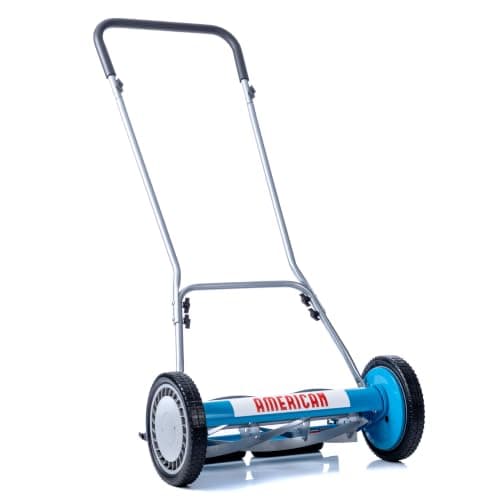
Buy the mower that can hold the height your bermuda needs, and ignore everything else on the spec sheet. Extension guidance across the southern states lands in the same place: bermudagrass is a half-inch to two-inch lawn, mowed every three to five days in summer. UF/IFAS lists bermudagrass at 0.5 to 1.5 inches, every 3 to 5 days, with a reel mower as the preferred type. Clemson’s bermudagrass calendar puts the May-to-August range at one to two inches and says plainly that “mowing heights below 1 inch will require a reel type mower to achieve satisfactory results.” That sentence is the whole buying decision.
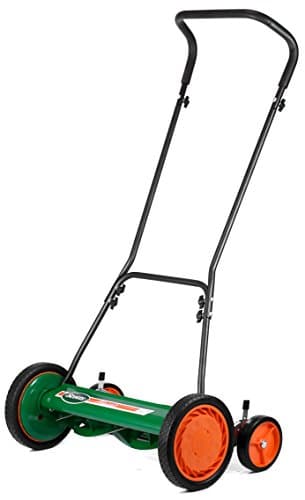
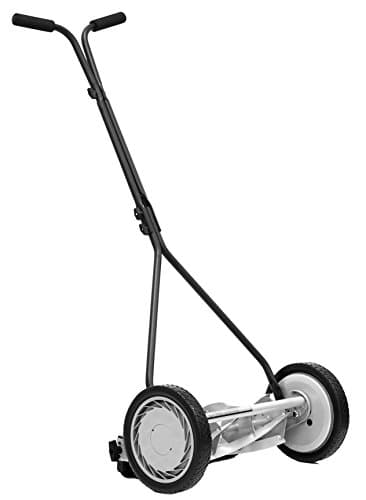
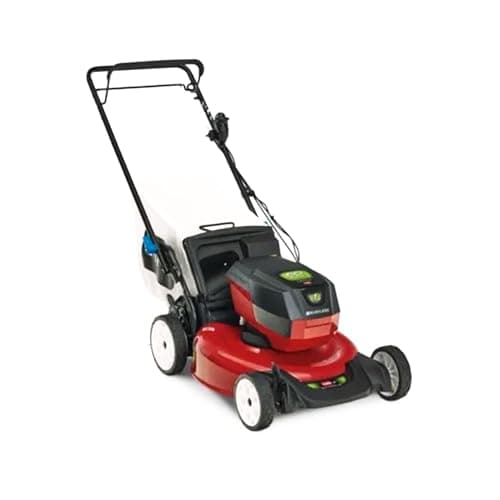
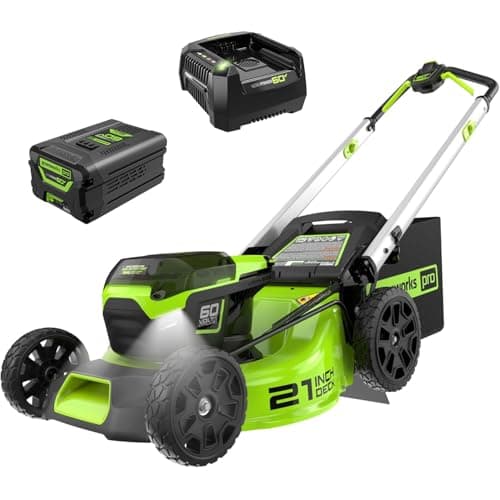
For most bermuda lawns the right answer is the American Lawn Mower Company 2815-18— an 18-inch five-blade reel whose listing states a cut range starting at half an inch, for less than a cordless trimmer costs. If you want finer control of the height as the season moves, the Scotts 2000-20S gives nine positions between one and three inches across a 20-inch reel. The Great States 415-16is the small, cheap version of the same idea. If you will not mow three times a week — and most people will not — the Toro Recycler 21" 60V push mower is the rotary to buy, because Toro publishes a one-inch bottom setting on that deck, which is lower than most battery mowers can go. The Greenworks 60V 21" push mower is here as the cautionary example rather than a recommendation for a short lawn: Greenworks publishes a 1-3/8-inch floor, which is already above the height a hybrid bermuda lawn wants, and it is a good mower that simply cannot do this particular job.
We have mowed nothing for this page. Cutting widths, blade counts, height ranges and the number of height positions are the figures the listings and the manufacturers’ own product pages publish — see how we pick. The agronomy is published extension guidance from Clemson, UF/IFAS, UC IPM and the University of Arkansas, cited at the foot of the page, not our measurement. Prices come from the live price layer with an “as of” date beside each mower.
Step 1: decide what height you are keeping, before you look at a single mower
Bermuda is a warm-season grass that spreads by stolons above ground and rhizomes below it. It fills in sideways rather than growing upward from a crown, which is why it tolerates being cut short in a way tall fescue never will — and why it gets stemmy, thatchy and ugly when it is kept long.
The published ranges split by what you actually have growing:
Seeded or common bermuda— the kind that comes out of a bag. UC IPM says set the mower to 1 to 1-1/2 inchesand mow when the turf reaches 1-1/2 to 2-1/4 inches. Clemson’s calendar agrees for May through August at one to two inches, starting the season at 1-1/4 to 1-1/2 inches.
Hybrid bermuda— sodded cultivars such as Tifway, Celebration or Latitude 36. UC IPM says set the mower to 1/2 to 1 inch and mow when the turf reaches 3/4 to 1-1/2 inches. The University of Arkansas puts it more bluntly: hybrid bermudagrasses look best mowed three times per week at 0.5 to 1.5 inches with a reel mower.
Shade-tolerant cultivars— Clemson notes these may be best cut at a two-inch height, and the same page says to raise the height during heat or drought stress.
Those two numbers — the height you are keeping and how often you are willing to mow — decide everything below. Write them down first.
Step 2: the one-third rule is what forces the mowing frequency
Every extension source says the same thing: never remove more than one third of the leaf height in a single mowing. UF/IFAS phrases it as mowing often enough that no more than 1/3 of the blade height is removed per mowing.
Do the arithmetic on a bermuda lawn and the frequency falls out of it. If you keep the lawn at one inch, a third of the height is a third of an inch, so you mow when it hits about 1-1/3 inches. In July, with heat and water, bermuda covers that in two or three days. That is why UF/IFAS prints “every 3 to 5 days” rather than “weekly”, and why Arkansas says three times a week for hybrids.
Break that rule and you scalp. Scalping on bermuda does not just look bad — you cut into the stem layer below the leaf, which is brown, holds no chlorophyll and takes a week or two to green over. Anyone who has let a bermuda lawn go for ten days in June and then cut it at the usual setting has seen exactly this.
The honest consequence: if you are not going to mow twice a week in summer, do not keep bermuda at an inch. Keep it at two, accept a slightly coarser-looking lawn, and buy a rotary mower that reaches two inches comfortably. The trade is a real one: at two inches the lawn tolerates a much longer interval between cuts, because a third of two inches is two thirds of an inch of growth rather than a third.
Step 3: why a reel mower, and when it is the wrong answer
A reel mower works like scissors. A set of helical blades turns against a fixed bed knife and the grass leaf is cut between the two. A rotary mower works like a machete: a single blade spinning at speed severs the leaf by impact. On a tall lawn you cannot see the difference. On a lawn cut at three quarters of an inch you can, because the impact cut leaves a frayed tip on the thin leaf that grays off for a day or two after every mow.
The mechanical reason a reel is needed below an inch is more basic than cut quality, though. A rotary deck has to carry a spinning blade inside a housing, and the housing has to clear the ground. Lower the deck far enough and the front skirt starts hitting the turf and gouging high spots. A reel mower has no housing to clear: its height is set by the wheels and the bed knife, so it can sit genuinely low. That is the whole of Clemson’s point about needing a reel below one inch, and the Arizona extension puts the same threshold at 1-1/2 inches or shorter.
Where a reel mower is the wrong answer is equally clear, and most of the people who buy one and hate it fall into one of these three:
Bumpy ground. A reel mower is a rigid frame on two wheels and it follows every lump. A lawn that needs a reel mower usually needs leveling first, and that is a season’s project rather than a weekend.
Letting it get long. A reel has no suction and no power. Grass that has bent over gets ridden over instead of cut. There is no version of a reel mower that forgives a missed week.
Sticks, leaves and seed heads.A reel jams on a twig that a rotary would mince. UF/IFAS also notes that reel sharpening is difficult and is best left to a mower repair service — so reel maintenance is cheaper in parts and more annoying in logistics than a rotary blade you can swap at home. Our blade sharpener roundup is for rotary blades; it will not help you with a reel.
Step 4: if you are buying a rotary anyway, buy on the bottom of the height range
Most people reading this will buy a rotary mower, and that is a legitimate choice as long as you pick the height target to match. The spec that matters is the lowest cutting position, and it is the spec nobody puts on the front of the box.
Here is the useful comparison, from the manufacturers’ own published figures. Toro publishes a 1 to 4 inch range in nine positions for the 60V Recycler pushdeck — note that Toro’s own listings for the self-propelled version of the same mower give 1.25 to 3.75 inches, so the push model is the one that goes lower. Greenworks publishes 1-3/8 to 4 inches in seven positions for its 60V 21-inch push mower. That inch-and-three-eighths floor is fine for common bermuda at 1-1/2 inches and simply cannot mow a hybrid lawn at three quarters of an inch.
So: if your target height is 1-1/2 to 2 inches, nearly any battery mower will do it and you should buy on deck width, battery platform and price instead — which is what the main electric mower roundupranks on. If your target is one inch, you want the Toro push deck or a reel. If your target is below one inch, it is a reel mower or nothing, and that is not our opinion, it is Clemson’s.
Step 5: the parts of bermuda mowing that are not about the mower
Three things matter nearly as much as the machine, and all three are cheap.
A sharp blade. UF/IFAS says to sharpen often enough to prevent a ragged appearance to the turf. Thin bermuda leaf shows a dull blade faster than any other common lawn grass, because the frayed tip is a bigger fraction of a short leaf. If you are mowing twice a week in summer you are putting twice the hours on the edge, so plan on sharpening mid-season, not just in spring. Our mower blade roundup covers replacement blades.
Returning the clippings.Bermuda cut on schedule produces short clippings that fall into the canopy and break down, which returns nitrogen and costs nothing. Clemson recommends a mulching-type mower through summer. Bagging a bermuda lawn you are mowing twice a week is a lot of trips to the curb for no benefit — see the mulching mower roundup.
Dealing with thatch.Bermuda is a stolon-forming grass, and a lawn kept too long or fed too hard builds a thatch layer faster than fescue does. If the mower is scalping some areas and missing others, check whether the high spots are soil or thatch before you blame the mower — aerating vs dethatching is the two-minute version of that diagnosis, and the dethatcher roundup is the tool for it.
One thing bermuda will not do for you
Bermuda cut at an inch does not stripe. A stripe is cut leaf bent over so it reflects light differently from the next pass, and short, stiff, upright warm-season leaf has very little to bend. If a striped lawn is what you are after, that is a cool-season project — the lawn striping kit roundup explains the mechanism and which grasses hold a stripe at all.
And if you are still choosing between species rather than mowers, read fescue vs bermuda first. The mowing frequency on this page is a real cost of owning a bermuda lawn, and it is the one most people do not price in. If you are assembling the rest of the program around it, the lawn care products guide puts the mower in order with the feeding, seeding and weed control.