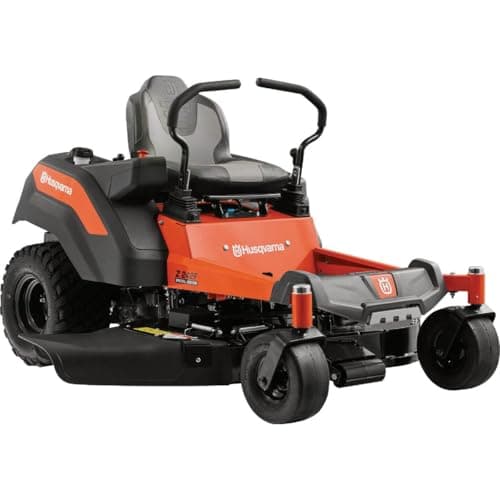
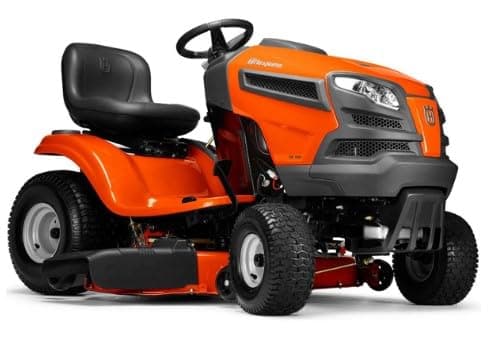
The best riding lawn mower for one acre is the Husqvarna TS 120: a 42-inch deck on a 19 HP Briggs & Stratton engine, which is the specification an acre actually calls for, and it has a live listing with a price you can see rather than a dealer quote. If you would rather buy green, the John Deere S130 is the same class of machine through the dealer channel, and the Cub Cadet XT1 Enduro LT42is the mainstream alternative. If your acre is full of trees, beds and a swing set, skip the tractors and read the zero-turn entry below — the Husqvarna Z242F will cut the same ground in noticeably less time.
One acre is 43,560 square feet, and it is the size at which this decision becomes simple. Below about three quarters of an acre a self-propelled walk-behind still finishes in a reasonable afternoon, which is why our self-propelled roundup covers that ground. Above two acres, deck width starts to dominate everything and you want the two-acre page or the five-acre page. At one acre, a 42-inch deck is the sweet spot and the real decision is tractor or zero-turn.
Here is why 42 inches and not more. A 42-inch deck fits through a standard 48-inch gate with room for your knuckles, stores in a single-car garage bay, and turns inside the radius a tree needs. A 48 or 54-inch deck saves passes on open ground and then costs you every one of those passes back in three-point turns around obstacles. Unless your acre is a genuinely open rectangle, 42 inches is the width that finishes first. Prices below are live from the price layer with an “as of” date; several of these machines sell through dealers, and those carry a tagged check-price link rather than a number we cannot verify.
How long does an acre take? The arithmetic
Mowing speed is width times speed, and the sum is worth doing once because it settles most deck-width arguments. A deck cutting a usable 3.5 feet at 4 mph covers 3.5 × 4 × 5,280 = 73,920 square feet an hour in a straight line. Nobody mows in a straight line, so take 80 percent for overlap, turns and trimming: about 59,000 square feet, or 1.35 acres an hour. That is the real answer to how long a 42-inch rider takes on an acre: roughly 45 minutes of mowing.
| Deck | Usable width | Acres/hour at 4 mph | One acre takes |
|---|
| 30 in rear-engine rider | 2.3 ft | 0.9 | About 65 min |
| 42 in lawn tractor | 3.5 ft | 1.35 | About 45 min |
| 42 in zero-turn (5 mph) | 3.5 ft | 1.7 | About 35 min |
| 48 in lawn tractor | 4.0 ft | 1.55 | About 39 min |
Those are arithmetic, not stopwatch figures — we have not driven these machines and we do not pretend otherwise, which is the policy explained in how we pick. What the table shows is that the gap between deck sizes at one acre is ten or fifteen minutes, while the gap between a tractor and a zero-turn on obstacle-heavy ground is far larger, because a zero-turn does not do three-point turns at all.
Tractor or zero-turn for one acre?
Buy a lawn tractor if your acre is mostly open, if you want to tow a cart or a spreader, if there are slopes, or if you want the cheapest route to a 42-inch deck. A tractor steers with a wheel, tows properly and holds a line on a hill.
Buy a zero-turnif your acre has more than about a dozen obstacles — trees, beds, a trampoline, a shed, a mailbox island. Every one of those is a three-point turn on a tractor and a pivot on a zero-turn, and across an acre those seconds add up to a third of the mowing time. The trade-offs in both directions are laid out in zero-turn vs riding mower.
Engine size: what 19 HP is doing for you
On a 42-inch deck, engine power is not about speed over the ground. It is about keeping blade tip speed up when the deck loads — wet grass, a growth spurt after rain, a patch of long stuff at the back. An underpowered engine bogs, blade speed falls, and a slow blade tears grass instead of cutting it, which browns the tips. Somewhere around 18 to 20 HP is where a 42-inch residential deck stops bogging in normal conditions, which is exactly where the TS 120, the S130 and the XT1 sit. Above that you are paying for durability and towing capacity rather than cut quality.
The electric option, honestly
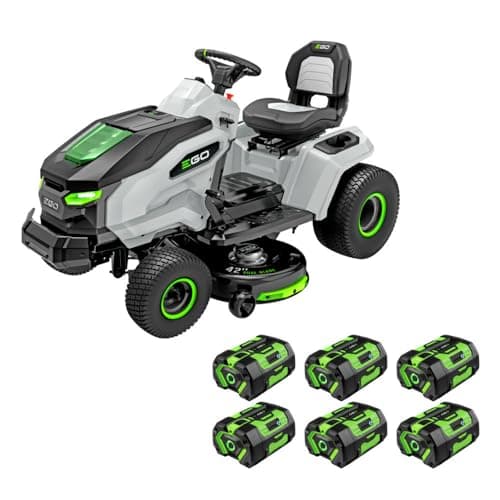
The EGO Power+ TR4204 is a 42-inch electric lawn tractor, and on one acre it is a genuinely sensible buy rather than a novelty: there is no fuel, no oil change, no filter, no winterizing and no pull cord, and an acre is inside the work a charged battery platform handles. What you give up is the ability to keep going past the battery, which matters on the one weekend a year you let the grass get away from you. Electric riders in general are ranked in best electric riding lawn mower.
The 30-inch exception
If your acre is reached through a 36-inch gate, or the storage is a shed rather than a garage, a 30-inch rear-engine rider like the Cub Cadet CC30 is the machine that physically fits. It will take an hour rather than 45 minutes and it is the right answer anyway when the alternative is not owning a rider at all. The same logic with more options is in best small riding lawn mower.
What to budget for beyond the machine
A rider is the start of a small fleet. Reckon on a lift so you can sharpen blades, a set of spare blades, and a cart or spreader from the attachments list within the first year. Budget for a blade change every season or two; a dull blade on an acre of grass undoes most of what you paid for.
At an acre you will own this machine for a decade, so it is worth reading the most reliable riding mowers alongside this list - the cheapest tractor that fits the acreage is not always the cheapest one to keep.