Skip to content
Fairway&Fescue

The Seed · Grass Seed & Fescue

The Best Grass Seed for Clay Soil

Clay is not a seed problem, it is a root problem. Ranked on rooting depth, drought behavior and how each blend behaves in ground that compacts.

By Stephen V.Updated How we pick
#ad

We earn a commission when you buy through our Amazon links, at no extra cost to you. It never changes our rankings — and we'll tell you when the cheaper bag or machine is the better buy. How this works.

The best grass seed for clay soil is Barenbrug Turf Saver RTF, because RTF is a rhizomatous tall fescue — it sends out underground stems as well as going deep, so it fills gaps in ground that a bunch-type grass leaves thin. The budget pick is Pennington Kentucky 31, the cheapest bag here and still a tall fescue, which means it brings the one trait that matters most in clay: a root system that goes down rather than sideways. If you want a premium blend bred for deep rooting, Jonathan Green Black Beauty Ultra is the deepest-rooting product in this registry. And if your clay lawn is part sun and part shade, GreenView Turf Type Tall Fescue Sun & Shade and Pennington The Rebels both handle a mixed lot without needing two different bags.

Prices on every card are pulled live with an “as of” date. We have not grown any of these in clay ourselves; the ranking reasons from published species composition, NTEP trial data on the cultivars involved, stated coverage and rooting characteristics the breeders publish. The method is in how we pick.

Here is the thing nobody selling seed will tell you: the seed is the smaller half of this problem. Clay soil fails lawns because it compacts, and compacted soil has almost no air space. Roots need oxygen. Water sits on the surface instead of soaking in, then the surface bakes to a crust in July. No seed in the world germinates reliably in that. Pick the right species and you have solved maybe forty percent of it; the rest is aeration and organic matter.

What the right species does buy you is a root system with a chance. Tall fescue roots two to three feet down in good soil and still manages far deeper than bluegrass or ryegrass in heavy ground, and those deep roots are what find moisture when the clay surface has gone hard. That is why almost every pick on this page is a tall fescue, and why the comparison worth reading first is tall fescue vs Kentucky bluegrass.

The short answer

Quick picks

#ProductBest forScorePrice
01
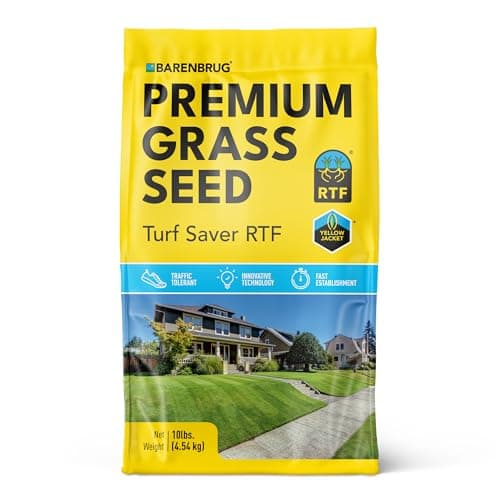
Barenbrug Barenbrug Turf Saver RTF Tall Fescue (10 lb)
Barenbrug Turf Saver RTF Tall Fescue (10 lb)

The one bag on this list that does something the others cannot: RTF is rhizomatous tall fescue, so it spreads sideways and fills its own thin patches instead of needing you to overseed them.

A lawn that repairs itself
8.4
$50.04Amazon
02
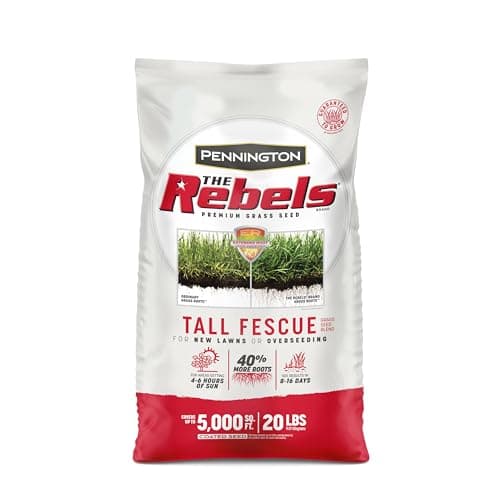
Pennington Pennington The Rebels Tall Fescue (20 lb)
Pennington The Rebels Tall Fescue (20 lb)

The value pick, and the bag we would point most people at first. The Rebels is a long-established turf-type tall fescue brand and a 20 lb bag costs a third of the premium blends.

Best value turf-type tall fescue
7.2
$52.98Amazon
03
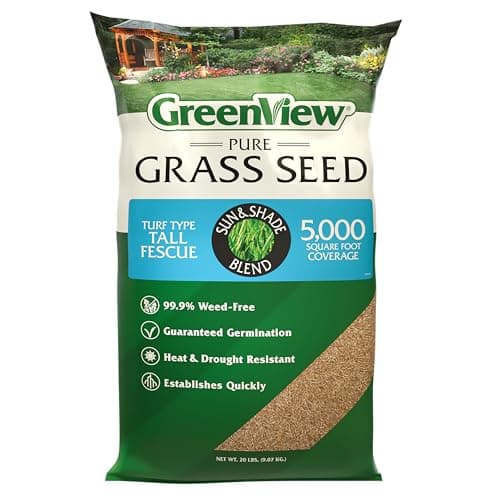
GreenView GreenView Turf Type Tall Fescue Sun & Shade Blend (20 lb)
GreenView Turf Type Tall Fescue Sun & Shade Blend (20 lb)

A 20 lb turf-type tall fescue blend sold explicitly for mixed sun and shade — the right shape of bag for the lawn most people actually have, which is bright at the front and dim down one side.

Lawns that are part sun, part shade
7.2
$69.98Amazon
04
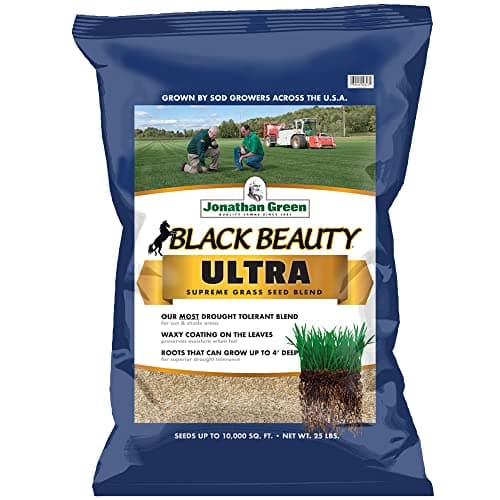
Jonathan Green Jonathan Green Black Beauty Ultra (25 lb)
Jonathan Green Black Beauty Ultra (25 lb)

Black Beauty tall fescue blended with Kentucky bluegrass and perennial ryegrass. The ryegrass greens up fast, the bluegrass creeps to fill in, and the fescue carries the lawn through summer.

Fast establishment plus staying power
7.8
$101.00Amazon
05
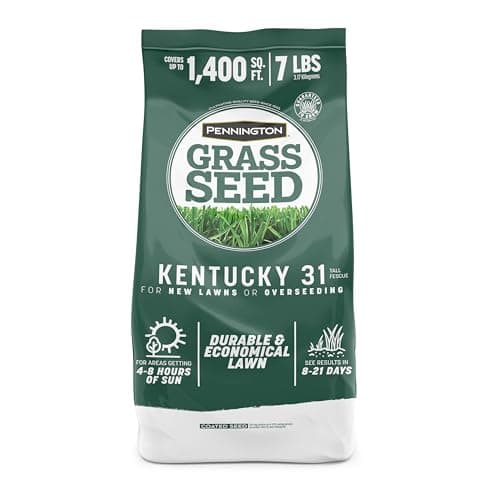
Pennington Pennington Kentucky 31 Tall Fescue (7 lb)
Pennington Kentucky 31 Tall Fescue (7 lb)

The skip-this pick for a lawn, and the right answer for a field. K31 is a forage-type tall fescue — coarse-bladed and tough as old boots, but it will never look like turf.

Pastures, ditches and erosion control
6.4
$21.97Amazon

#ad · Live prices from the Amazon Product API, as of November 22, 2026. Where we have no verified live price, we show none — we would rather leave a gap than print a number that has rotted.

In detail

The picks, in full

01
Barenbrug Barenbrug Turf Saver RTF Tall Fescue (10 lb)

A lawn that repairs itself

Barenbrug Turf Saver RTF Tall Fescue (10 lb)

Rhizomatous tall fescue (RTF)Yellow Jacket seed coating10 lb bagSelf-repairing
8.4/10

The one bag on this list that does something the others cannot: RTF is rhizomatous tall fescue, so it spreads sideways and fills its own thin patches instead of needing you to overseed them.

Species quality
10
Shade tolerance
7
Drought tolerance
9
Self-repair
10
Value per lb
6

Pros

  • Ordinary tall fescue is a bunch grass — it grows up, not out, so every bare patch stays bare until you reseed it. RTF puts out rhizomes and closes gaps on its own
  • The Yellow Jacket coating is a water-holding polymer coat, which helps germination on the days you miss a watering
  • Barenbrug sells the same seed into sports fields and parks, which is the honest reason to trust the genetics

Cons

  • Priced well above a commodity tall fescue bag per pound of seed
  • Coated seed weighs more per viable seed, so a 10 lb bag of coated seed sows less area than 10 lb of bare seed

Skip this if…

…you are seeding a large area on a budget. At this price per pound, covering a half acre gets expensive fast — Pennington's Rebels blend is the better value for sheer square footage.

$50.04View on Amazon

Price as of November 22, 2026. Prices change — Amazon's is the one that counts.

#ad · we may earn a commission from this link to Barenbrug Turf Saver RTF Tall Fescue (10 lb)

02
Pennington Pennington The Rebels Tall Fescue (20 lb)

Best value turf-type tall fescue

Pennington The Rebels Tall Fescue (20 lb)

Turf-type tall fescue20 lb bagImproved cultivarsSun and light shade
7.2/10

The value pick, and the bag we would point most people at first. The Rebels is a long-established turf-type tall fescue brand and a 20 lb bag costs a third of the premium blends.

Species quality
8
Shade tolerance
6
Drought tolerance
8
Self-repair
4
Value per lb
10

Pros

  • Genuinely cheap per pound for real turf-type tall fescue rather than forage-type seed
  • 20 lb covers a substantial area at normal new-lawn seeding rates
  • The Rebels cultivars have been in the trials and on lawns for decades

Cons

  • Not the dark color class of the Black Beauty bags
  • Bunch-type, so no self-repair

Skip this if…

…you are overseeding a lawn you already like the look of. Matching an existing dark-green fescue with a mid-green bag leaves you with a patchwork for a season.

$52.98View on Amazon

$59.9912% off

Price as of November 22, 2026. Prices change — Amazon's is the one that counts.

#ad · we may earn a commission from this link to Pennington The Rebels Tall Fescue (20 lb)

03
GreenView GreenView Turf Type Tall Fescue Sun & Shade Blend (20 lb)

Lawns that are part sun, part shade

GreenView Turf Type Tall Fescue Sun & Shade Blend (20 lb)

Turf-type tall fescue blendSun & shade blend20 lb bagCool-season
7.2/10

A 20 lb turf-type tall fescue blend sold explicitly for mixed sun and shade — the right shape of bag for the lawn most people actually have, which is bright at the front and dim down one side.

Species quality
8
Shade tolerance
8
Drought tolerance
8
Self-repair
4
Value per lb
8

Pros

  • Blended for the real-world case of one lawn with two light levels, so you seed the whole thing from one bag
  • Turf-type rather than forage-type fescue, which is the distinction that matters most on a label
  • Sensible mid-market price for a 20 lb bag

Cons

  • A sun-and-shade blend is a compromise at both ends — not the best sun seed nor the best shade seed
  • Less cultivar information published than the Jonathan Green bags

Skip this if…

…your lawn is uniformly one thing. A dedicated shade mix does better in real gloom and a straight tall fescue blend does better in open sun.

$69.98View on Amazon

$89.9922% off

Price as of November 22, 2026. Prices change — Amazon's is the one that counts.

#ad · we may earn a commission from this link to GreenView Turf Type Tall Fescue Sun & Shade Blend (20 lb)

04
Jonathan Green Jonathan Green Black Beauty Ultra (25 lb)

Fast establishment plus staying power

Jonathan Green Black Beauty Ultra (25 lb)

Tall fescue + bluegrass + ryegrass25 lb bagCool-season mixtureBlack Beauty cultivars
7.8/10

Black Beauty tall fescue blended with Kentucky bluegrass and perennial ryegrass. The ryegrass greens up fast, the bluegrass creeps to fill in, and the fescue carries the lawn through summer.

Species quality
9
Shade tolerance
7
Drought tolerance
8
Self-repair
7
Value per lb
8

Pros

  • A three-species mixture hedges your bets: ryegrass germinates in days, bluegrass spreads by rhizome, fescue survives August
  • The bluegrass component gives the mixture some genuine self-repair that straight tall fescue lacks
  • Still built on the Black Beauty cultivar family

Cons

  • A mixture never looks quite as uniform as a single-species blend — the three grasses have visibly different leaf textures
  • Bluegrass needs more water than tall fescue, so the mixture is thirstier than pure fescue

Skip this if…

…you want one uniform texture across the whole lawn, or you are in the hot transition zone where bluegrass struggles. Straight Black Beauty tall fescue is the cleaner choice for both.

$101.00View on Amazon

Price as of November 22, 2026. Prices change — Amazon's is the one that counts.

#ad · we may earn a commission from this link to Jonathan Green Black Beauty Ultra (25 lb)

05
Pennington Pennington Kentucky 31 Tall Fescue (7 lb)

Pastures, ditches and erosion control

Pennington Kentucky 31 Tall Fescue (7 lb)

Kentucky 31 forage-type fescue7 lb bagDrought-resistantCoarse blade
6.4/10

The skip-this pick for a lawn, and the right answer for a field. K31 is a forage-type tall fescue — coarse-bladed and tough as old boots, but it will never look like turf.

Species quality
4
Shade tolerance
5
Drought tolerance
10
Self-repair
3
Value per lb
10

Pros

  • Extremely tough and drought-tolerant — it was bred for grazing land, and it shows
  • The cheapest fescue seed you can buy, by a distance
  • Genuinely the right choice for a bank, a ditch, a paddock or a hard-wearing play area

Cons

  • A coarse, wide blade that does not look like a lawn next to any turf-type fescue
  • Clumps rather than knitting, so a K31 lawn reads as uneven however you mow it

Skip this if…

…you want a lawn. This is the single most common grass-seed mistake we see: K31 is on the shelf next to the turf-type bags at a third of the price, and the difference is permanent. Buy The Rebels instead.

$21.97View on Amazon

Price as of November 22, 2026. Prices change — Amazon's is the one that counts.

#ad · we may earn a commission from this link to Pennington Kentucky 31 Tall Fescue (7 lb)

Why clay is hard on grass, in one paragraph

Clay particles are tiny and flat, so they pack together with very little pore space between them. That does two things. Water cannot move through quickly, so it either pools on the surface or saturates the root zone and drives the air out; and once it dries, the same tight packing sets like a brick. Roots need oxygen and physical room to push, and compacted clay offers neither. Everything below follows from that.

The criteria, in the order they matter in clay

1. Rooting depth, which is the entire game. A grass that roots deep finds moisture below the baked layer and survives the weeks when the surface is impenetrable. Tall fescue is the deepest-rooting cool-season lawn grass in common use, which is why it dominates this page.

2. Whether it spreads or clumps.Most tall fescue is bunch-type: each plant stays where it germinated, so a thin patch stays thin until you seed it again. Rhizomatous tall fescue sends out underground stems and fills gaps on its own, which in compacted ground — where germination is always patchy — is worth a great deal.

3. Establishment speed, because the window is short. Clay surfaces crust after rain, and seed that has not rooted before the crust forms is lost. A blend with some faster-establishing seed in it gets cover down sooner. The germination timings by species are in how long grass seed takes to germinate.

4. Drought behavior rather than drought “tolerance”. Clay holds a lot of water but releases it grudgingly, so a lawn on clay can be water-stressed in soil that is technically moist. A deep-rooted grass reaches the part of the profile that is still giving water up.

5. Shade, if you have it. Clay lawns under trees are the hardest case of all, because tree roots compete for both water and the little air space there is. Fine fescues handle shade better but root shallower; a sun-and-shade tall fescue blend is usually the better compromise on heavy ground. The shade-specific ranking is the best grass seed for shade.

Which seed, by what your clay lawn looks like

Your lawnWhat to sowWhy
Heavy clay, full sun, patchyBarenbrug Turf Saver RTFRhizomatous tall fescue fills its own gaps - the one trait bunch grasses lack
Large area, tight budgetPennington Kentucky 31Cheapest tall fescue here; coarser leaf, but the deep roots are the point
You want the best finish clay will allowJonathan Green Black Beauty UltraDeepest-rooting blend in this registry, with a finer leaf than K31
Part sun, part shade on heavy groundGreenView TTF Sun & Shade or Pennington The RebelsOne bag that works across a mixed lot without buying two
Clay that puddles and stays wet for daysFix drainage firstNo grass species survives standing water; seed sown into it is money gone
Warm-season region on clayBermuda, not fescueSpecies is set by climate before soil - see our fescue vs bermuda comparison

The soil work that makes the seed worth buying

Core aerate first, and do it properly. A core aerator pulls plugs of soil out and leaves holes, which is the only mechanical way to put air back into compacted clay. Spike aerators push soil sideways and can make compaction marginally worse, which is exactly the wrong move here. The distinction matters enough that we wrote spike vs plug aerator about it, and the machines for this specific soil are in the best aerators for clay soil.

Seed straight into the holes. Aerating and overseeding on the same day is the single most effective thing you can do to a clay lawn. The plugs break down into a topdressing, the holes give seed a protected pocket with soil contact on all sides, and germination rates improve dramatically against broadcasting onto a hard surface.

Add organic matter every year, not once. Compost topdressing is what changes clay over time: organic matter binds the fine particles into larger crumbs, and crumbs have air between them. A quarter inch a year, repeated, does more than any one-season intervention.

Roll the seed in, lightly. Clay dries to a crust and seed sitting on top of a crust does not germinate. A light pass with a part-filled roller presses seed into contact without adding compaction; the units are ranked in the best lawn rollers.

Watering and feeding a clay lawn differently

Clay takes water slowly and holds it for a long time, so the watering pattern that suits sandy soil is actively harmful here. Water less often and for longer, and if it starts running off before the time is up, stop and come back in an hour — the cycle-and-soak approach gets water into clay where a single long run just floods the surface.

On feeding, go slower than the bag suggests. Compacted soil has less microbial activity and less root surface to take nutrients up, so a heavy application is partly wasted and partly runoff. A slow-release product at a moderate rate suits clay better; the shortlist for a fescue lawn is the best fertilizer for fescue.

Finally, mow high. Three and a half to four inches on tall fescue shades the soil, keeps the surface from baking and encourages deeper rooting — all three of which are exactly what a clay lawn is short of. How much seed you need to start with is in how much grass seed do I need, and the timing is in when to plant grass seed.
How we picked this

We haven't run this gear through a lab — and we say so

We compiled the published manufacturer specifications — deck width and gauge, drive type, blower CFM, fertilizer NPK, seed species — did the deck-width and nitrogen arithmetic, cross-read the owner manuals, and scored each pick against a published rubric. The scores are judgments from documented research — they are notlab measurements we took, because we don't have a lab and we're not going to pretend we do. Where somebody has genuinely measured this, we link them. You can check every number we publish.

Questions

Frequently asked

What is the best grass seed for clay soil?
Barenbrug Turf Saver RTF. It is a rhizomatous tall fescue, so it combines the deep rooting that clay demands with underground stems that fill gaps on their own - which matters because germination in compacted ground is always patchy. Pennington Kentucky 31 is the budget pick and still a tall fescue.
Will grass grow in clay soil?
Yes, and tall fescue does it better than anything else in cool-season regions. The limiting factor is not the seed but the compaction: clay has almost no air space, and roots need oxygen. Core aerate before you seed and the same bag performs far better.
Should I aerate before seeding clay soil?
Yes, and use a core aerator that pulls plugs rather than a spike aerator that pushes soil sideways. Aerating and overseeding on the same day is the most effective thing you can do to a clay lawn: the holes give seed a protected pocket with soil contact all round.
Is tall fescue or Kentucky bluegrass better for clay?
Tall fescue, clearly. It roots far deeper, which is the trait that gets a lawn through the weeks when a clay surface has baked hard. Bluegrass spreads by rhizomes but roots shallow, so it struggles once the top few inches dry out.
How do I improve clay soil for a lawn?
Core aerate annually, topdress with about a quarter inch of compost each year, and mow high. Organic matter binds fine clay particles into crumbs with air between them - that is the only durable fix. Sand alone is not; adding sand to clay without enough organic matter can make it worse.
How often should I water a lawn on clay soil?
Less often, for longer, and with a pause if it starts running off. Clay absorbs slowly and holds for a long time, so frequent shallow watering floods the surface and never reaches the roots. Cycle and soak - run, stop, let it absorb, run again.
Can I just topdress with sand to fix clay?
No. Sand mixed into clay without a large volume of organic matter can set harder rather than looser. Compost is the material that actually changes clay structure, applied thinly and repeatedly rather than in one heavy go.

Keep reading

Receipts

Sources

We do not run a testing lab, and we do not pretend to. Every spec number here comes from a manufacturer's published sheet or an official standard, cited above. Where we could not verify something, we say so on the page rather than quietly leaving it out. Read our full method.